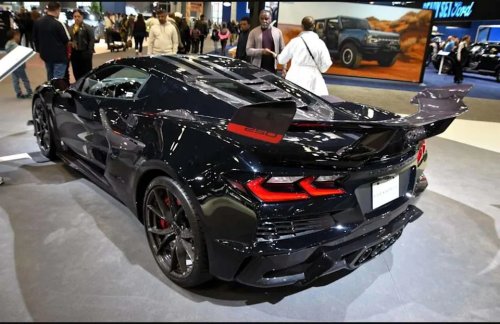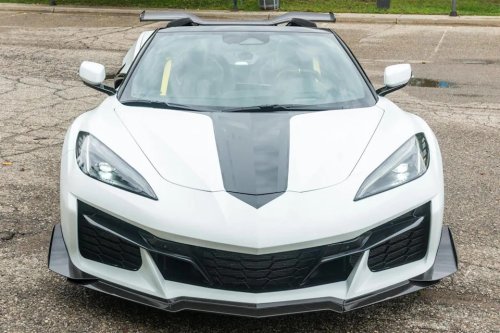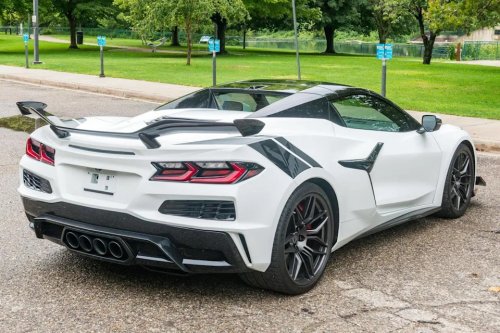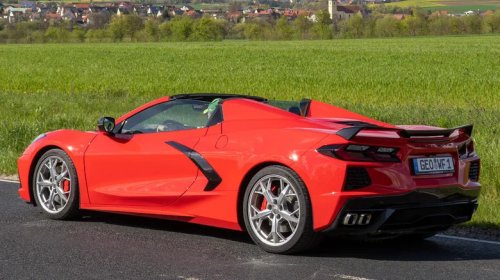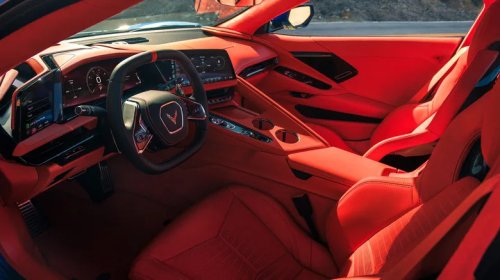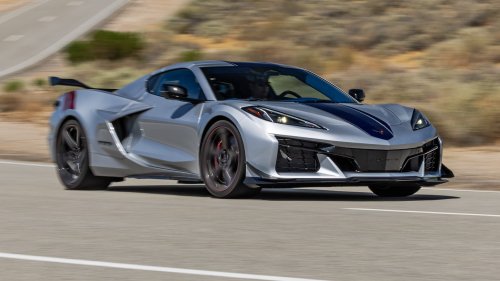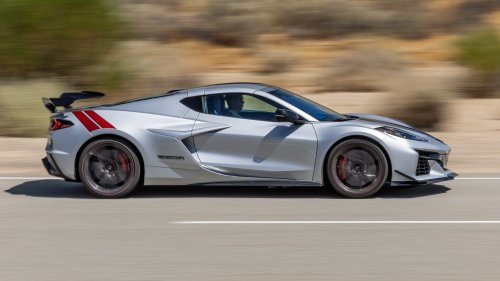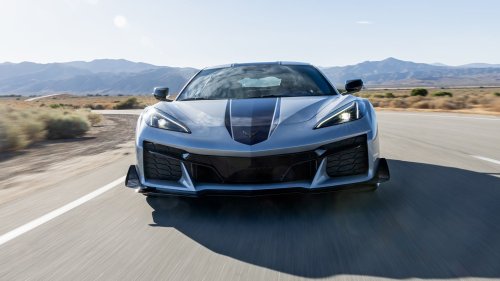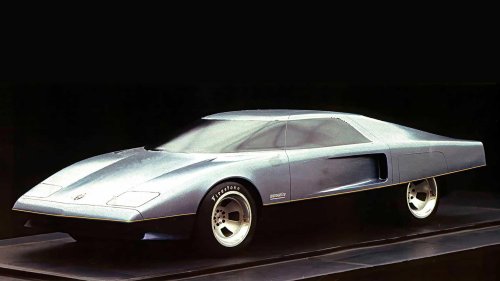
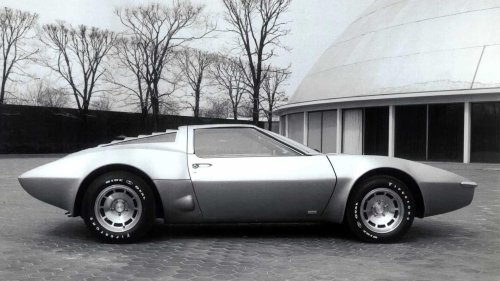
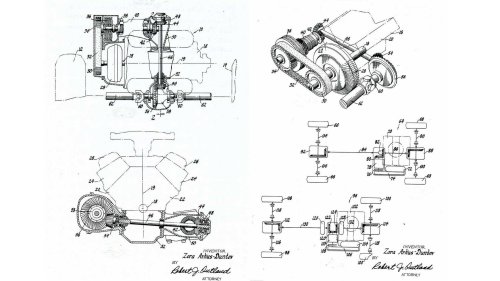
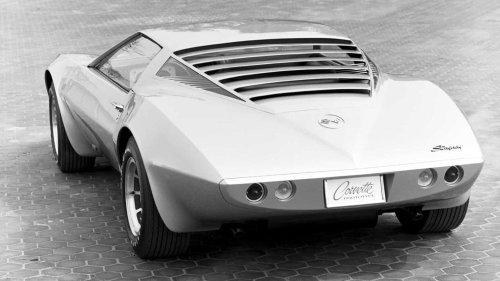
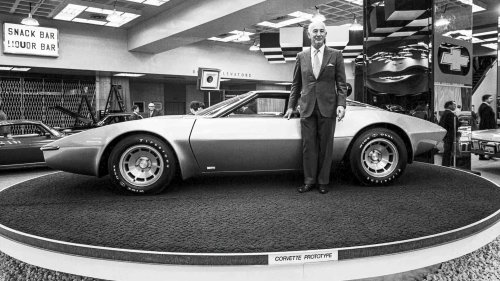
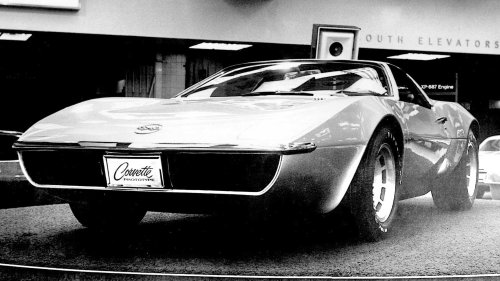
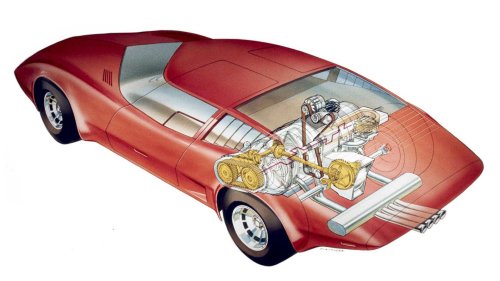
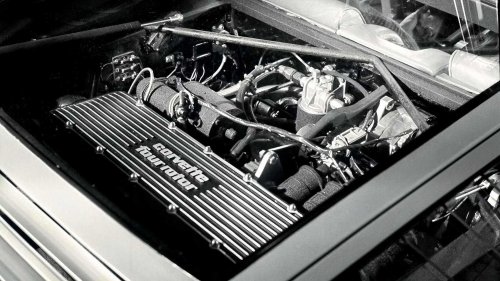
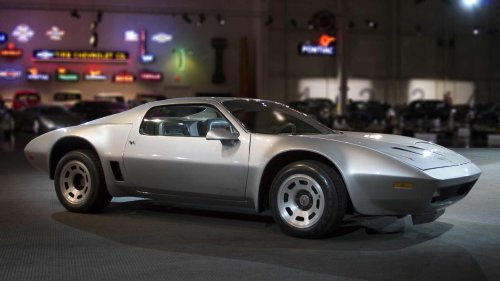
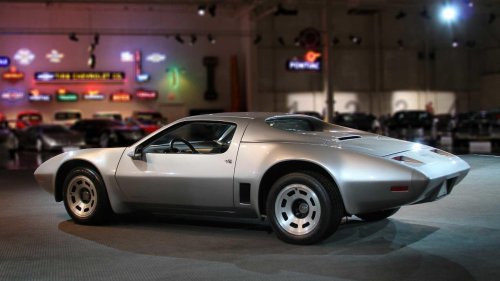
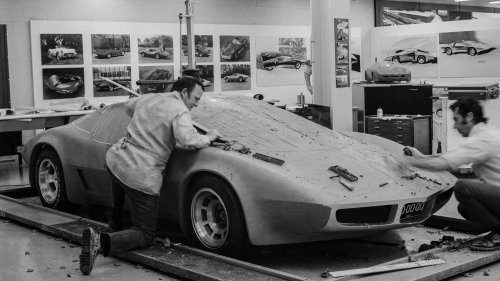
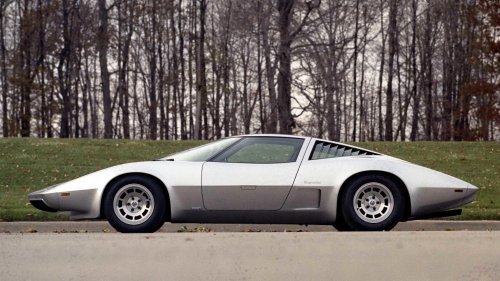

























When the silks were pulled from the C8 Corvette in October 2019, much was made of this being the first-ever mid-engined version of Chevrolet’s halo sports car. Which, while officially true, technically, was not. Indeed, the C8 had been beaten to that particular proverbial punch more than 50 years prior by Chevy’s radical "Astro II" concept. Or nearer 60, if we’re counting the "Cerv I" (Chevrolet Experimental Research Vehicle) test mules.Our subject today, however, was not only a mid-engined "Corvette," but also boasted a radical powertrain. And, like Magneto, it’s a concept that’s been known by many names.When development first started, for example, it was dubbed the XP-882. It re-debuted as the "Corvette Prototype", and then the refreshed "XP-895" three years later. Behind closed doors, it was dubbed the "Four Rotor Corvette". In shadowy corners of the motoring web, it’s even been called "Zora’s Dream", in tribute to the Russian-American entrepreneur Zora Arkus-Duntov who pulled the project kicking and screaming off the ground several times. To many though, the first (or second? Or third…?) mid-engined Corvette is more commonly known by its most recent, and most endearing pseudonym: the Aerovette. The Mid-Engined XP-882 "Corvette" Was All About Aerodynamics Karl LudvigsenFittingly, for a model the lineage of which is already quite complex, the Aerovette story has two branching narratives, the first of which dates back to 1969. As it had been for much of the preceding decade, the Cerv program, overseen by long-time General Motors’ engineer Zachary "Zora" Arkus-Duntov, was researching everything from powertrain and engine layouts, to radical aerodynamics and lightweight materials in the pursuit of performance. This, at a time, don’t forget, when main rival Ford, fresh off two (of an eventual four) consecutive wins at Le Mans, was riding a substantial wave with its mid-engined, Ferrari-pasting GT40.Handily for Zora, the Cerv program also meant he could explore a new design for his beloved Corvette, the front-engined bruiser that had brought the Belgian-born engineer to GM in the first place in 1953. Famously, almost scandalously, Zora was not a fan of either the "windsplit" rear window or the long vascular hood on, arguably, the most cherished Corvette of them all, the C2 Sting Ray. Indeed, by the late 1960s, Zora was pushing for a design that was not only far more aerodynamic, but, crucially, mid-engined as well.GM Heritage CenterHence the very low-slung nose, the heavily raked windshield, the sweeping roofline, and that pincered fiberglass tail on Cerv’s latest project: XP-882. It looked sensational, and, even with that louvered engine cover, is said to have had a drag co-efficient of just 0.325. That meant – with the right powertrain – it would be blisteringly quick, too. It Didn’t Debut With A Rotary Engine Though Revs Institute / GMXP-882’s pièce de résistance, however, was the patented transaxle design. Originally, the plan was to mount the drivetrain from an Oldsmobile Toronado – albeit upgraded with a larger, more Corvette-esque 454 cubic inch / 7.4-liter V8 – longitudinally, mid-rear. This layout, however, left the heavy V8 hanging above, rather than nestling in front of, the rear axle, destroying the prototype’s center of gravity and weight distribution in the process.Designing a dedicated mid-engine transaxle, meanwhile – essentially one unit comprising the engine and the transmission – was a no-go too, since this would be both far too complex and, crucially, too expensive for what was still a one-off experimental project.GM Heritage CenterInstead, the Cerv team rotated the drivetrain 90-degrees, with the V8, differential, and transmission mounted side-by-side, with the transaxle now on the left side of the package rather than at the rear. That wasn’t the clever bit, though: this transverse layout had been successfully used in production since the early 1930s. Zora’s design instead swapped out the differential for a simpler bevel gear connected to a single elongated driveshaft that "tunneled" through the oil sump to a conventional Corvette differential on the other side. This then sent power to the rear wheels as usual, albeit via the scenic route.The design meant that not only could the V8, which weighed 950 lbs just on its own, be mounted in front of the rear axle, aiding overall balance, but that power could, potentially, be sent to all four wheels for the first time. By using off-the-shelf Chevrolet parts, the Cerv team had also kept costs down. After months of fettling and knuckle-scuffing, Zora’s mid-engined Corvette was starting to become reality. Why The Project Was Canned. Part One Karl Ludvigsen / Revs InstituteClever as XP-882 was, however, John DeLorean, GM’s then-GM, wasn’t convinced. DeLorean, after all, had helped bring Pontiac back from the brink with a fleet of practical yet performance-heavy sedans, like the GTO, that could be built in bulk, to a budget, and sold at a competitive price. Something a production version of the XP-882, with its complex automatic-only drivetrain – which would be expensive to build and had no proven customer base – would not. Impressed though he was, DeLorean quickly canned the XP-882 project.That was until a few weeks later, when news broke that the De Tomaro-built, mid-engined Pantera would be sold in the US with official Ford backing through Lincoln dealerships. Realizing the danger of letting his main American rival gain yet more steam – by 1969, Ford’s popular GT40 had now won Le Mans four times on the bounce – DeLorean quickly re-greenlit the XP-882 project, and a dusted-off example, with its fiberglass bodywork now painted a more eye-catching metallic silver, was rolled out for an 11th hour debut at the 1970 New York Auto Show.Karl Ludvigsen / Revs InstituteUnsurprisingly, GM’s quickly renamed "Corvette Prototype" sparked immediate interest, and rumors abounded that the mid-engined Corvette would make production as early as 1973. Indeed, to take some of the wind from Ford’s sales, the decision was made in September 1970 to put the mid-engined XP-882 into production ahead for launch in 1974. That Wankel Engine How a rotary engine differs from pistons Corvette SportBy the early 1970s, in stark contrast to the big block V8s that had made General Motors a household name, the Cerv program was also exploring rotary engines (though only after GM spent $50 million in November 1970 licensing their own version on the Wankel concept).Unlike a piston engine, in which combustion moves the pistons up and down, a Wankel engine spins a triangular rotor around an output shaft in a chamber to create momentum. In theory, it’s a setup that’s lighter, more compact, and, because fewer components are required, more reliable than a conventional piston engine. For GM, the Wankel engine project was a potential home run. And what better showcase was there for the new General Motors Rotary Combustion Engine (GMRCE) than a sleek, mid-engined prototype the motoring media was already calling the next Corvette? Why The Wankel Could Outsprint Chevy’s V8 GM Heritage Center After its show-stealing debut in New York, further changes to XP-882 were commissioned. Chevy’s big block V8, unsurprisingly, was quickly jettisoned, and in its place, two slightly detuned Wankel engines, borrowed from Chevrolet’s compact Vega, were connected together and mounted in its place. Thus the "Four Rotor Corvette" pseudonym was born.Ironically, the "more compact" rotary engine proved far bigger than the piston V8 it replaced at 585 cubic inches (9.5-liters). For GM, however, power wasn’t the priority. Indeed, Chevrolet’s press materials at the time focused on the mid-engined chassis’ superior handling and the greater fuel efficiency afforded by the aerodynamic bodywork.No official power rating was ever released, but it’s believed, certainly by (Zora) Arkus-Duntov, who was still very much involved with the project, that the four Rotor Corvette could hit 145 mph. With the three-speed Turbo Hydra-Matic providing more consistent torque, Arkus-Duntov was even convinced the Wankel could outgun the "humpy" V8 to 100 mph from standstill. Why The Project Was Canned. Part Two GM Heritage CenterThe drivetrain transplant was not the only significant change, however. DeLorean – who, even by 1971, was still hedging his bets on the mid-engine layout – authorized a more aerodynamic redesign for XP-882 overseen by Chuck Jordan and C2 Sting Ray supervisor, Bill Mitchell.Alongside this, GM also commissioned Reynolds Aluminum to create a second prototype made from aluminum to test the lighter material’s practicality and durability. This restyled "XP-895" prototype made its debut at the 1973 Paris Auto Show, alongside a smaller, Two Rotor Corvette concept dubbed "XP-987GT".Unsurprisingly, talk of a production-ready, mid-engined Corvette, and a Wankel-engined entry-level alternative, arriving in 1974 reached fever pitch. Sadly, Zora’s mid-engined Corvette dream, now agonizingly close, still couldn’t be realized. And, ironically, it was the Wankel engine that was the core of the problem.GM Heritage CenterThe outbreak of the Yom Kippur War – and the resultant embargo on oil shipments from the Middle East to the United States – soon led to petrol prices skyrocketing in the US in early 1974. American automakers quickly re-routed, ditching their thirsty V8s for more frugal, and often diesel four-cylinders.In a brutal double-blow for GM, meanwhile, the company’s new Wankel engine, on which millions had already been spent to meet the US’ ever-tightening emissions regulations, proved to be not only be "dirtier" than expected, but less fuel efficient, too. Just like that, the mid-engined Corvette project, and its costly four-rotor engine, was canned once again. Why The Project Was Canned. Part Three GM Heritage CenterLike the proverbial phoenix, Arkus-Duntov’s mid-engined Corvette dream rose from the fuel-starved ashes one final time in 1976. Supported, ironically, by GM design chief Bill Mitchell, with whom Zora had butted heads over both the C2 Sting Ray and the XP-895 re-design. Dug out from storage, XP-895 was stripped of its Wankel engine and in its place, a smaller, 400 cubic inch (6.6-liter) V8 was slotted.The pop-up headlamps – part of yet another aerodynamic revamp – were re-designed. The louvered engine cover was replaced with a clear large window, and, for added visual oomph, the prototype was given gullwing doors for the first time.Once again, the prototype – now called "Aerovette" in a nod to its ever-more aerodynamic form – was rolled out on the auto show circuit. And once again, buoyed by the positive press, and with the by-now eight-year-old, heavily neutered third-generation Corvette looking for a much-needed revamp, production was greenlit. Incredibly, almost a decade on from its New York debut, Arkus-Duntov’s mid-engined Corvette dream was on course to come true in 1980. Even a competitive $15,000 to $18,000 MSRP was tentatively agreed.The Aerovette, however, would prove very much to be "right place, wrong time". By 1976, Arkus-Duntov – who’d retired from GM two years earlier but stayed on the project as a consultant – struggled to convince the Corvette’s new chief engineer Dave McLellan that mid-engined propulsion was the way to go.With Bill Mitchell having also retired as GM’s design chief in 1977, Arkus-Duntov had lost a key ally on the project, and underwhelming sales for the similarly mid-engined Porsche 914, Fiat X1/9, and Lotus Europa in the US did his argument no favors. This, collectively, proved one hurdle too many, and the XP-882/XP-895/Four Rotor Corvette/Aerovette project was eventually canceled. This time for good.GM Heritage CenterFittingly, the Aerovette has since found a permanent home as part of General Motor’s Heritage Collection. Zora’s dream of a mid-engined Corvette, meanwhile – one powered by a twin-turbo V8 rather than an experimental rotary engine – would finally be realized, albeit 24 years after the man’s passing and more than five decades after development first began on XP-882. Well, some dreams can take longer than others.Source: GM Heritage Center / GM Retro Rides / Revs Institute