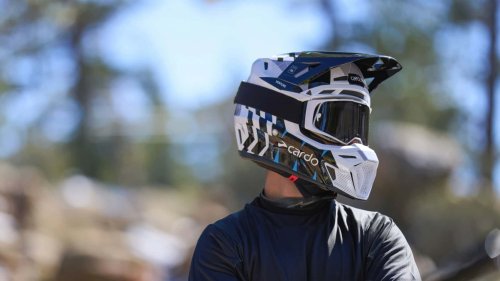
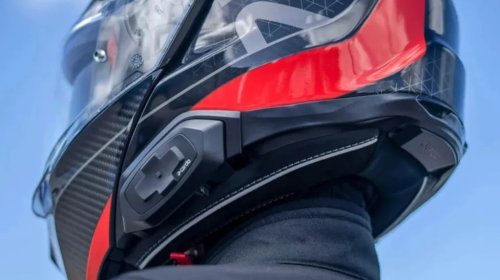
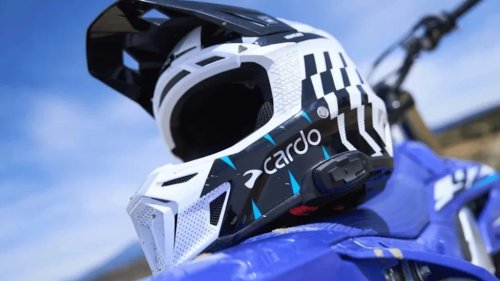
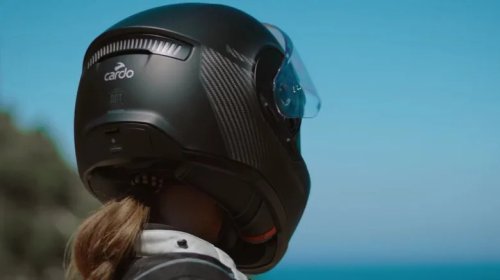
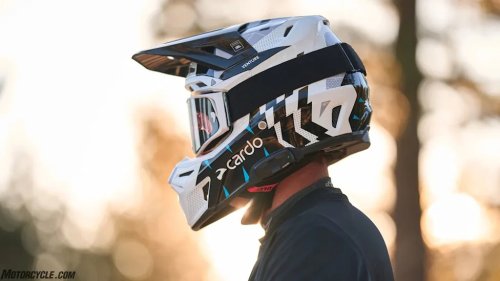
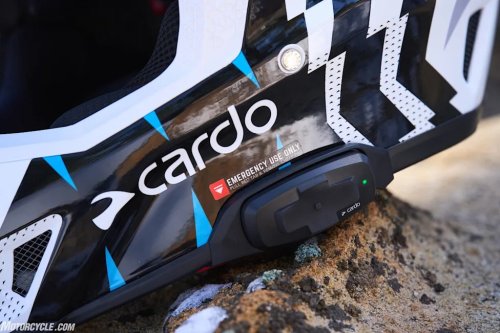
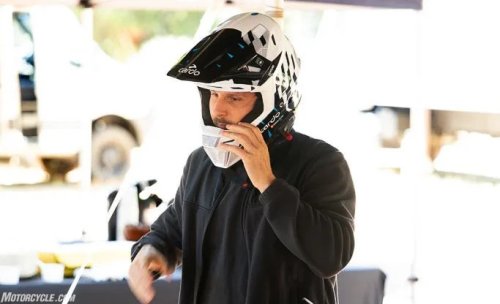
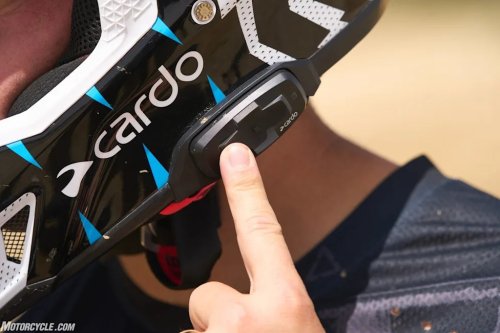
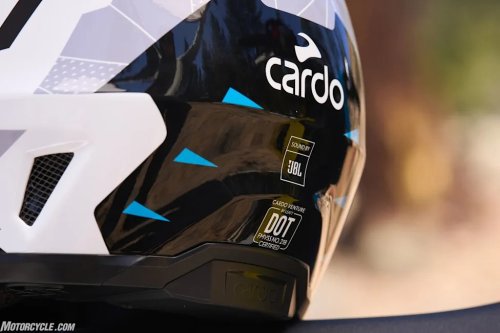
The off-road helmet I didn't think I neededcardo venture helmet reviewWhen Cardo announced the Venture off-road helmet, I had the same reaction I imagine a lot of motocross riders had: Why? Integrated communication systems make perfect sense on street bikes, but motocross? The last thing I want while charging into rough braking bumps or blind jumps is someone talking in my ear.That skepticism followed me all the way to my first ride. I wasn't worried about the electronics nearly as much as I was worried about the helmet itself. Would all of the added technology compromise comfort? Would it feel bulky? Would it simply be a gimmick or an answer searching for a problem?Those questions framed every hour I spent with the Cardo Venture. Interestingly, none of them ended up having the answers I expected.Video: Cardo Venture Off-Road Helmet ReviewCardo didn't attempt to reinvent helmet construction. Instead, they partnered with Leatt and built the Venture around the Moto 8.5 platform. That decision immediately gives the Venture credibility because the Moto 8.5 has already earned a reputation for comfort and protection.AdvertisementAdvertisementPositioned just below Leatt's flagship Moto 9.5, the Moto 8.5 shares many of the same design principles, with the primary difference being shell construction. While the 9.5 utilizes a carbon constructed shell, the 8.5 relies on a composite shell that strikes an excellent balance between performance, durability, and cost. Combined with 4-density impact foam and Leatt's 360 Turbine Technology, the Venture is designed to help manage both direct and rotational impacts while meeting both DOT and ECE 22.06 safety standards.Of course, all of that technology comes at a price. At $799 MSRP, the Venture sits comfortably within the premium helmet category, but it doesn't feel overpriced when you consider what's included. The standard Leatt Moto 8.5 retails for around $549, and adding a premium aftermarket communication system such as a Cardo Freecom 4X can easily push the total investment beyond $850.Viewed through that lens, the Venture starts to make a lot of sense. Not only are you getting a proven premium helmet and a fully integrated communication system, but you're also avoiding the hassle of mounting speakers, routing wires, and installing hardware yourself. Everything is already built in and ready to ride.cardo venture helmet reviewCardo really focused its engineering where it knows best: communication. The Venture integrates second-generation Dynamic Mesh Communication, 40mm JBL speakers, Bluetooth connectivity, natural voice control, and fully removable electronic components. Rather than creating another clip-on communicator, Cardo integrated the technology as part of the helmet, which keeps everything clean, balanced and cohesive.AdvertisementAdvertisementFor many motocross and off-road riders, the idea of an in-helmet communication system may feel completely foreign. But riders who spend time on the street or in the adventure riding world are likely already familiar with Cardo. The company has spent years developing rider-to-rider communication systems, offering a range of aftermarket devices that can be mounted to virtually any helmet.In fact, this isn't Cardo's first time developing a fully integrated helmet. The company previously introduced the Beyond, a street-focused helmet with communication technology built directly into it. The Venture follows a similar philosophy, but this time Cardo has shifted its attention entirely toward the off-road market. Cardo has integrated the entire system directly into the Leatt Moto 8.5 platform. Everything comes pre-installed from the factory, making it truly ready to use right out of the box.The integration is surprisingly clean. The battery is housed in a dedicated compartment at the rear of the helmet and can be recharged via USB-C without removing it. The speakers, microphone, wiring, and control panel are all neatly incorporated into the helmet itself, giving the Venture a much more refined appearance than a traditional bolt-on communication system.I also appreciated that every component can be removed if necessary. That's an important consideration for a helmet that will inevitably be exposed to dust, mud, and sweat. While rerouting the wiring during reinstallation would require some patience, the fact that the system is serviceable at all is a welcomed touch.AdvertisementAdvertisementMore importantly, it reinforces what makes the Venture unique. This isn't simply a motocross helmet with a communicator attached to it. It's a communication helmet purpose-built for off-road riding.cardo venture helmet reviewBefore getting into my riding impressions, it's worth taking a closer look at what makes the Cardo Venture different from virtually every other off-road helmet on the market. At its core, the Venture is built around communication. Utilizing Cardo's 2nd-generation Dynamic Mesh Communication (DMC) technology, riders can connect with up to 15 people in a group with a claimed range of up to 1.6 km (1 mile). For those of you familiar with Cardo Systems, some of these features may sound familiar as Cardo's other products like the PackTalk Edge and Freecom 4X utilize the same technology.What makes the DMC system particularly interesting is that it doesn't rely on cellular service or any outside infrastructure. You can be completely off the grid, miles from the nearest town, and still maintain communication with the rest of your group. The only real limitation is line of sight. If a mountain, canyon, or other major obstacle separates riders, the signal can be interrupted. Fortunately, the system automatically reconnects once riders are back within range and have a clear path between them, so there's no need to manually re-establish the connection every time someone disappears around a bend in the trail.Like most modern communication systems, the Venture also pairs with your smartphone via Bluetooth. That opens up a number of additional features beyond rider-to-rider communication. You can stream music from your favorite app, access downloaded playlists through the Cardo Connect app, and somewhat surprisingly to me, even listen to FM radio. It's a feature I didn't expect to use, but Cardo allows you to save preset stations and listen to local broadcasts while you ride. If you're connected to other riders, you can even share your music with the group.AdvertisementAdvertisementPhone functionality is equally straightforward. Once connected to your smartphone, the Venture allows you to place and receive calls without ever reaching for your phone. Through the Cardo Connect app, you can assign speed-dial contacts and initiate calls directly from the helmet. It's one of those features that sounds simple on paper but becomes incredibly convenient when you're geared up and miles from civilization.cardo venture helmet reviewThe Ventrue has natural voice commands. By simply saying, "Hey Cardo," the helmet can perform a variety of commands without requiring you to remove a hand from the handlebars. Whether it's adjusting the volume, checking battery status, placing a call, or playing music, the system responds quickly and keeps your focus on the trail rather than on a control panel.Cardo also recognizes that not everyone in your riding group will be using one of its products. For that reason, the Venture includes Live Bluetooth Intercom functionality, allowing riders to connect with communication systems from other major brands. That flexibility makes the system much easier to integrate into existing riding groups where everyone may be using something different.Of course, all of that communication technology would be meaningless without decent audio quality. The JBL speakers do a solid job, and overall I came away impressed. That said, my experience was somewhat unique because I spent most of my testing time in a motocross environment.cardo venture helmet reviewMotocross is about as demanding as it gets when it comes to riding style, performance and horsepower. Bikes spend much of their time at high rpm, riders are constantly accelerating, wind noise is significant, and you're often surrounded by several other motocross bikes doing exactly the same thing. During testing, I communicated with a colleague who was sitting trackside using a Cardo headset. In slower sections of the track or while braking into corners, I could hear him clearly. Under hard acceleration, however, understanding every word became much more difficult.AdvertisementAdvertisementAfter a few laps I pulled off and manually increased the volume to its maximum setting, which certainly helped, but there were still moments where aggressive acceleration and engine noise made communication challenging. To be fair, I don't view that as a criticism of the speaker quality. Rather, it felt like the reality of trying to have a conversation while riding a motocross bike at race pace. In fact, my colleague and I joked that motocross riders might need to develop their own set of shorthand code words rather than trying to communicate in full sentences while circulating the track.It's also important to remember that while the Venture is built on the Leatt Moto 8.5 motocross helmet platform, motocross is only one piece of the off-road world. Once you move into trail riding, dual-sport adventures, or ADV riding, the environment changes dramatically. Speeds are often more consistent, throttle inputs are smoother, and engine noise is generally lower. In those situations, I don't see riders having any issues with volume or sound quality. In fact, that's where I believe the communication system will be most effective and most appreciated.cardo venture helmet reviewAs impressive as the technology is, the Venture still has to succeed as a helmet first. Communication features don't matter much if the helmet is uncomfortable or distracting to wear. Before I ever paired the Venture to another rider, I paid attention to something far more important: fit and comfort.The interior liner immediately stood out. It has an exceptionally soft feel, almost like microfiber, that wraps naturally around the head without feeling overly thick or stiff. The fit in my medium test helmet seemed to work perfectly with my head, with no noticeable pressure points around my cheeks or forehead. The eye port is also generously sized, providing excellent peripheral vision and plenty of room for different goggle brands. I cycled through three different sets of goggles during testing and never encountered any fitment issues, something experienced off-road riders know can't always be taken for granted.AdvertisementAdvertisementBy the end of the day I had largely stopped thinking about the fit altogether, and that's one of the best compliments you can give any helmet.cardo venture helmet reviewThere's no avoiding physics. Batteries, speakers and microphones add weight. On paper my medium test helmet weighs about 2 pounds 14 ounces without the electronics and roughly 3 pounds 2 ounces with the complete communication system installed.You can notice the difference if you're coming directly from an ultralight race helmet, but it never crossed the line into feeling cumbersome. During an extended day of riding I could see where riders logging multiple motos might prefer every ounce saved. Trail riders, however, are making a different compromise. They're trading a few ounces for communication, navigation and safety. That's a much easier trade to justify.cardo venture helmet reviewThe biggest surprise wasn't the fit or the sound quality. It was realizing I had been evaluating the Venture through the wrong lens.AdvertisementAdvertisementInitially I viewed everything through the lens of motocross. Would I want my mechanic talking to me during a race? Honestly, no. Racing demands total concentration. Every lap brings changing ruts, evolving lines and riders attacking from every direction. Personally, I don't think I would benefit from constant conversation in that environment.That realization raised another interesting thought. If communication systems become common in professional motocross, where does coaching end and competitive advantage begin? Formula 1 has long embraced radio communication, but two-wheeled racing has always rewarded independent decision making. If mechanics could relay line choices or competitor information in real time, sanctioning bodies like the AMA may eventually need to establish boundaries. It's an interesting discussion, even if we're still a long way from that becoming commonplace, if the conversation happens at all.cardo venture helmet reviewEverything changed once I stopped thinking exclusively about motocross.On an off-road trail ride the Venture makes more sense. Riding with friends often means stopping to regroup, shouting over running engines or wondering if the rider behind you made the last turn. With integrated mesh communication, those interruptions disappear. Riders can warn each other about obstacles, call out route changes, confirm everyone is still together and even communicate after a crash without removing a helmet.AdvertisementAdvertisementI also came away appreciating the coaching potential. When my colleague joined me at the track to test this helmet there was a situation where a rider went down and he notified me ahead of time. That gave me time to react and avoid a potentially dangerous situation. While I was not in any kind of real danger in that particular situation, it at least gave me a real world peek into the safety benefits of in-helmet communications.One-on-one instruction during practice could become significantly more productive because corrections happen immediately rather than several laps later. That's a much stronger use case than race-day communication. It was a lot of fun, to my surprise, to have the real time communication on board my motorcycle at the track. We were able to crack some jokes but also work together in a way that a coach and rider would. In that case, this could be a very effective tool for coaching.cardo venture helmet reviewOff-road helmets live hard lives. They get dusty, muddy and soaked with sweat. Fortunately, the Venture retains one of the Leatt platform's best traits: simplicity. The cheek pads and liner remove easily for cleaning, hold their shape well and reinstall without frustration. Cardo also made all of the electronic components removable and serviceable. That's a thoughtful design choice because it allows owners to clean the helmet thoroughly or remove components if they're unnecessary for a particular ride.Final ThoughtsThe Cardo Venture didn't convince me by proving communication belongs in motocross racing. It convinced me by showing that off-road riding has evolved beyond motocross alone.AdvertisementAdvertisementTrail riders, dual-sport enthusiasts, adventure riders and riding coaches all have different priorities than someone lining up behind a Supercross gate. For those riders, communication isn't a distraction, it's another tool that improves safety, convenience and the overall experience.I began this review wondering whether the Venture solved a problem that didn't exist. I finished it realizing Cardo had identified a different problem entirely. Rather than trying to reinvent the motocross helmet, it has reimagined what an off-road helmet can be when communication is treated as an integrated feature instead of an aftermarket accessory.That's an important distinction, and it's ultimately why the Cardo Venture feels less like a novelty and more like the beginning of a new category.Cardo Venture Off-road HelmetLeatt Moto 8.5 platform with composite shellDOT and ECE 22.06 certified360° Turbine Technology and four-density impact foam40 mm JBL speakersSecond-generation Dynamic Mesh CommunicationUp to 15 riders / approximately one-mile rangeRemovable electronicsMedium weight: ~2 lb 14 oz (helmet only), ~3 lb 2 oz (with communication system)MSRP: $799 (Available late Summer 2026)Become a Motorcycle.com insider. Get the latest motorcycle news first by subscribing to our newsletter here.
























 +70 others