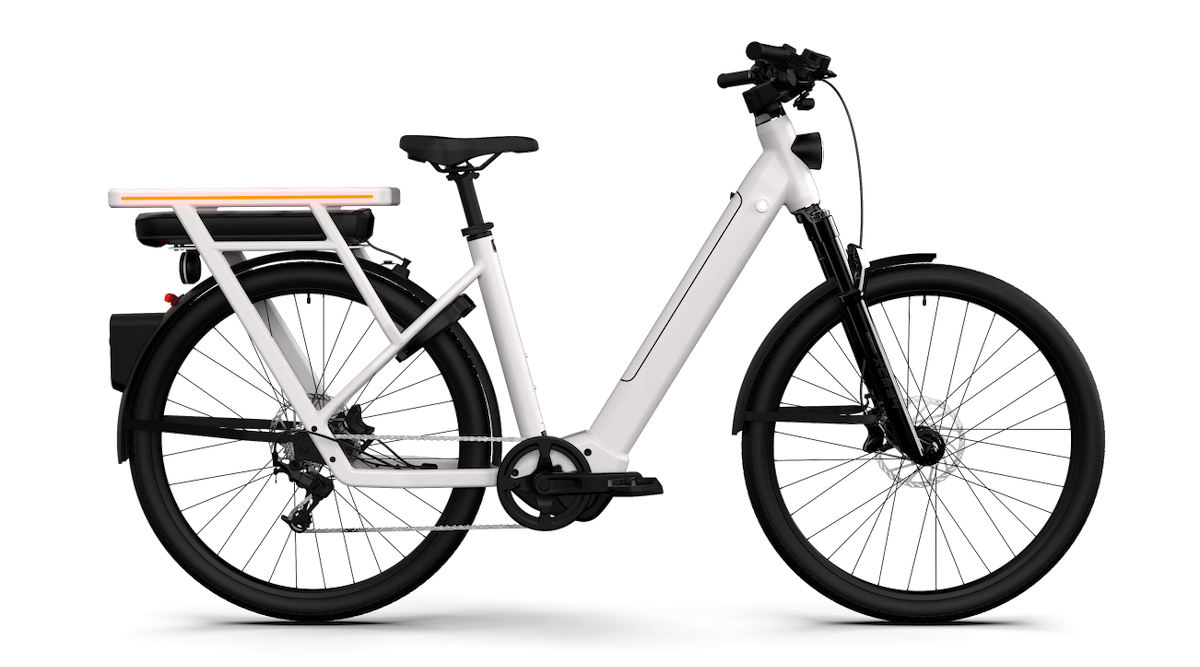
The Intertubes have been buzzing with news that Volkswagen Group is in chaos, slashing its model lineup, closing factories, and pulling the employment rug out from under 100,000 workers. On the other hand, the company is making progress on its driverless vehicle plans, which could explain part of the motivation behind the pare-down. Meanwhile, Volkswagen is also determined to keep up with the e-bike industry, and it has enlisted the top notch bike-maker n+Bikes in the effort. E-Bikes And The Safety Factor In the midst of a bad news cycle, word of a new Volkswagen-branded e-bike slipped out earlier this morning. It’s not much, but it could help the company refresh its image as it navigates the mobility world of today. The news service EIN Presswire has the rundown, posted by the elite automotive PR agency Influence Associates. “Introducing the world’s most intelligent eBikes, engineered with automotive safety technology to deliver safer roads for everyone, developed by n+ under licence from Volkswagen,” reads the pitch. There’s a lot to unpack in that sentence, particularly in the area of automotive safety. Think of it in terms of weight. Here in the US, the average adult weighs between 170 (female) and 199 (male) pounds. That sounds like a lot, but put them in a car and they are completely surrounded by protective, and heavy, hunks of metal. According to Consumer Affairs, the average small car weighs about 2,600 pounds, moving up to 4,400 pounds in the large car bracket. The situation is reversed for bike riders. The average e-bike weighs far less than the average person, and it provides no protection whatsoever. The Smartest E-Bikes In The World Protecting cyclists from cars is primarily a matter of infrastructure choices, which will continue bending mightily towards cars unless the political landscape changes drastically. Improving the safety features on bicycles and e-bikes is a second-best approach, but realistically it’s the only near-term solution at hand, and Volkswagen aims to stake its claim in that space with the n+ hookup. “As the number of eBikes on city streets increases, so does the number of accidents. The answer is simple, eBikes should have the same preventative safety technology as passenger vehicles so that bikes can anticipate vehicles and vehicles can anticipate cyclist’s road movements,” the pitch explains. The most significant contribution is in the area of rear view. Up until now, only two solutions have been available to cyclists: swivel your head around to watch for approaching traffic, or attach a small rear-view mirror to the bike or helmet. Volkswagen levels up the technology with a car-style cockpit display on the handlebars, where a high-def, rear facing camera provides a real-time view of the action behind. “Working in tandem with the rear-view camera technology, Smart View also features radar-activated blind sport alerts, signalling to riders’ vehicles approaching, significantly enhancing situational awareness on busy city streets,” the branding partners add. Bikes That Talk Like Cars A “Door Alert” feature would complete the picture, but such a thing probably has not been invented yet. A signal that warns of cyclists who wantonly disregard the bike lane rules could help save some pain as well. Similarly, there should be something that enables cyclists to avoid collisions with pedestrians who cross traffic willy-nilly with a smart phone planted in front of their face. Perhaps a bike-to-phone connection would do the trick. In the meantime, Smart View does represent a safety improvement over neck-swiveling, and n+ also anticipates that equipping e-bikes with brake lights and left-right signals will result in some improvement over the old-fashioned method of signaling with the left hand down, out straight, or up depending upon what the cyclist intends to do next. The new e-bike addresses that issue with a strip light that turns red for braking and amber for turning, though apparently signaling the direction of the turn is still the cyclist’s responsibility. “One of the most distinctive design elements of the new Volkswagen eBike is the full-length illuminated LED strip integrated directly into the top tube,” n+ explains. “Inspired directly from Volkswagen’s signature automotive lighting design language, the integrated strip lamp functions as a high-visibility daytime running light, dramatically increasing the bicycle’s visibility from multiple angles throughout the day.” The Helmet Factor A good helmet being the key to cyclist self-preservation, n+ is also offering the new Smart Helmet under the Volkswagen brand. “Bluetooth sync’ed seamlessly with the eBike, the helmet incorporates high-visibility LED lighting and works in unison with the Smart Lights, rearward signalling braking and turn indication to other motorists,” is the pitch. To complement the Smart Helmet, cyclists can also invest in a pair of Volkswagen-branded Smart Glasses. But, not just any old smart glasses. As described by n+, the technology was developed by the the same engineers who invented HUDs (Heads Up Displays) for fighter pilots. “Inspired by a modern motor vehicle heads-up display (HUD) navigation prompts, rear-view blind spot alerts and intelligent ride information are presented within the rider’s natural field of vision,” n+ explains. “Intentional eye movement top-right activates and deactivates the Head Up Display seamlessly,” they add. Though synced with Smart View, n+ notes that the glasses can be used across various bikes and sports. For all the specs on the Volkswagen-branded e-bike, the helmet, or the glasses, or all three, go to smart-bike.net. What’s Going On With N+ N+ previously appeared on the CleanTechnica radar back in 2024, when it hooked up with Ford Motor Company to produce Bronco- and Mustang-branded electric bikes. The company also lists the Mercedes-AMG and McLaren F1 in its stable. So, what’s the appeal of an e-bike that evoke a carmaker? Workaday e-bikes are more affordable than their branded cousins, but that still leaves plenty of marketing to go around in the space where deep-pocketed cyclists reside, particularly in regards to those attracted by advanced technology. Volkswagen is not alone. The market research firm CSM International took stock of the state of affairs earlier this year, noting that “the integration of smart technologies has significantly transformed the design, functionality, and appeal of e-bikes, reshaping consumer expectations and driving innovation among manufacturers.” CSM writer Francis Rozange cites AI-tuned pedal assistance, route optimization, and machine learning among the areas of focus. He also takes particular note of the ability to sync e-bike technology with other mobile devices, providing the same convenience and personalization drivers expect from their four-wheeled EVs. “Riders can now access navigation systems, track their fitness goals, and receive maintenance alerts through dedicated mobile applications,” Rozange notes. “Such advancements make e-bikes more than just a mode of transportation; they become an extension of a connected lifestyle,” he adds. Having test-driven e-bikes over the years (including a Harley!), I’m all in favor of a flashy, attention-getting ride that — hopefully — catches the eye of motorists, pedestrians, and other cyclists before they ram into me. I could take or leave the connectivity, but that’s just me. E-bikers, what do you think? Flashy or lowkey? Connected or disconnected? Drop a note in the discussion thread and share your experiences. Photo: Volkswagen has hooked up with the premium e-bike maker n+ to launch a new two-wheeler billed as the “world’s smarted Ebike (courtesy of Volkswagen/n+ via smart-bike.net).



















![Volkswagen, Volkswagen ID.4, Volkswagen ID.5, Volkswagen's best-seller is going electric in 2027 to replace the ID.4 and ID.5 [Images]](https://cdn.topcarnews.net/thumb/id/aHR0cHM6Ly9pMC53cC5jb20vZWxlY3Ry-ZWsuY28vd3AtY29udGVudC91cGxvYWRz-L3NpdGVzLzMvMjAyNi8wOS9Wb2xrc3dh-Z2VuLUlELVRpZ3Vhbi1JRC00LmpwZWc_-dz0xNTAwJmFtcDtxdWFsaXR5PTgyJmFt-cDtzdHJpcD1hbGwmYW1wO3NzbD0x/aed2aa2870791850c8e69c5fc3a0ed85.jpeg?t=20261004&post_id=66267)
![Volkswagen, Volkswagen ID.4, Volkswagen ID.5, Volkswagen's best-seller is going electric in 2027 to replace the ID.4 and ID.5 [Images]](https://cdn.topcarnews.net/thumb/id/aHR0cHM6Ly9lbGVjdHJlay5jby93cC1j-b250ZW50L3VwbG9hZHMvc2l0ZXMvMy8y-MDI2LzA5L1ZvbGtzd2FnZW4tSUQtVGln-dWFuLUlELTQtZnJvbnQtcXVhcnRlci5q-cGc_c3RyaXA9aW5mbyZhbXA7dz0xMDI0/97fb00cd3919b8d0dc36440715039e6e.jpg?t=20261004&post_id=66267)
![Volkswagen, Volkswagen ID.4, Volkswagen ID.5, Volkswagen's best-seller is going electric in 2027 to replace the ID.4 and ID.5 [Images]](https://cdn.topcarnews.net/thumb/id/aHR0cHM6Ly9lbGVjdHJlay5jby93cC1j-b250ZW50L3VwbG9hZHMvc2l0ZXMvMy8y-MDI2LzA5L1ZvbGtzd2FnZW4tSUQtVGln-dWFuLUlELTQtc2lkZS5qcGc_c3RyaXA9-aW5mbyZhbXA7dz0xMDI0/ed240b20e8275f3af4b904f46ebb5fb3.jpg?t=20261004&post_id=66267)
![Volkswagen, Volkswagen ID.4, Volkswagen ID.5, Volkswagen's best-seller is going electric in 2027 to replace the ID.4 and ID.5 [Images]](https://cdn.topcarnews.net/thumb/id/aHR0cHM6Ly9lbGVjdHJlay5jby93cC1j-b250ZW50L3VwbG9hZHMvc2l0ZXMvMy8y-MDI2LzA5L1ZvbGtzd2FnZW4tSUQtVGln-dWFuLUlELTQtcmVhci1xdWFydGVyLmpw-Zz9zdHJpcD1pbmZvJmFtcDt3PTEwMjQ/436c7979cf5b947053f7f0bf39ff94bc.jpg?t=20261004&post_id=66267)
![Volkswagen, Volkswagen ID.4, Volkswagen ID.5, Volkswagen's best-seller is going electric in 2027 to replace the ID.4 and ID.5 [Images]](https://cdn.topcarnews.net/thumb/id/aHR0cHM6Ly9lbGVjdHJlay5jby93cC1j-b250ZW50L3VwbG9hZHMvc2l0ZXMvMy8y-MDI2LzA5L1ZvbGtzd2FnZW4tSUQtVGln-dWFuLUlELTQtZnJvbnQuanBnP3N0cmlw-PWluZm8mYW1wO3c9MTAyNA/ec2e4ca027ccbfb42942abe523f3acf7.jpg?t=20261004&post_id=66267)
![Volkswagen, Volkswagen ID.4, Volkswagen ID.5, Volkswagen's best-seller is going electric in 2027 to replace the ID.4 and ID.5 [Images]](https://cdn.topcarnews.net/thumb/id/aHR0cHM6Ly9lbGVjdHJlay5jby93cC1j-b250ZW50L3VwbG9hZHMvc2l0ZXMvMy8y-MDI2LzA5L1ZvbGtzd2FnZW4tSUQtVGln-dWFuLUlELTQtcmVhci5qcGc_c3RyaXA9-aW5mbyZhbXA7dz0xMDI0/668525889dc433b0fd0e166fd5bd8366.jpg?t=20261004&post_id=66267)