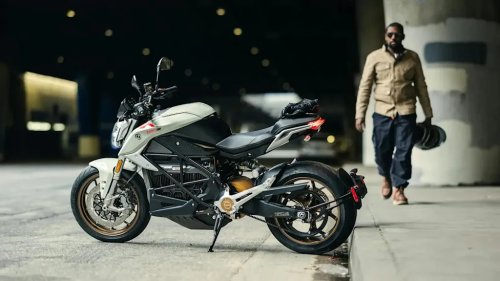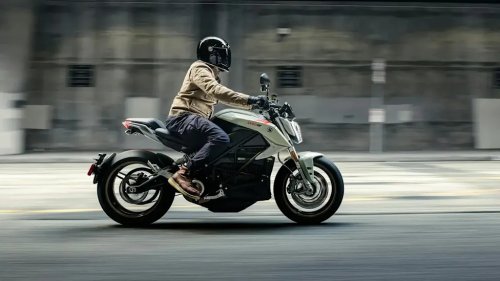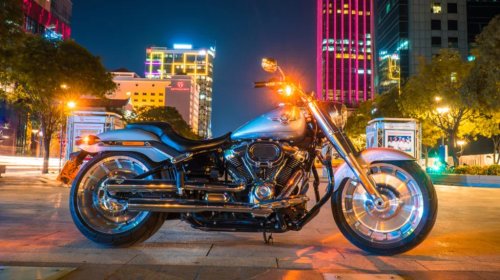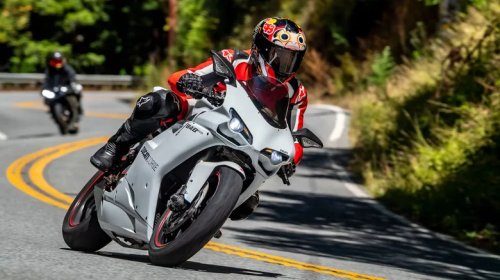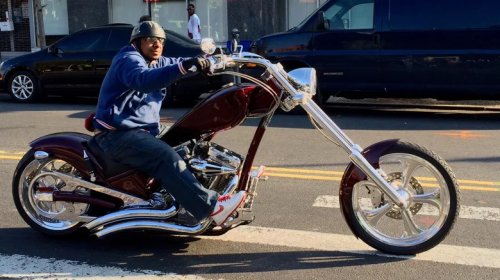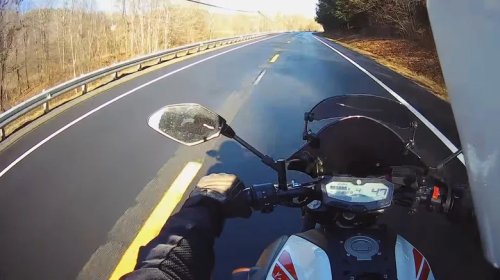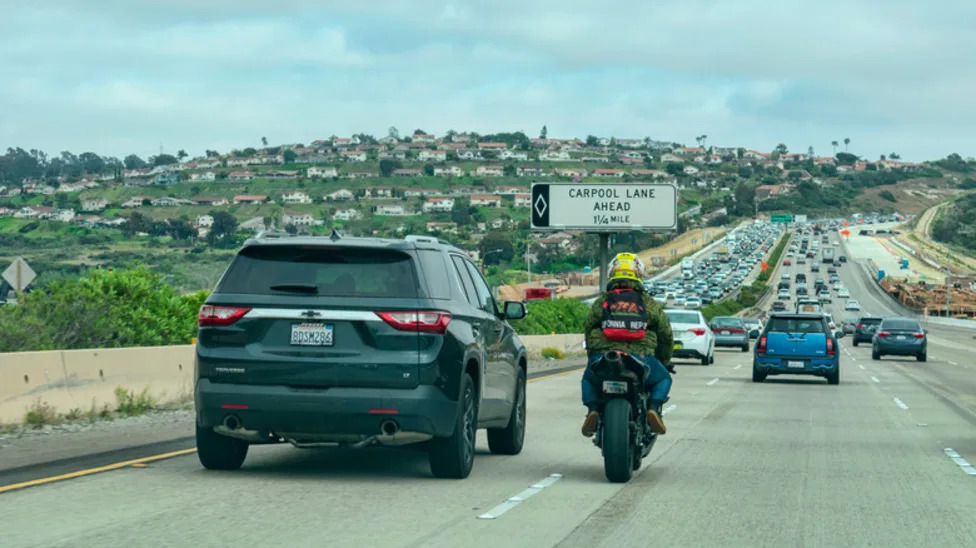
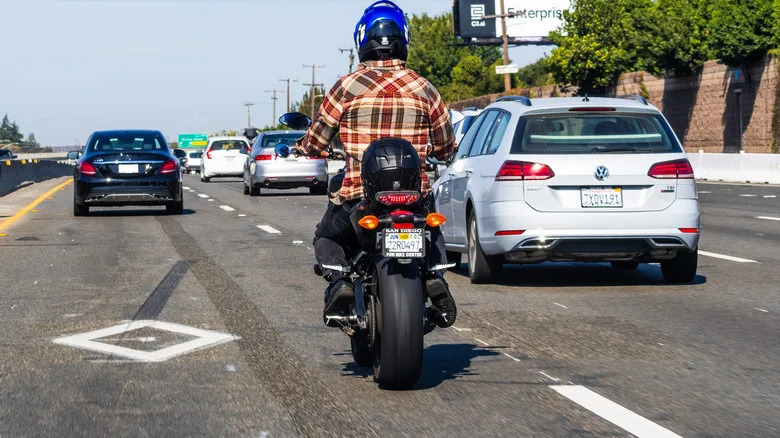
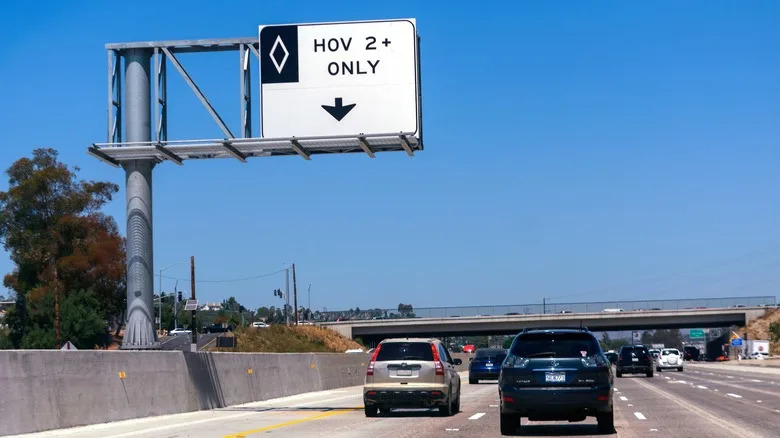



















A motorcycle rider preparing to merge onto the HOV lane next to a gray Chevrolet Traverse - Michael Vi/ShutterstockMost highways today have at least one lane set aside with a diamond painted on it. That's the HOV lane — short for high-occupancy vehicle. These lanes are meant to ease traffic by giving people who carpool a faster way through the messy highway. These lanes have confusing traffic signs, usually saying 2+ only, a diamond-type sign, or showing certain hours. But the big question here is — what happens if you're on a motorcycle, riding alone? Can you still use an HOV lane?Turns out, in most places, motorcycles can legally use HOV lanes even with just one rider. It's actually one of the lesser known perks of riding a bike. You don't need a passenger, a special sticker, or any extra gear in many states to use it. This rule helps keep traffic flowing and even supports environmental goals, with California being a great example. There, the bikes can use HOV lanes without needing anything extra, unlike hybrid cars that need a yellow decal. Before merging onto one of these lanes, though, there are a few rules that riders should know.AdvertisementAdvertisementRead more: The Best And Worst Motorcycles Made By Major BrandsKnowing the rules could save you a ticketA motorcycle rider riding on the HOV lane behind a black Mercedes-Benz - Sundry Photography/ShutterstockWhile motorcycles are widely accepted in HOV lanes, there are still rules that vary from state to state. One of the most common mistakes, along with lane splitting in a lot of states, is crossing solid double lines to enter or exit an HOV lane. That's clearly a big no. You can only merge in or out where you see dashed lines. While most toll roads don't require motorcycles to carry a transponder like FasTrak, riders with personalized plates may still need one, depending on the system.Some states go a step further with special decals or license plates for exempt vehicles like hybrids or EVs. That said, motorcycles usually don't need any of that. Colorado, for instance, allows motorcycles in HOV lanes without an ExpressToll pass, except on toll roads like E-470. On the other hand, in Washington, bikes can also use HOT, or high-occupancy toll lanes, but you still need to follow speed limits and posted signs. Basically, it's legal — just follow the rules and regulations.Why It's worth using the HOV lane on a bikeHOV sign board saying 2+ only, a gold Honda CR-V driving on it - Michael Vi/ShutterstockFirst things first, riding in the HOV lane will more than likely get you to your destination faster. On top of that, it also makes the ride smoother and safer. As there are fewer stop-and-go situations, there is less risk for the driver to get distracted, and often fewer traffic jams. For motorcyclists, who are already exposed to more danger than car drivers, that's a huge plus. You can also avoid wasting fuel since you're not idling in bumper-to-bumper traffic.AdvertisementAdvertisementFrom an environmental standpoint, motorcycles generally produce fewer emissions than most cars. This gives them access to these lanes, which aligns with larger state goals, like cutting pollution and lowering fuel use. Plus, there is reduced wear and tear on your bike, thanks to steadier speeds, which means fewer repairs for your motorcycle in the long run. Just remember to stay alert, keep a safe following distance, and wear high-visibility gear while you're out there.Want the latest in tech and auto trends? Subscribe to our free newsletter for the latest headlines, expert guides, and how-to tips, one email at a time. You can also add us as a preferred search source on Google.Read the original article on SlashGear.