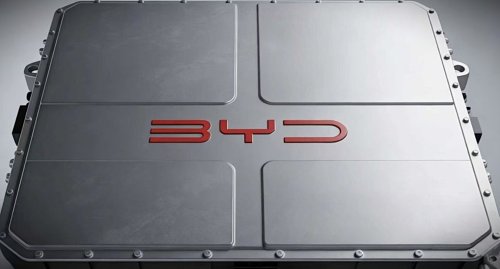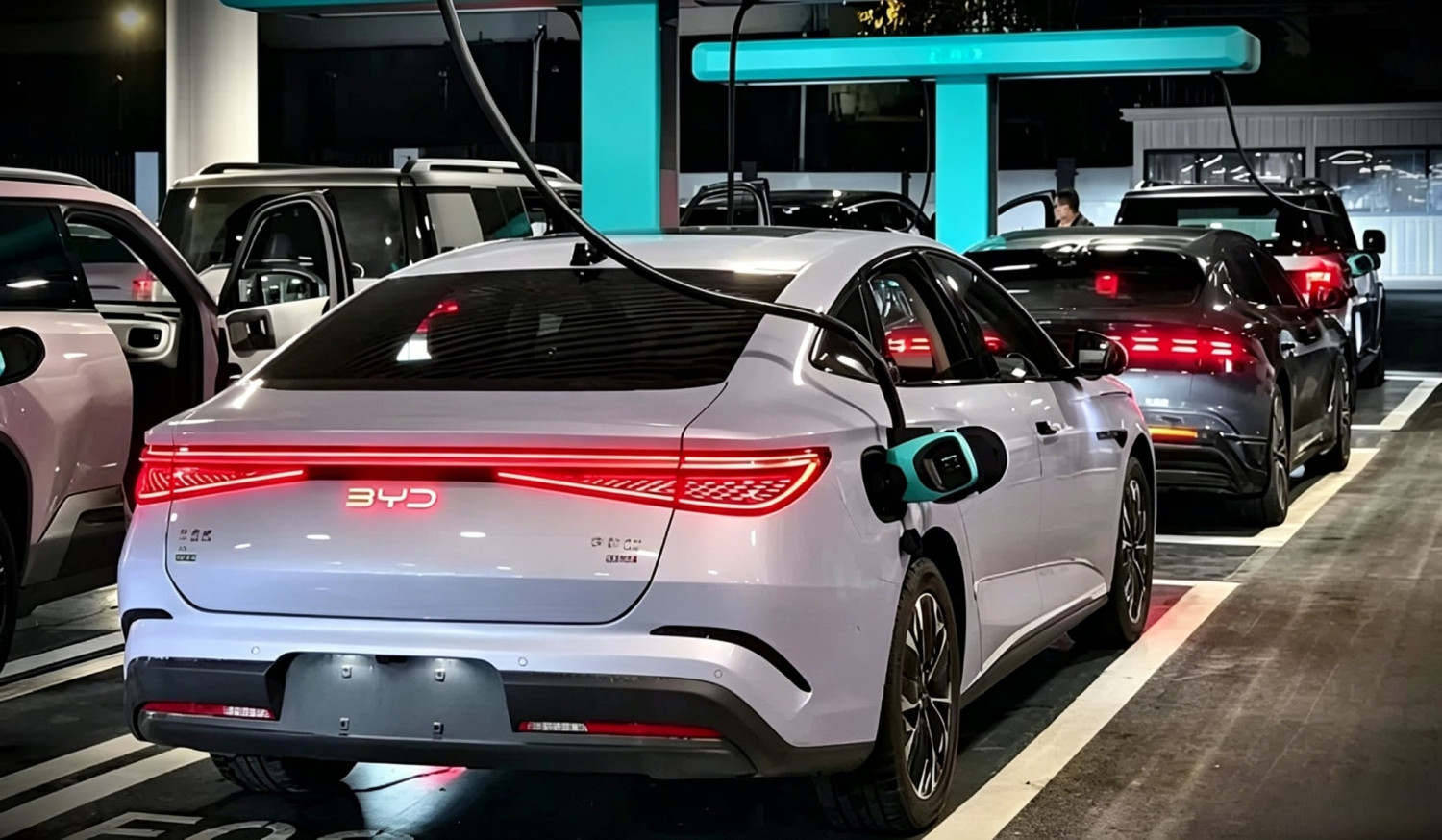



















The predictive routing system coordinates battery temperature curves using live navigation data vectors from vehicles. Credit: BYD fans Understand China EV’s Market Real-time notifications when critical EV data is released All important data in one place 2,000,000+ data points Become a member BYD has filed a patent for a predictive battery thermal management system. This system uses real-time navigation information to optimise temperature curves. Operating in a dedicated eco-mode, it dynamically adjusts temperature targets. It aims to enhance overall vehicle efficiency in intelligent driving scenarios, according to Sina. This technical advancement occurred as BYD scaled its lithium-iron-phosphate EV battery installations in China to 11.87 GWh in May 2026. This marked a 13.2 percent month-on-month increase, according to China EV DataTracker. The manufacturer secured a 20.4 percent market share in the domestic battery market during this period. This was despite a 7.6 percent year-on-year contraction. Predictive temperature control The engineering architecture requires the vehicle control unit to fetch destination routing parameters and live battery cell characteristics. It processes these data vectors to project independent temperature curves and ideal benchmark target curves. This dual-curve alignment prevents excessive power spikes or severe thermal drops. Such issues typically trigger operational limitations on vehicles. The mechanism regulates thermal states before high-load driving demands arise. This reduces cell energy waste from unnecessary cooling or heating cycles. The patent targets intelligent driving platforms where route geometry can be predicted. This allows proactive automated adjustments, not just reactive thermal management. The application lists Zhang Zheyuan and Wang Xinyue as primary development engineers. Strategic chemistry integration This software-driven thermal adjustment links directly to advanced chemistry development across vehicle platforms. The architecture is designed to optimise new powertrains. These include a specialised sulfide solid-state battery and a high-durability 10000-cycle sodium cell. These chemistry variants are at the core of the manufacturer’s new low-cost battery strategies. They are designed to challenge market rivals. Integrating predictive thermal controls directly supports new cells that require tight temperature windows. This helps maintain structural stability. These initiatives support a manufacturing framework aimed at segments where hardware differentiation is vital. The optimisation framework helps diverse battery lines achieve maximum volume efficiency. This is done without increasing the cost of premium materials. Corporate financial capacity Financial allocations for these R&D projects are drawn from a corporate ecosystem that recorded total revenue of 803.965 billion yuan (118.97 billion USD) in 2025. The automotive division generated 648.646 billion yuan (95.99 billion USD), or 80.68 percent of total operations. Net profit for the same annual period, consolidated, was 33.761 billion yuan (5.00 billion USD). Other business segments generated stable, complementary cash flows to buffer heavy engineering investments. Mobile component manufacturing and assembly operations contributed 155.237 billion yuan (22.97 billion USD). This accounted for 19.31 percent of total revenue. These secondary revenue streams ensure funding for long-term cell validation trials and intellectual property acquisition. This financial foundation enables the brand to sustain lithium iron phosphate production, even as consumer demand fluctuates. Total installations reached 10.49 GWh in April 2026 and rose to the current May metrics. This baseline data confirms steady manufacturing operations across core brand assemblies and commercial vehicle supply channels.