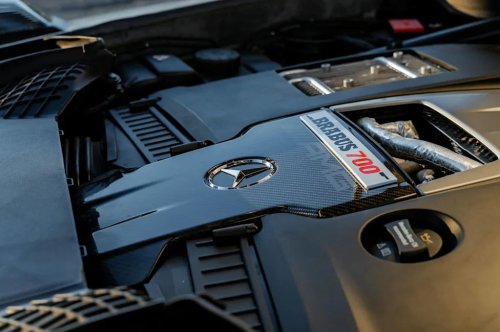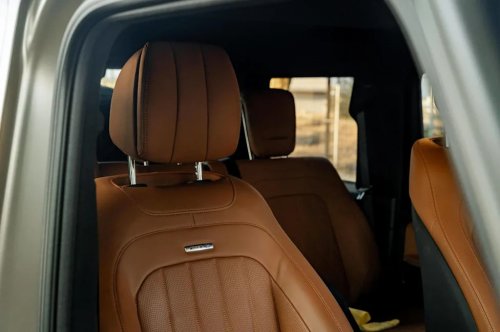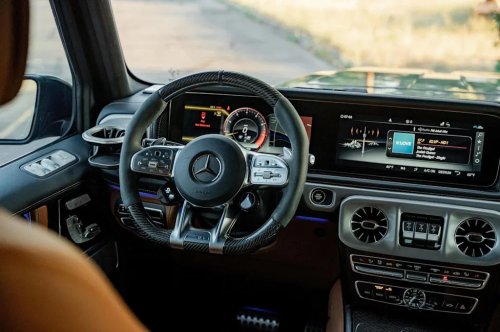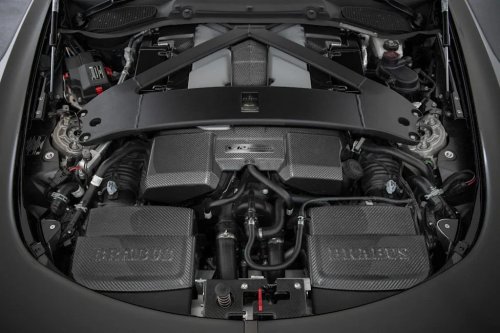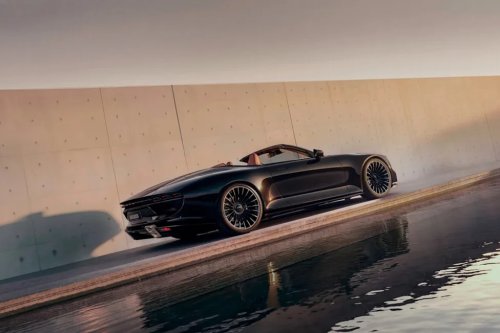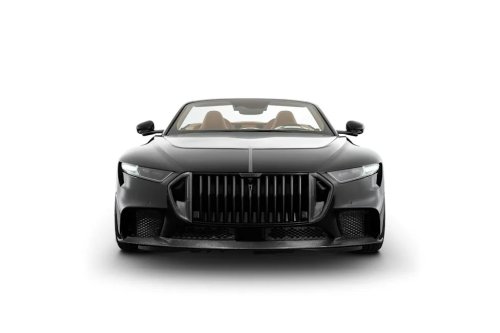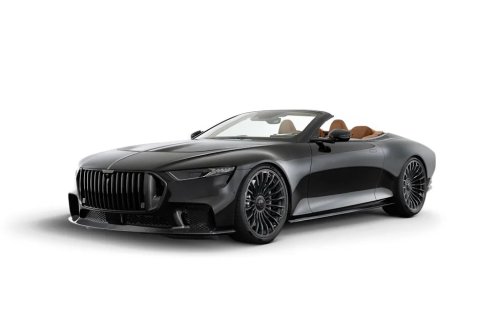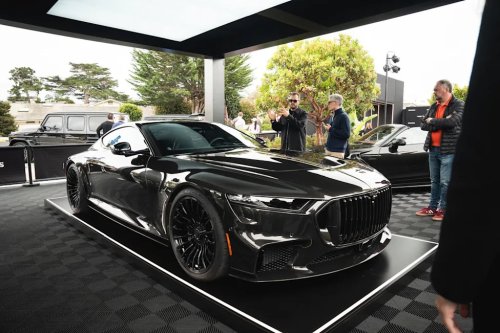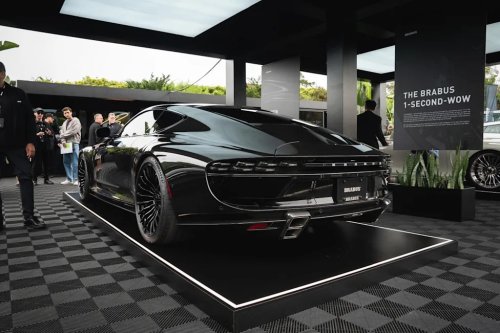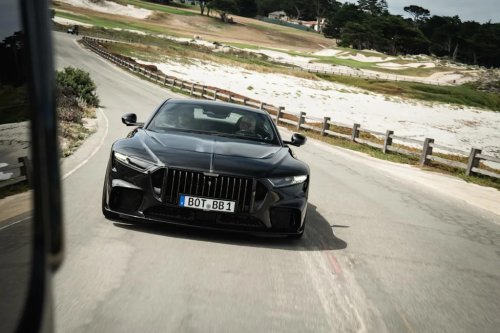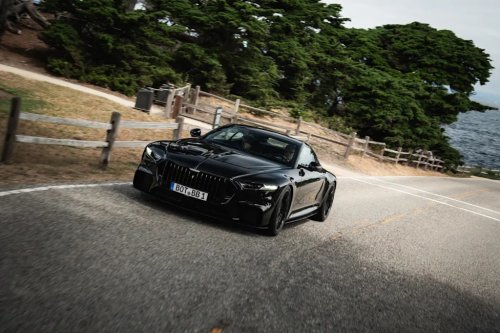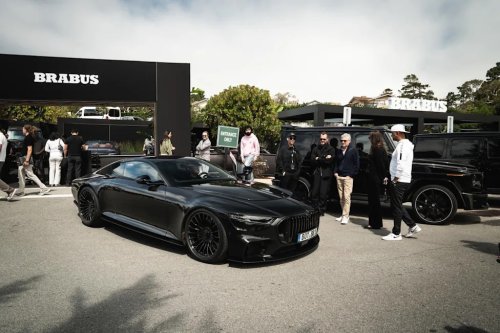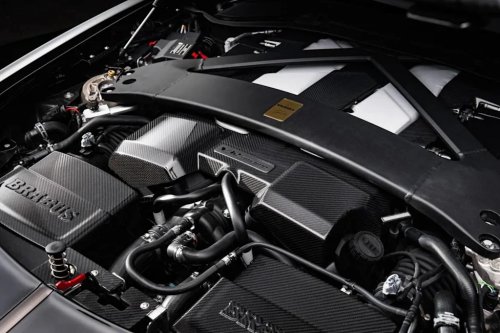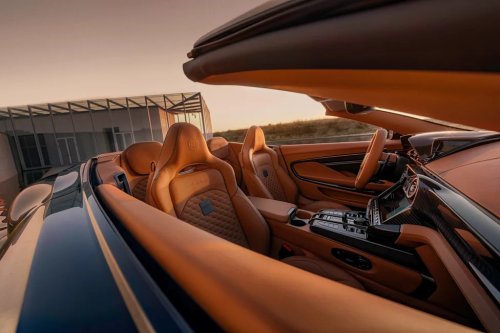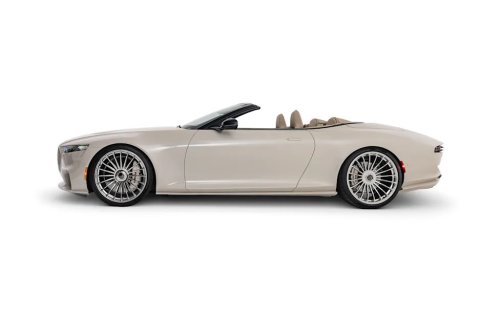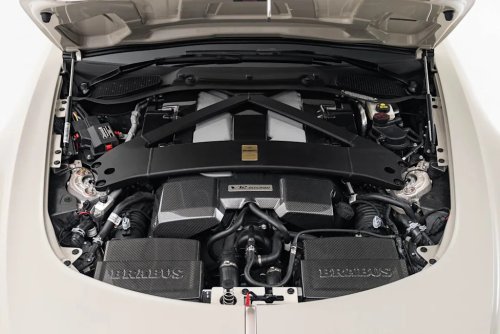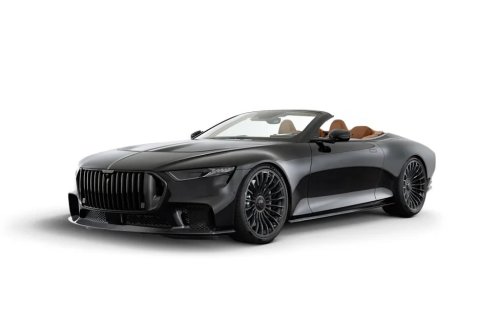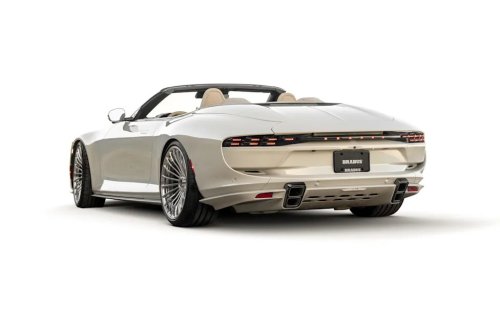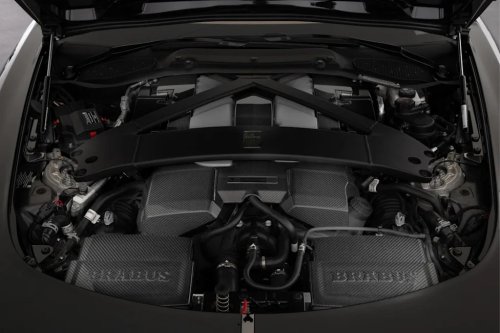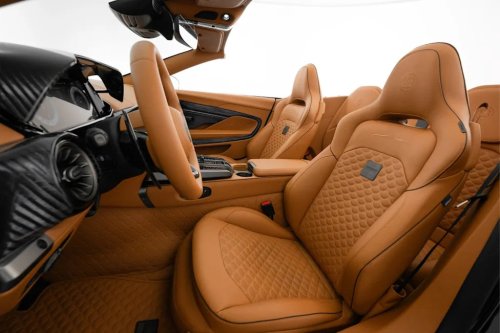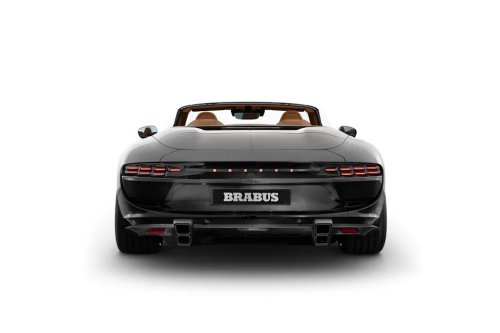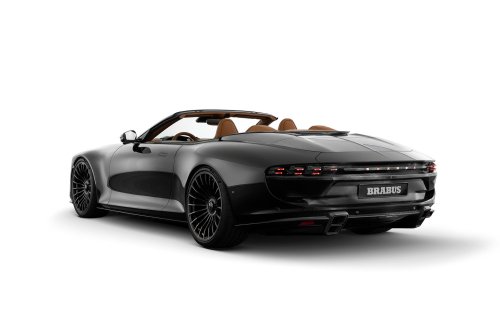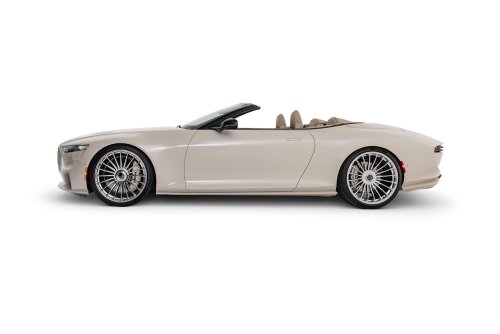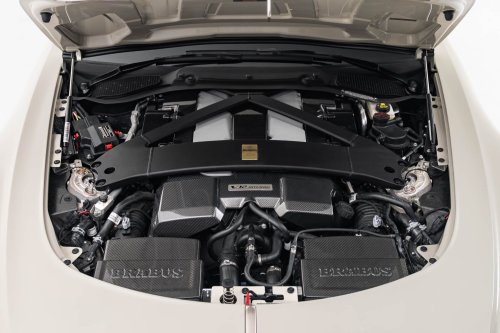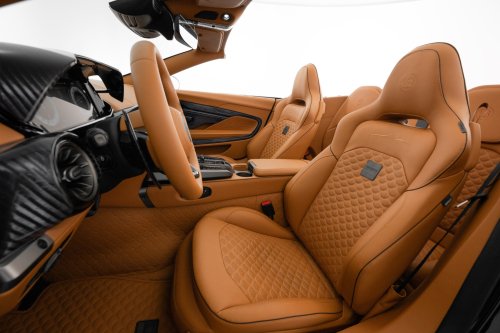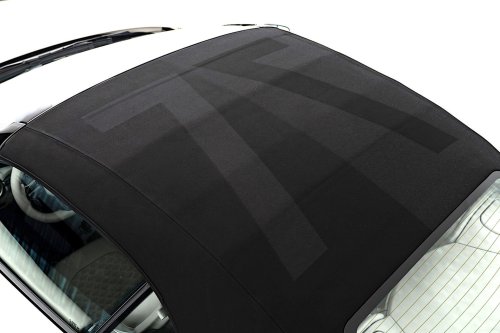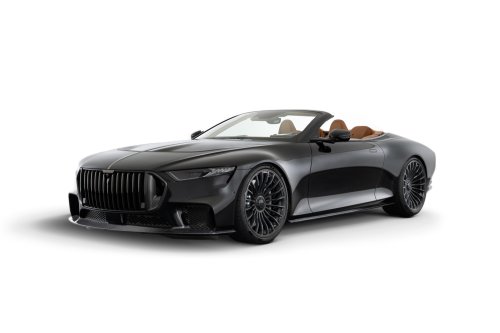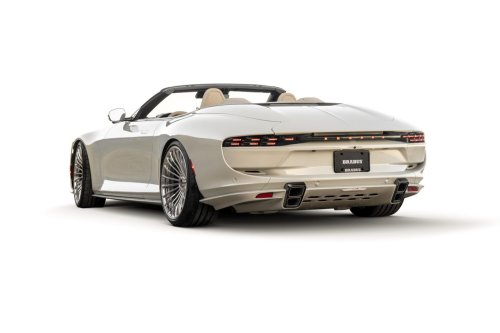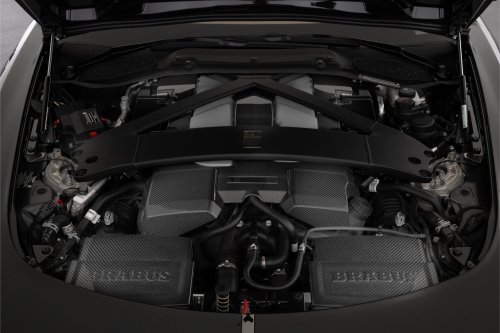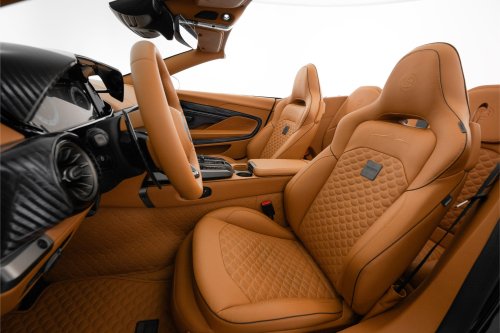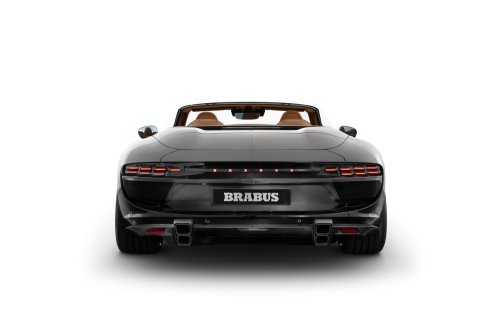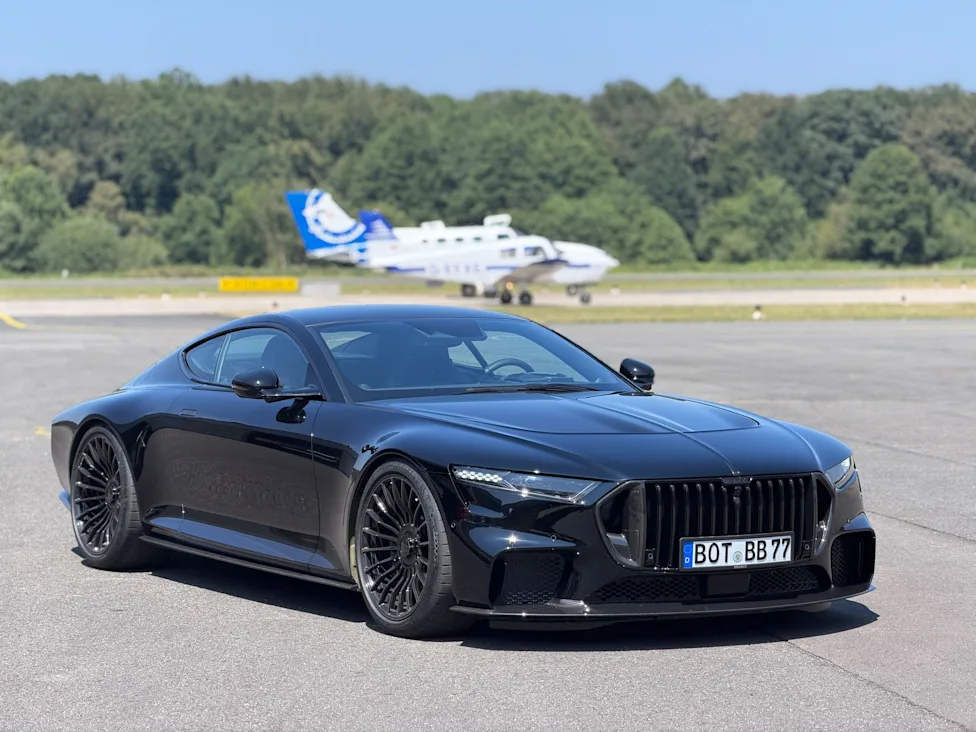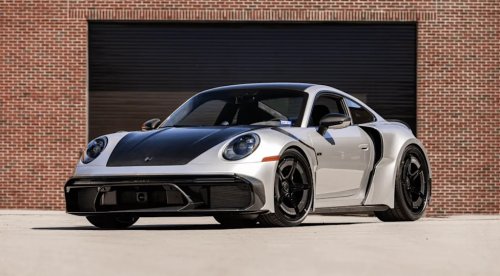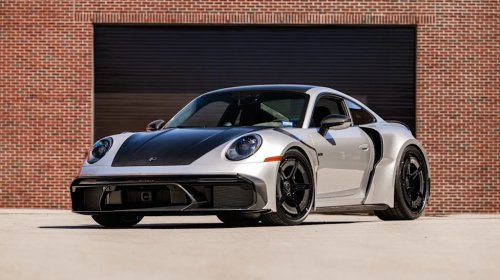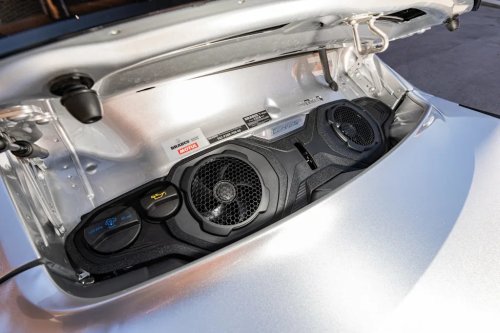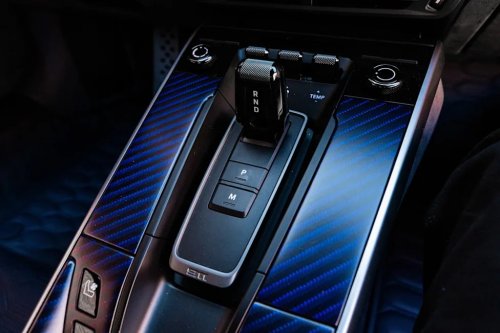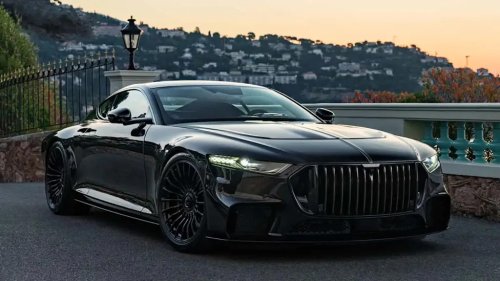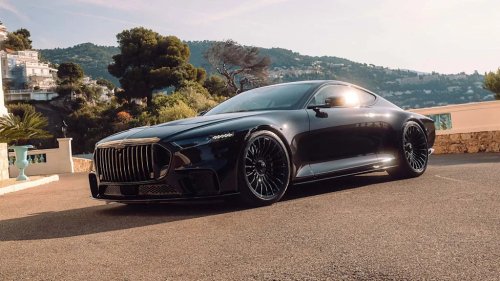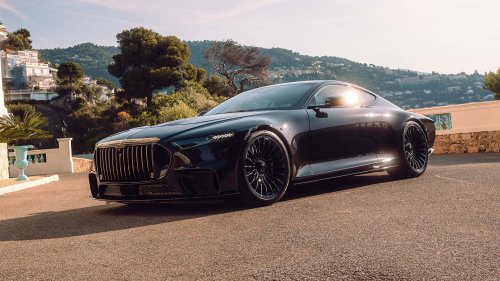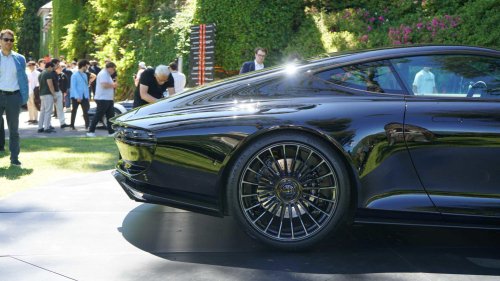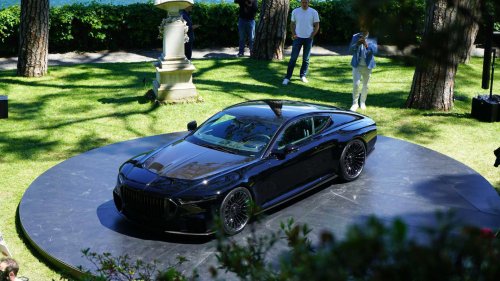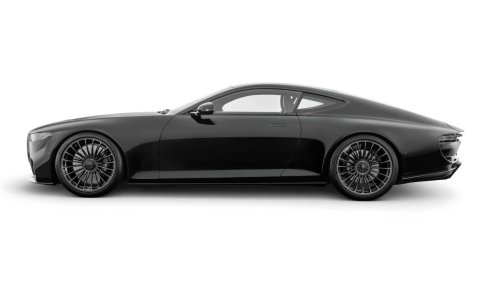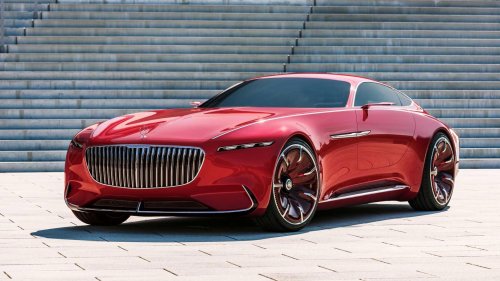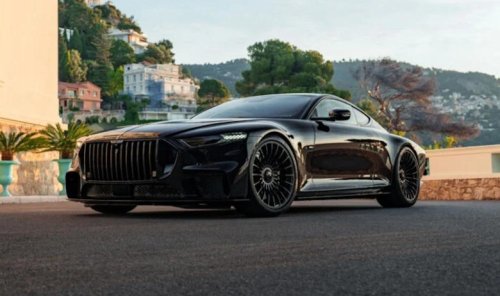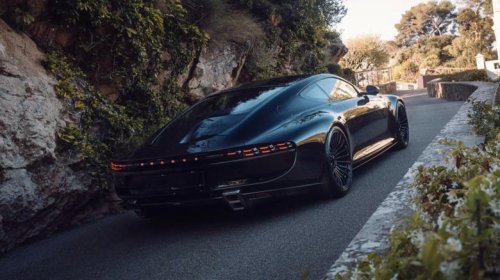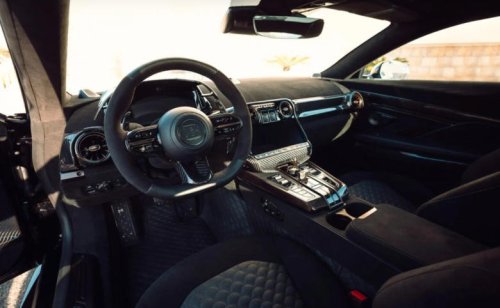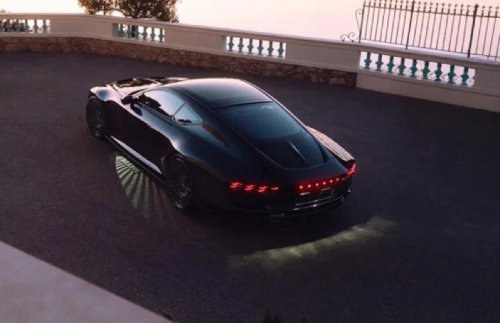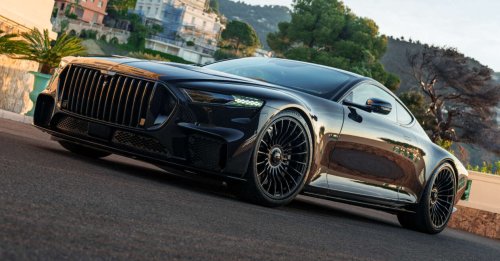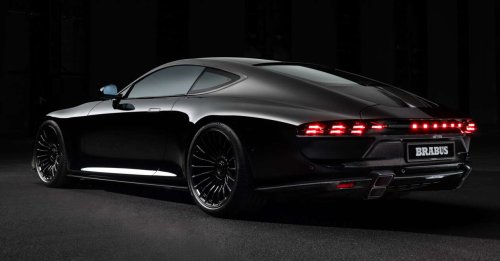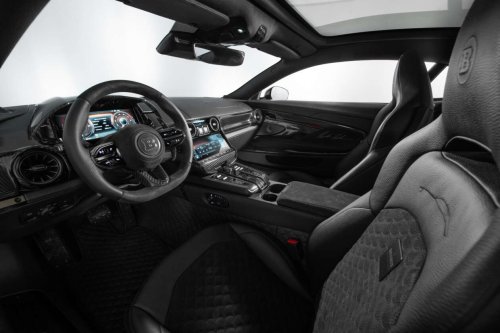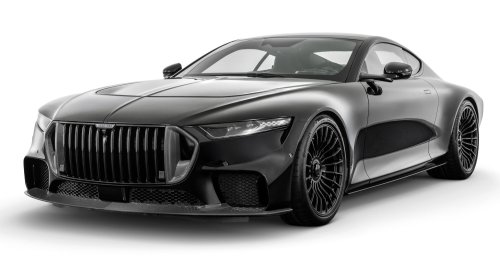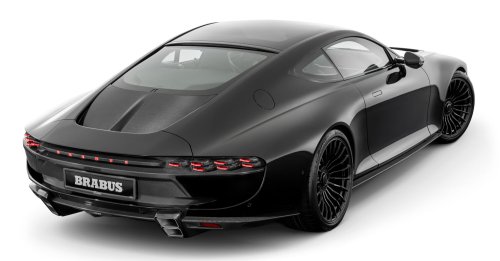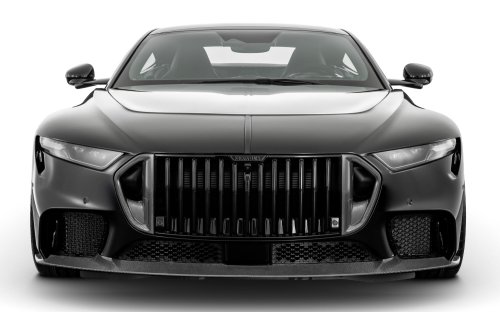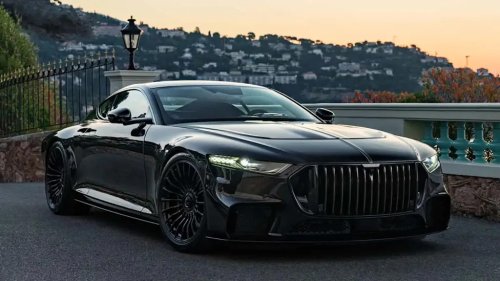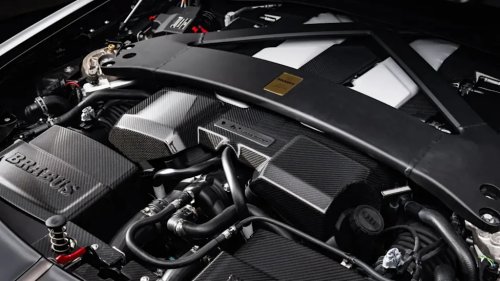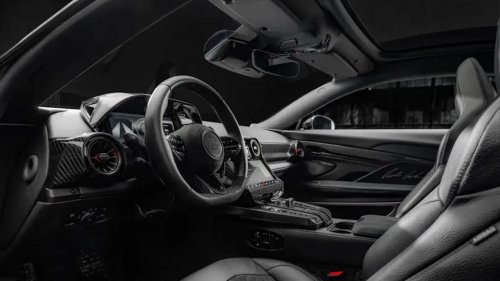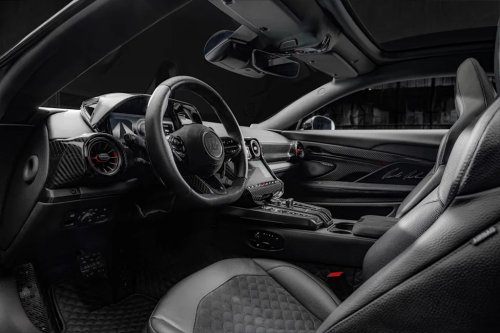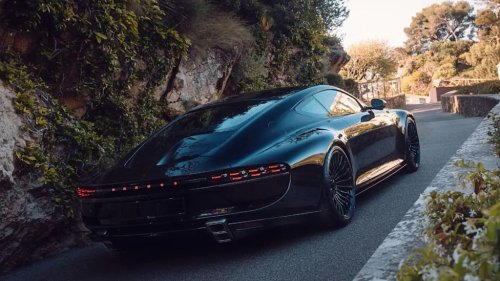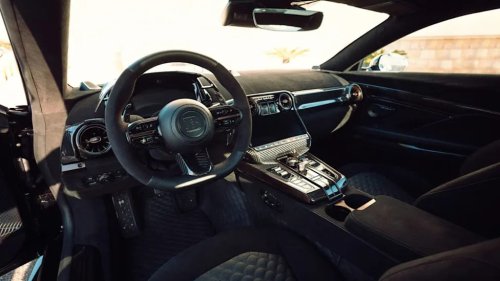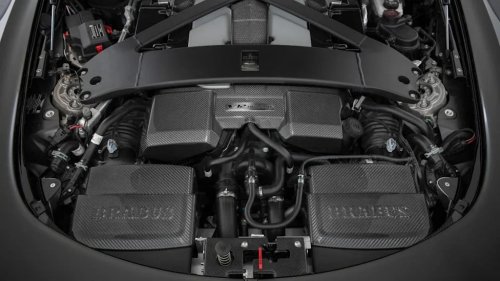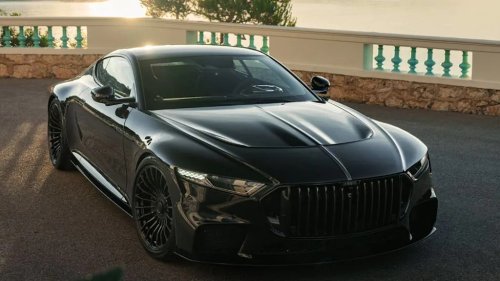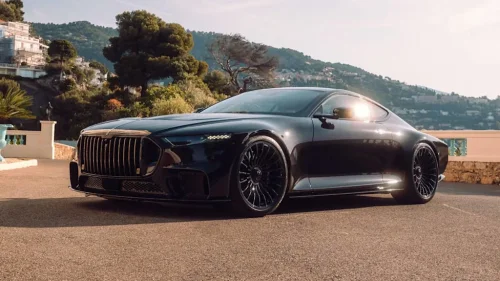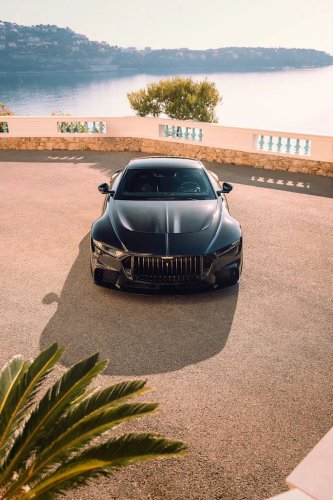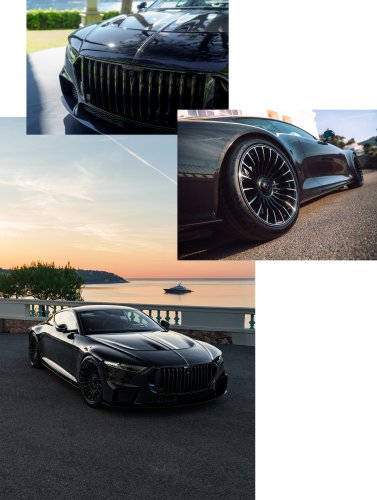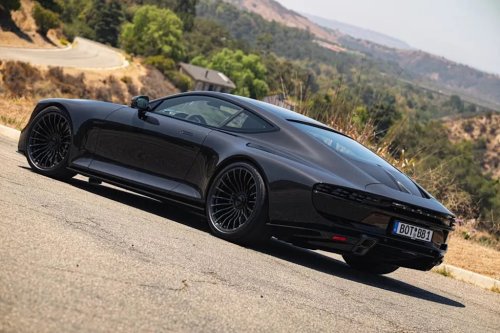
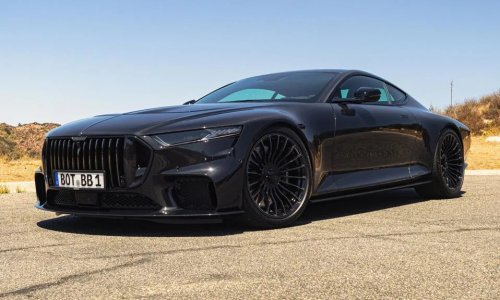
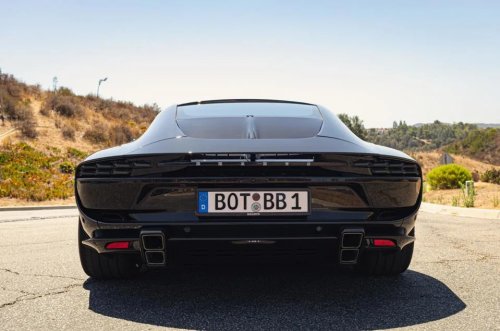
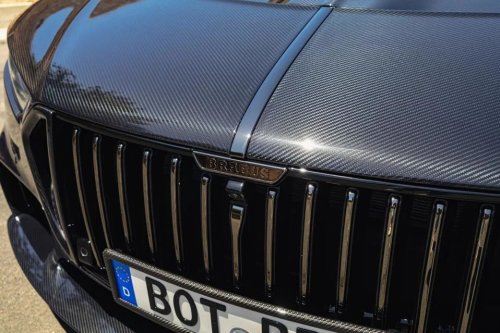
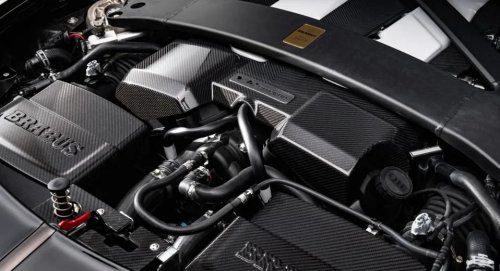
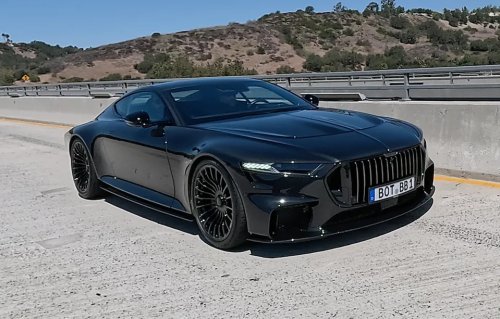
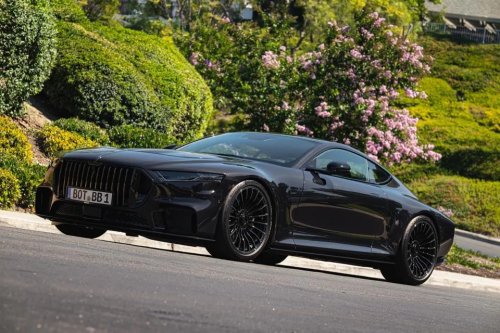
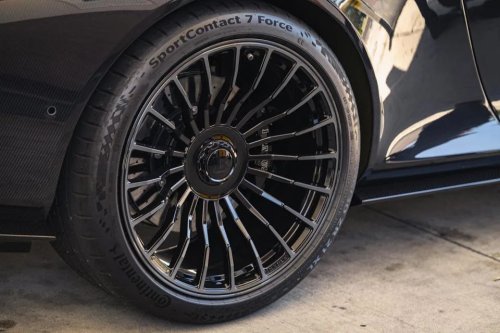
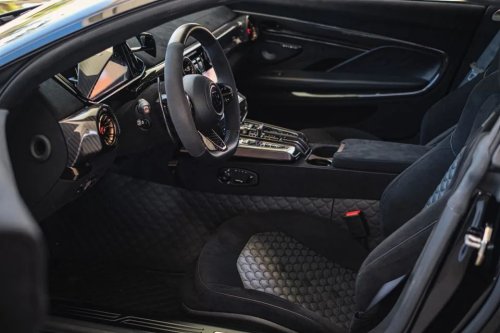
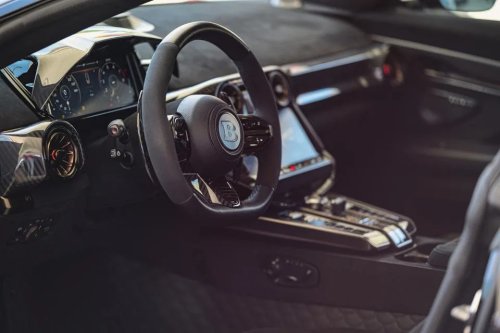
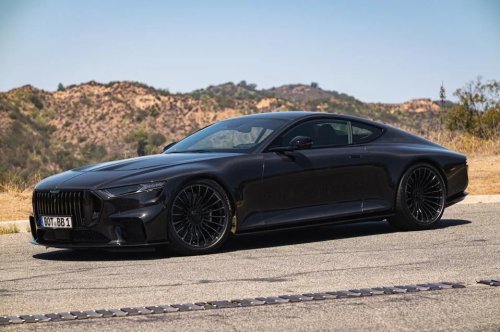























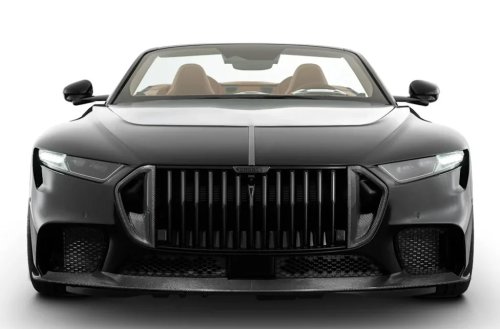
BRABUS BODO: A 1,000-HP V12 Gran Turismo Built To Honor Brabus’ LegacyForbesKarl Brauer, ContributorWed, September 9, 2026 at 10:00 AM UTCAdd us on GoogleThe Brabus Bodo's custom carbon fiber bodywork includes active aerodynamicsOlga Trehub IG @oliphotoproBrabus Bodo Combines a Custom Body with 1,000 hp V12There was a time when the ultimate expression of automotive achievement was a large, powerful Gran Turismo. Long hood. Two doors. Rear-wheel drive. A massive engine up front and enough luggage capacity behind the seats to cross countries rather than merely carve canyons. The Brabus Bodo brings that formula back with a vengeance.Named for Brabus founder Bodo Buschmann, this limited-production 2+2 coupe is less a modified production car than a declaration of what Brabus believes the ultimate modern Gran Turismo should be. Its body is made almost entirely from carbon fiber, its hand-built twin-turbocharged V12 produces 1,000 horsepower, and its electronically limited top speed is 224 mph.The Brabus Bodo is a limited-production $1.5 million GT from the German supercar builderOnly 77 examples will be built worldwide, with annual production limited to roughly 10 to 15 cars priced at around $1.5 million. That rarity matters, but the Bodo's specifications make an even stronger statement.Stacked, titanium exhaust outlets announce the V12's 1,000 horsepowerThe Gran Turismo Bodo Buschmann WantedAccording to his son, Constantin Buschmann, Bodo had long talked about creating a large coupe inspired by the great Gran Turismos of the past but re-interpreted through the company's decidedly aggressive design philosophy.AdvertisementAdvertisementThe resulting Bodo sits just 4.2 feet tall, giving it an extremely low profile despite its expansive proportions. Rather than modifying existing exterior panels, Brabus created a dedicated coachbuilt carbon-fiber body. Aside from the windows and fixed panoramic glass roof, virtually the entire exterior structure is carbon fiber, with individual components produced in molds and cured in an autoclave.The Bodo's black paint reveals the bodys' carbon fiber weave upon closer examinationAerodynamics dictated much of the car's development because Brabus targeted a 360-km/h — roughly 224-mph — maximum speed from the project's earliest stages. The styling doesn't exactly whisper. Thirteen vertical bars dominate the radiator grille, flanked by unique LED matrix headlights. Two large ram-air ducts feed the engine while additional openings direct cooling air toward the radiators, oil cooling system and front brakes.An exposed-carbon front spoiler produces additional front-axle downforce, while the rear incorporates a diffuser and electrically controlled two-stage spoiler. That spoiler continually adjusts at speed and performs double duty as an air brake, rotating toward a vertical position during hard braking above 87 mph.Four rectangular titanium exhaust outlets — vertically stacked in pairs and manufactured using 3D metal printing — provide an appropriately exotic finishing touch.A twin-turbocharged 5.2-liter V12 offers 1,000 horsepower and 885 pound-feet of torqueA 1,000-Horsepower V12 Powers the Brabus BodoThe Bodo's appearance is dramatic, but the engine beneath that long carbon-fiber hood supplies its defining personality. The hand-built 5.2-liter twin-turbocharged V12 produces 1,000 horsepower at 6,400 rpm and 885 pound-feet of torque between 2,900 and 5,000 rpm. Two purpose-developed turbochargers, a ram-air intake system and high-capacity intercooling help the twelve-cylinder achieve those numbers.AdvertisementAdvertisementAll that power goes exclusively to the rear wheels. That's significant. In an era when four-digit horsepower figures often require sophisticated all-wheel-drive systems to reach the pavement, Brabus is sending 1,000 horsepower through an eight-speed torque-converter automatic and electronic rear differential capable of up to 100 percent locking. Carbon-fiber shift paddles give the driver manual control when desired.The Brabus Bodo serves as a Gran Turismo for high-speed, long-distance travelThe performance figures are predictably outrageous. Brabus claims 0 to 60 mph in 3.0 seconds, with 124 mph arriving in 8.5 seconds. The Bodo requires just 23.9 seconds to reach 186 mph before continuing toward its electronically limited 223-mph maximum velocity.Those acceleration numbers are impressive, but perhaps not surprising in today's hypercar world. The more interesting element is how they're delivered. A rear-drive, front-engine V12 coupe (devoid of any electric motors) represents an increasingly rare mechanical configuration, particularly when electric assistance isn't required to reach four-digit horsepower.The Bodo's advanced suspension includes a front and rear lift systemBrabus Bodo: Built To Turn As Well As AccelerateThe chassis suggests Brabus didn't design the Bodo simply for autobahn glory. A double-wishbone front suspension works with a multilink rear arrangement and electronically adaptive aluminum dampers. Five drive modes — GT, Sport, Sport+, Wet and Individual — allow the driver to alter the car's character from long-distance cruiser to maximum-performance configuration.AdvertisementAdvertisementThere's also a front-and-rear axle lift system capable of raising the entire vehicle approximately 0.9 inch to negotiate steep driveways or other obstacles. It automatically lowers the car once speeds reach 28 mph. Forged 21-inch Brabus Monoblock Z-GT Shadow Edition wheels carry Continental SportContact 7 Force tires specifically developed for the Bodo. Front tires measure 275/35 ZR21, while massive 325/30 ZR21 rubber attempts to translate 885 pound-feet of V12 torque into forward motion at the rear axle.The Bodo's 21-inch wheels wrap around standard carbon ceramic brakesCarbon-ceramic brakes use six-piston fixed calipers up front and four-piston units at the rear. The combination of lightweight forged wheels, massive high-performance tires and carbon-ceramic brakes reflects the sort of hardware expected when approaching triple-digit speeds becomes almost effortless.A full spectrum of high-quality materials envelop the Bodo's driver and passengersLuxury Without Restraint Defines Brabus BodoGrand touring requires more than speed, which explains the Bodo's elaborate interior. Black leather and Nubuck blanket the cabin, complemented by carbon fiber along the steering wheel, dashboard, center console and doors. Brabus' Shell quilting extends beyond the seats to the floor, luggage compartment, floor mats and trunk liner. Even the rear seats receive full leather upholstery, reinforcing the Bodo's role as a 2+2 GT rather than a stripped-down supercar.A flat-bottom steering wheel and carbon fiber shift paddles provide driver controlThe flat-bottom steering wheel combines leather and Nubuck for grip, while carbon-fiber pedals, carbon shift paddles and Shadow Gray interior components provide the requisite performance cues. Bodo Buschmann's signature is embroidered into the doors, and the silhouette of the car itself is embroidered into the front seatbacks. Brabus even supplies a matching leather Weekender bag, leather-covered key and indoor car cover.AdvertisementAdvertisementMore unusually, every Bodo carries a blockchain-based Digital Product Passport developed with the Aura Blockchain Consortium. Integrated into a specification plate in the luggage compartment, it documents the car's authenticity, ownership and original configuration — potentially valuable information when dealing with something produced in numbers this small.The Brabus Bodo represents the company's 50-year legacy, as well as its futureMore Than Another 1,000-HP SupercarFour-digit horsepower no longer guarantees exclusivity. Electric sedans and SUVs can now generate acceleration figures that would have qualified as science fiction two decades ago. That makes the Bodo's mission different.Its appeal isn't simply that it produces 1,000 horsepower or reaches 223 mph. It's the way Brabus combines those figures with a twin-turbo V12, rear-wheel drive, a traditional 2+2 Gran Turismo layout and almost obsessive levels of handcrafted detailing. Most importantly, the Bodo represents something Brabus founder Bodo Buschmann wanted to build but never completed during his lifetime.Nearly half a century after Buschmann founded Brabus as a premium German car tuning company, in Bottrop, Germany, Brabus has finally created the large, unapologetic Gran Turismo he envisioned. Given the Bodo's carbon-fiber body, 1,000-horsepower V12, 223-mph top speed and production run of just 77 cars, "unapologetic" may actually be an understatement.AdvertisementAdvertisementThis article was originally published on Forbes.com