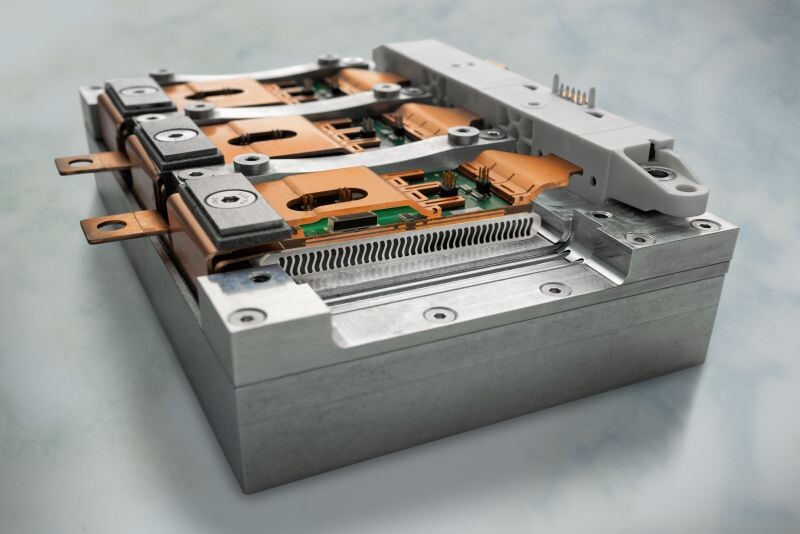
Hannah Moreau · 6 months ago@hannahmoreau327Bosch targets efficiency gains with third-gen SiC chips Liked by+11 othersPost commentRelated PostsWolfspeed, GEENER sign SiC power module cooperation agreementMorgan White · 13 days agoLi Auto President Ma Donghui: Mahe Chips and SiC Modules May Be Supplied Externally, While Battery P 88 · Emma Clark · 1 months agoBosch's Wang Junyue: SiC Capacity to Expand 20x in 6 Years, AIDC and Automotive Lines Advance in Parallel 10 · Chloé Green · 1 months agoVolkswagen's Tianjin component unit partners with Leadrive Technology on SiC power modules 19 · Mason Rogers · 2 months agoInfineon unveils EV inverter SiC module for high temp loads 53 · Lily Fortin · 4 months agoFraunhofer IZM elevates SiC inverters to a new performance level 12 · Grace Lewis · 5 months agoBMW i4 gets SiC inverter – eDrive35/40 gains up to 22 km EV range; new M60 variant added with 601 PS 82 · Camille White · 1 years agoChery Selects Bosch ADAS Technology for Six New Models in Europe; Pony.ai Expands Robotaxi Operations to Manchester; XPENG Opens Intelligent Vehicle Solutions Business to Global PartnersAmélie Anderson · 11 days agoChery selects Bosch ADAS technology for six new models in EuropeSophie Clark · 11 days agoUp to 50% off Bosch, DeWalt, and More: Get Clearance Pricing on Power Tools This Amazon Prime DayAmelia Bouchard · 18 days agoAmazon Is Selling a 'Powerful' Bosch Impact Wrench for 48% Off 63 · Benjamin Tremblay · 25 days agoBosch Says the Truck of the Future Isn’t Electric—It’s Hybrid 25 · Parker Côté · 27 days agoAre Bosch Wiper Blades Reliable, And Where Can You Buy Them? 74 · Adam Martin · 28 days agoBosch First-Half 2026 Sales Reach 46.4 Billion Euros, Maintains Full-Year Forecast 33 · Amélie Gagnon · 1 months agoTruck Of The Future Aim Of New Bosch Technology 95 · Adam Roy · 1 months agoBosch Aims to Double Heavy-Duty Commercial Vehicle Technology Sales Around 2035 35 · Grace Pelletier · 1 months agoBosch Five AI wins UK funding for AV simulation tech 17 · Ava Brown · 2 months agoGlobalization in Focus: Gasgoo CEO Zhou Xiaoying and Bosch’s Philipp Ibele Discuss Automotive Industry Trends 64 · Connor Poirier · 2 months agoGlobalization in Focus: Gasgoo CEO Zhou Xiaoying and Bosch’s Philipp Ibele Discuss Automotive Indust 57 · Jackson Fortin · 2 months agoChangan Partners Again with Huawei; Bosch Secures Major Project Awards 12 · Benjamin Harris · 2 months ago


 +11 others+11 others
 +11 others