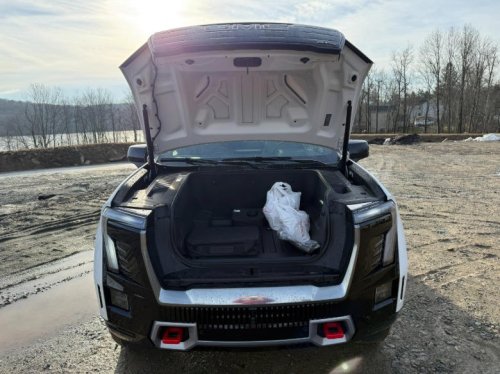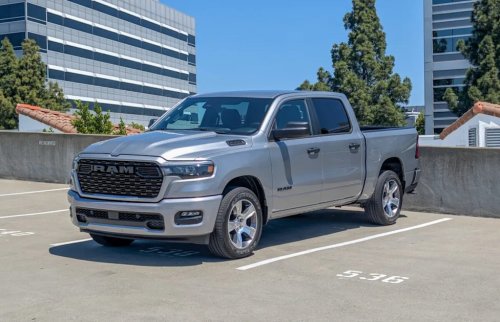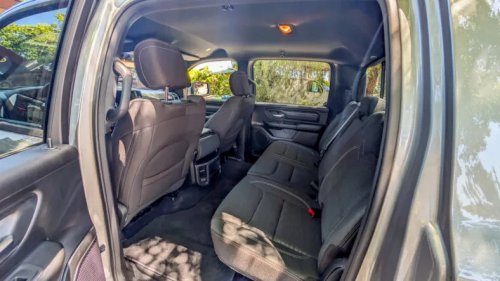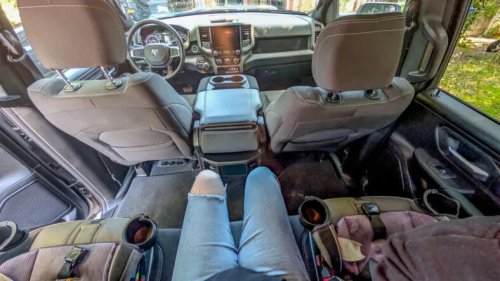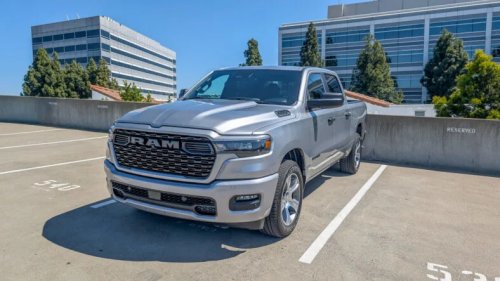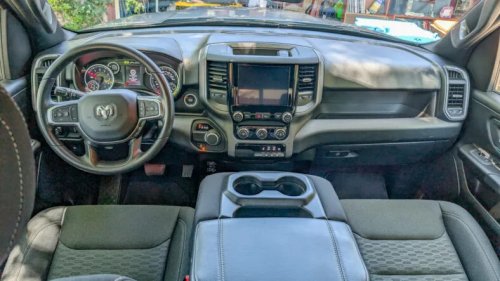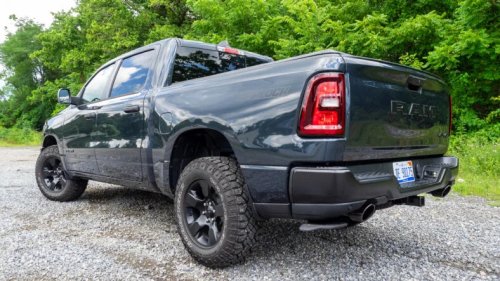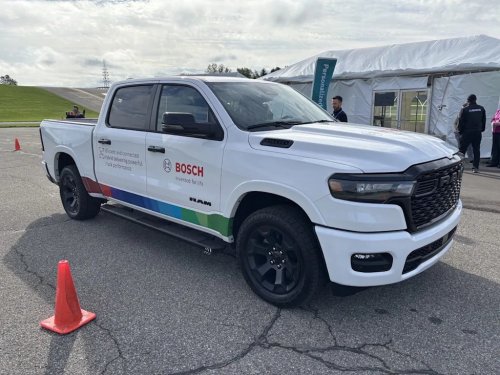
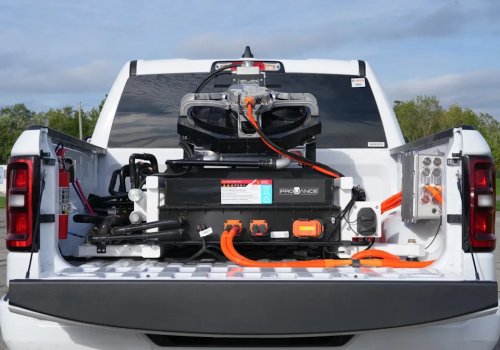
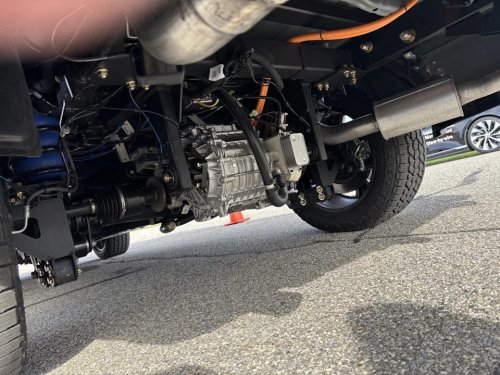
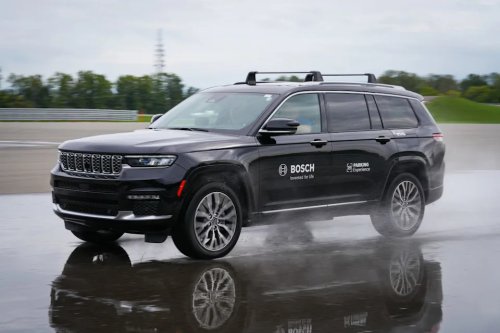
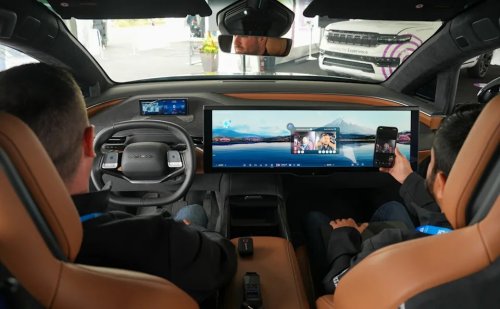






















Bosch Says the Truck of the Future Is a HybridJim MotavalliUntil recently, ask any automaker or supplier about the "Truck of the Future," and they'd describe a battery EV. These days, they're not so sure. At Mobility Experience Days at the 325-acre Flat Rock Proving Grounds in Michigan on September 22, Paul Thomas, president and CEO of Bosch in North America and president of Bosch Mobility, Americas, used the analogy of a multi-lane highway. That explains the company showcasing a hybrid truck, among other technologies, rather than a battery-electric."The truck of the future is not just about what's under the hood, but what the vehicle can do for the people who depend on it, and by the software and sensors that make that possible," Thomas said. "The old assumption was that the market would take down one powertrain and replace it with another, but now our position is that not one solution will be dominant. And we think that reality will be in place for a while."Customers want no-compromise trucks of whatever type, Thomas said, and that includes the ability to tow 8,000 pounds (even if they rarely do so), with no drop in performance. Oh, and the convenience of running job-site power tools and appliances from the bed, as well as—a feature usually associated with EV trucks—providing backup power to their homes during power outages.The hybrid truck carries a 50-kilowatt-hour battery in its bed, yielding 50 or 60 miles of electric cruising.John F MartinAdapting some EV perks was part of Bosch's showcase in Flat Rock. One demonstration showed the ability to effectively offer the convenience of an EV's one-pedal driving in an ICE vehicle by controlling brake pressure.The hybrid work truck was a Ram pickup with its conventional engine still in place, but a number of enhancements to improve efficiency, tailpipe emissions, and fuel economy. The hybrid, with 400-volt architecture, uses an "eAxle" that combines the vehicle's oil-cooled electric motor, inverter, and gearbox into a single rear-mounted design. The truck retains its standard three-liter, twin-turbo, inline-six "Hurricane" gas engine, but combines it with a 50-kilowatt-hour battery pack (in the bed on the test vehicle). A second pack can be added to effectively double range. Journalists didn't drive the truck, but an unremarkable ride was provided.Mohammad Fatouraie, director of engineering at Bosch USA, told Autoweek, "The demo vehicle is designed for scalable battery-pack capacity. This is to ensure we can assess the requirements of long-EV-range plug-in hybrids (with two batteries) as well as cost-optimized PHEVs with single pack. The single pack was demonstrated in the vehicle today. The range depends on the drive cycle and loading condition, but this configuration is estimated to have an all-electric range of approximately 50 to 60 miles."There was no estimate of fuel savings over the conventional Ram truck, but that wasn't the whole point. Bosch is taking the long, or global, view on emissions, largely ignoring the Trump administration's full-scale rollback of climate-related regulations. Without changing performance, the truck targets emissions below Tier 4 Bin 20. In May, Trump proposed pushing back tough Tier 4 regulations from 2027 to 2029 to give "manufacturers and suppliers additional lead time to adapt to evolving market conditions, regulatory requirements, and feasibility challenges…"Features on the hybrid truck prototype that reduce climate-negative tailpipe output include advanced catalysts, gasoline particulate filters, and rapid catalytic converter heating to cut down on cold-start emissions by 60 to 70 percent, Bosch said. Bosch said that localized production of the eAxle could begin in North America in 2029.The eAxle on the hybrid truck combines the vehicle's oil-cooled electric motor, compact inverter and gearbox into a single design.Jim MotavalliA Bosch white paper on the future of hybrids, released in August, notes that electrification is proceeding at different paces around the world. "Electrified vehicles currently account for roughly 20 to 25 percent of new registrations across [Europe]. Bosch powertrain scenario modeling indicates that the European market will gradually move toward a BEV-dominant structure by 2035," with hybrid tagging along as "a compliance-relevant technology during the transition period." In the US, electrified vehicles are only about nine or 10 percent of new vehicle sales, constrained by "infrastructure rollout and regional policy differences. At the same time," the white paper said, "full hybrids have gained significant market relevance, driven by their ability to deliver efficiency improvements without compromising range, towing capability or refueling convenience."Wet road detection uses ultrasonic sensors to deter hydroplaning.John F MartinThere was plenty more neat stuff shown at Flat Rock. For better off-road performance, Bosch demonstrated what was effectively one-pedal driving for gas vehicles. Instead of the driver having to dance feet between accelerator and brake while rock crawling, the system is designed to automatically apply the brakes when the gas pedal is backed off. Hitting the gas again releases the brake.Brake and steering by wire were demonstrated. In a Grand Cherokee, we were also shown Wet Road Detection, a "who-woulda-thunk-it" system using seventh-generation ultrasonic sensors that, by listening to the audio splash made by tires when they entered standing water, could deliver an immediate report on the depth of that water—up to a tenth of a millimeter. The information, fed into driver assist systems, could be used to reduce speed and effectively deter dangerous hydroplaning.And the truck of the future can also have the AI Cockpit of the future. Other cars can respond to "play Taylor Swift," but the Bosch system knew what you meant when the command was a generic "play rock music" (the result sounded like Guns N' Roses). The stationary test system was rather slow to respond, but it got there in the end.The AI did some innovative things. For instance, you can pull up to a sign in a foreign language, German say, and the car's camera will see it and work with the car's systems to translate the message. "EV parking only." It did Japanese, too. Drivers can be identified via facial recognition, and his or her settings (for seat location, music playlist and more) dialed in.The AI Cockpit definitely kicks up driver interaction.John F MartinThe AI system can read your email and paraphrase the message, and also respond to the sender. If you're running late, voice commands can initiate an apologetic email message to the person you're meeting with. And it can also log you into Microsoft Teams by scanning the link in your calendar (which it can also update with new meetings, if it finds you're free at that time). Ask the AI for coffee shops, and it not only finds them but offers a rundown of the menu.Bosch is a Tier One supplier, and we will see these technologies onboard the truck of the future only if automakers buy in. A plethora of carmakers was scheduled to arrive at Flat Rock the day after the journalists left.