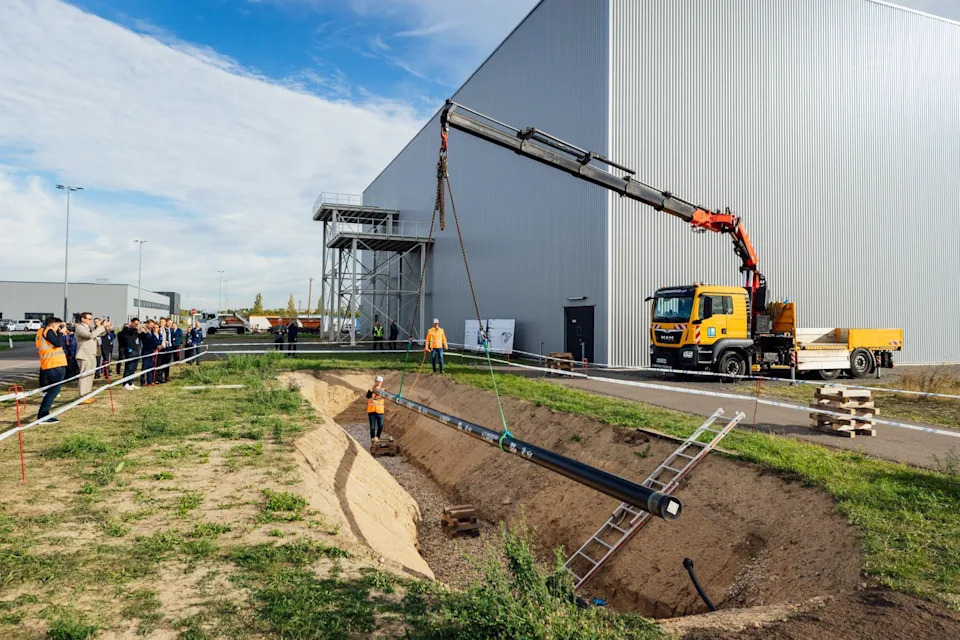
BMW's Next Hydrogen Vehicle Is… Its FactoryChristoph BusseBMW is doubling down on its investment in hydrogen technology, but this time it's not focused on fuel cells or even hydrogen combustion engines. Instead, the Bavarian automaker is focusing on vehicle manufacturing itself, breaking ground on a pipeline that will connect its Leipzig assembly plant directly to Germany's growing hydrogen network.When completed in the first half of 2028, BMW says the roughly 1.2-mile (2-kilometer) pipeline will make its Leipzig facility the first automobile plant in the world with a direct connection to a public hydrogen grid.The project is aimed at helping to decarbonize some of the factory's most energy-intensive operations, especially the paint shop, where high-temperature ovens are usually fueled by natural gas. BMW says the connection will allow those processes to run increasingly on hydrogen instead.The automaker has been experimenting with hydrogen at Leipzig for more than a decade. Since 2013, BMW says the factory has operated hydrogen fuel-cell forklifts and tug trains for internal logistics, a fleet that now counts over 230 vehicles and is the largest of its kind in Europe. In 2022, BMW added some hydrogen-capable paint ovens that can switch between natural gas and hydrogen, depending on what fuel is available.Christian Hüller"This pipeline will enable us to power our paint shop with hydrogen to a far greater extent than ever before," Leipzig plant director Petra Peterhänsel said in a statement. "It marks an important milestone and lays the foundation for greater energy resilience."More broadly, Germany has been working to establish a hydrogen infrastructure as part of its overall industrial decarbonization strategy. In fact, much of Europe's current alt-fuels investment is aimed not just at developing hydrogen-powered vehicles, but at replacing fossil fuels in heavy industry, steelmaking, and manufacturing, in places where high temperatures are required and are difficult to electrify.The move also stands in contrast with the situation in the United States. While hydrogen production and transportation projects are expanding through regional hydrogen hubs funded by the US Department of Energy, the country still lacks a nationwide hydrogen pipeline network. Most hydrogen in the US is transported by truck or through relatively small, regionally concentrated pipeline systems serving industrial customers along the Gulf Coast.BMW has long argued that hydrogen has a role beyond manufacturing as well. The company continues to develop hydrogen fuel-cell vehicles, including the iX5 Hydrogen demonstration fleet, although it has acknowledged that widespread adoption will depend on the build-out of refueling infrastructure.For now, Leipzig's new pipeline is focused squarely on the factory itself. If successful, it could provide a blueprint for using hydrogen not just to power vehicles, but to build them as well.




















 +46 others