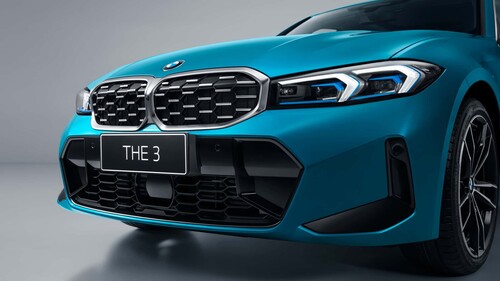
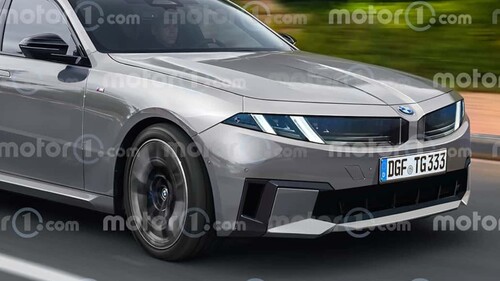
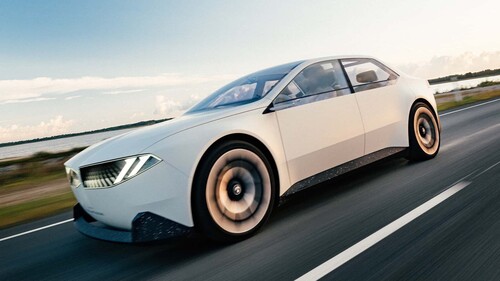
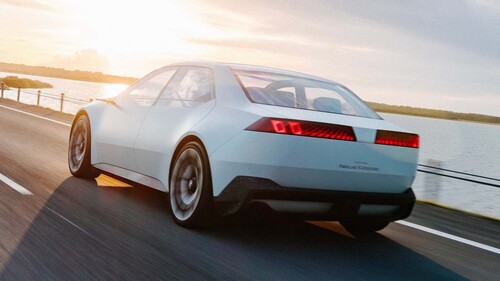
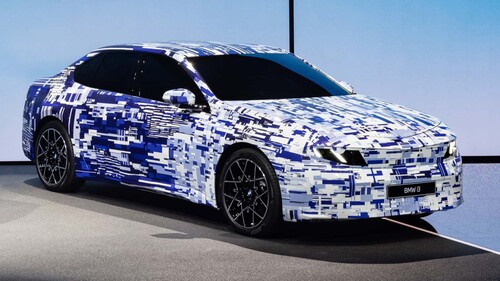
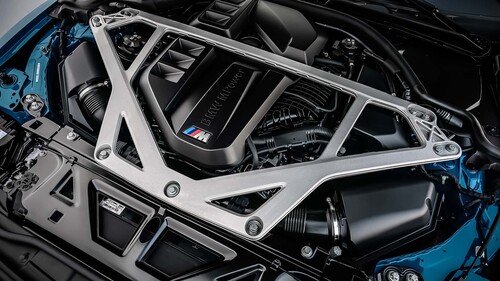
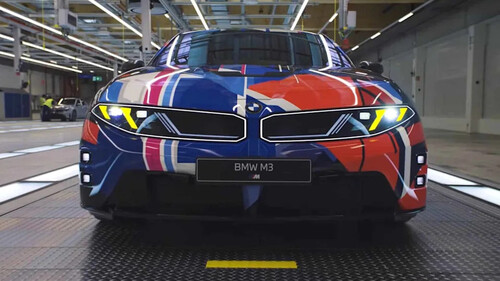
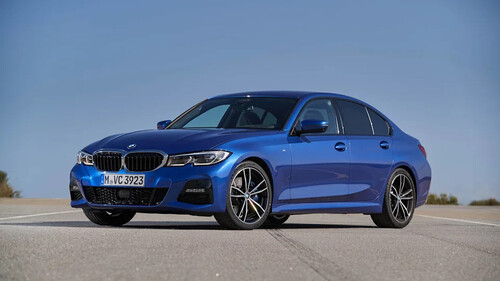
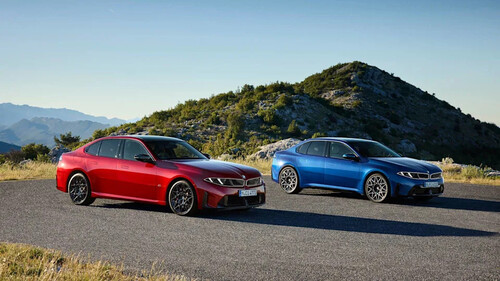
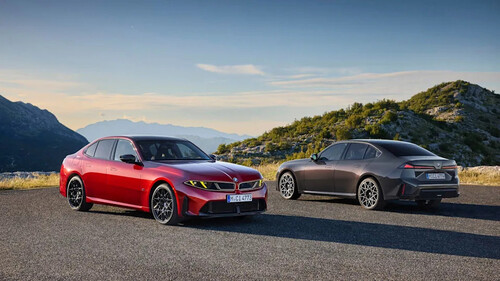
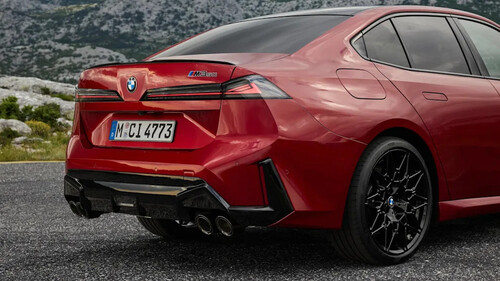
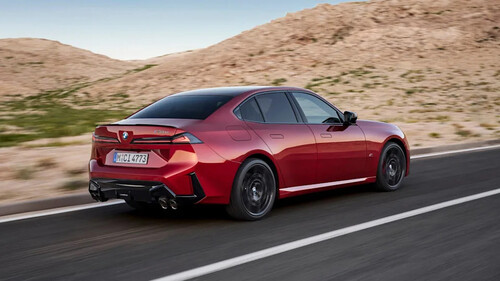
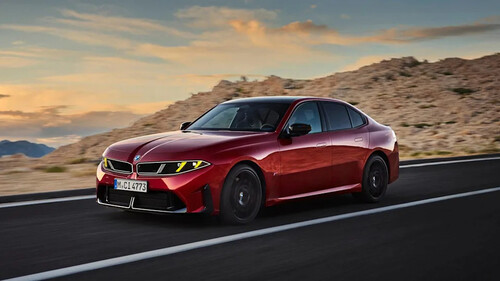
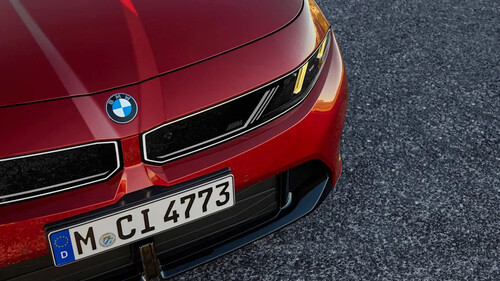
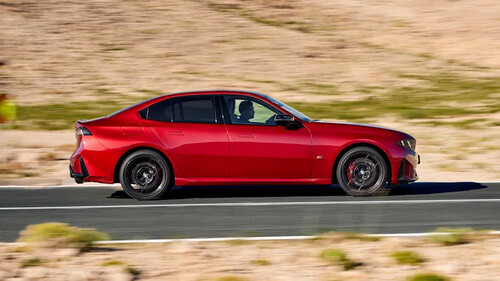
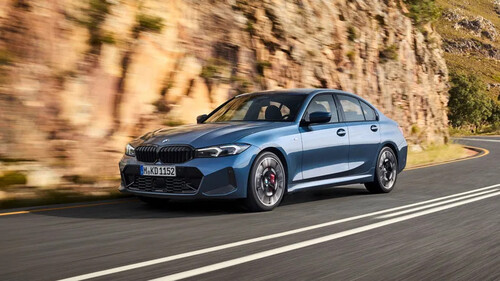
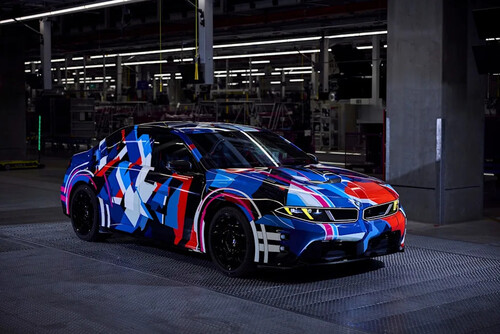
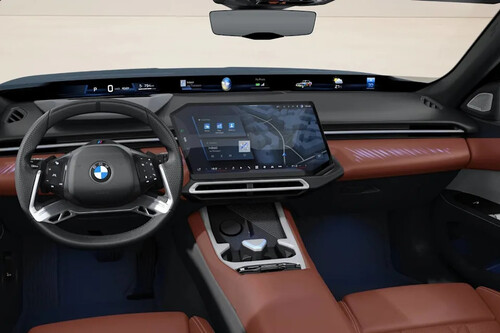
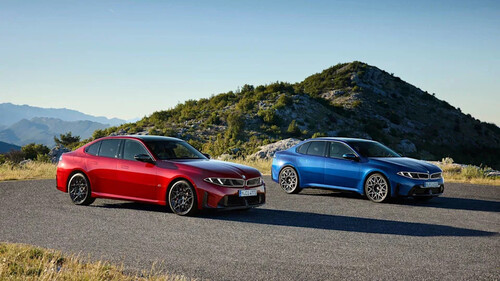
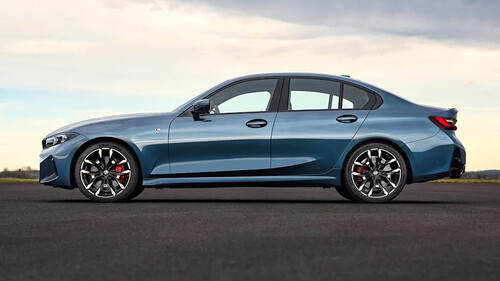
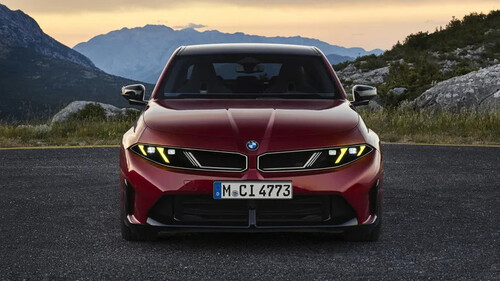
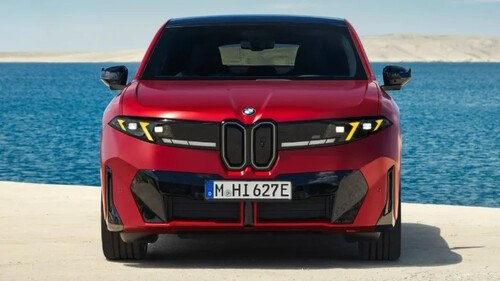
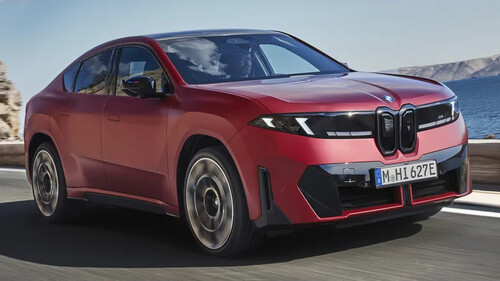
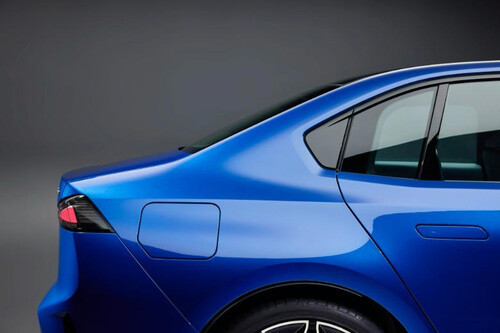
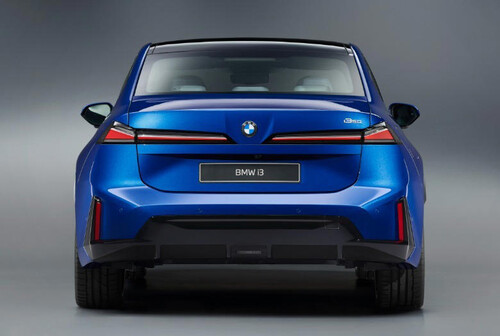
Earlier this year, the all-new BMW i3 sedan debuted as the first all-electric 3 Series, and while the powertrain agnostic could appreciate its styling and technology, fanatics bemoaned the scuttle, the overhangs, the height, the squeezed-in dash-to-axle ratio, and, of course, the lack of noise from under the hood. Well, Munich has rectified all of those concerns with the eighth-generation G50 BMW 3 Series sedan, revealed today with mild-hybrid powertrains (minimizing weight but providing no all-electric driving mode) that improve upon their predecessors' outputs and efficiency without sacrificing cylinders. Indeed, the turbocharged four- and six-cylinder engines that have made BMW an engine-building Hall of Famer are present and correct, but BMW has also announced that a more powerful i3 version (M60 xDrive) is coming with similar M touches to the range-topping gas model we're about to explore. Let's talk numbers, looks, tech, price, and availability.2027 BMW 3 Series: Two Combustion OptionsBMWBMWWhereas the G20 BMW 3 Series had its range topped by the M340i with 386 horsepower, the G50 changes the name and the output. For 2027, the 3 Series for the performance-conscious is the M350, which wears a badge that emphasizes the M Performance model's M3 influences and signifies a 3.0-liter turbocharged straight-six combined with 48-volt mild-hybrid technology in the form of a 17-hp electric motor between the transmission and crankshaft to produce a total of 437 hp and 428 lb-ft of torque, an increase of 51 hp and 30 lb-ft over the G20. While the M340i would take between 4.1 and 4.4 seconds to run from 0-60 mph, depending on whether it was a rear-wheel-drive or an AWD car, the M350 will take just 3.9 seconds. Yes, xDrive AWD is standard alongside an eight-speed automatic, and there's no indication that the M350 will be available with RWD, but you do get a rear-drive setting called 'Drift Moment' (and an M Drag Meter to show acceleration data). A manual transmission is even less likely, especially since there are cupholders where a stick should be, but let's wait and see. As before, performance tires allow a top speed of 155 mph.BMWIf posing as an M3 is not your bag, the new 3 Series is also available in 330 and 330 xDrive forms (the 'i' suffix has disappeared from all gas Bimmers so as to avoid confusing customers who will also see it as a prefix on EVs). The 330 and 330 xDrive get a 2.0-liter turbocharged four-pot, again with 48V mild-hybrid tech and an eight-speed automatic. Here, a belt-driven starter-generator is used, and both trims return a total of 255 hp and 295 lb-ft of torque. 0-60 mph takes 5.9 seconds, and again, sport tires enable a top speed of 155 mph. As seen below, BMW's M Performance engine cover sports a carbon fiber-like finish, a prominent M badge, and retro stripes either side of the BMW wordmark.BMWAs you might have noticed, the electrification component hasn't provided all the two powertrains' gains, and that's because efficiency and performance improvements have also come from new Valvetronic variable valve control programs with switchable exhaust valves. Alongside variable intake-valve lift, this helps the engines reduce drag torque by roughly 66 percent, meaning the rotating assembly requires less energy to move and saps less when off-throttle. A Miller combustion cycle is used with new turbochargers, and BMW has revised intake ports, combustion chambers, camshaft timing, fuel injection, ignition, and exhaust-gas flow routing. All of these measures will keep the 3 Series legal in the U.S. and Europe until at least the end of the decade.BMW 3 Series: Handling and Comfort ImprovementsBMWEven in pictures, it's clear that the G50 3 Series has swelled in all areas, as every car in this so-called 'compact' class has. But BMW says the 3 Series will continue to excite in the corners, thanks to wider tracks and a longer wheelbase. That should contribute not only to predictable handling but also to improved comfort. Extensively revised chassis and body structures, a new steering ratio, and a BMW Driving Stack suite of chassis controls are complemented by new brakes and revised geometry for the suspension, which is a double-joint spring-strut design up front with more camber and an increased positive caster trail. At the back, a five-link rear axle gets modified negative caster trail along with more camber, while both front and rear setups get preloaded anti-roll bar mounts to keep the chassis stiff. Newly developed lift-related dampers and a larger wheel diameter (up from 654 millimeters to 680 mm) should also improve traction and comfort. Adaptive suspension is available, including top-line Adaptive M Suspension, but either option requires sport steering with a variable ratio. BMW says these systems not only improve handling but also reduce stopping distances when the ABS is required. And for the M350 xDrive, along with model-specific spring and damper rates, the engine bay has gained a tower-to-front strut bar, not totally dissimilar to that seen in the G80 M3 CS Handschalter.2027 BMW 3 Series Interior and TechBMWIf, like me, you were hoping that BMW would fit a normal three-spoke wheel to the gas 3 series, bad news: the 330 and M350 stick with the unconventional two- or four-spoke wheel design that looks weird but feels pretty good. Remember how car designers in the 1980s thought four-spoke wheels looked futuristic? The rest of the cabin is mostly the same as in the i3 too, with a 17.9-inch touchscreen running Operating System X in the center of the dashboard and a full-width Panoramic iDrive display projected between the dash and the base of the windshield. A 3D head-up display is also available, while above the occupants, all 3 Series models get a panoramic glass sunroof that is glazed. As standard, electric seats with memory are fitted, but multifunction perches with lumbar support and backrest-width adjustment are available too. In the i3 EV, these offer massaging, but here, they add ventilation. M350s get access to M Sport seats with illuminated M logos (like G8X M cars), but they're optional.BMWAll steering wheels get shift paddles, including 2.0-liter models, and all interiors get dual-zone climate control. However, while there are physical controls for the parking brake, the transmission selector, the rear-window defroster, the hazard warning lights, and for controlling audio volume, the climate system is operated entirely via the screen. BMW has tried to make this less bothersome by adding a shortcut that switches the air vents between direct and indirect airflow, and the temperature controls reside at the base of the screen, but actual buttons or knobs would still be better. Tri-zone climate control and heated seats are optional.BMWAs for audio, a seven-speaker setup with 205 watts of power is standard, while M Performance models get a Dolby Atmos-supporting Harman Kardon system with more power and speakers, though unspecified. Finally, the interior can be specced in one of three themes: Contemporary, BMW M, or BMW Individual. The first provides faux leather in Digital White, Castanea, Agave Green, or Black shades, while the second features a different type of imitation leather paired with M PerformTex faux suede. Finally, Individual has real Merino leather, but only in Black.2027 BMW 3 Series Styling and PricingBMWThe Neue Klasse design language was, at the very least, acceptable on the i3, but personally, I think it works even better with the gas 3 Series. The proportions are much, much better – the gas 3er looks more car-like than crossover-like because the doors aren't stretched upward as they are on the i3. Without a big battery pack, the side skirts can also follow a straight line, and while the hood must enclose an engine, it is flatter. These sleeker lines give the gas 3 Series a more traditional look and feel, and while subtle, the flared wheel arches look more prominent. Not having to hide excessive bodywork means BMW can outline the glasshouse with a piece of trim, and instead of having 21-inch wheels like the i3, the combustion-powered sedan stops at 20-inch wheels. 19-inch designs are standard, including on the M350, which gets Style 1139 M wheels in Jet Black. From almost any angle, we can see references to several 3 Series designs of the past, yet the G50 simultaneously looks and feels completely new.BMWSpeaking of color, BMW says 11 hues will be available, including the exclusive Le Castellet Blue, which is only for the i3 and 3 Series. Individual paint finishes are also coming, but BMW hasn't provided a list of shades just yet. Naturally, the 330 and 330 xDrive will have access to the M Aerodynamics package as part of the M Sport package, adding many of the M350's styling elements, including bumpers, side skirts, and diffuser. The M350 also gets a trunk lid spoiler in black as standard, but because BMW likes to incrementally add aggression to its M-lite models, the biggest talking point is the addition of a quad-exit exhaust, something formerly reserved for serious M cars. Similarly, M yellow running lights are optional, as is Iconic Glow lighting between the clusters. Pricing for options is yet to be decided, and an arrival window was not specified, but the base pricing for each model is listed below (all prices exclude an obligatory destination charge of $1,350), and we expect dealerships to see deliveries begin before the year is out.ModelMY2026 (excl. $1,175 dest.)MY2027 (excl. $1,350 dest.)BMW 330i/330$49,350$49,900BMW 330i xDrive/330 xDrive$51,350$51,900BMW M340i$63,650n/aBMW M340i xDrive/M350 xDrive$65,650$65,900BMW i3 50 xDriven/a$61,500Final ThoughtsBMW's 3 Series designs are almost always judged harshly at first, but they grow on you with time and further exposure. The 2027 3 Series, which BMW wants us to call both the gas and electric versions, continues the trend, but this time, it's hard to call out many cosmetic flaws on either, and with pricing that is only a few hundred dollars more across the 330 trims and a couple thousand more on the M350 compared to 2026 equivalents, it's going to be immensely popular worldwide, as always. Giving the outgoing 3er the so-called 'Snake Eye' lighting signature makes the transition to Neue Klasse styling easier to embrace, and the aggression of this G50 indicates the eventual M3 will be even wilder. Sure, some will criticize the aesthetic liberties taken with the M brand, some will dislike the interior, and others will want to know how heavy the G50 is. Others will pine for fewer displays and haptic buttons in favor of three pedals and a stick shift. But for its core consumer base, there's no doubt it's a compelling offering, and it's hardly offensive to look at. Most will love the tech, which includes Level 2 hands-free highway driving, an AI assistant, and plenty of safety and convenience improvements. We're also confident that the G50 will drive beautifully and handle its mass, whatever it may be, with grace. What's more, the addition of a drift function on the six-cylinder M350 will make the loss of a rear-drive straight-six option easier to stomach. This new 3 Series looks just different enough from the i3 to be recognizable to the keen-eyed, yet it's simultaneously so similar that those considering the EV won't be sacrificing much, especially at a near-mid-range price for the i3 50 xDrive. Granted, we'd prefer physical door handles and more real switchgear, and we're partial to a traditional steering wheel, but if those are the only serious gripes, the 2027 3 Series is hard to argue with in gas or electric form. How does it compare with the new Mercedes-Benz C-Class, you ask? Stay tuned. In the meantime, the gallery below includes all versions of the 3 Series revealed so far, including the upcoming i3 M60 xDrive with its M-flavored upgrades and interior.BMW