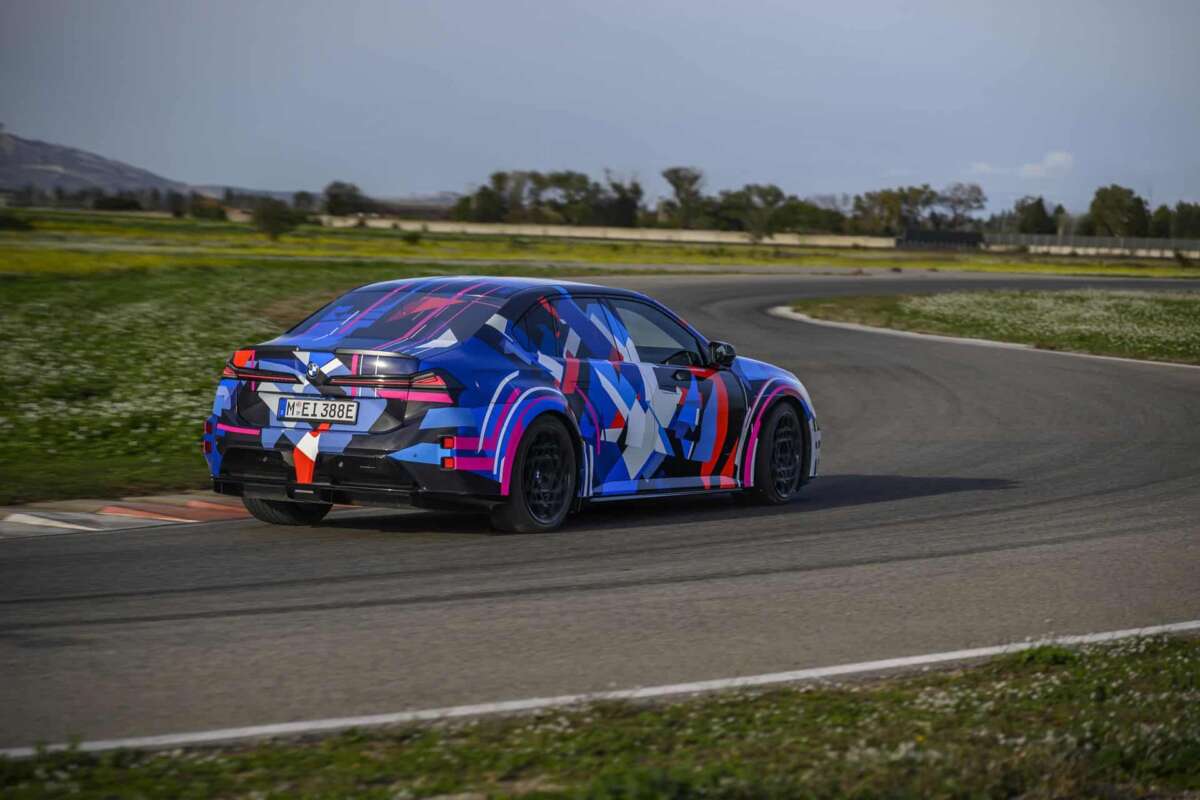
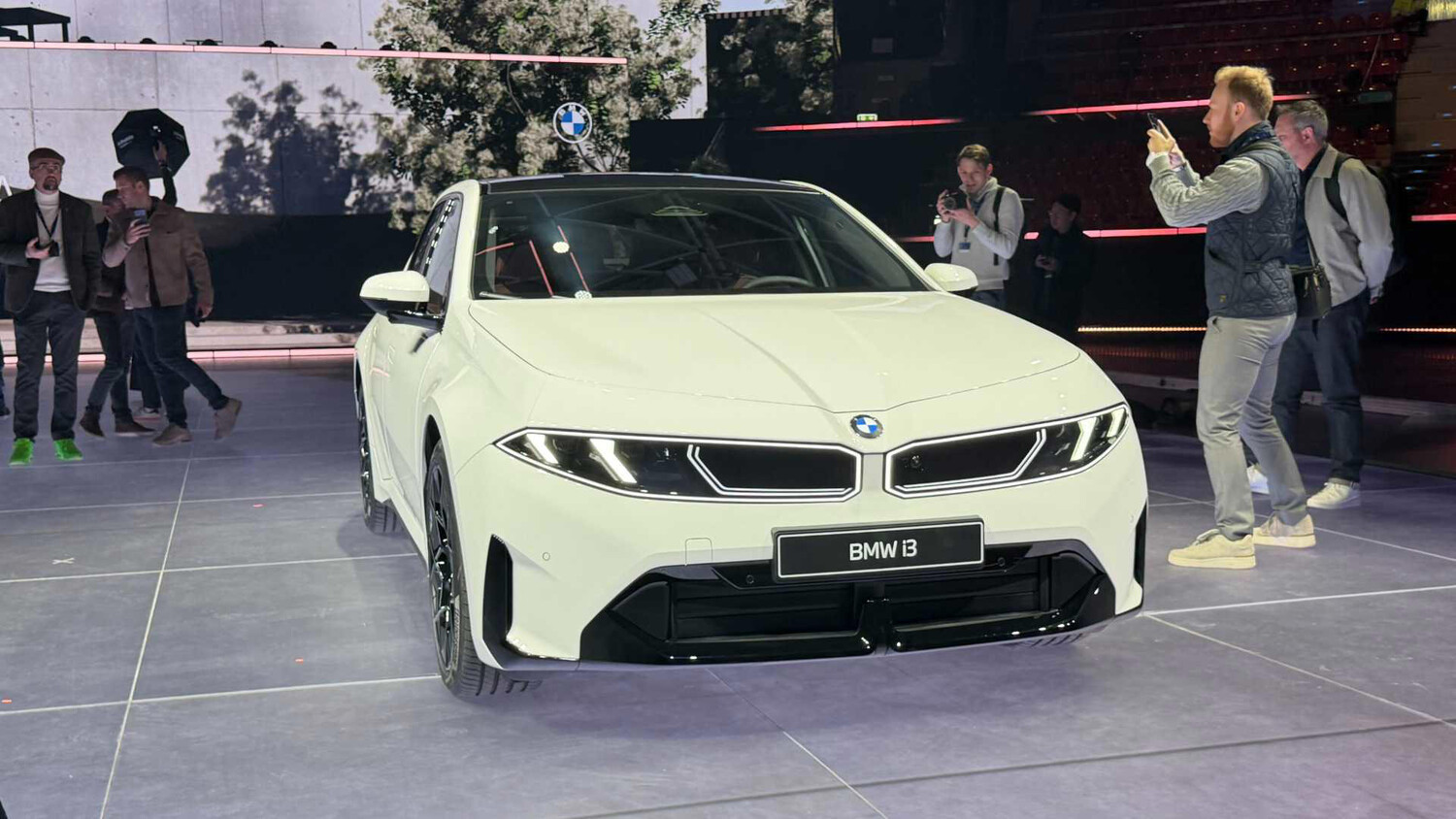
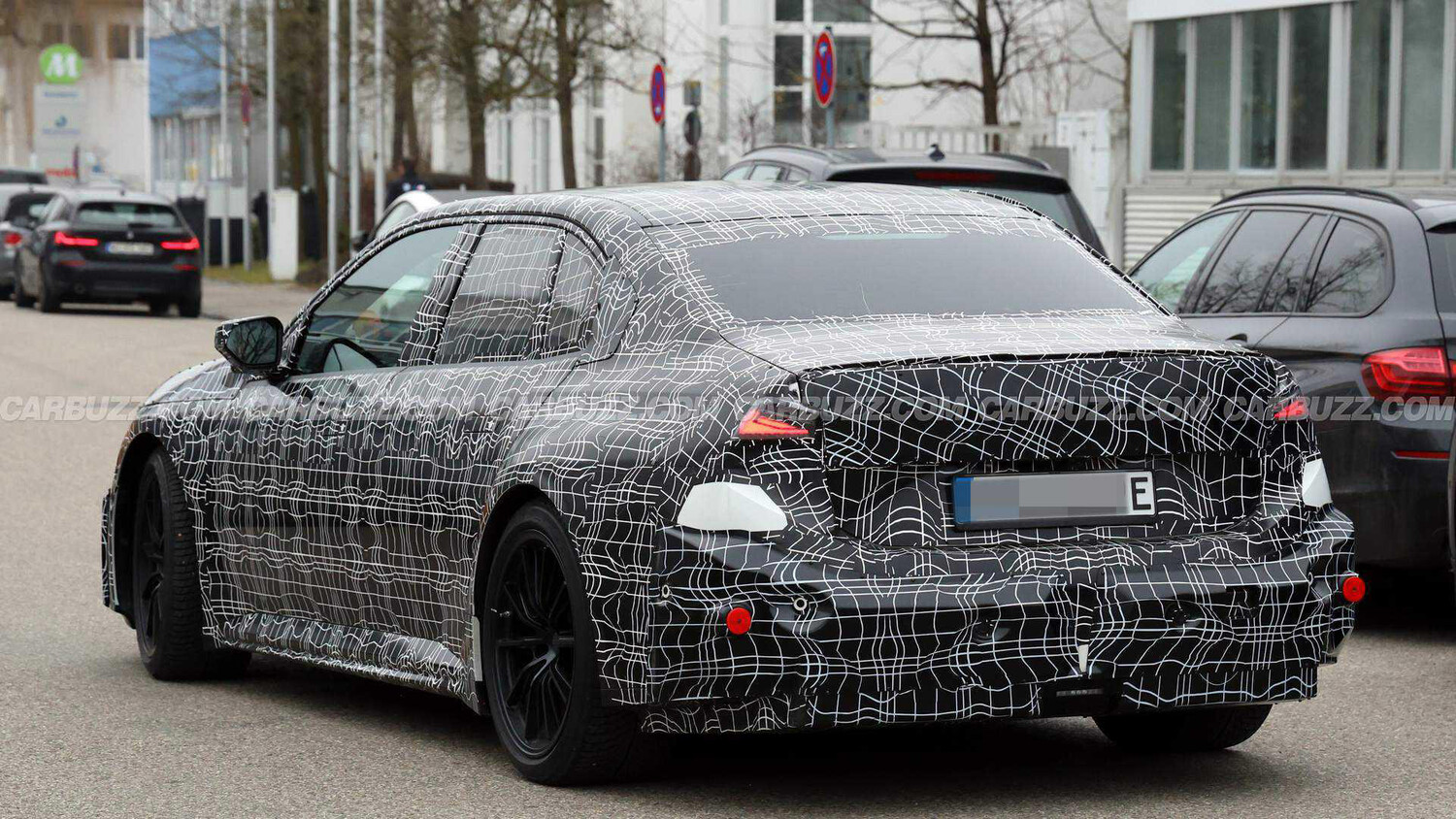
Next year will mark the 55th anniversary of BMW M, and the performance division will kick off celebrations with arguably its most important car yet – the hot version of the brand spanking new Neue Klasse i3. We’ve been waiting to see exactly what Munich will call this electric über sedan, and we now know the answer. No, it isn’t i3 M or iM3, but the BMW M3 with M eDrive. Sillily long name, I know, but it means M isn’t hiding behind some “less than” nomenclature and is putting its money where its mouth is – this car is part of the fearsome M3 lineage, plain and simple. A lineage, by the way, that has spanned six generations over the past 40 years, with a long history of being powered by high-strung, motorsport-derived petrol engines and a penchant for smoky drifts. No pressure, then. Anyway, BMW recently invited a select group of international media (not us, so we can only observe from the sidelines jealously) to its Miramas proving ground in France to drive a camouflaged prototype, ahead of its reveal in January. Codenamed ZA0, the M3 EV will feature quad motors, a setup that the company teased as far back as 2022. While previous prototypes were reportedly capable of producing up to one megawatt (1,340 PS) of power and 18,000 Nm of torque, M has pegged those figures back on the production model, listing estimates of just 850 PS (625 kW) and 1,200 Nm. The rear-biased setup nevertheless delivers real torque vectoring across all four wheels (even when braking), and fervent M fans will note that the motor count is one up on the tri-motor Mercedes-AMG GT 4-Door Coupé. Presentation slides posted by BMWBlog note that the performance of the whole kit and caboodle is coordinated by a new M Dynamic Performance Control, integrated within the Neue Klasse’s Heart of Joy central computer. Juicing the motors is a bespoke battery developed on BMW’s new Gen6 architecture. The approximately 100 kWh (presumably NMC) pack is slightly smaller in capacity compared to the 108.7 kWh unit in the regular i3 50, but its cylindrical cells have been configured to deliver maximum sustained performance. Even so, the M3 EV is still capable of delivering an impressive WLTP-rated range of around 650 km. Built on the same 800-volt electrical architecture as the i3, it will also charge slightly faster, supporting a DC fast charging rate of up to 420 kW. Regenerative braking is more powerful as well, with the car able to recuperate up to 540 kW; around Miramas, BMW claims the system is able to give drivers a “free” lap of range every three laps. However, the car will continue to feature either standard M Compound or optional M Carbon ceramic friction brakes. Those discs hide behind 20-inch wheels shod with Michelin’s all-new Pilot Sport S 6 tyres. The suspension is the same MacPherson struts at the front and a five-link setup at the rear, but with M-specific subframes and elastokinematics. Those subframes are mounted to the battery to increase rigidity, and new A-pillar bracing and a stiffening plate at the front eliminate the i3’s (not exactly very useful anyway) 31 litre front boot. As ever in performance EVs, it’s the software that makes the difference, and the M3 EV has no shortage of tricks. Typical for an M car, there’s endless customisation of the powertrain, regen braking, adaptive dampers, steering, brake force and stability control, but you also now get simulated gearshifts akin to the Hyundai Ioniq 5 and 6 N. Except M isn’t calling them gear changes, but rather “stages”, similar to the nomenclature Ferrari uses for the controversial Luce. There are six of them, and while there are no simulated shift times nor any difference in zero-to-100 km/h acceleration with the system on or off (unlike the Hyundais), you do get fake engine sounds, a build up of power as the “revs” climb, and shift lights and a “limiter” in Manual mode. So, like an actual gearbox, then. You even shift “stages” using paddles on the steering wheel, which is based on the i3’s M Sport tiller but with new buttons to select the trademark configurable M1 and M2 modes, plus a dedicated button to turn the driver assists on or off. The M3 EV also gets also a dedicated track mode for sustained sessions, coming with three stages of battery preconditioning to deliver maximum power depending on duration – Hot Lap (two minutes), Short Run (eight minutes) and Long Run (15 minutes). While the prototype is still camouflaged, one can spot M-specific details previewed by the M Concept Neue Klasse in June. These include aggressive trimaran-inspired front and rear bumpers with a central spar and ice cube-like positioning and rear fog lights, plus a vented bonnet, prominently flared fenders and a boot lid lip spoiler. The dual-panel front end gains the M Yellow Lights introduced on the i3 M60, while the “grille” now features the M3 badge. Given the car’s eco-friendly powertrain, it’s no surprise to see natural fibre composite replace carbon fibre on the roof, M mirrors (optional) and heavily-bolstered M sports seats. Of course, those who still want a petrol-swilling M3 will be able to opt for the conventional seventh-generation G84 – replete with a pumped-up version of the outgoing G80’s S58 3.0 litre twin-turbo straight-six, likely with mild hybrid assistance. This model will take a back seat to the M3 EV and should arrive later on in 2027.

 Liked by Gabriel Young, Annabelle Smith







 Liked by Gabriel Young, Annabelle Smith