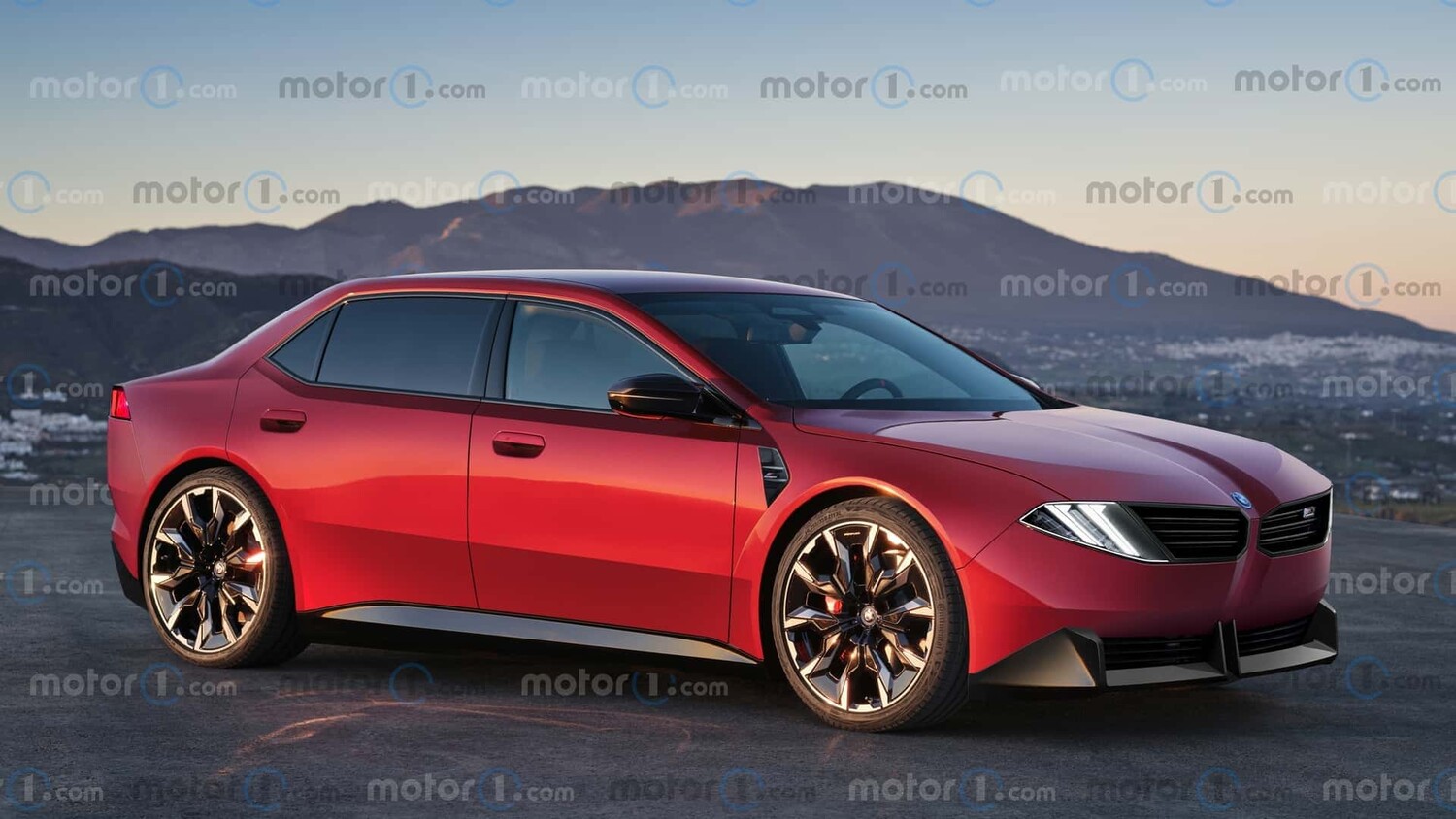
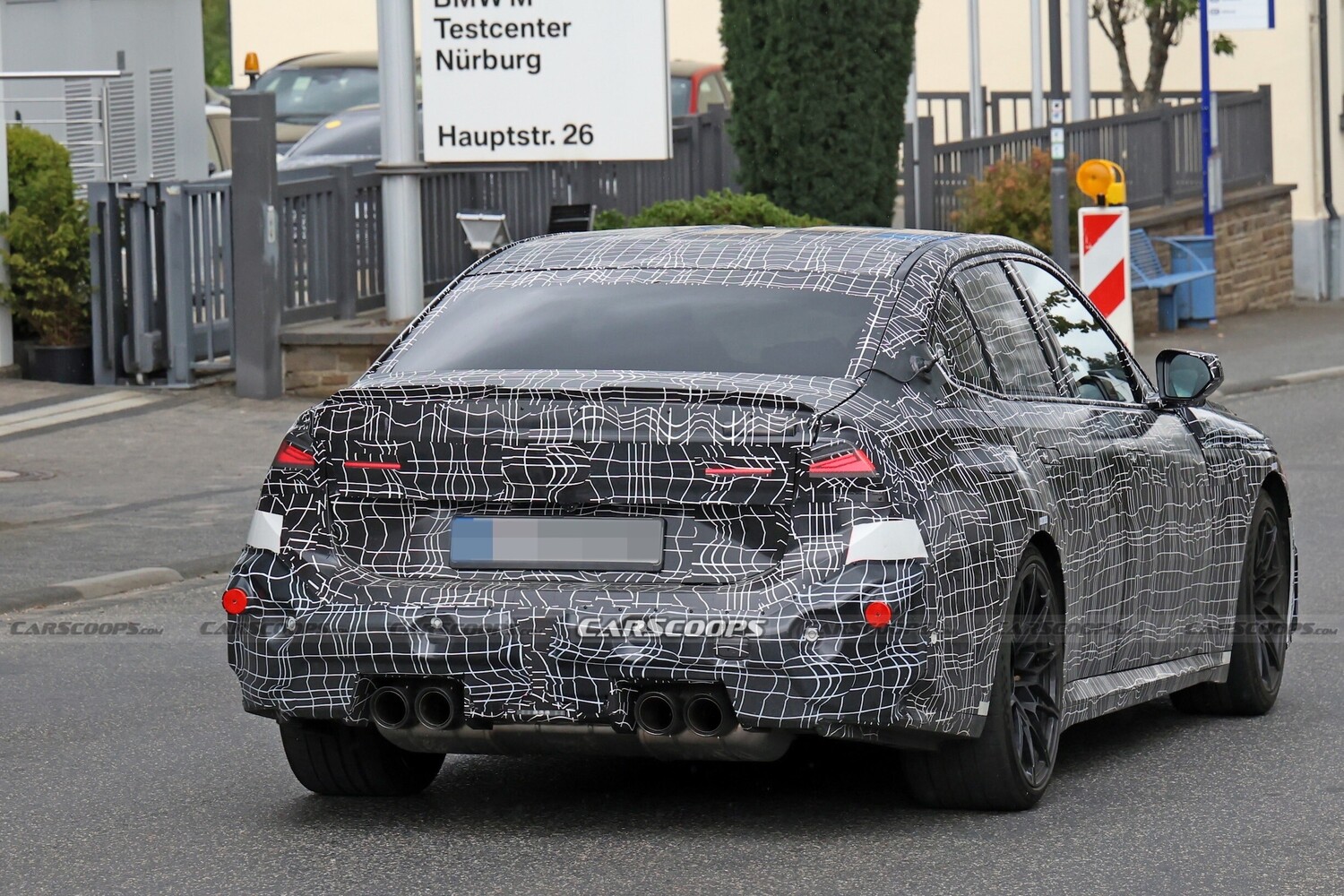
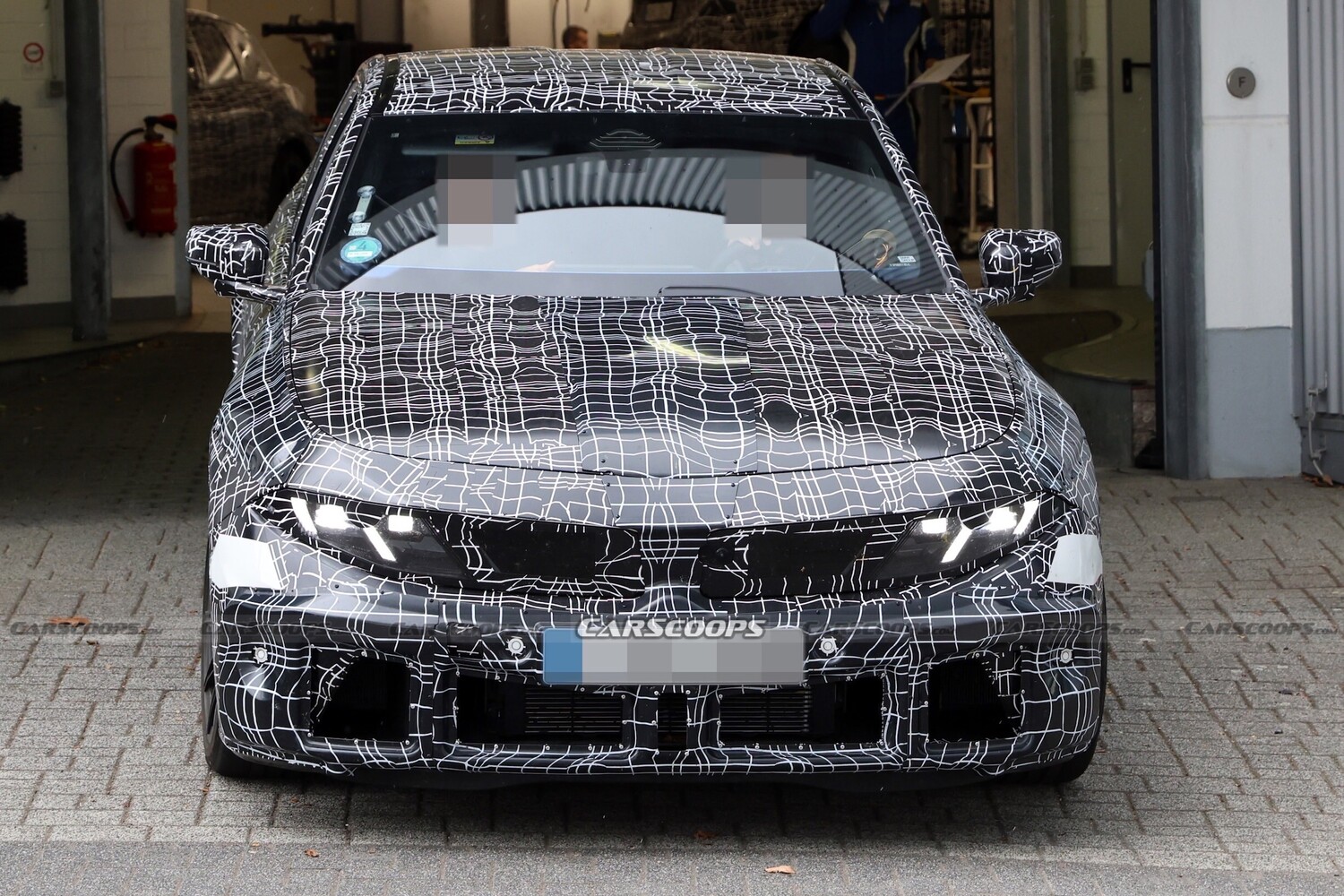
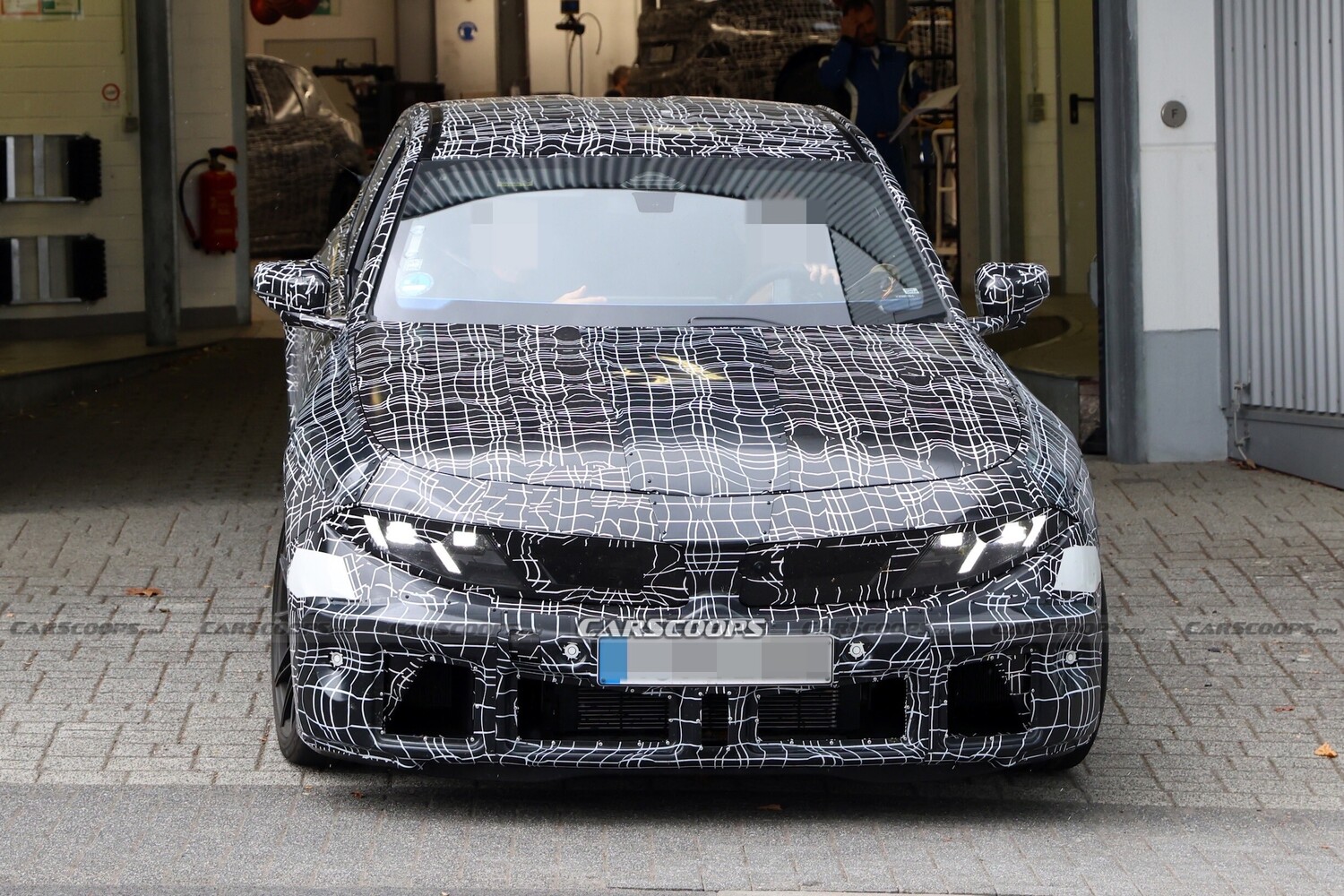
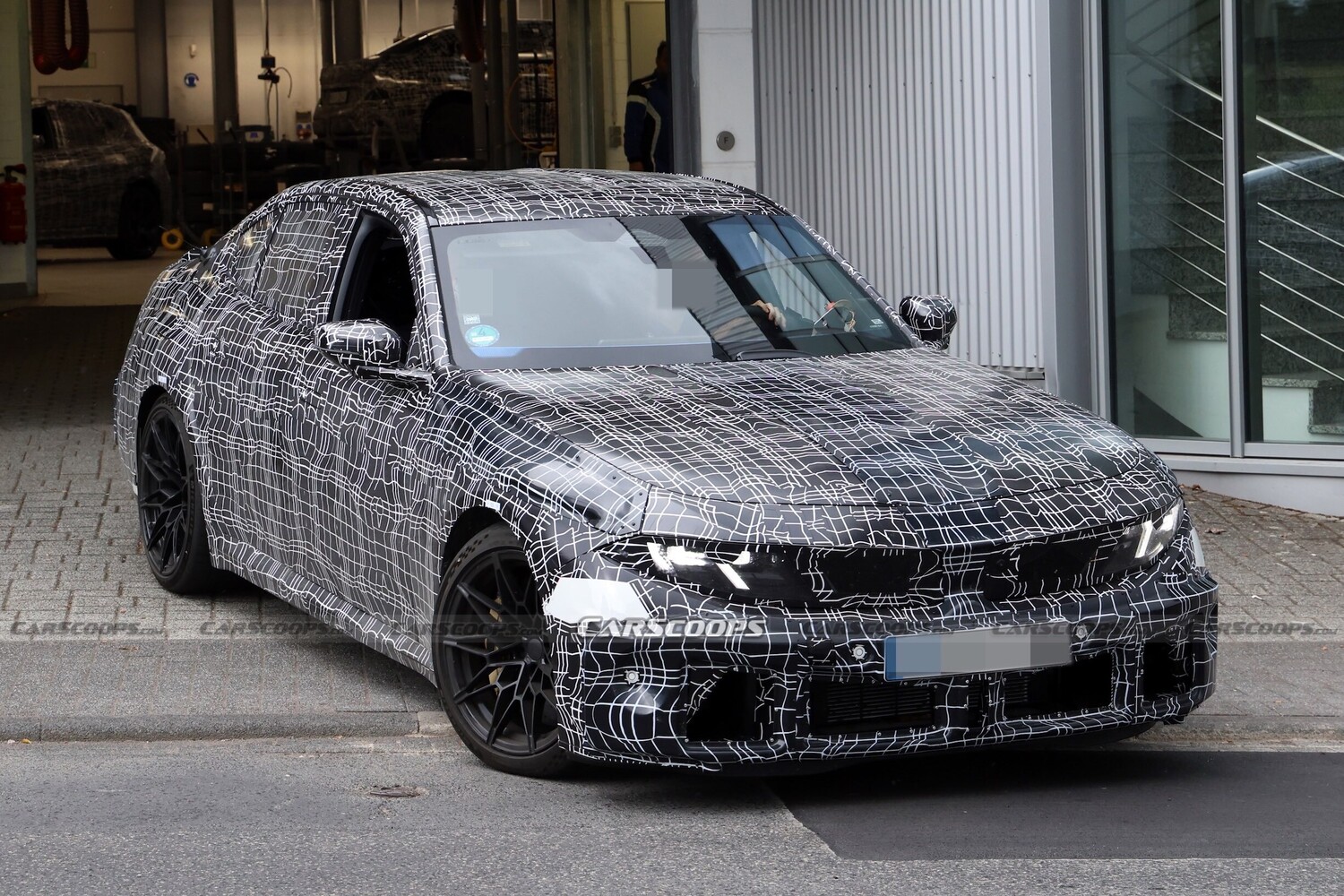
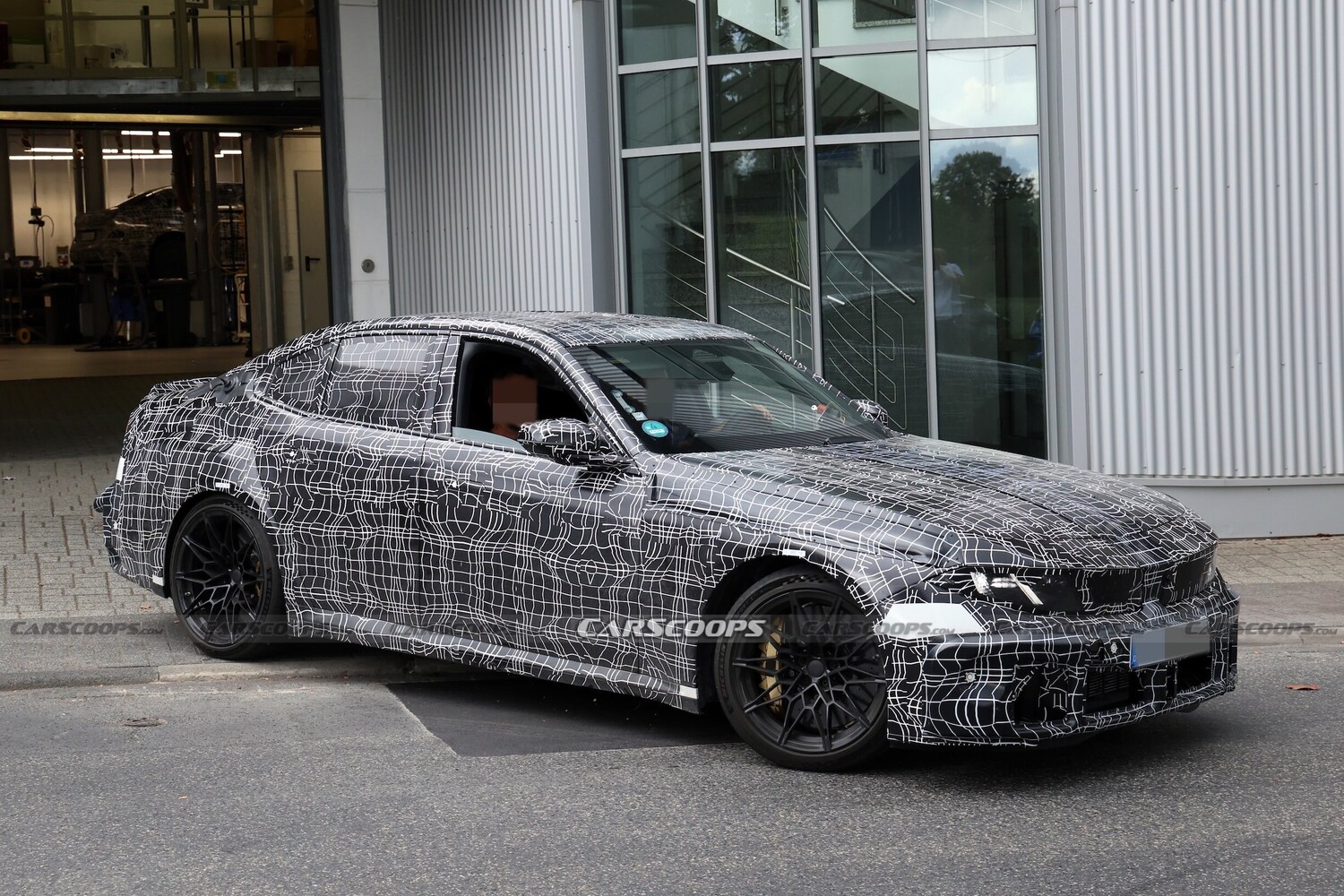
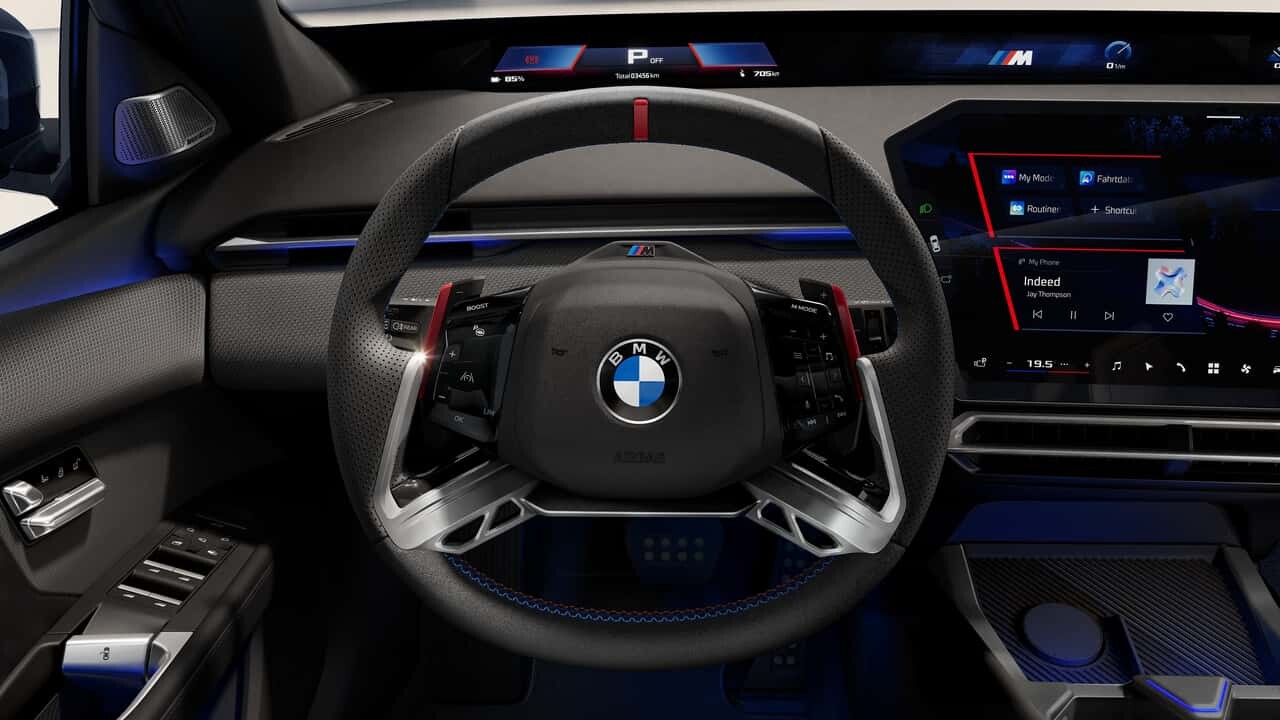
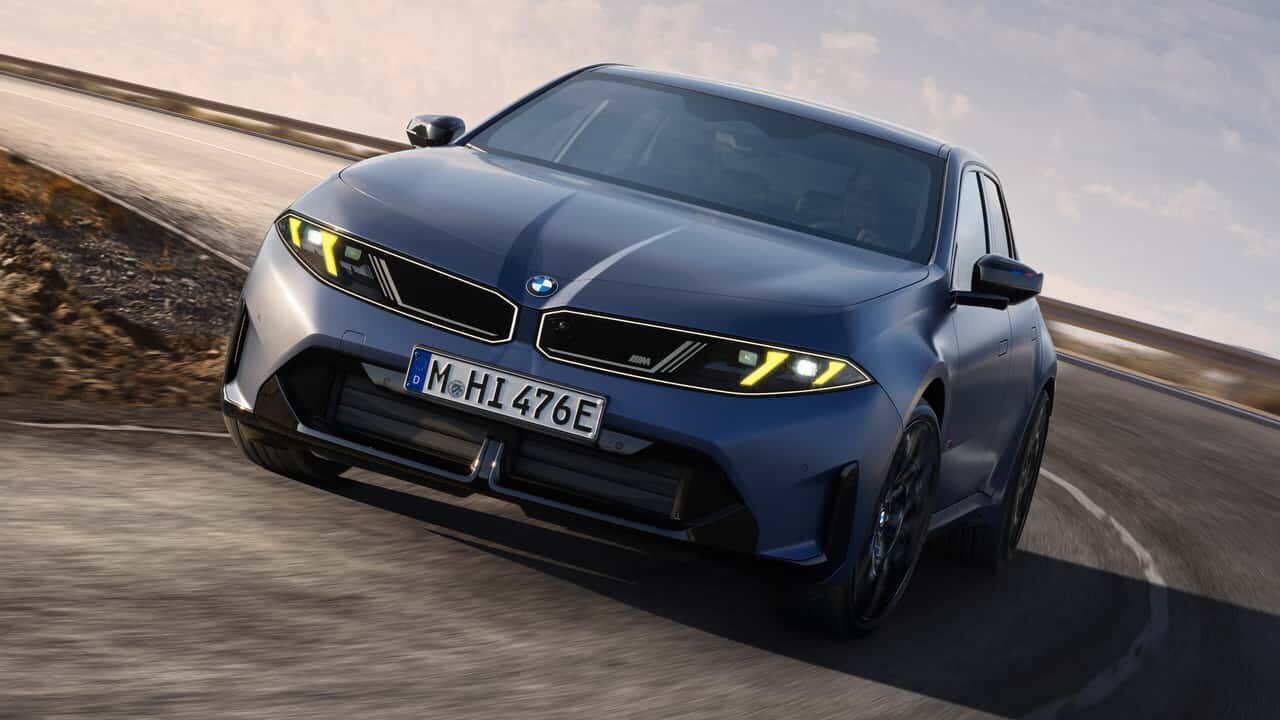
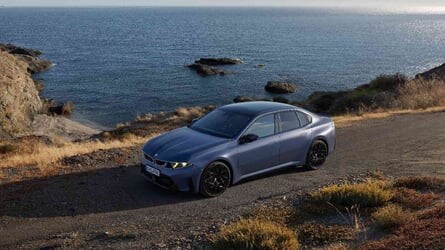
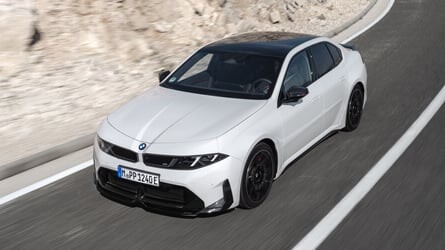
How is this possible? The BMW M3 just turned 40! It certainly helps explain why, like many of us facing that milestone, it's taking stock of its life and reinventing itself—radically changing its look, 'roiding up its power, going on an extreme CO2-reduction diet, and treating itself to expensive new tech gadgetry as if its time were short. You'd like to think its best friends would be supportive, but M3-fan attitudes range from intrigued but skeptical to outright hostile. People these days, am I right? The good news is, as we've reported on the feeder-series cars (i3, 330i, M350 xDrive), BMW has gone full either-or mode with the Neue Klasse 3er. Folks will be able to choose from a range of turbocharged four- or six-cylinder 330 or 350 models, or from a lineup of electric 3s at differing power and price levels—each on its own unique platform united by a common design theme. The same will be true for the M3. As this new eighth-gen ZA0 fully electric M3 rolls out, the existing G80-generation M3 will remain available while the team turns its attention toward finalizing the next gas M3—to be dubbed G84—over the next couple of years. No official details have been divulged about the next gas M3, but don't expect it to outmuscle this one. And yes, they will both be badged M3 (the faithful all call their cars by their code names anyway). We've already laid out most of the details on the ZA0. Now we've had a chance to experience the new M3 at BMW's Miramas Proving Ground in France—which is itself celebrating its 40th year. We'll introduce you to the M3 the way we were introduced: by jumping straight into a preproduction M3 passenger-side sport seat for a full-bore taxi ride. BMW Hailing an M3 Taxi Head of vehicle dynamics Sven Esch is at the controls and warns, "I recommend to put your head to the seat back." He then pulls both shift paddles back and stands on the go-pedal as the thrumming idle increases in pitch and stutters at its synthetic stall speed. When the flagman flashes thumbs-up, he releases the paddles, four Pilot Sport S6s bark once, and we're off. (Yes, activating launch control is that simple.) The neck-snapping forces will feel familiar to anyone who's sampled upper-tier Porsche Taycans, and with M3 output estimated around 850 hp and 900 lb-ft, the weight-to-power roughly slots between the Taycan GTS and Turbo models. What seems to separate this electric slot car from others is its uncanny cornering behavior and oddly stirring soundtrack. Better driving through science. In a matter of minutes, we're back where the shuttle had dropped us, innards mildly scrambled, and we head in for the usual PowerPoint indoctrination. Most of it is a review of our advanced tech deep dive. Minutes later, our wait is over. BMW On Track, the ZA0 M3 Feels Unfair I'm lined up behind a pro BMW team driver in his M4 GT4 race car, and he's prepared to go as fast as he thinks I can manage, around a track he's been lapping for weeks. The M3 development engineers are also watching. No pressure. Two sessions will consist of one familiarization lap, several hot laps, and a cool-down. Within the first few corners, my wildest hopes for the M3 are being fulfilled, as the Neue Klasse's immense computing power is brought to bear on a dedicated motor for each wheel. Gone is even the infinitesimal latency one senses in an i3 or iX3 as the system directs torque across an open differential via millisecond ABS pulses on one side or another. That poor M4 GT4's engine can only dispense its power in big, thick multi-horsepower wadges, shoveling the pound-feet left or right across the rear axle via a mechanical differential, while my mount is dispensing huge power to each tire in precise milliwatt doses—both positive and negative—as conditions warrant. BMW The first session starts out in M1 mode: Auto S (M eDrive's "self-shifting" mode) with DSC on, midlevel brake regen, and everything else in Sport. The nature of the system's ability to precisely measure and fully exploit available traction means I only notice one or two turns where hard acceleration results in noticeable DSC intervention. As in all good M3s, this competition seat seems to bolt my body into the extremely rigid chassis. There's no perceptible flex and very little body lean as big g loads transfer left to right. The steering-wheel rim is transmitting small force interruptions as lateral grip varies across corner curbing teeth. The brake pedal always feels firm and perfectly linear despite only occasionally activating any calipers. At the end of the session, an infrared reading of our brakes shows they're hundreds of degrees cooler than the lead car's, testifying to the amount of energy the motors have recuperated. In session two, we start off in M2 mode: max recovery, Sport+ chassis, and DSC in M Dynamic Mode. Now the turns that woke up DSC are offering beautiful, controlled drifts. A later lap with DSC off demonstrates that higher chassis slip angles can be achieved without triggering an anxiety reflex. BMW Sven Esch had used the paddles on his taxi lap, so I try them during my second session. Perhaps with the interior camo in place, I'm not fully aware of the upshift lamps, but I'm hitting the fake rev limiter that interrupts torque, so I revert to Auto S to avoid any such interruptions. I do agree that the sound of shifting—with or without paddles—offers a useful auxiliary perception of how much the car has accelerated up each straight and how much you've slowed before each corner from lap to lap. I remain glued to the lead car throughout both sessions and start to wonder, is this the sort of advantage racing organizers might decide to ban as unfair? Esch is riding shotgun now, and (politely?) affirms that I was probably running at about 80 percent of his earlier pace. Another thing I notice is that neither session made me sweaty, as wrestling a 2.5-ton car around a 2-mile track with 13 turns taken at nine- or ten-tenths usually does. This was easily the most impressive track drive of a new vehicle I've experienced in many years. The G84 will struggle mightily to impress me this much. With that established, let's address a few issues annoying the M3 faithful: BMW Battery Weight Will Kill Handling BMW has yet to divulge the ZA0 M3's curb weight, even relative to the AWD i3's 4,950-pound mass. Yes, the car uses a lot of BMW's new Natural Fiber—think carbon fiber, but with the energy-intensive carbon fibers replaced by natural flax-based ones—for the sport seat frames, roof, and various other body panels. Might that shed enough weight to offset the two extra motor/drive units, uprated brakes and suspension components, and the substantial structural enhancements? Maybe? The gas M3 Competition xDrive weighs a shade less than the M340i xDrive, but we'd bet on a 100-pound increase. Battery Range Will Shorten Track Sessions OK, this M3 may not have much future in 24-hour racing. But thinner electrodes that leave more space for an electrolyte featuring new (and yet undisclosed) chemistry designed to improve ion transfer mean these batteries can absorb 540-kW regenerative braking. With the first 0.4 g of brake energy returning to the battery, on a circuit like this, three hot laps can recoup enough energy to power a fourth. And on the road, 420-kW DC fast charging (20 kW more than i3) can add 200-plus miles in 10 minutes. We Hate Fake Engine Noise Give this a listen. M eSound definitely registers as automotive—no "Tron-on-a-wah-wah-pedal" nonsense. Spectral analysis points to a primary tone rising through 35–80 Hz with strong overtones extending into the 200–450-Hz range—a sound signature that doesn't suggest an obvious firing-order pattern that aligns with a particular cylinder count. Overrun provides nice electronic burbles. We reckon most owners will leave it on, though with it off you can listen to the front tires micro-scrabbling for grip; it's the high-performance track equivalent of off-roading a Rivian and listening to nature. Note, all these sounds are inside the car; you only get regulated low-speed pedestrian awareness noise outside—at least for now. BMW How Much Will the Electric M3 Cost? How will BMW price its first-ever electric M3? An engineer simply scaling up for the horsepower bump over today's G80 M3 Competition might suggest a price in the $145,000 range. Or maybe it's useful to use weight-to-power as a scaling element to slot the M3 where it would fit between the Porsche Taycan's GTS and Turbo variants. That math would suggest $169,000. The wild card is the way M3's Heart of Joy seems to do a lot more with its power. It strikes us as worth paying for, but will buyers agree? The Electric M3 Makes a Convincing Case Prepare to consider the ZA0 M3 as a tidier, cheaper, similar-performing Porsche Taycan Turbo—about 8 inches easier to parallel park, while packaging similar interior dimensions, we expect the M3 will allow most drivers to turn similar power into even more scintillating driving dynamics than offered by the already impressive Taycan—at a price that's sure to undercut the Turbo. The electric M3 truly delivers better driving through science.

 Liked by Jackson Côté, Benjamin Wright











 Liked by Jackson Côté, Benjamin Wright