The major initiatives needed for Volkswagen Group to jump-start U.S. sales and boost market share, long a top corporate priority, are starting to take shape but significant hurdles and questions remain.
Under President Donald Trump’s bruising tariffs, VW Group, the world’s second-biggest automaker, has seen its strategy of importing vehicles engineered and built in Europe largely break down.
And the automaker’s North American manufacturing footprint, while significant, is hamstrung with the future of the United States-Mexico-Canada Agreement in limbo and a busted bet on electric vehicle production in Chattanooga.

Keep up with product planning news with Automotive News' regularly updated database.
Future Product database: 5-year vehicle timelines
Future Product guide: Our 10-week series on future products by brand
With a second multibillion-dollar plant on deck in a span of less than four years, VW Group could more than triple its U.S. production capacity to 550,000 once the Scout Motors Production Center in Blythewood, S.C., and a new Audi factory in middle Georgia are at full utilization, producing 200,000 vehicles each annually.
The Georgia assembly plant, announced Oct. 24, is the latest signal that VW Group is doubling down to reverse its U.S. fortunes, made more urgent by the collapse of sales in China, the steady rise of Chinese automakers across Europe, falling revenue and wider financial losses.
RELATED ARTICLE: Audi lowers margin forecast amid China, Europe pressure
Over time, VW Group will be able to pump out some 1.2 million light vehicles across North America a year, assuming sales and exports kick into a higher gear as well.
In a sign of the rough road ahead and need to lean more on North America, Audi cut its 2026 earnings forecast, citing a deepening sales slump in China and competition in Europe that will reduce the brand’s operating margin to as little as 3 percent.
RELATED ARTICLE: Johan de Nysschen on why Audi chose to build a U.S. plant and not partner with other VW Group brands
How the expanded U.S. manufacturing footprint will be allocated and leveraged with new products will be key to the company’s sales success.
VW’s Chattanooga plant has capacity to produce 150,000 vehicles and is solely building crossovers. In Mexico, VW’s Puebla factory can produce 525,000 models a year and Audi’s San Jose Chiapa plant can churn out 150,000 vehicles for global markets.
Sign up to get our afternoon video email. The video focuses on a new topic in the news each day.
While the new Audi plant will build tried-and-true crossovers, Scout will target white space, large body-on-frame trucks missing now from VW Group’s product portfolio.
The VW brand could also fill out its U.S. lineup by targeting body-on-frame vehicles for the first time, executives say.
How plant could change Audi
Audi will invest around $4 billion in the factory and create 4,500 jobs. Construction is set to begin in 2027 and output is slated to start in the early 2030s.
“It’s a long-term investment for decades and will make Audi a different company in the future,” Audi CEO Gernot Döllner told a small group of journalists Oct. 25. Audi imports each vehicle it sells in the U.S. from either Europe or Mexico and the company’s hit from U.S. tariffs totaled $4 billion in 2025.
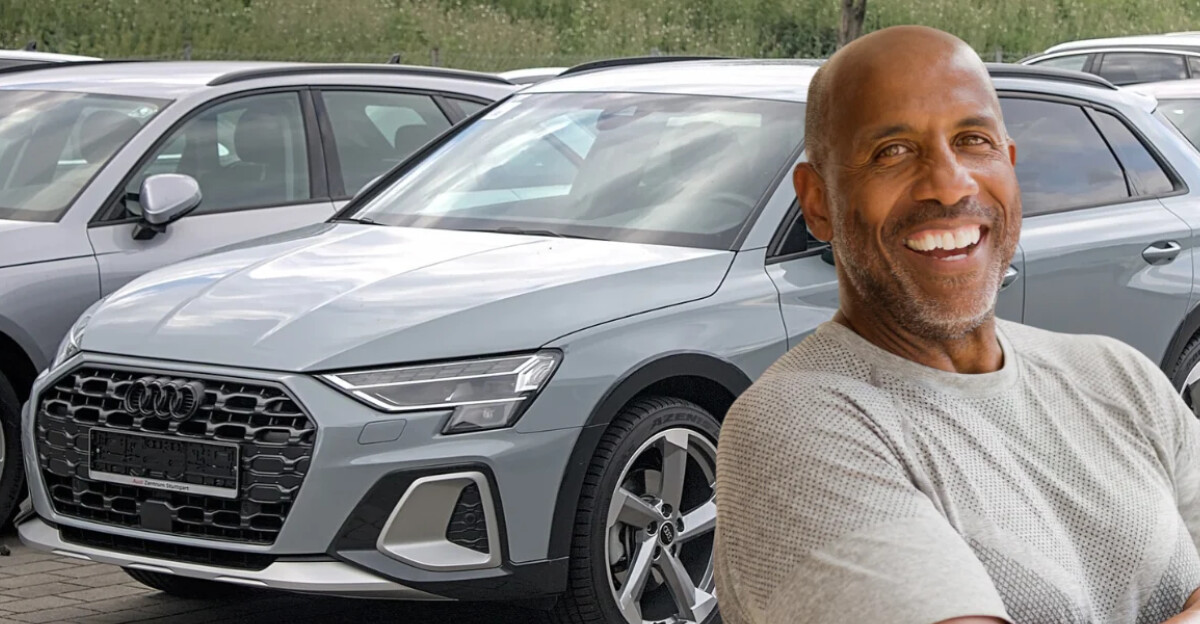
The Georgia factory, dedicated exclusively to Audi output, will build the Q7, Q8 and Q9 utility vehicles, with around 50 percent of output allocated for the U.S.
“It’s the right product to go into that plant,” said Tim Urquhart, a principal automotive analyst at Mobility Global covering Germany, Russia and Central Europe.
Mobility Global expects some Q7, Q8 and Q9 output to remain in Slovakia after the Georgia plant goes online. Production of the Q9, a new nameplate and Audi’s largest vehicle ever, began earlier in 2026.
Following a path blazed by BMW, Mercedes
With the U.S. plant, its first, Audi is following rivals BMW and Mercedes-Benz, both of which opened factories in the American South in the 1990s that today produce some of their most profitable models, all of them utility vehicles tailored specifically for American consumers.
BMW is on a three-year streak of record U.S. deliveries and seven consecutive years as the top-selling luxury brand in the U.S.
Audi set a U.S. sales record in 2023 but has since faced declining volume, with deliveries off 16 percent to 164,942 in 2025.
The company has become almost a second-tier luxury brand in the U.S. because of its lack of local production, said Sam Fiorani, vice president of global vehicle forecasting for AutoForecast Solutions.
RELATED ARTICLE: U.S. said to promise tariff relief to Audi for Georgia plant
“Audi has positioned itself to better take on Mercedes and BMW this way,” Fiorani said of the new Georgia plant. “The German rivals have had nearly three decades of local production [with] their SUVs. This gives Audi a chance to blossom into that volume that they’ve always wanted.”
Audi also plans to build 25,000 vehicles a year at Scout’s plant in South Carolina, Reuters reported, citing a U.S. government official involved in the talks to secure the Georgia factory. A Scout spokesperson said the brand has no announcements to share at this time.
It also remains unclear if and when Audi or other VW Group brands will be granted any tariff relief as a result of the Georgia investment and jobs planned.
Porsche CFO Jochen Breckner, speaking during the automaker’s Oct. 27 earnings call, said the brand continues to operate on the assumption that 15 percent import tariffs will remain in place going forward.
Low market share remains an issue
VW Group’s long-held goal of capturing 10 percent of the U.S. market has been moved further out.
VW Group’s share of the U.S. light-vehicle market stood at 3.5 percent in 2025 across the VW, Audi, Porsche, Bentley and Lamborghini brands. The VW brand’s slice of the market stood at 1.9 percent through the third quarter while Audi’s share was 1 percent, according to the Automotive News Research & Data Center.
The company believes the Scout lineup could eventually add about one percentage point of U.S. share.
The VW lineup is also ripe to expand and add market share, officials say. VW is evaluating body-on-frame vehicles for the U.S., company executives told a group of reporters Oct. 22.
A final decision on entering new segments, and where such models will be produced, hasn’t been made but could be decided in the next two to three months, VW executives said.
VW is not planning to utilize Scout’s body-on-frame platform because the brand is eyeing vehicles smaller in size, likely signaling midsize light trucks.
Why Audi plant still needs approval
The Georgia plant, announced during a Trump political rally in Perry, Ga., just days ahead of the U.S. midterm elections, appears far from being a done deal.
The project has yet to be approved by VW Group’s supervisory board, including labor representatives. VW’s works council said Oct. 25 there are several open questions to be answered internally by committees.
Döllner’s on-stage embrace of Trump drew fierce criticism in Germany, handing unions new leverage over Volkswagen Group’s restructuring plans.
Audi has studied U.S. assembly for decades, and Döllner said the latest search began in earnest three years ago and was not solely driven by tariffs.
Audi’s product portfolio, which has undergone significant updates and additions, already reflects a U.S. focus. But the Georgia plant is part of a larger U.S. strategy, said Vito Paladino, president of Audi of America and head of the Audi North America Region.
“There is significant potential in this market,” Paladino said, “and it’s time really to seize this opportunity.”
Larry P. Vellequette and Automotive News Europe contributed to this report.