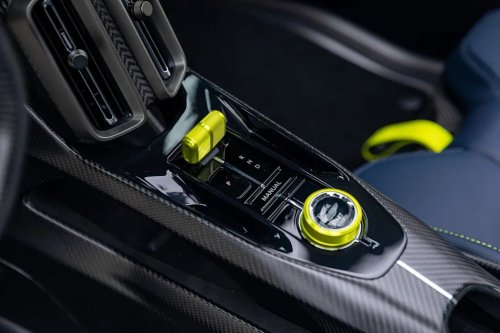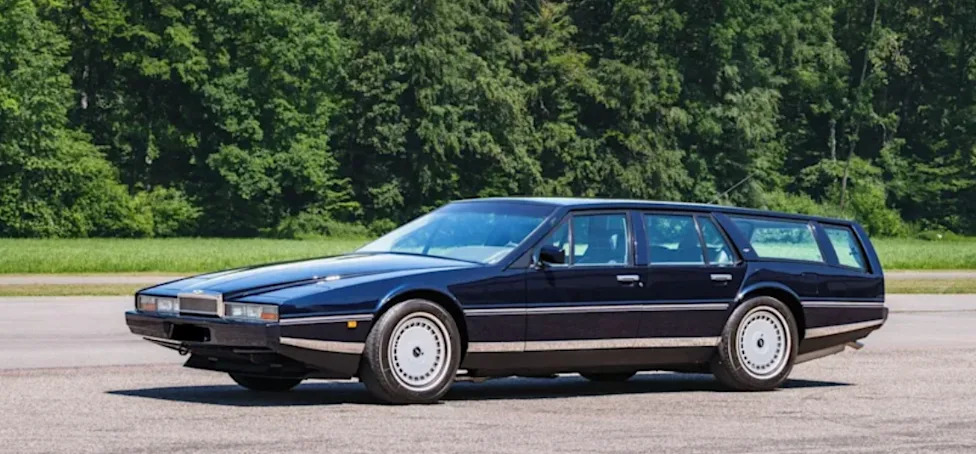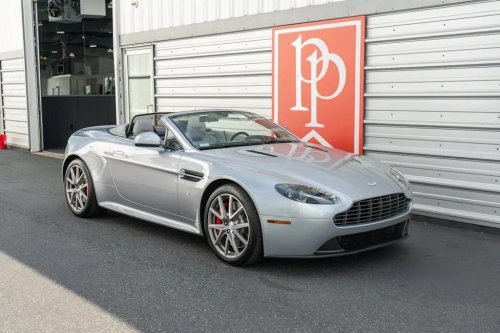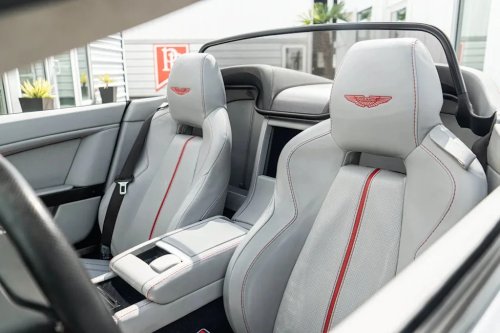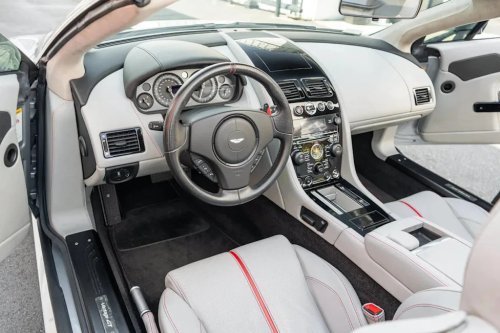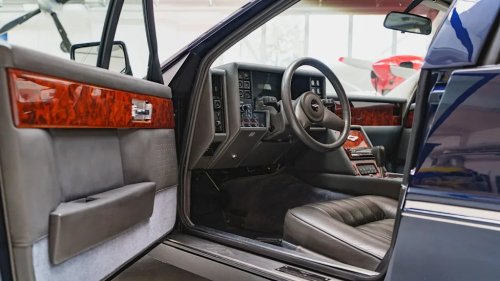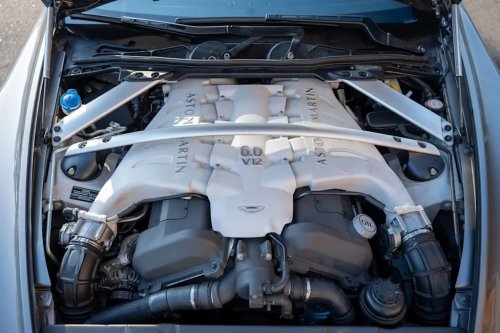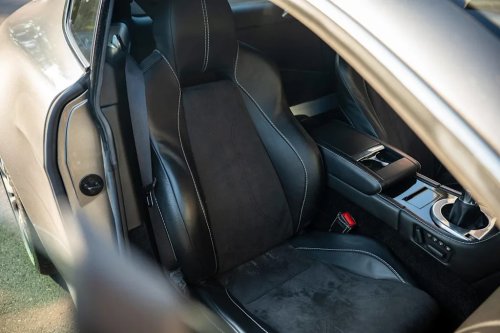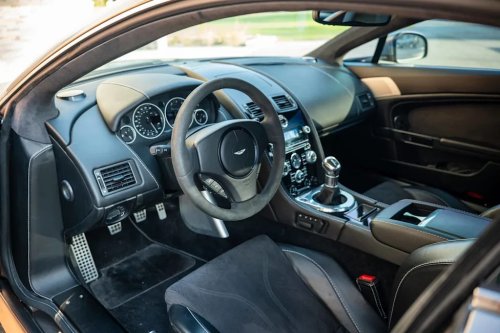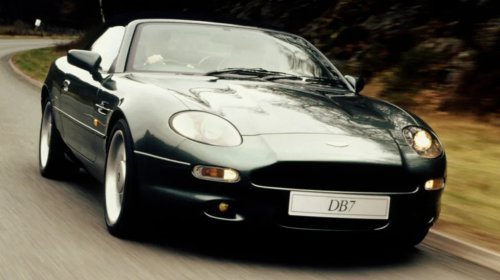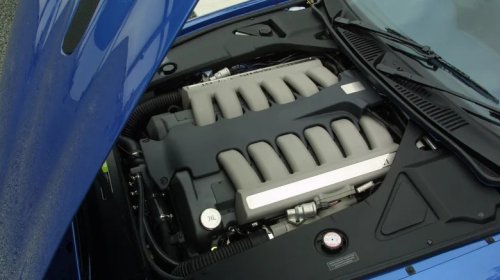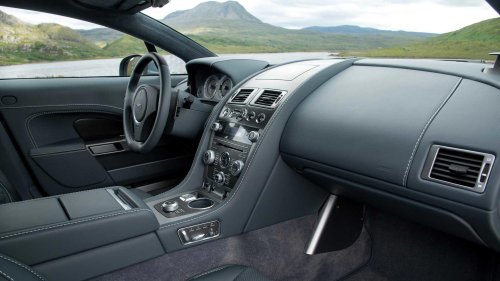
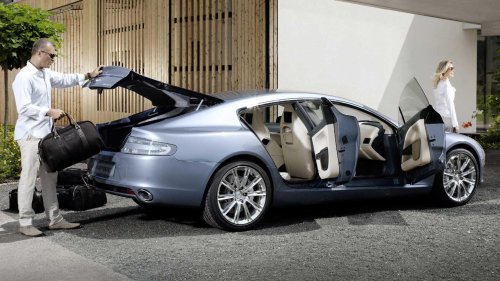
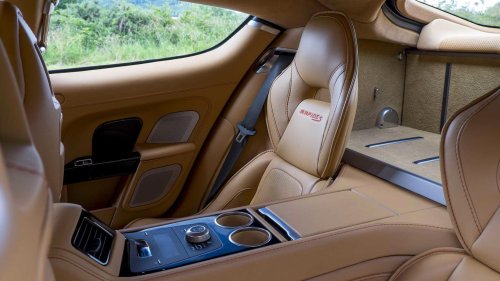
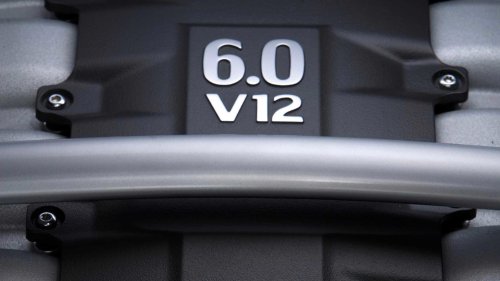
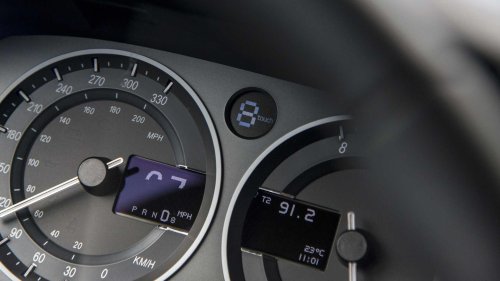
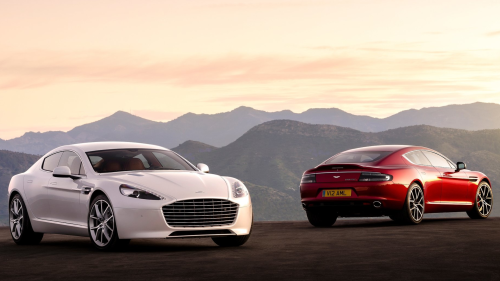
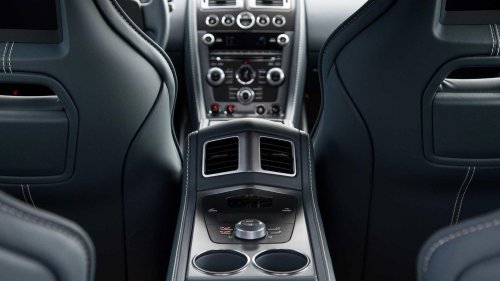
























Many luxury brands today tout screen acreage and app capabilities when promoting their cabins, but this obsession with the digital world has increasingly come at the expense of old-world ideals like materials, craftsmanship, and build quality. The Audi A6 is a prime example, its dashboard lined with screens resembling a coder’s workstation or a teenager’s dream gaming rig more than a comfortable place you’d actually want to spend hours in on a long road trip.Things were very different even just a decade ago, as the Aston Martin Rapide S proves. Before software updates and display counts became luxury talking points, Aston Martin prioritized tactile richness and timeless design, resulting in an interior that still feels genuinely special today – and arguably better than many modern attempts at high-end cabins.All prices were accurate at the time of writing but are subject to change. Where Comfort Comes First Aston Martin Key Facts To Know Tachometer needle spins counter-clockwise to mirror speedometer Glass key (dubbed the Emotion Control Unit) needs to be inserted into the dash Power comes from naturally aspirated V12 Aston Martins almost universally turn heads with stunning exteriors, though their interiors have been a bit of a mixed bag, especially under Ford ownership, when some switchgear and other components were borrowed from models wearing the Blue Oval. That changed with the launch of the DB9 for the 2004 model year. Still developed under Ford’s stewardship (Ford didn’t sell Aston Martin until 2007), the DB9’s interior combined classic craftsmanship, rich leather, and aluminum trim with impressive ergonomics, giving it a tactile quality and refinement that set a new standard not only for the brand but for sports-luxury cars in general.This interior was carried over almost unchanged to the Rapide launched for the 2010 model year, essentially a stretched DB9 with extra doors and seats. The design reached its zenith with the harder-edged Rapide S, introduced for 2014 and produced until 2017. It remains a high-water mark for Aston Martin, with even later models struggling to surpass the combination of materials, layout, and meticulous attention to detail.Aston Martin The theater begins even before you step inside. Flush handles require a push on one end to pop out a stick-shaped lever, which you then pull to open. With the frameless doors, the windows tuck down in perfect co-ordination as the latch releases, allowing the “swan doors,” as Aston calls them, to swing outward and upward. Built-in friction plates let the doors stay suspended at any angle, which is perfect for when you’re climbing out of a steep parking spot.Once inside, details like the gauge surrounds and controller dials – all genuine machined aluminum – give a solid, tactile feel. Even minor controls, like toggle switches, are often brushed or polished metal, instead of the plastic-coated stuff you find in most cars today. Even the key fob was made beautiful, formed from crystal glass. This almost old-world quality was paired with a sense of minimalism that lent the cabin a modern feel, with even a conventional gear lever replaced by shifter buttons on the dash.Aston Martin It’s not all good news. A digital screen sits atop the dash, but it’s small, low-resolution, and not a touchscreen, so some text can be hard to read and controlling it is difficult on the move. You navigate it using buttons and a rotary controller mounted next to the unit. Even when new, the system felt dated, and today it’s easier to just tuck it away and rely on a smartphone for navigation or Bluetooth-connected media. Basically, if you want a screen-free interior, this is the car for you. Out back, the two rear seats, separated by an extended center console, are another sore point. They are difficult to access due to the low roofline and too cramped for anyone six feet or taller beyond a quick trip to the local shops. One highlight of the rear, however, is the storage area: a long hatch opens to reveal a rear compartment with a fold-flat bulkhead piece, allowing long items like skis to fit. V12 Performance To Boot Aston Martin Even if you ignore the interior, the Rapide S still impresses with a gorgeous exterior and performance that made it nearly as quick as the era’s top sports cars. Beneath the long hood sits a hand-built 6.0-liter V12, mounted behind the front axle and engineered to unleash an intoxicating roar at startup before settling into a civilized note for everyday driving. Push it past 4,000 rpm, though, and the engine wails with the unmistakable fury of a naturally aspirated V12.Handling is another strength, even with a hefty curb weight of roughly 4,400 pounds. Compared with the already capable Rapide, Aston Martin lowered the engine by 0.75 inches to drop the center of gravity. They also recalibrated the stability control, transmission, and adaptive damping (Normal, Sport, and Track modes) to suit the sharper focus of the S variant.Aston Martin On a spirited drive, the car clings to the road with confidence that belies its bulk. At 84 inches wide, it’s a substantial machine, yet from the cockpit it feels surprisingly compact, allowing the driver to place it with remarkable precision. The steering is quick and doesn't have any modes for adjustment, but it perfectly matches the car’s character. And staggered tires, measuring 245/40R20 up front and 295/35R20 at the rear, provide grip that’s more than adequate for street speeds, while massive vented brakes effortlessly scrub off speed. How Much To Pay Today Aston Martin Anyone looking to own a Rapide S can find a decent example for just a little more than today’s average price for a new vehicle. A quick search on major classifieds shows prices starting around $60,000, and even at that level, many have only about 30,000 miles on the clock, showing how little these cars are actually driven.The most affordable examples are the earliest model years, while more recent 2016 and 2017 cars command roughly $20,000 more, even with comparable mileage. A more extreme Rapide AMR with 603 hp was also offered for the 2019 and 2020 model years with a starting price of $240,000, though only 210 were built for worldwide sale and prices today still hover close to $200,000.For buyers on a tighter budget, the Rapide S’ same stunning interior can still be had in the regular Rapide, which spans the 2010–2013 model years, though power dips to 470 hp on this model. You can find these listed for just over $30,000, with mileage around 60,000–70,000 miles. Raise the budget to about $40,000, and plenty of examples with well under 50,000 miles are available.Higher-mileage cars shouldn’t scare you, as regular driving is beneficial for them, provided routine maintenance has been kept up. Always get a pre-purchase inspection and consider a factory-backed extended warranty. A Love Of All Things Analog Aston Martin Despite its age, the Aston Martin Rapide S remains a benchmark for tactile, driver-focused interiors, proving that cabins can feel luxurious without relying on endless touchscreens. Ultra-exotics like the Bugatti Tourbillon and De Tomaso P72 are returning to this philosophy, offering screen-free cabins, and over time, elements of this analog approach should filter down into more accessible models.Regulatory shifts are reinforcing the trend. Only in February, China proposed rules that essential car functions retain physical controls, reversing the touchscreen-only approach. Given the size of the Chinese market, this move is likely to influence manufacturers worldwide, signaling that a tactile, human-centered cabin may finally return to many luxury cars.Sources: Aston Martin