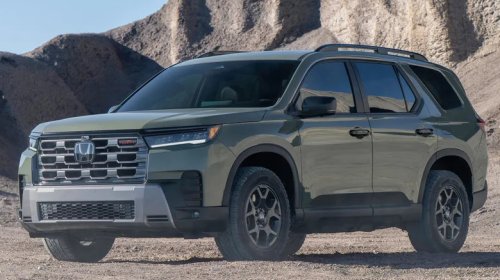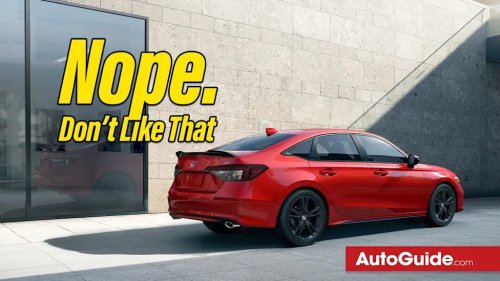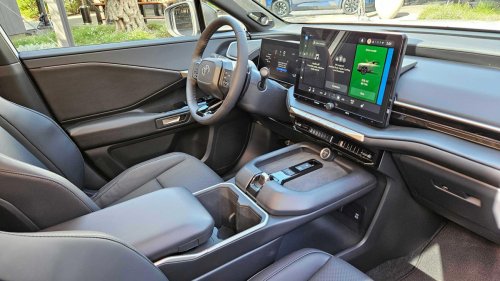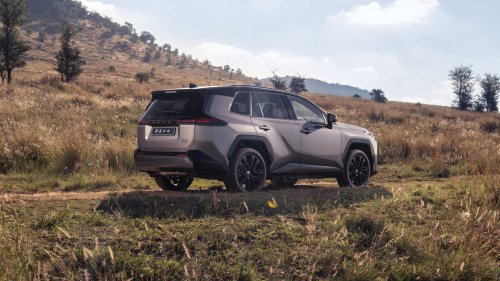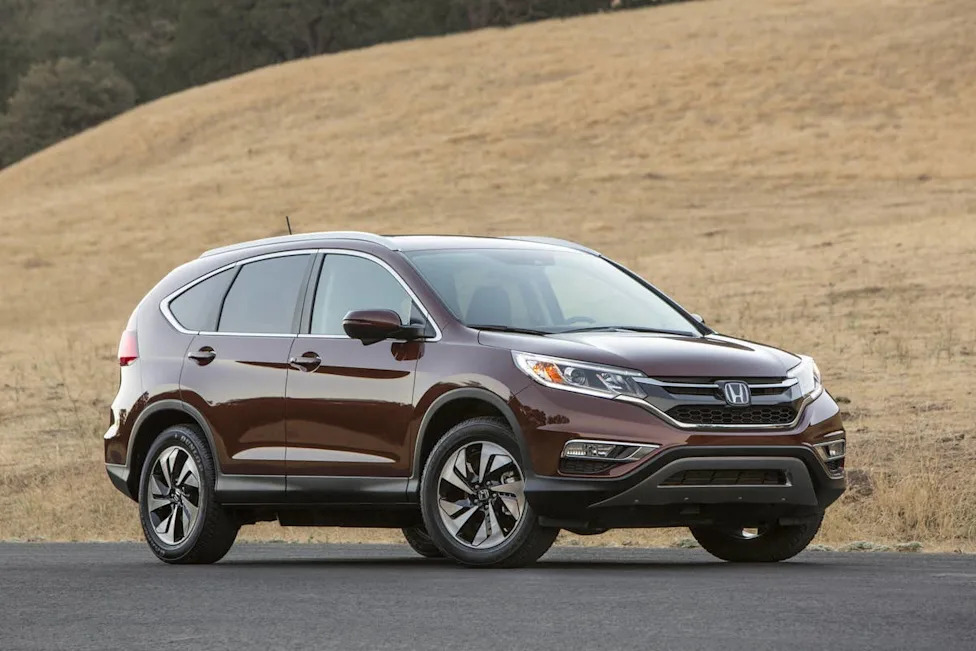
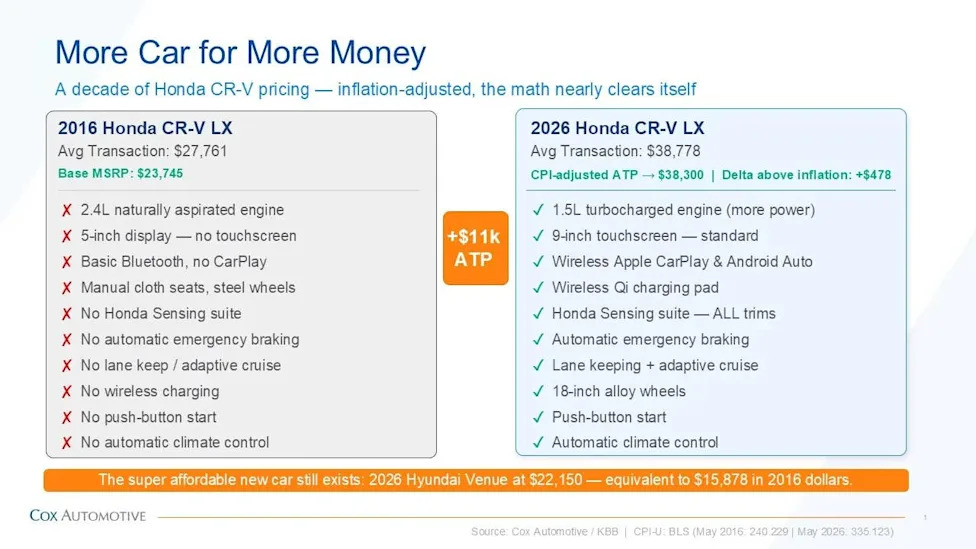



















Autoblog and Yahoo may earn commission from links in this article.A decade of rising sticker prices tells only half the storyEveryone's experienced the sticker shock at a dealership. A Honda CR-V that ran a shade under $28,000 in 2016 now costs around $39,000, an increase of roughly $11,000 going by average transaction prices. The funny thing is, the CR-V isn't actually the best example of runaway inflation. If anything, it's evidence of the opposite. According to new analysis from Cox Automotive, once inflation is factored in, Honda's best-selling crossover hasn't become dramatically more expensive at all. Run that $11,000 increase through a decade of inflation and the roughly 39 percent cumulative inflation means a $28,000 CR-V from 2016 would need to cost almost $39,000 today just to break even. When adjusted for inflation, much of that increase simply reflects the changing value of money, and that's the real catch.The CR-V Costs More, But So Does Almost Everything ElseHondaView the 2 images of this gallery on the original articleAdvertisementAdvertisementCox chose the Honda CR-V as an example because it's remained one of America's best-selling crossovers for years. But the same pattern was found at the bottom of the market. Today's cheapest new car starts around $22,000, but adjusted back to 2016 dollars that's under $16,000, actually below where entry-level pricing sat a decade ago in real terms. The sticker moved, the value didn't.Many shoppers compare today's MSRP with what they remember paying years ago, but inflation affects far more than automobiles. Housing costs, food, healthcare, insurance, and virtually every other major household expense have risen sharply over the same period, leaving buyers with less disposable income for big-ticket purchases. In other words, the CR-V hasn't become unaffordable in isolation. The average household budget has simply become far more stretched.Today's CR-V Also Delivers Considerably More Than Yesterday'sCox AutomotiveNone of that means the car got cheaper to build, though. A base Honda CR-V in 2026 comes standard with tech, safety kit, and refinement that would've been a top trim a decade ago. Automatic emergency braking, pedestrian detection, lane departure warning, wireless phone integration, none of it is optional anymore. Automakers aren't padding margins so much as building to what buyers, and insurers, now expect as baseline.None of this changes the reality that many Americans still feel priced out of the new-car market. Has the CR-V become expensive? Sure. Has it become vastly more expensive than inflation suggests? Not really. Ultimately, the car hasn't gotten less affordable in isolation. Everything around it did, simultaneously, and that's a much harder problem to fix with choosing another trim level.AdvertisementAdvertisementThis story was originally published by Autoblog on Jul 12, 2026, where it first appeared in the Features section. Add Autoblog as a Preferred Source by clicking here.