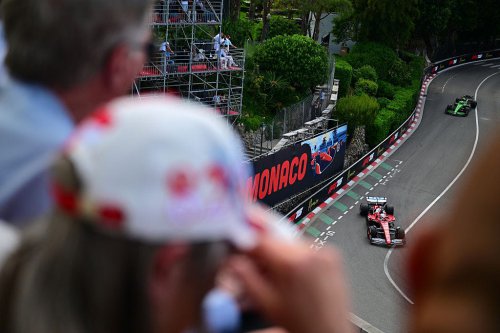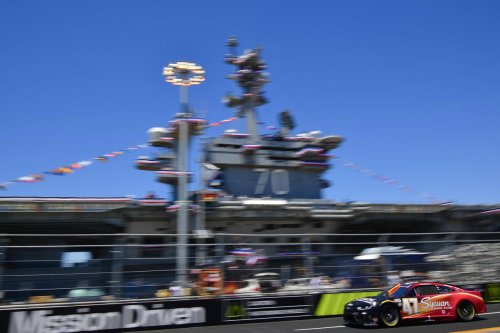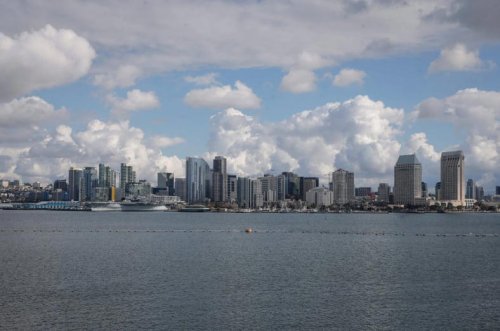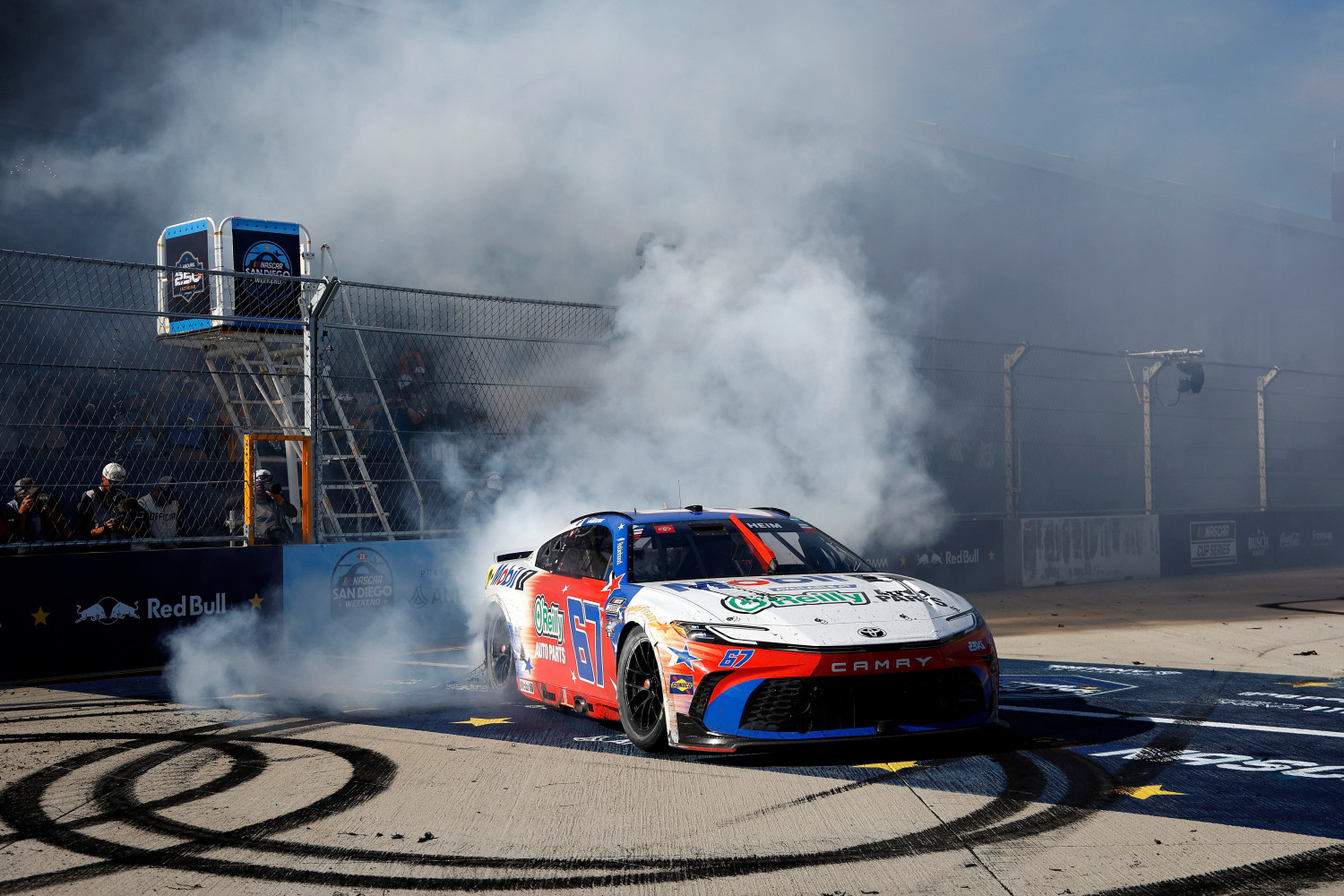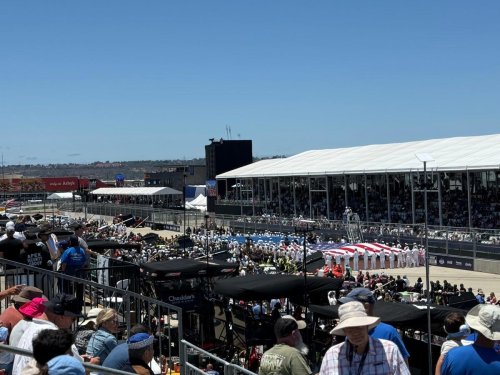
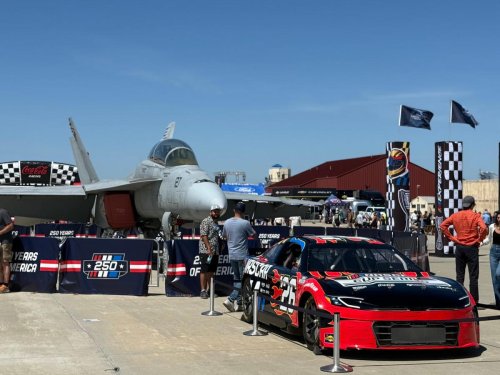
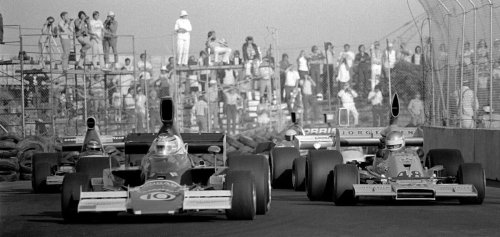
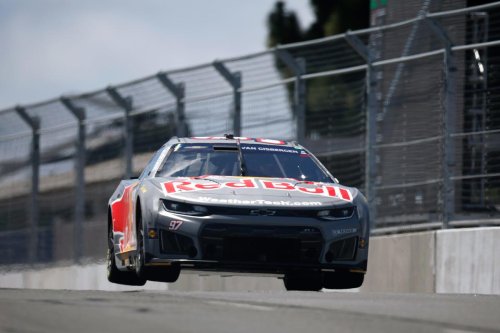
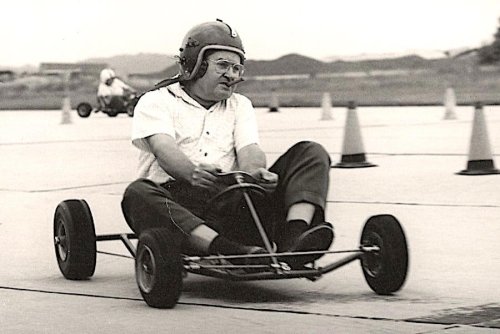
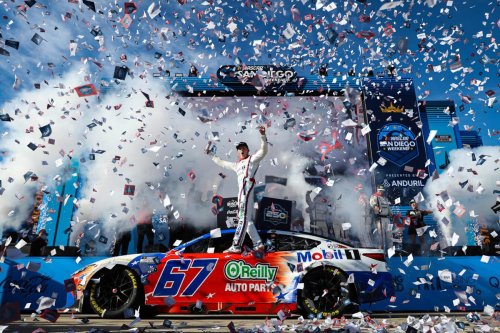
















On occasion, I need to attend a racing event as a civilian. No press access, no special privileges or indulgence. Attitude adjustment away from the car writer thing.The view from where I sat before the race started. I apologize to the little kid I nudged (accidentally) while in the stands. I swear it was an accident.My friend Luther Abel, through his media contacts at Spire Motorsports, snagged me a free ticket to NASCAR’s Anduril 250 on Coronado Island across from San Diego. While he was interviewing driver Michael McDowell and working to produce content for his site, I was up in the front stretch grandstands. I also got a free hat. It was as close to a civilian spectator experience I’ve had outside Friday nights at the Ventura Raceway dirt track since I began writing about cars in 1990.Coronado was weird. It was, seemingly so far, a one-off run on the access roads and aprons of Naval Air Station North Island, which is part of Naval Base Coronado across a bay from the city of San Diego. The civilian part of Coronado is its own city and operates as one of San Diego’s nicest suburbs, and the military part is where the Navy parks aircraft carriers. North Island is the installation to which Capt. Pete “Maverick” Mitchell is sent when recalled to a fictionally relocated Top Gun in that sequel to the movie you surely know.Neither the United States Navy nor NASCAR were shy about co-mingling with each other.For a recap of the race and the competitors’ reaction to it, read Fred Smith’s well-reported story here. But I was in the stands and I could barely see anything. The 3.4-mile, 16-turn course was reduced, for me, to about a half-mile stretch from out of turn 16 before disappearing before turn one. This is a working military base, and the infield of the course is filled with buildings and structures that support that mission. Those not only blocked most views of the course, but also dampened out much of the noise. It was eerily quiet when the pack was running on the back part of the track.Back in September 1975, when I was 14 and somehow talked my father into indulging my motorsports fetish, I attended the first Long Beach Grand Prix, an SCCA Formula 5000 race run as a proof-of-concept event through the streets of Long Beach, California. And what I remember best of that event is that I couldn’t see much of that either. At 14, just glimpsing Vern Schuppan’s baby blue No. 48 Jorgenson Eagle was thrilling. And knowing that Mario Andretti and Al Unser were only a few yards away in Viceroy-sponsored Lola T332s had me feeling adjacent to greatness. But I didn’t know who was leading or who crossed the finish line first up on Ocean Boulevard near the porno theater. Not that I knew what porn was back then.Run in September 1975, this Formula 5000 race proved that Long Beach, California, could handle Formula One cars on its temporary street race. I was there. Saw only a glimpse. The City of Long Beach has evolved around the race so that it’s a much better venue now. And a half-century in, a great party.That’s often the problem with temporary circuits as a spectator. Most of the action is hidden, and, frankly, the racing usually sucks because barriers mean narrow racing alleys and few opportunities for passing. It’s been true for nearly a century at the Monaco Grand Prix, it was the same when Formula One ran at Detroit and Phoenix and a dozen other improvised courses—including the current incarnation of the Las Vegas Grand Prix. The one exception that comes to mind is the Caesar’s Palace Grand Prix in 1981 and 1982, run in the parking lot of that Vegas resort. I drove out to the 1982 running of that wacky event and saw much of the race from my cheap seat. But it was wicked hot, there was no shade, and the port-a-potties were steaming and rank. Also, the track itself wasn’t much more than a Malibu Grand Prix course.I assume everyone else remembers Malibu Grand Prix, right?My personal goal at the Anduril 250 was to see with my own eyes what makes Shane van Gisbergen (SVG) so freakishly awesome on road courses. As far as I can figure, his brain calculates precisely what the brakes, clutch, and accelerator need to do sustain momentum through corners with astonishing efficiency. He is human traction control. And he combines that with a fearlessness that transcends self-preservation and identifies the meager passing opportunities that appear. Of course, he qualified on the pole. And I expected him to dominate.Shane van Gisbergen qualified on the pole but crashed out on the narrow Coronado course. This bump and the corner past the USS Carl Vinson were the track highlights.SVG didn’t run away with the race, but was contending for the lead on lap 32 when he was caught up just the sort of cluster crash that happens within the narrow walls of a temp circuit. It arose from the sort of dive bomb racing move that would hardly matter on a roomier road course like Sonoma, Circuit of the Americas, or Watkins Glen. But at Coronado, it was a clog in a skinny pipe that couldn’t be cleared quickly. Plus, some of the pipe itself (the wall) was knocked out of whack. So, NASCAR threw a red flag, stopping the race, and SVG finished 38th.Incidentally, a similar cluster crash in Saturday’s O'Reilly Auto Parts Series race took more than 40 minutes to clear up and repair the walls.The race took an interminable four hours and 36 minutes to complete, despite lasting only 75 laps. Fortunately, the weather was perfect with a cool ocean breeze compensating for any solar harshness.There was a lot to love about the Coronado venue. The Navy embraced it wholeheartedly, and the sailors looked damned snappy in dress whites. The corner at the docked USS Carl Vinson carrier was dramatic, even if I only saw it on a video screen. The flyover by a pair of F-35s alongside a pair of F/A-18s, led by an E2 Hawkeye, is among the best. All the huckster trailers had plenty of room, the food vendor lines were long but moved quickly, and it was a chance to get up close with equipment like the V-22 Osprey and all the military drones that Anduril Industries builds.I didn’t even know Anduril was a thing until this event.Plus, motorsport has a long history of working with the military to stage events, even if this is the first time NASCAR ran on an active installation. One of my favorite photos appeared in R&T’s January 1960 issue. It’s a shot of General Curtis LeMay, leader of World War II bombing strategy and head of the Strategic Air Command, cripping around in a go-kart at a SAC facility somewhere. Of course, he’s also chomping on a cigar and wearing a flying helmet.General Curtis LeMay, then head of the Strategic Air Command, in a go-kart in 1959 at Andrews Air Force Base. As seen in Road & Track’s January 1960 issue. LeMay was inducted into the SCCA Hall of Fame in 2007. He allowed the club to race on many Air Force facilities.The October 1953 R&T cover featured sports cars lined up with Navy aircraft at Moffett Field in Northern California. The roots here go deep.Ben Kennedy, NASCAR’s chief operating officer, seems open to suggestions. So here are mine for the next Coronado race (if there is one). First, shorten the course so that it can be seen and heard by more fans more consistently. Second, run the race to a time instead of a lap total—the Three Hours of Coronado would be a better show than nearly five hours. And it would completely change the race strategy. Third, come up with a more consistent racing surface. And fourth, somehow figure out how to widen the track.There’s too much that’s right with the Coronado event not to invest in making it better. Long Beach has been running for 50 years now, and the city has built itself up around the course, and it has become one of Southern California’s best parties. It's still tough to see much of the track, but it's a lot better. And the porno theaters have been replaced with banks and condos.Oh yeah, Corey Heim won the Coronado race. This weekend, NASCAR is at Sonoma in Northern California. Another road course. I expect SVG to dominate.Corey Heim won his first Cup Series race at Coronado. His big advantage was surviving the carnage.