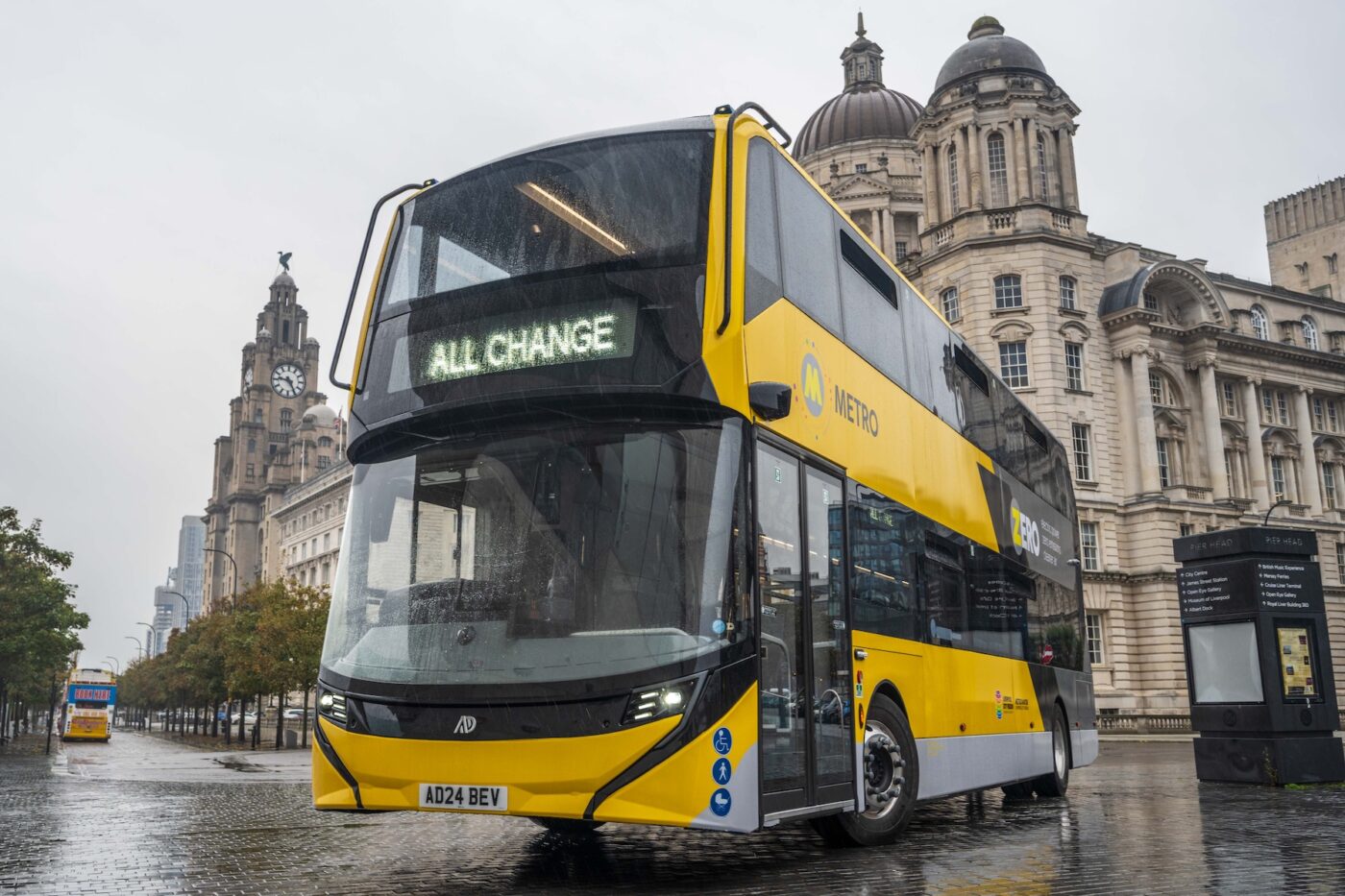


















Image: Alexander DennisNews of Alexander Dennis’s withdrawal from Scotland caused a significant stir last summer. In June 2025, the company announced plans to close its two factories in Scotland and consolidate production entirely at its English site in Scarborough. “Up to 400 roles at Alexander Dennis at potential risk of redundancy,” it stated at the time.Paul Davies, President and Managing Director of Alexander Dennis, attributed the decision to ‘challenging market dynamics.’ He explained: “We must take significant action to drive efficiency to allow our operating model to be competitive.” The goal was to reduce costs, eliminate duplicate structures, and clarify responsibilities.A key challenge for the company is the rising market share of Chinese electric bus manufacturers. This comes despite ADL’s long-standing partnership with BYD, which preceded its shift to developing in-house battery-electric buses from 2022 onward.It is clear: the share of Chinese providers in the UK market has risen rapidly. The solution, Davies said, is consolidating all production at the English site in Scarborough.The prospect of closure had an immediate effect. Political representatives, initially highly critical, softened their stance within weeks. By September 2025, a temporary halt to production had been avoided after the Scottish government agreed to a furlough package.Valued at £4 million, the scheme secured operations at both sites for 26 weeks, with the government covering 80 per cent of the costs and Alexander Dennis contributing the remaining share. At the same time, the company reported a renewed uptick in demand for single- and double-decker buses, enabling improved utilisation of its production capacity in the short term.The furlough transition solution ran until 22 March and gave ADL time to evaluate a more sustainable restructuring of its business. As the company now announces in a press release, it is considering an approach in which only the Falkirk site would close. The Larbert plant, however, could be repurposed as a facility for chassis production for zero-emission and low-emission buses.According to the company, this new approach would secure around 200 skilled jobs in manufacturing and support that were previously at risk of redundancy. In total, approximately 350 jobs in Scotland are expected to be retained, while up to 115 jobs remain at risk.“We are proposing to retain jobs and restart manufacturing at Larbert with a focus on chassis manufacturing. This represents the best possible outcome for our business, employees, customers and supply chain partners in the current climate,” said Davies. “This new approach would enable us to better align with the current market whilst improving our efficiency. It also allows us to continue to adapt to rapidly changing and challenging market dynamics.”The proposal is still in the consultation phase, so no final decision has been made. However, Davies emphasised that further government intervention is needed to support domestic manufacturers.“The UK domestic bus manufacturing sector has lost significant market share in 2025, with 51% of all zero-emission buses purchased in the UK sourced from overseas manufacturers – an increase of 25 percentage points from 2024,” the current press release states, and that “recent government interventions have also fallen far short of the bold and decisive action the industry needs and risk domestic manufacturers losing even more market share to overseas competitors.”“We continue to repeat the same calls to both governments to level the playing field, recognise the cost of manufacturing in the UK and the fact that these higher costs flow through the supply chain,” the ADL CEO added. “Manufacturing in this country needs to be better supported if we are to generate the economic benefit that the country so badly needs.”How deeply Alexander Dennis is intertwined with Scotland is revealed by a look at the company’s history: its connection to Falkirk dates back to 1901, when Walter Alexander first opened a bicycle shop there. Later, the company produced buses, vans, and fire engines. In 2019, the company was acquired by the Canadian group NFI Group.“Together with our parent NFI Group, we are extremely proud of our UK history and legacy dating back to 1895,” Davies said last year. “The stark reality is that current UK policy does not allow for the incentivization or reward of local content, job retention and creation, nor does it encourage any domestic economic benefit.”alexander-dennis.com