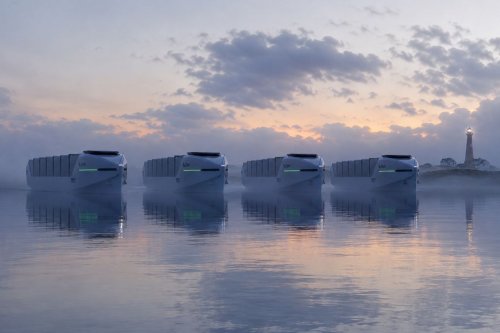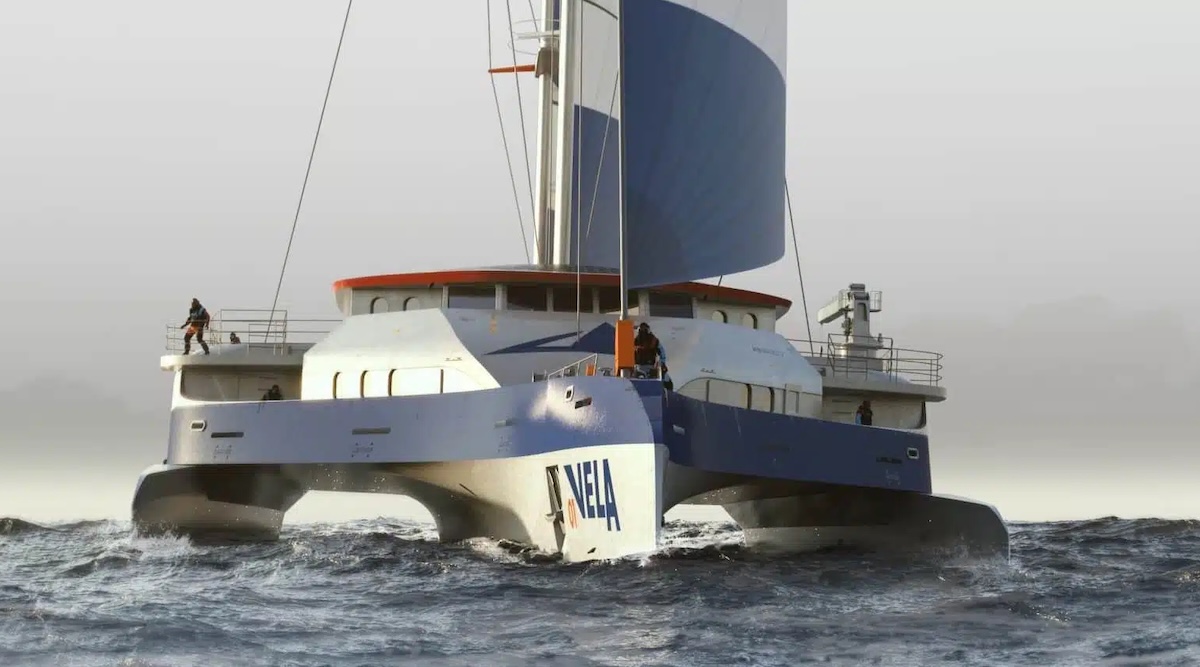



















The global shipping firm DHL embarked on a vehicle electrification journey some time ago, and now the French branch of the company has placed a stake on wind power, too. The footprint is small, consisting of reserved space on a forthcoming fleet of sailing ships, but it is another indication that a technology first used millennia ago is still relevant today as the global economy transitions — slowly — away from fossil fuels. Wind Power Comes Back To The Shipping Industry DHL’s latest decarbonization step is being enabled by the French startup VELA Transportation. In contrast to the three-ton shipping containers and gigantic ships that characterize the modern seagoing cargo industry, VELA has focused it business on lightweight pallets packed into ships that are small enough to be pushed across the Atlantic crossing, with wind power alone providing the propulsion. Because VELA’s ships are small, they also have access to downsized port facilities outside of main terminals, enabling the company to meet port-to-port timetables for the Atlantic crossing comparable to that of conventional cargo ships. Larger ships are also hampered by crowded port facilities and travel time to warehouses on land, among other factors. DHL Spots A Decarbonization Opportunity VELA’s vessel of choice is a trimaran, a low-riding sailing ship with three hulls for stability. The sails take care of oceangoing propulsion, while on-board solar and a hydrogenerator help power the ship’s kitchen, refrigeration systems and other auxiliary equipment, including maneuverability in port, reducing (though not entirely eliminating) the need for a diesel generator. In 2024 the company closed on a new $43 million round of funding enabling it to construct its first trimaran at the Australian shipyard Austal, and now a vote of confidence from DHL will take it to the next level. On June 22, VELA announced that a new strategic partnership with DHL Global Forwarding France, aimed at adding wind power to DHL’s renewable energy portfolio. The agreement assigns DHL a dedicated allotment on VELA’s first vessel, which is expected to launch into commercial operation early next year. If all goes according to plan, VELA will eventually add four more trimarans to its fleet, enable it to schedule up to one departure each week. That’s a drop in the bucket compared to DHL’s oceangoing activities. The company is focusing on biofuels to decarbonize large-scale cargo ships. Still, DHL’s support for VELA could help stimulate more widespread acceptance of the wind power option among other shippers. “By reducing exposure to congestion at major hubs, limiting transshipments, and strengthening operational control, it aims to be among the leading lower-emission transatlantic service options currently available,” VELA said of itself in a press statement. “The wind propulsion cargo will carry 600 EU pallets per transatlantic trip operating as a direct route between strategic secondary ports — Caen-Ouistreham and New Haven— to combine speed, reliability, safety, and a significantly reduced greenhouse gas emission profile,” VELA elaborated. The Pharmaceutical Angle VELA aims for a port-to-port timetable of less than 15 days for the Atlantic crossing. That puts wind power reasonably close to the range of conventional cargo ships, which typically take 8-14 days. VELA aims to hit the sweet spot for producers of pharmaceuticals, wine and spirits, luxury goods, and other high-value products that generally don’t need an entire three-ton shipping container for an Atlantic crossing, but which do appreciate the cost savings over air freight alongside the opportunity to cut their carbon emissions without sacrificing a substantial amount of time compared to conventional cargo shiops. The pharmaceutical angle has already earned VELA attention from other partners including the Japanese firm Takeda Pharmaceuticals. In September of 2025, Takeda tapped itself to be the first biopharmaceutical company to ship its wares across the ocean from Europe to the US via wind power. The renewable energy angle supports Takeda’s 2040 net zero commitment. As with DHL, shipping by catamaran represents a tiny fraction of Takeda’s global operations. However, the partnership with VELA does draw attention to the potential for wind power to perform equally, if not better, than conventional fuels in some applications. “Innovative partnerships like this are critical to accelerating progress on Scope 3 hard-to-abate emissions categories and is part of Takeda’s larger ambition to lead the way in the industry to help decarbonize the pharma supply chain,” Takeda explains. More Renewable Energy For DHL VELA’s catamaran is just one manifestation of the shipping industry’s return to wind power. Decarbonization innovators are also working on other wind propulsion systems that can be retrofitted on existing ships or installed on new builds, including some that don’t resemble traditional sails at all. Meanwhile, DHL is making some moves in other areas of the energy transition. The company launched its “New Energy Logistics” decarbonization branch in 2024, and US President Trump’s war on Iran has refreshed the effort. “Amid the backdrop of fossil fuel supply disruptions, DHL Group announced its plan to further strengthen its capabilities and presence in the New Energy sector,” the company announced on June 11. “As the world refocuses on diversifying energy sources and building domestic renewable energy capacity for energy independence, DHL Group is gearing up to support these initiatives with new solutions across various segments,” the company emphasized, listing alternative fuels, battery energy storage systems, electric vehicles and EV batteries, hydrogen, and grid infrastructure. Solar and wind power are also part of the plan, though more on the logistics side. For the wind industry, DHL has launched a new service focusing on the particular needs of energy infrastructure in remote locations. “The industry is no longer just building wind farms but also operating them at scale, in turn opening more opportunities for DHL to lean into its expertise to support the maintenance, repair and overhaul (MRO) of these wind farms,” DHL explains. “With many of these wind farms located remote places, our customers require us to get the spare parts quickly and efficiently to these sites,” they elaborate. Additionally, DHL is among the aviation stakeholders expanding their interest in SAF (sustainable aviation fuels), so an eye out for new developments in that area. Back in 2021, DHL also ordered a dozen “Alice” electric aircraft from the US startup Eviation. Unfortunately Eviation suspended its operations last year, but DHL is still pursuing electrification of its ground fleet. Last October, for example, DHL added 45 Mercedes-Benz electric vans to its US operations. Photo: Wind power is making a comeback in the maritime shipping industry, as exemplified by a new high-tech cargo-bearing catamaran from the French firm VELA Transportation (cropped, courtesy of VELA).