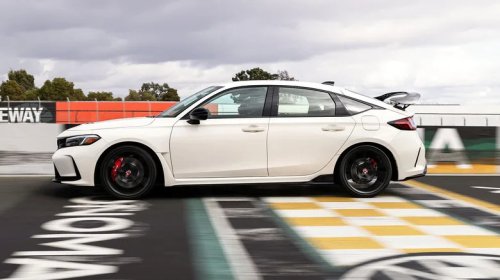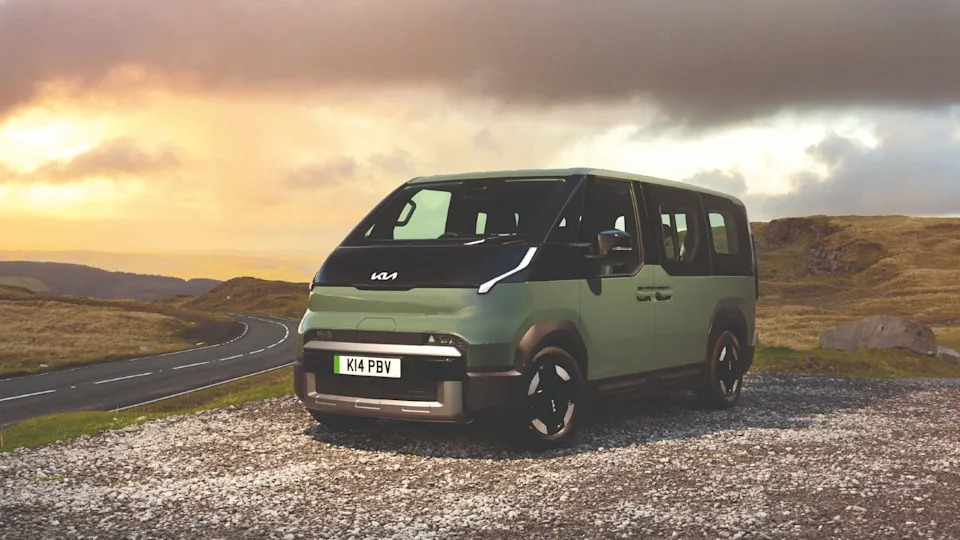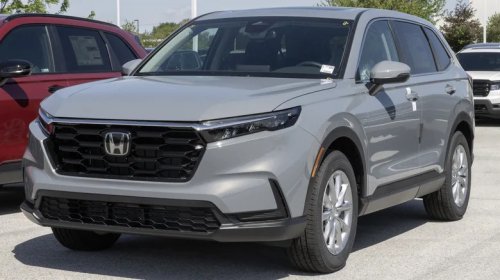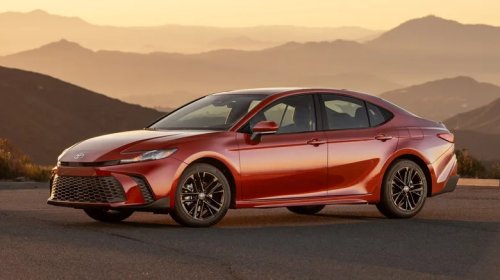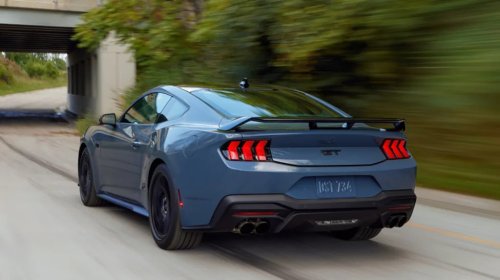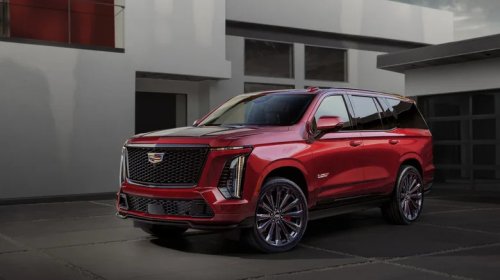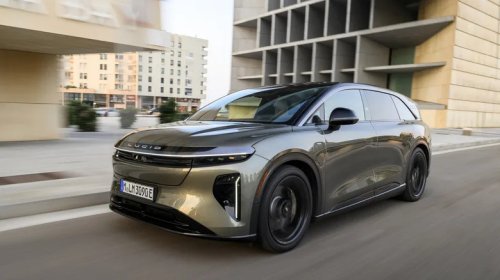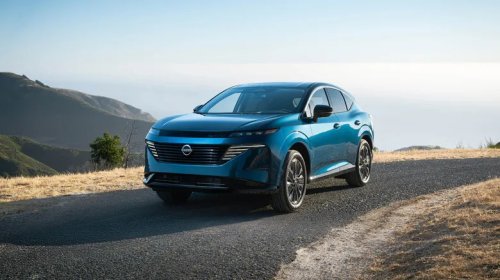
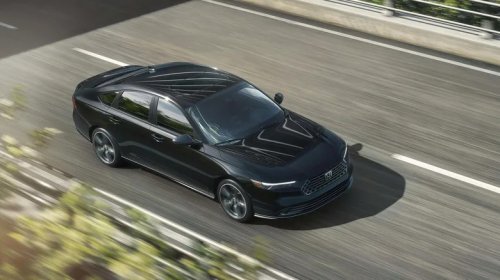
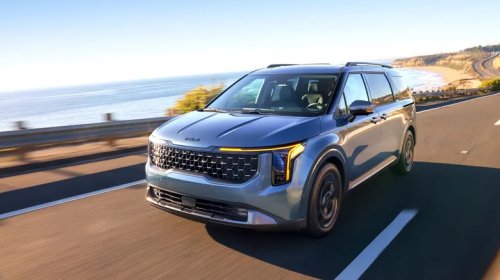
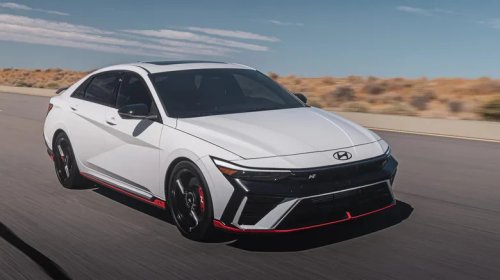
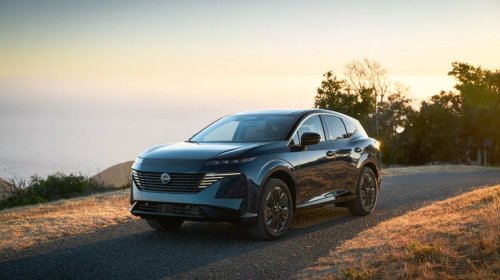
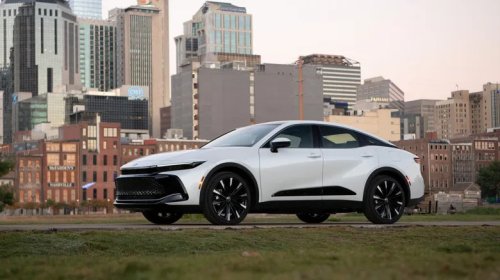



















NissanMost people don't really think about what engine rests beneath the hood of the car that takes their kids to school, unless there's a problem, of course. And that's perfectly reasonable — cars are, after all, appliances. They're meant to get us from Point A to B, and as far as the end user's concerned, all that matters is that they do it efficiently and safely. Power is a secondary concern, but it is still a requirement; the thing needs to be able to merge onto the highway without feeling sluggish.Two solutions for such a car exist as far as engines are concerned: Something with a big, simple, naturally-aspirated engine; and something with a smaller turbo engine. While there are some downsides to turbochargers like added complexity, expense, and the need for premium gas, generally, larger family cars stay away from them. Of course, there are always exceptions to the rule, usually marked with special trims and distinctive badging, like the Nissan Altima VC-Turbo that ran until 2025.Not every turbo car has those turbo badges, though. In fact, some cars are downright unassuming — they look, behave, and sound like regular family cars. But for whatever reason, the manufacturer decided to opt for a more unorthodox (for the class) turbo engine and put it as a footnote in their online configurator, so you'd be forgiven for never even knowing. That isn't to say that these engines are better or worse than their naturally-aspirated counterparts, simply that you'd pass by one of these on the road and never know it's turbocharged. Let's take a look.Honda AccordHondaThe Honda Accord is one of the Japanese marque's most well-known models, second perhaps only to the Civic. 2026 is its 50th anniversary, believe it or not, so it's been around the block a few times, to the tune of eleven generations to date. What's more interesting is that throughout its history, the U.S. market Accord was always naturally-aspirated right up until 2018, with the introduction of the tenth generation. That's 42 years' worth of reputation as a midsize family sedan with a regular, naturally-aspirated engine, before Honda quietly deviated away.You won't see any turbo badge on the modern Accord despite the base-model still housing the 1.5-liter turbo four-cylinder. Honda instead prefers to keep that engine on the base LX and slightly upmarket SE trims, invariably paired with a continuously variable transmission (CVT) against the more prestigious hybrid models — none of which feature turbos. So unless you purposefully avoid the Sport and Touring trims, all of which are hybrids, and spring for the cheap option — well, you would never really know.It's a bit ironic as well, considering turbochargers were typically found in upper trim levels of various cars. You always saw the regular base-model, then the one with the "turbo" badging commanding $5,000 more. Alternatively, you see turbos in enthusiast trims, like Honda's own Civic Type R featuring an exclusive turbo engine. It's far rarer to see it the other way around, with the turbo engine being the less powerful and (perceivably) less desirable option.Kia Carnival (hybrid only)KiaFirst of all, minivans aren't exactly popular as family movers anymore, so some people might not have even seen one of these things on the road, but rest assured that they do exist. Not only does the Kia Carnival exist, but it's the only MPV with a factory turbo still around in the United States. Not that there were many to begin with, considering the only other big-name minivan with a turbo was the classic Chrysler K-platform with the Plymouth Voyager, Dodge Caravan, etc. in the late-1980s; it was also a car no one would expect to have a manual transmission.Fast forward around three decades later, and the turbocharger has returned to the minivan in a big way with the Kia Carnival hybrid. Yes, minivans still live in the shadow of crossovers and suffer from the whole "mom-car" reputation, but it carries on that age-old tradition whereby a minivan is comfort, safety, and ride quality first and foremost. Is it fast? Not really, but that's hardly the point. It doesn't compromise to try and do everything in the same way that crossovers do.That said, it's still somewhat stealth in a number of ways. For one, it retains that SUV-inspired styling we're so accustomed to, with the tall, flat cheese grater grille, pronounced wheel arches, and boxy hood. But then it has features like a full-length roof rack and those iconic minivan sliding doors, coupled with a generously-apportioned interior with captain's chairs up front. And, of course, a turbocharged 1.6-liter engine hooked up to a hybrid powertrain, as if it wasn't quirky enough. As SlashGear found out, it has the potential to change your mind on minivans.Hyundai Elantra N LineHyundaiThe Hyundai Elantra is arguably one of the most regular of regular sedans. It's about as middle-of-the-road as you can get in 2026, with a base price sitting at $25,275 and featuring a generic 2.0-liter four-cylinder, much like its competitors. Okay, it might not be as aggressively bland as the Corolla, but you'd never look at this thing twice in traffic all the same.The Elantra N Line is the equivalent of adding some zesty hot sauce on top of the Burger King burger of the base sedan. It can make a world of difference to someone with the right taste, thanks to a 201 hp 1.6-liter turbo married to a seven-speed DCT, as opposed to the standard 2.0-liter and its CVT. Reviews praise it as a spritely, fun sedan, though lacking somewhat in terms of mechanical depth. There's sadly no true manual option unlike Honda's counterpart, and the DCT is sluggish at low speeds — one of the shortcomings of DCTs in comparison to other automatic transmissions.That said, the N badge on the back of the Elantra carries a somewhat less hyped reputation than something like a Honda Type R, despite being roughly similar in concept. It features some sportier aesthetics, like a modest rear wing and the red trim along the undertray, but it's far less distinctive in traffic — a good example of a modern sleeper. And, of course, being a midsize sedan, the Elantra N remains perfectly capable of hauling a family of four in comfort and with turbocharged haste.Nissan MuranoNissanSpeaking of bland cars you'll walk right on past without a second glance, it arguably doesn't get much blander in the midsize SUV category than this, at least one would assume so. Despite a recent redesign, this still-very-normal family hauler hides a rather interesting secret — the engine. Originally tested back in 2017 and purportedly holding around 300 patents, the KR20 family — in this case, the KR20DDET — is the world's first production variable-compression engine. You might know it from the Nissan Altima VC-Turbo trim level or a couple of Infiniti models, this is the latest evolution.What's so special about this engine, though? First of all, yes, it is turbocharged, hence the 'T" at the end of the name. But what's really important is the variable compression ratio. An engine's compression ratio affects performance and fuel efficiency in a number of complex ways, based on variables such as the fuel load, heat, what octane of gas you're using, and so on. It's basically how much you're squishing all the air and fuel in the combustion chamber when the piston moves up; a smaller space means a higher compression ratio. Well, there are pros and cons to high-compression engines, so why not get the best of both worlds, Nissan thought. Hence, variable-compression.But, like all novel technologies, these engines had numerous teething issues, like main bearings suddenly changing their mind about holding onto the crankshaft. This ultimately soured the engine's reputation, though its latest iteration can still be found under the hood of this otherwise unassuming midsize SUV. Who knew something so mundane could hide such a weird marvel of modern combustion technology?Toyota Crown PlatinumToyotaThe Toyota Crown is a relatively new player to the United States lineup, though the luxury sedan's pedigree extends all the way back to 1955. In fact, this was one of Toyota's first ever vehicles sold to private customers, marketed as Toyota's upscale executive car — though modest by the United States' standards at the time. Bear in mind that this was a decade after World War II. Nevertheless, the executive car grew up with the times, remaining a stalwart top-tier offering for individuals of means ever since.Fast forward 71 years and 16 generations later, and the Crown represents Toyota's premiere full-size luxury sedan in U.S. markets, with the top-tier trim being the Platinum, which also happens to be the only Crown available with a turbocharger. That turbo dramatically affects the car's character as well, bumping up power from the Limited's 236 hp to a respectable 340 hp. Moreover, Toyota ditches the e-CVT for a straightforward, traditional six-speed automatic, lending the car a sportier feel with this powertrain setup.Of course, it's still a Crown, so the top-tier will always prioritize comfort and ride quality. As well it should, for a Toyota sedan costing in excess of $60,000 without breaking a sweat for a decent optioned example — that's encroaching on German territory. Fittingly, it comes with everything you'd expect at this price point as well — adaptive suspension, leather everything, well-fitted touchscreen displays, and so on. The turbocharged engine just ensures that it can actually move all that weight at a comfortable pace.