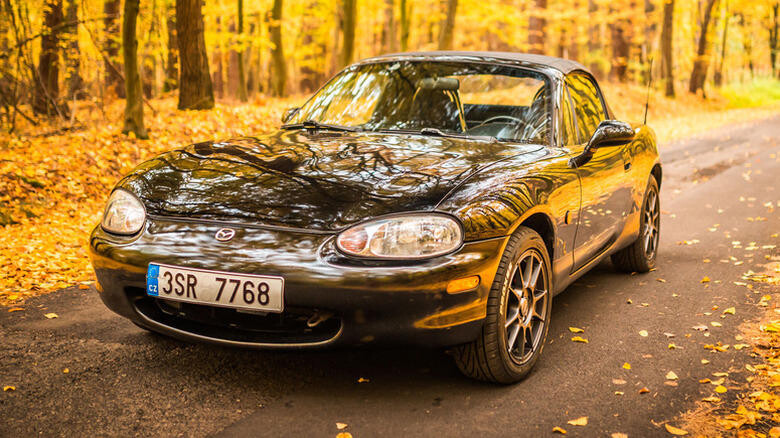
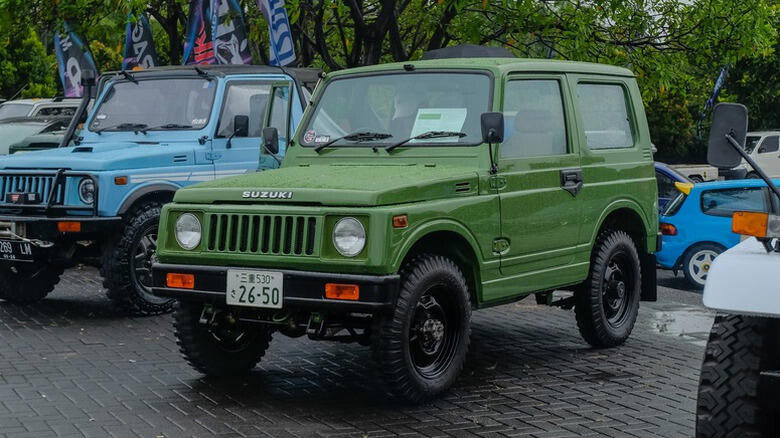
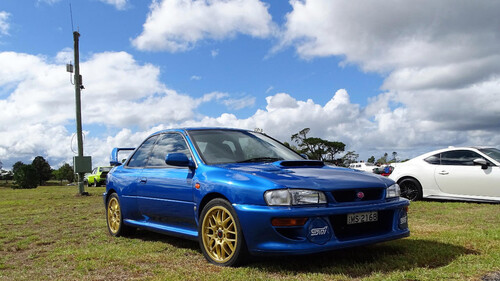
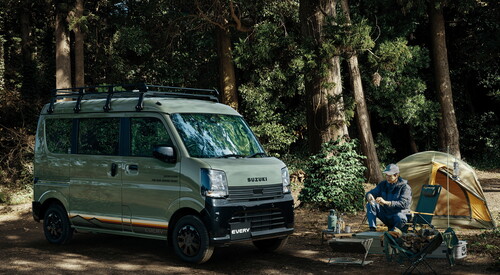
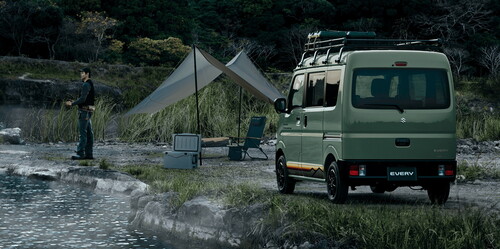
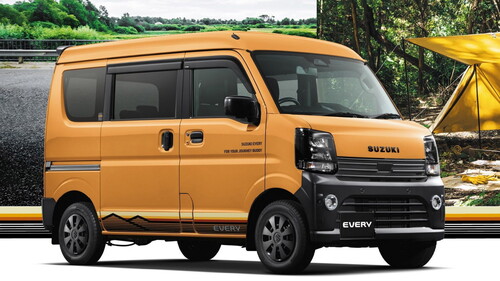
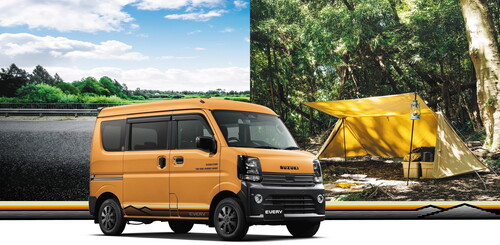
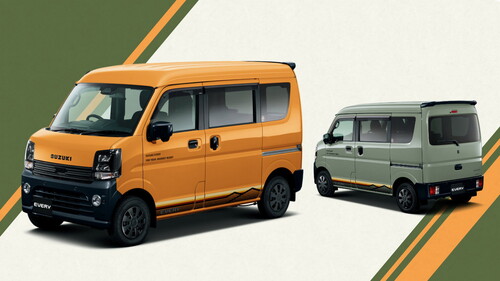
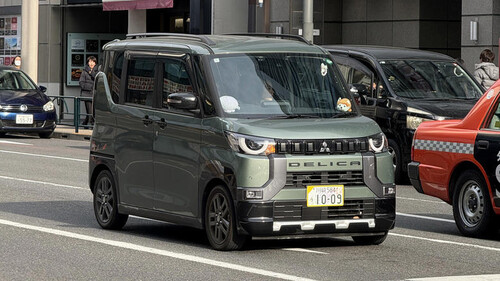
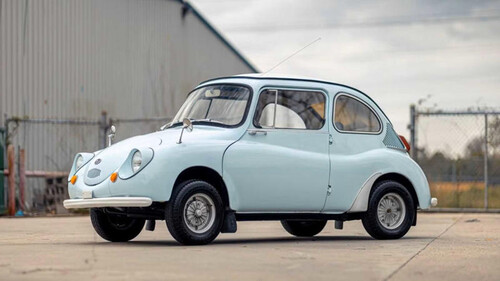
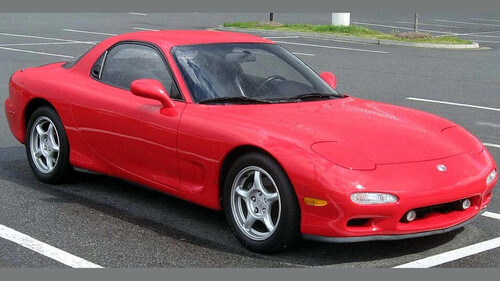
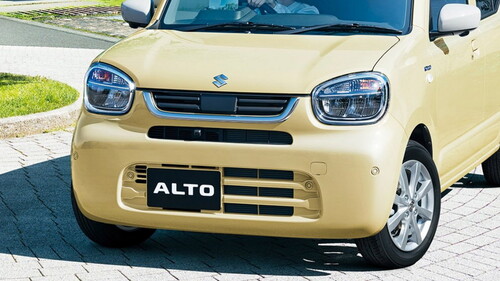
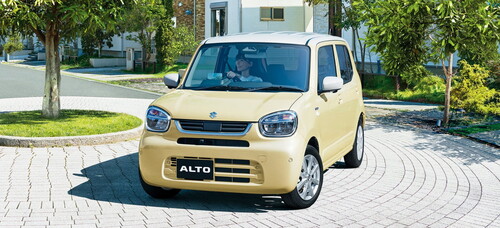
Subaru SambarAnother tiny classic with a cult following in America is the Subaru Sambar, which is available both as a truck and as a minivan. It was first launched in the early '60s to meet kei regulations, and as those regulations have allowed for slightly larger vehicles over the years, it has expanded accordingly. Even later models are still comically small by American standards, but nonetheless, there's seating for up to seven people in minivan variants. The exact horsepower output varies by model and year, but don't expect to get anywhere fast –- '90s examples of the Sambar only made somewhere around 45 to 55 horsepower.The Sambar was officially discontinued in Japan in 2014, and in the years since then, a growing number of older examples have found their way to the United States thanks to their cute looks and tiny dimensions. A rising number of imported examples have popped up for sale in recent years, with many available for less than $10,000. The average sale price over the past five years sits closer to $11,000 according to Classic data.Mazda MX-5 Miata (NB)While the original NA Miata is still the definitive classic Miata for many people, the NB can often be picked up for even less than its predecessor. The second generation didn't bring any significant mechanical changes, with most of the big differences concerning the car's exterior styling. New lights, more sculpted bodywork, and updated wheels mean that there's no mistaking an NB for an NA from the outside, even if inside the two cars look fairly similar.A new steering wheel and some small styling tweaks were pretty much all that was offered in terms of cabin improvements, but then focusing too much on the cabin is arguably missing the point of buying a Miata entirely. They're built to be driven, and many of the used examples on the market today will have been driven hard at some point in their lives. Much like the NA Miata, be wary of examples that have been in accidents or have questionable modifications, and watch out for hidden rust. Even if you're picky, though, it should still be very easy to find a clean example for well within budget.Expect to pay around $13,000 for the average example, although plenty can be found for less.Suzuki Alto WorksThe mandatory small engines and boxy proportions of kei cars mean that they're never going to be what most people would call truly fast, at least not without some serious aftermarket assistance. However, some kei cars take their sporty credentials more seriously than others — few more so than the Suzuki Alto Works. Based on the popular (but slow) Alto, the Alto Works was the result of Suzuki giving the car a thorough overhaul, with a turbocharged engine and full-time all-wheel drive available as standard in top-spec models.The first generation car was said to be the fastest kei car ever made at the time of its release, with 63 horsepower on tap a few years before the government regulations that capped horsepower came into force in 1990. It's been suggested that the Alto Works' major improvements in performance compared to other cars of the era were what prompted the Japanese government to make such a rule in the first place. Only a handful of examples of the mad little Suzuki have made it to America, so it won't be easy to find one for sale. However, when they do come up, they're surprisingly cheap: the average Alto Works sells for under $5,000.Nissan PaoThe second production car to emerge from Nissan's Pike Factory line was the Pao, which launched to buyers in 1989. It combined a modern platform with thoroughly retro styling and proved to be very successful, with over 30,000 units sold over the course of production. Its 987cc engine made around 51 horsepower, and technically, there was seating for up to five. It should go without saying that since the car was designed for Japanese passengers and not Americans, it's probably not a good idea to bring four of your friends on an interstate road trip in one of these.Nonetheless, it makes for a very funky daily driver, and buying one certainly won't mean breaking the bank. That is, if you can find one at all -– like many other Japanese cult classics here, it will take some patience to find a clean example for sale in the U.S. However, when they do sell, they're affordable for buyers on a tighter budget, with examples commanding around $9,000 on average.Suzuki JimnyThe Jimny is a long-time cult favorite among off-road enthusiasts, with a history stretching back to 1970, when it was introduced as a kei-class 4x4. Since then, it's been sold in a variety of configurations with different engines available in different markets, but Japan usually gets the smallest and least powerful version. From 1998, the introduction of the third generation Jimny streamlined these versions into a more cohesive global lineup, and now the earliest examples of that generation are available to import to the United States under the 25-year import rule.Most examples of the Jimny that are already imported are of the second generation, with average prices clocking in around $12,000 and both modified and stock examples being available. Whether you want your Jimny to be a bare-bones off-roader or a road-oriented daily driver is a matter of personal taste, but no matter what your preference, it's easy to find examples of both kinds for well within budget.Mitsubishi DelicaThe words off-road and minivan aren't often put together in the same sentence, but the Mitsubishi Delica is just that. It's a trail-ready 4x4 with room to carry the whole family, and it's built up a niche following in the U.S. over the years. While the first generation of the Delica was more of a traditional people and cargo mover, from the second generation onwards, Mitsubishi added more all-terrain features to cater to a wider crowd. The third generation, debuting in 1986, was the tipping point –- with a two-speed transfer case, four-wheel drive, and higher ground clearance, the Delica had evolved from a humble van into a bona fide off-road vehicle.It's the third generation onwards that's the most highly sought after among Delica enthusiasts, although the van's relatively small number of American fans means that prices have remained affordable for now. Resale prices for the Delica currently average $13,000, and even the rarest variants don't tend to cost more than $20,000.Mazda RX-7 (FC)The second-generation RX-7 might not boast the star power of its immediate successor, but it can be found for significantly cheaper. Some would argue it's the most underrated generation, too, since it introduced a number of innovations over the first-gen car. The design was sleeker and more streamlined than before, with designers reportedly taking inspiration from Porsche's sports car lineup. The car was also the first generation to feature a turbocharged rotary engine, paving the way for the twin-turbo rotary in the FD generation.Prices for the FC peaked in 2022, having been on a steady rise for a few years before then. The latest data shows average sale prices dipping slightly to a little under $16,000, with the very cheapest examples selling for $6,000 or less. Buyers should expect those ultra-cheap examples to need some TLC, but a budget of $10,000 or so should be enough to get an FC in good working order. A handful of rare special edition sales are responsible for pushing the average sale price past that point, with one pristine 10th Anniversary edition selling for a whopping $62,000 at auction in 2024.Nissan PresidentIf the Toyota Century seems a bit too mainstream, then the Nissan President might be worth considering. The few examples that have been imported to America are similarly affordable to buy, although will likely be similarly tricky to maintain. It has been offered with a choice of six-cylinder or V8 engines, although later models all feature a V8. As Nissan's top-of-the-line JDM car, the recipe has remained similar over the decades: plenty of power, plenty of interior space, and a high level of safety tech to keep occupants protected in case of an accident.The President is still a rare car to find in the U.S., even by JDM standards, but the few imports that have appeared for sale mostly sell for $10,000 or less. The car's boxy, old-school Japanese styling makes it a great choice for project car builders who want the big-body JDM look and V8 power, and are prepared to fork out for rare parts should something go wrong.Nissan Pulsar GTI-RSubaru, Mitsubishi, and Toyota might be the three most famous Japanese brands associated with rallying, but Nissan also previously competed at the sport's top level. Its efforts in Group A produced an often overlooked homologation special, the Pulsar GTI-R. It featured a 230 horsepower SR20DET engine and the same ATTESA all-wheel drive system that famously appeared in the R32 Skyline GT-R. Appropriately, the Skyline became known as "Godzilla," while the Pulsar GTI-R was nicknamed "Baby Godzilla."Finding an example of the Pulsar GTI-R for sale will be difficult, and finding one within budget will be even more of a challenge. Nonetheless, it can be done, particularly if you're willing to import one from Europe. One Canadian example also sold on Bring a Trailer for $17,500 in November 2024, while a non-modified example with American registration sold for $16,500 on Cars & Bids in 2022. It might be tricky to find, but there's simply no other hot hatch out there that combines the DNA of a competition rally car with the all-wheel drive grip of the R32 Skyline GT-R.