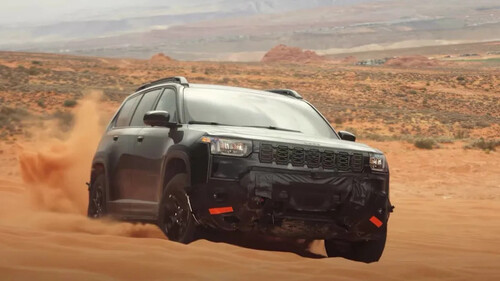
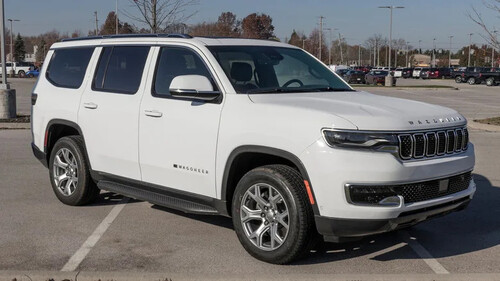
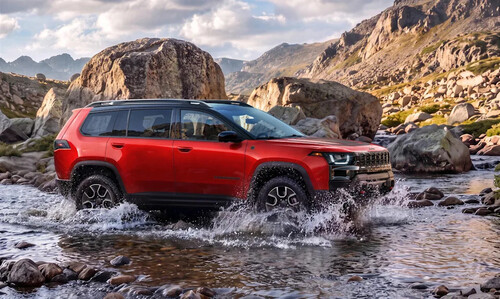
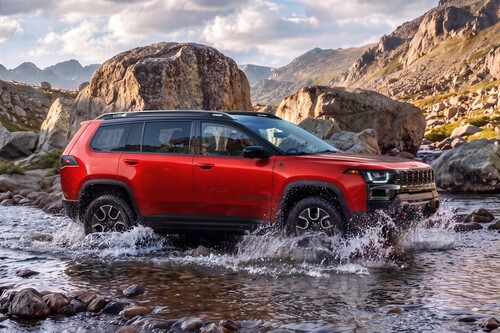
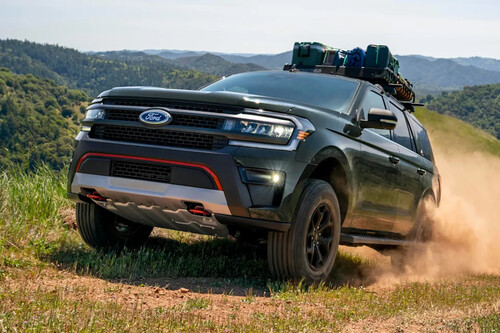
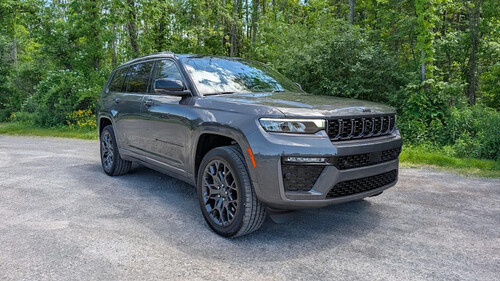
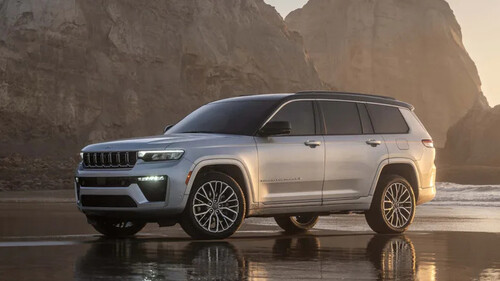
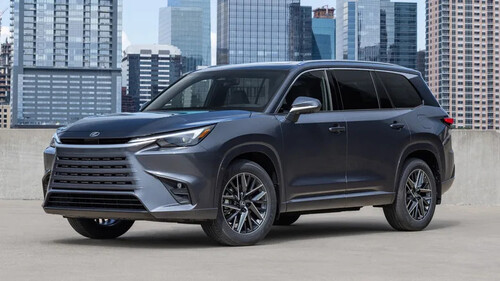
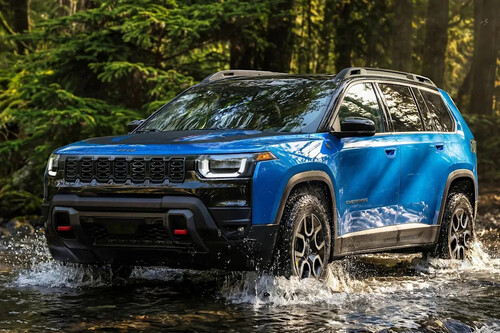
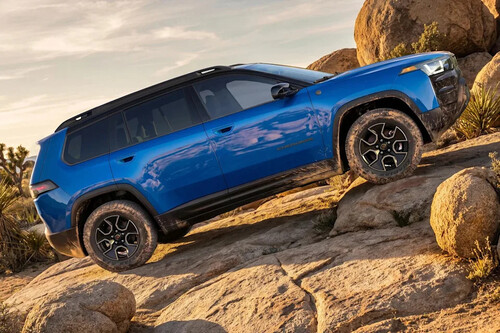
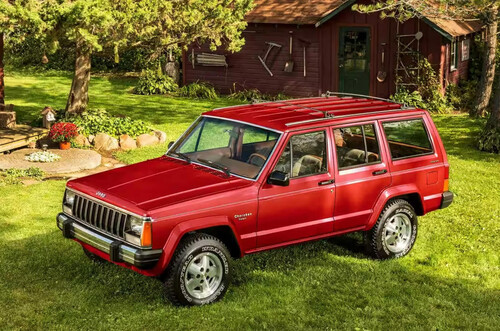
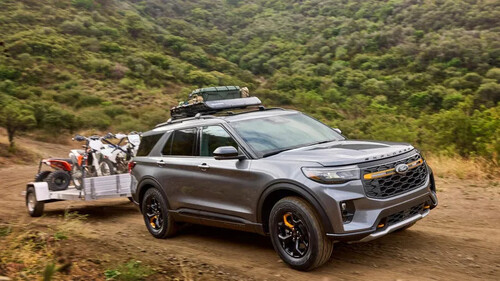
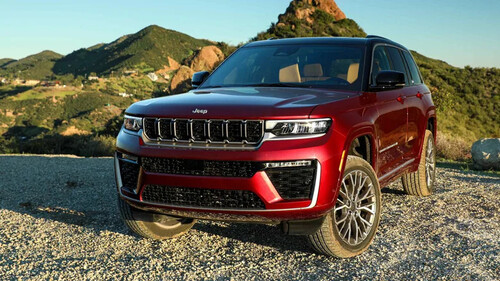
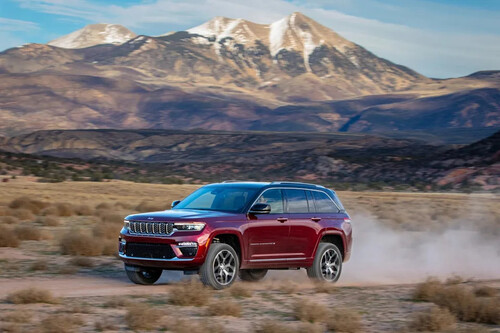
Autoblog and Yahoo may earn commission from links in this article.Buying a used midsize SUV from 2020 means choosing between two of America's most iconic nameplates. Both the Grand Cherokee and the Explorer seat five, offer capable powertrains, and can tow a boat without breaking a sweat. But their reliability stories from this model year could not be more different. One was the final, fully sorted version of a platform that had been in production since 2011. The other was a first-year redesign on an entirely new architecture, and the growing pains were severe. If dependability is anywhere on your priority list, this comparison is not even close.2020 Jeep Grand CherokeeReliability ratings at a glanceOn average, the Grand Cherokee earns a 3.5 out of 5.0 reliability rating, ranking it 15th among 26 midsize SUVs. Annual repair costs come in at $666, which is slightly above the segment average of $573 but nowhere near alarming. Severity of repairs is average and major issues are less frequent than normal, meaning the Grand Cherokee tends to need routine work rather than catastrophic fixes. It scores a 67 out of 100 for reliability, and while one major survey rates it as less reliable than the average 2020 vehicle, the 2020 model year has the fewest recalls of any fourth-generation Grand Cherokee. For a Jeep, that counts as a win.2020 Ford ExplorerThe Explorer earns the same 3.5 out of 5.0 reliability rating, but ranks a worse 19th among 26 midsize SUVs. Annual repair costs average $732, nearly $160 above the midsize SUV norm. Where it truly falls apart is in the details: 524 owner complaints have been filed with the government, more than double the Grand Cherokee's 207, and the 2020 model scores just 54 out of 100 for reliability, flagging it as the worst Explorer model year in over a decade. A major survey rates it as much less reliable than the average 2020 vehicle, a damning assessment for a nameplate that once defined the family SUV segment.Recalls and owner complaintsThree NHTSA recalls on the 2020 Grand Cherokee is a remarkably tidy number. One addresses a rearview camera that may not display an image, another covers a fuel pump failure that could stall the engine, and a third targets a crankshaft position sensor issue. None are trivial, but all have been resolved with dealer repairs, and the overall complaint picture is manageable. Electrical system problems top the gripe list at about 50 entries, followed by powertrain and climate system concerns. For a vehicle that was in its ninth year on the same platform, the relative calm makes sense: most of the bugs had been squashed years earlier.2020 Jeep Grand CherokeeWhere the Explorer is concerned, the recall list reads like a phone book. Depending on the source, between 19 and 33 NHTSA recalls have been issued for the 2020 model, covering everything from seat belt anchor bolts that may not be properly secured to rear axle bolts that can loosen and cause the wheels to shift, to transmission failures, rearview camera malfunctions, and drive system problems. Owner complaints are dominated by engine and powertrain issues, which account for nearly half of all reports. Multiple owners have documented transmission rebuilds at 60,000 to 70,000 miles, well past the basic warranty but distressingly early for a $40,000 SUV. Reliability guides overwhelmingly list 2020 as the Explorer year to avoid.2020 Ford ExplorerFordAdvertisementAdvertisementWhat breaks, what lasts, and what it costsUnder the Grand Cherokee's hood, the standard 3.6-liter Pentastar V6 is one of the most widely produced engines in the Stellantis portfolio, and it has earned a solid reputation for longevity. The eight-speed automatic transmission is similarly well-proven. Common high-mileage issues tend to be limited to fuel tank filling difficulties and typical electrical wear, neither of which is bank-breaking. With average mileage and scheduled maintenance, a 2020 Grand Cherokee should comfortably push past 150,000 miles without a major mechanical surprise. It is not Toyota-level bulletproof, but it is far more dependable than the Jeep stereotype would have you believe.2020 Jeep Grand CherokeeFirst-year growing pains define the Explorer's long-term ownership picture. Ford moved the Explorer from a front-wheel-drive platform to a new rear-wheel-drive architecture for 2020, and the transition was rough. Transmission cooler failures that lead to fluid leaks, snap ring failures inside the gearbox, and a catalog of electrical gremlins. Some problems were addressed through recalls, and others fell outside warranty coverage. Thankfully, Ford did improve things significantly in 2021 and 2022.2020 Ford ExplorerAutoblogHow long can you keep it covered?Both SUVs came with identical warranty terms: three years and 36,000 miles for the basic coverage, five years and 60,000 miles for the powertrain. On a 2020 model, the basic warranty is gone, and the powertrain warranty is either expired or right at the edge. If you are buying a Grand Cherokee with typical mileage and planning to keep it for another three to four years, you are operating without factory coverage but with the comfort of a $666 annual repair average and few catastrophic failure reports. Average used prices range from $18,000 to $25,000 for mainstream trims, which is reasonable for a well-sorted SUV with a predictable ownership trajectory.2020 Jeep Grand CherokeeBuying a 2020 Explorer without an extended warranty is a gamble that the math does not support. At $732 per year in average repairs, with a history of expensive transmission and drivetrain failures, and with dozens of recalls still working their way through the system, the out-of-pocket risk is real. Average used prices range from $18,000 to $28,000, and while that buys you a newer platform, a three-row layout, and more interior space than the Grand Cherokee, it also buys you a first-year vehicle that Ford spent the next two years fixing. If you are committed to the Explorer, budgeting for an extended warranty is essential.2020 Ford ExplorerFordAdvertisementAdvertisementThe bottom lineSo which one is more reliable? It is the Grand Cherokee, and it is not a hard call. Three recalls versus 19-plus, 207 owner complaints versus 524, lower annual repair costs, and the late-lifecycle maturity of a platform refined over nearly a decade all point in the same direction. It is the kind of used buy where the boring answer is the right one: the older design simply works better because the engineers had time to get it right.This story was originally published by Autoblog on Jun 10, 2026, where it first appeared in the Car Buying section. Add Autoblog as a Preferred Source by clicking here.