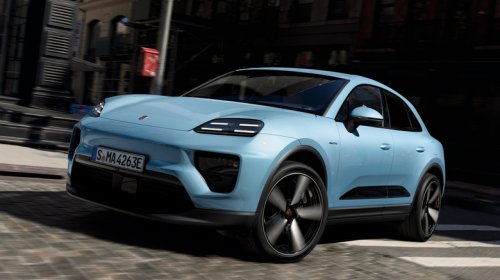
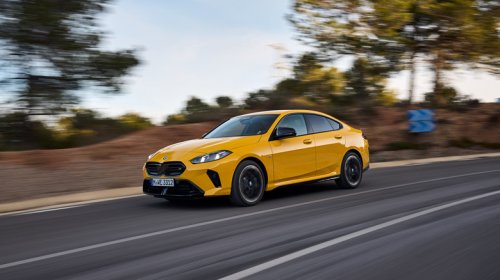
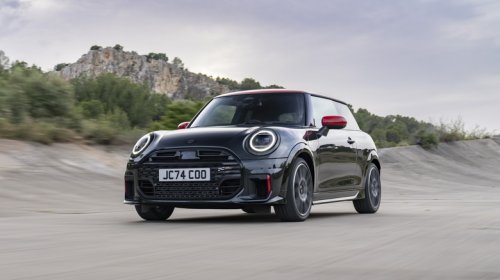
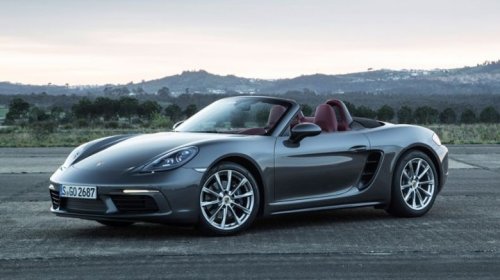
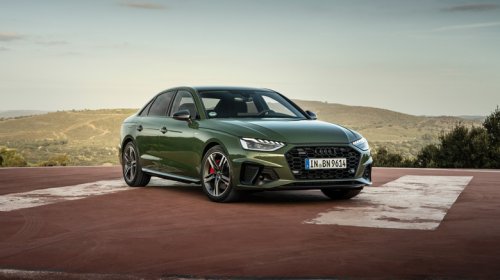
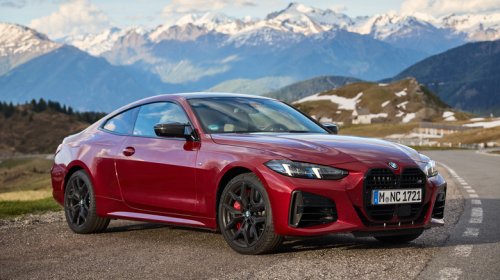
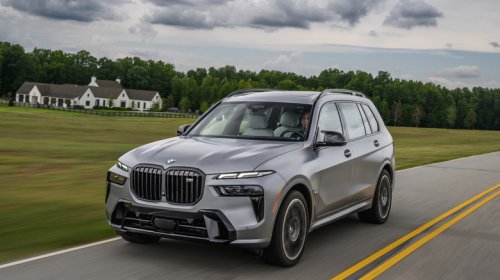
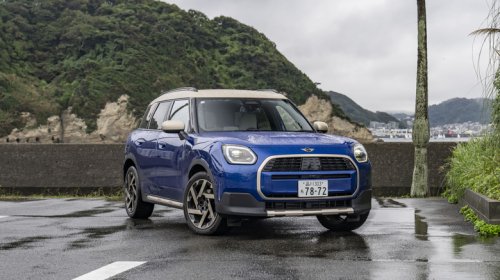



















Joe Morris/Getty Images It's a pretty well-established trope that European cars – especially expensive ones – inevitably come with questionable reliability and eye-watering repair bills. Yet, while Consumer Reports has previously recommended skipping European brands if you want a luxury car, its own data also suggests there are at least a handful of European models that hold up far better than their reputations imply. More surprising still, most of them are not obscure hidden gems. We're not about to reveal the secret bulletproof reliability of some Renault you've never heard of. These are the luxury SUVs and sports cars you see every day, probably assuming they are ticking financial time bombs, based purely on decades of enthusiast horror stories and collective automotive trauma around the rod bearings in an S85 V10. This list draws on predicted reliability data from Consumer Reports, compiled from owner surveys across recent model years. We aren't going to obsess over exact scores or rankings, since sample sizing and the survey methodology warrant some grains of salt. Still, if you always wanted a European car but feared the real or imagined ownership consequences, these are the models most likely to help you sleep at night. And just remember: warranties and certified pre-owned programs exist for a reason. Porsche Macan Porsche There are luxury crossovers, and then there's the Porsche Macan, a compact SUV that promises Porsche performance and prestige in something practical enough to survive school pickup duty and Costco runs. Buyers get handling worthy of the badge, a range of turbocharged powertrains, and the sort of status appeal that convinces people that they absolutely need a German luxury SUV in their lives. Naturally, the usual fears come along, too: expensive repairs, intimidating maintenance costs, complicated electronics, and the lingering paranoia that ownership could become catastrophic the second the warranty expires. But the Macan's reliability showing paints a much less terrifying picture than enthusiast folklore would suggest. It lands among the strongest-performing European vehicles in CR's current predicted reliability data , which is not exactly what most people expect from a Porsche, mass market crossover or not. That doesn't mean that it's just a RAV4 with launch control. But the old assumption that every German luxury SUV is automatically a disaster waiting to happen feels much harder to defend here. If the proposition is starting to sound more appealing than you would like to admit, maybe read about what owners say are the biggest problems with the Macan, and go from there. BMW 2 Series BMW The BMW 2 Series is still doing the small rear-drive BMW thing at a time when much of the luxury market has decided every vehicle should be taller, heavier, softer, and more egg-shaped. Reception has been uneven since the model debuted for 2014, but later iterations of the 2 Series might have been enough to atone for the sins of its predecessors. The 230i uses a 255-horespower turbocharged inline-four, while the lineup also offers rear-wheel drive, xDrive all-wheel drive, and a turbocharged inline-six in the M240i. Add in refreshingly fun handling and quick acceleration, and the 2 Series becomes the sort of compact luxury coupe that reminds people why BMW earned its enthusiast reputation in the first place. That is exactly why the 2 Series feels like it should come with an asterisk. A small German luxury coupe with turbocharged engines and genuine enthusiast appeal is supposed to reward its owners with a surprise party decorated with warning lights and catered by the service department. Instead, the 2 Series kind of nails it with respect to predicted reliability, per Consumer Reports, and even picks up a "great" rating from JD Power in terms of quality and reliability. That doesn't make it cheap transportation, and it certainly doesn't negate decades of BMW cost-of-ownership jokes, but it does suggest that one of the most entertaining modern BMWs may also be among the least frightening to actually live with. Porsche Cayenne Porsche Against all odds, after all these years, it's the Porsche Cayenne that wears the luxury performance SUV crown. Sure, this is still a two-ton family hauler that can be optioned into absurdity, yet it has somehow convinced enthusiasts that a Porsche SUV can feel genuinely desirable. Depending on trim, buyers can get anything from a turbocharged V6 to a plug-in hybrid setup with 729 horses in the Cayenne Turbo E-Hybrid. Despite the size, reviewers still praise the Cayenne for handling that feels improbably athletic for something this tall and heavy . It also sounds exactly like the sort of vehicle that should become catastrophically expensive once warranty coverage ends. Big German luxury SUVs packed with powerful drivetrains, complex electronics, and six-figure option sheets do not exactly inspire confidence among long-term ownership pessimists. Yet, the Cayenne comes in strong as far as European reliability goes in the Consumer Reports data. That doesn't mean repairing one will ever feel emotionally comparable to maintaining a Toyota Highlander. But it does suggest that the old assumption that every high-performance German SUV inevitably becomes an undriveable money pit may be more outdated than many enthusiasts are ready to admit. Porsche Cayenne BMW Mini Coopers have been making drivers smile for 25 years, and thanks to a long-running reputation for questionable reliability, they have also been making plenty of those same drivers nervous. The formula remains familiar: tiny footprint, playful styling, and enough personality to make a normal hatchback feel like it's wearing a fun party shirt. The current Cooper starts with a 161-horesepower turbocharged four-cylinder, while the Cooper S makes 201 horsepower and the John Cooper Works version reaches 228. Of course, raw speed isn't really the point anyway. Minis succeed because they feel playful and eager in ways most modern cars no longer do. That charm also makes the Cooper feel like the sort of car that should eventually punish emotional decision-making with expensive repairs and long service invoices. Instead, the Cooper surprises its detractors (and, honestly, its fans) as far as the data goes. JD Power was perhaps a little surprised as well, with the Mini climbing to the number-two spot in its 2026 U.S. Vehicle Dependability Study in the mass market segment, after coming in dead last not too long ago. It becomes one of the more interesting examples here: a car that looks like an emotional purchase and drives like one, too, yet it does not appear nearly as reckless on paper as conventional wisdom may suggest. If you want something European and genuinely fun without fearing it will eventually turn on you financially with Sweeney Todd levels of British malice, Mini's modern reliability at least gives the rational side of your brain a fighting chance. Porsche 718 Boxster Porsche The Porsche 718 Boxster puts the driving experience first with the increasingly endangered idea that a lightweight two-seat sports car should prioritize balance, steering feel, and driver engagement over touchscreen acreage and fake off-road capability. The lineup starts with a turbocharged flat-four and eventually reaches naturally aspirated flat-six territory in models like the GTS 4.0 and Spyder RS. Depending on trim, output ranges from 300 horsepower to nearly 500 in the Spyder RS. Reviewers consistently praise the Boxster for its precision and composure. Of course, all of that also sounds like the sort of highly engineered German sports car where the steep MSRP is just the beginning of your financial peril. Yet, as absurd as it sounds, it turns out that you can squeeze some eyebrow-raising reliability while sitting behind the wheel of what is still a mid-engine Porsche designed primarily to make canyon roads more interesting. Reliability and affordability are not the same thing, of course. Porsche still charges Porsche prices when something breaks, and maintenance costs remain significantly higher than they are for most mainstream cars. But that distinction matters. The Boxster's strong reliability showing suggests owners may be less likely to need those expensive repairs than the car's mid-engine layout and performance credentials may lead people to assume. The Boxster's potential for prudent reliability suggests reality may be at least a little less dramatic than the stereotype. Audi A4 Audi If you're not the type to be persuaded that the Audi A5 is the new Audi A4, perhaps you've been thinking about getting your hands on Audi's now-retired answer to the BMW 3 Series and Mercedes-Benz C-Class. The A4 built its appeal around restrained competence: tidy proportions, an impressive cabin, and an enviable balance between luxury and performance For its final model year, the A4 paired a 261-horsepower turbocharged four-cylinder with a mild-hybrid system, a seven-speed dual-clutch automatic, and standard all-wheel drive. It is not the flashiest European sedan, but it feels like the polished end result of decades of refinement. That also helps explain why the A4's standing feels less shocking than it is validating. This was never the "please film me leaving cars and coffee" luxury sedan anyway. It was always the "please get me through winter without drama" option. That doesn't make Audi ownership magically cheap, especially in a segment where maintenance costs can still sting. But among European luxury sedans, the A4 makes the reliability argument in the most Audi way possible: calmly and without making a scene. BMW X5 BMW The BMW X5 is what happens when a German luxury SUV survives long enough to become the responsible choice. It's not cheap, obviously, but responsible in the specific way that appeals to people who want one vehicle to handle commuting, road trips, bad weather, and family life, without giving up entirely on driving enjoyment. The current X5 starts with a 375-horsepower turbocharged inline-six, while the xDrive50e plug-in hybrid makes 483 horsepower and adds all-wheel drive. Plus, if restraint really isn't your thing, the X5 M Competition pushes things to 617 horsepower and a claimed 3.7-second sprint to 60 mph. It is also still regarded as one of the sharper-driving SUVs in its class. That is exactly why the X5 feels like it should be a long-term ownership trap. Turbocharged engines, plug-in hybrid hardware, luxury tech, and German repair pricing are not usually associated with peaceful durability. Yet, the X5 shows up alongside responsible choices like the Acura MDX in the CR forecast as far as luxury SUVs go. If you want a premium SUV that still feels like a BMW, the X5 gives you more rational cover than expected. And hey, the next-gen X5 is reportedly getting five different powertrain choices and another new kind of door handle, so perhaps BMW can still engineer enough complexity to draw some Consumer Reports ire down the road. BMW 4 Series BMW The 2025 BMW 4 Series and M4 stand out with laser lights and curved displays, but, yeah, this is the BMW with the unfortunate face. BMW's big-grille era has produced years of enthusiast discourse, and the 4 Series became rolling ammunition in arguments about whether the company lost the plot with respect to what "ultimate driving machine" even means, as BMW delivered a generally competent car that doesn't really approach the bona fides of it's M4 variant as far as dynamics go . Beneath all the styling drama, though, the actual car remains easy to understand. There's plenty of power to be had by climbing upward through the lineup, with the M440i bringing a 386-horsepower inline-six and the proper M4 obviously taking things a step further. BMW also offers both rear-wheel drive and xDrive all-wheel drive, depending on the model. So, it's a sleek, quick luxury coupe built around the basic promise that a BMW should feel better from behind the wheel than the more anonymous alternatives around it. After years of grille jokes and "old BMW was better" discourse, the 4 Series shows up strong here, with a predicted reliability score that's in line with an Accord Hybrid. It has a ways to go before it reaches the echelon of the standard Accord, but BMW enthusiasts are probably happy enough to be lumped in with Hondas when it comes to reliability. BMW X7 BMW This is the last BMW on the list, we promise, but at least we are ending on the most ridiculous one. The X7 is BMW's flagship SUV, which means it takes the X5 formula and inflates it into something larger, plusher, and harder to park gracefully. The xDrive40i uses a turbocharged inline-six with mild-hybrid assistance, while the M60i gets a 523-horsepower twin-turbo V8. Add in three rows, serious luxury-SUV presence, and enough performance to make the whole thing feel faintly unreasonable, and the X7 becomes exactly the kind of vehicle that makes modern BMW both impressive and absurd. That said, it'd be easy to assume that, with something like this, questionable reliability would be part of paying the cost to be the boss. But, in fact, the X7's predicted reliability score, per Consumer Reports, is higher than every Acura besides the TLX (by a hair), better than much of Honda's lineup, and on par with the Lexus LS, a vehicle whose reputation for reliability is borderline mythological. So, its appearance here feels strange for the same reason the X7 itself feels strange: Giant luxury SUVs are usually where reliability optimism goes to die. There is simply a lot happening, from turbocharged powertrains and hybrid systems to all-wheel drive and layers of expensive electronics. Still, making an appearance here doesn't (necessarily) make a used X7 the rational alternative to a minivan. But if you want your family-hauling appliance to come with a giant grille and a faint sense of menace, the X7 is less indefensible than expected. Mini Cooper Countryman BMW Look, just because your Mini is too small for your new baby doesn't (necessarily) mean you have to punch a ticket to minivan hell. The Countryman exists because Mini stretched its familiar formula of playful styling and cheerful personality into something practical enough to survive modern American life. The current Countryman lineup starts with a 241-horespower turbocharged four-cylinder in the Countryman S ALL4, while the John Cooper Works version pushes output to 312 horsepower with standard all-wheel drive. It is also noticeably larger than older Minis, which means rear passengers can now exist in relative comfort and grocery shopping no longer requires advanced puzzle-solving skills. That practicality also makes the Countryman's potentially surprising appearance here a fun way to wrap this up. Historically, "quirky European crossover packed with turbocharged hardware" is not the sort of phrase that inspires confidence among long-term ownership pessimists. However, the current Countryman offers reliability scores on par with models like the Honda CR-V Hybrid and Civic. More than anything, its presence here feels like a reminder that modern European cars have become harder to caricature. No, these are not secretly Hondas wearing designer jackets. But the old assumption that buying a European luxury or performance car automatically means endless mechanical heartbreak feels increasingly outdated — even if your uncle with the broken old 7 Series still refuses to believe it.