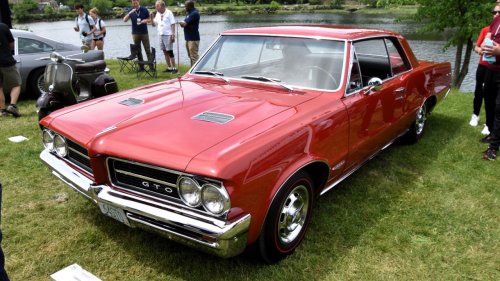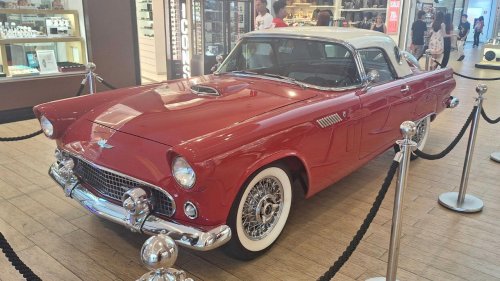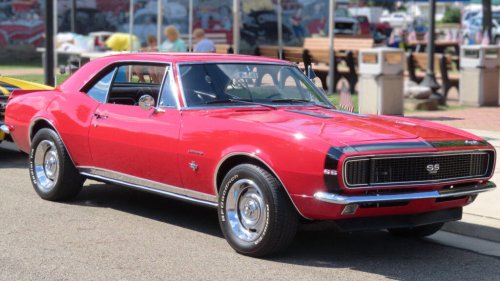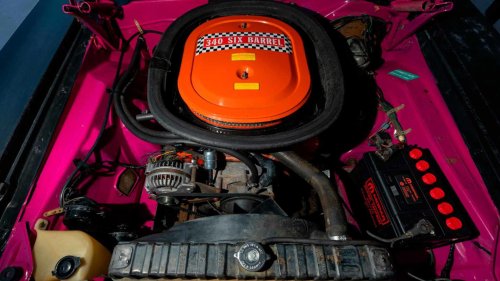
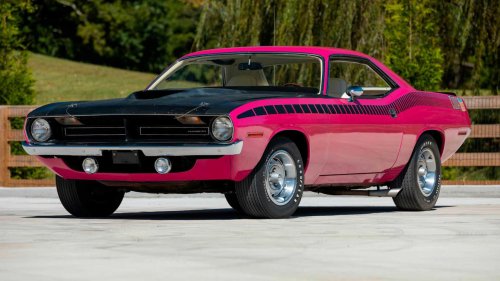
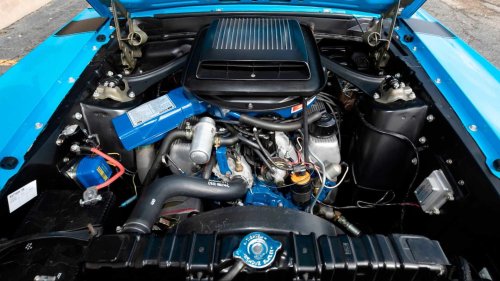
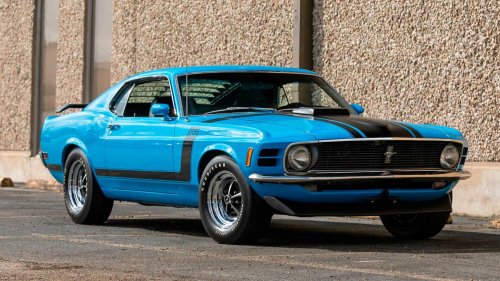
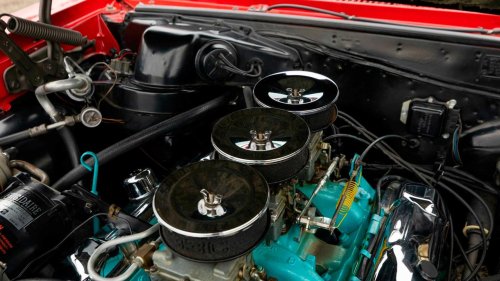
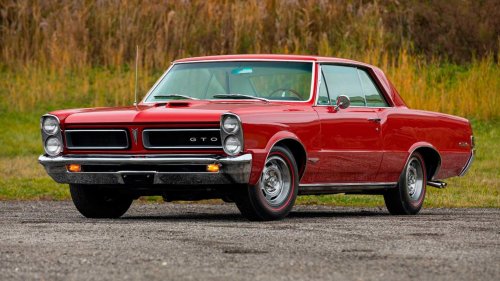
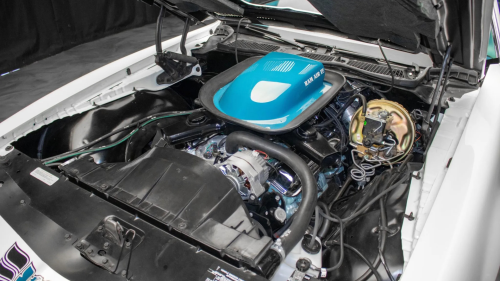
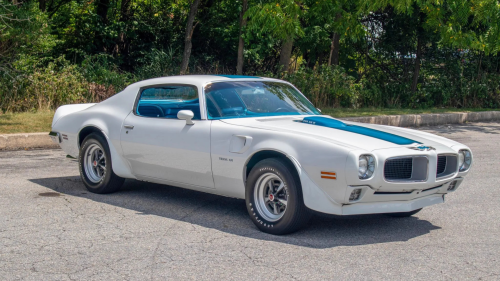
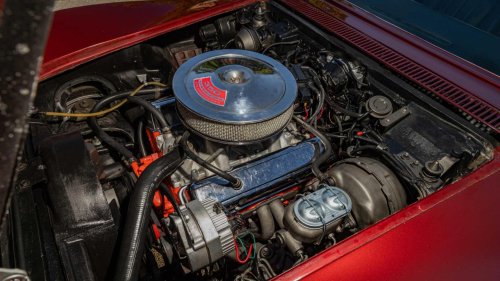
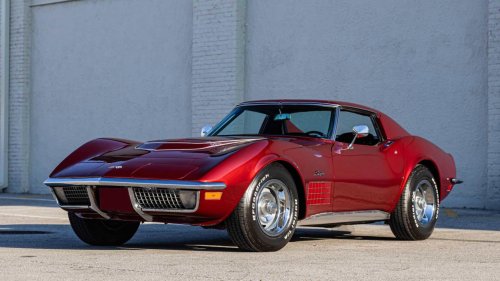
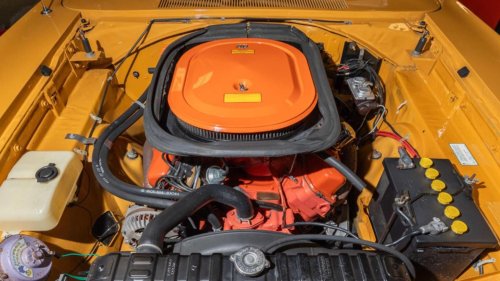
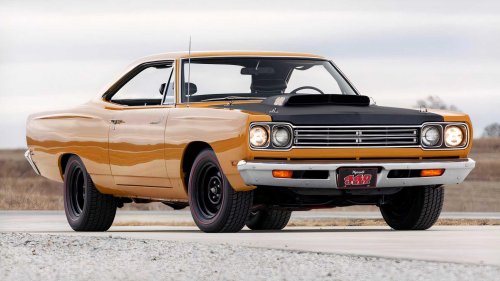
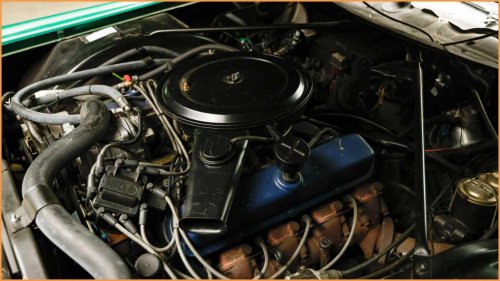
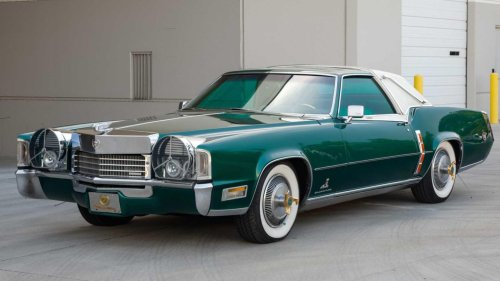
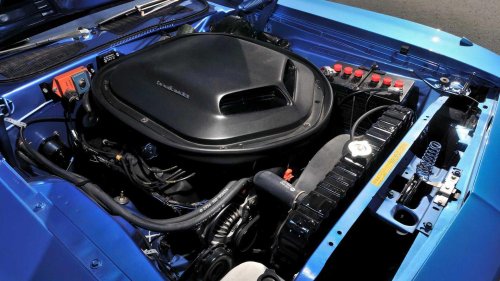
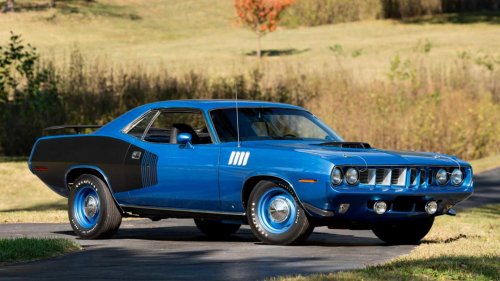
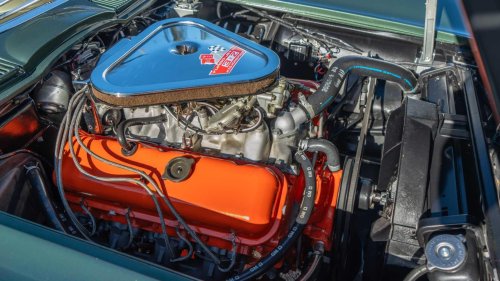
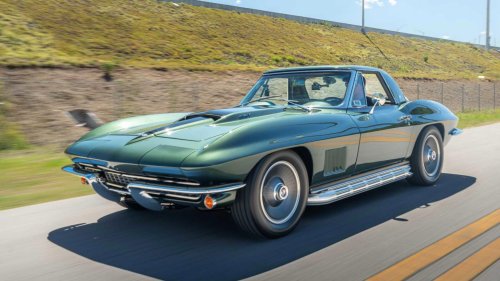
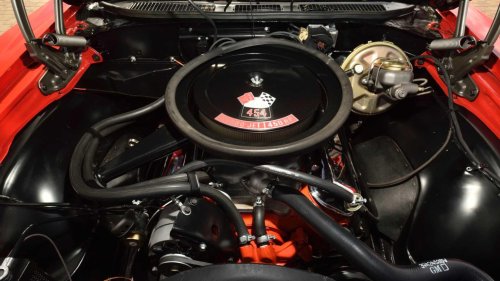
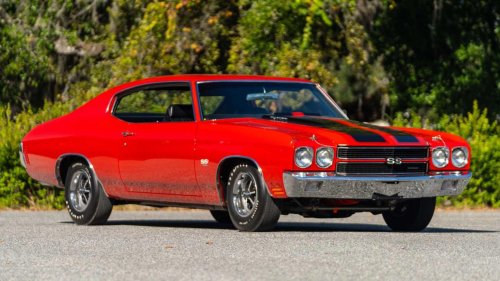



















Electronic fuel injection improves fuel economy, is more reliable, and makes for better cold starts, but there's something supremely awesome about an old-school carbureted engine, especially V8s. Modern fuel delivery systems definitely offer more efficiency, but a carburetor can be tweaked for an instant horsepower boost and classic car enthusiasts do not give rat's behind about MPGs, just RPMs and ETs. Also, there's something intoxicating to gearheads about the exhaust smell of a V8 with a carburetor, and it was even better when leaded gas was a thing. We totally agree with ditching the lead in gasoline because it was an environmental catastrophe, but its unique aroma back in the day was what street dominance smelled like.Modern automotive tech is a marvel with impressive outputs like the 392 horsepower of the 5.7-liter Hemi in the 2024 Jeep Wagoneer, versus the similarly displaced 1958 Plymouth Fury with a 305-hp 350ci Chrysler B-Series V8. There are also turbo and supercharged engines that make terrifying power such as the 1,000+ ponies of the 2023 Dodge Demon SRT 170 and its 6.2-liter Hemi V8, which blows away the 335-hp 383, the next closest Moper engine in terms of size. When it comes to restoring a classic muscle car or putting together a custom street rod, however, nothing beats at least four barrels of carbureted awesomeness, and these are the V8s hot rodders, gearheads, and enthusiasts love the most. Chrysler 340 Six-Pack V8 Maximum Power: 290 HP MecumClassic Mopar muscle cars (Dodge and Plymouth) were the hottest and the coolest rides of the Golden Age, but weren't produced in nearly the numbers as Fords or GM, so they've become the elite collectibles. Obviously, the 440 Six-Pack and 426 Street Hemi are the primo engines of the era, but those are best left in their original vehicle, while the Chrysler 340 is a great candidate for a project. Many hot rodders and modders prefer a small block, and the 340 V8 is very appealing because it is attainable and has decent aftermarket support that can tune them up to freakish power levels, plus simply having a Mopar under the hood or out in the open gives a project instant credibility.Mecum The Chrysler 340 V8 was never better than in 1970 with the 290-hp version feeding those combustion chambers with a triple two-barrel carburetor array. Known as the "Six-Pack" by Dodge and dubbed the "Six-Barrel" in Plymouthville, the 340 is the only Mopar small block that matters. Designed to power the 1970 Dodge Challenger T/A and Plymouth AAR 'Cuda in the SCCA's Trans-Am Racing Series, the 340 Six-Pack was a one-hit wonder that was discontinued almost as soon as it hit the scene. Home mechanics would be crazy to cannibalize one of these engines, as AAR 'Cudas can and do bring multi-hundreds of thousands at auction sales, so this is a rebuild and restore V8 only. Ford Windsor 302/5.0-Liter Maximum Power: 290 HP MecumThe Ford 302 V8 is another engine that was developed specifically for racing in the SCCA's Trans-Am Racing Series, and unlike the cars powered by the Chrysler 340, was quite successful. Introduced in 1968, at the same time Ford was going big-block Cobra Jet crazy, the 302 small-block seemed a bit regressive, but it would have the last laugh as it easily became the most famous muscle car engine of all time, powering Mustangs and others until the 2000s. Also, its displacement has reemerged as the most powerful naturally-aspirated engine with the 500-hp Coyote V8 of the Mustang Dark Horse. This is one of the favorite engines for any project, from hot rod to restomod, because they are abundant, super-simple to rebuild, and have bolt-ons galore that bring out their inner rage.Mecum Not only did the Windsor 302 help propel the Mustang to Trans-Am glory, it was the only V8 available in the sad Mustang II era of the 1970s, and made the Fox Body GT 5.0 the defining ride of the entire 1980s. While the era-best 1993 Mustang SVT Cobra brought performance back from the Malaise Era with 235 ponies, the ultimate version of the legendary small-block was with the 290-hp 1970 Mustang Boss 302. In reality, that power rating was kind of an inside joke as the actual output could have been as much 375 hp. Again, people don't want to mess around with a '70 Boss 302, but can easily find a regular 302/5.0-liter in any junkyard in America for an awesome project. Pontiac Tri-Power 389 V8 Maximum Power: 360 HP MecumSpinal Tap's lead axe-man, Nigel Tufnel, had a Marshall Amp that went up to 11, when all others had a volume capped at 10. Obviously, it was louder and way more badass. The 1964 Pontiac GTO had a 389 V8 with six barrels of carburetion, when other muscle car imitators were slumming with just four, and it was the baddest thing on the streets. This is an engine that enthusiasts and builders love because it's so easy to work on and has the potential for serious performance. Clearly, one of these in a GTO needs to stay there, but it was also available in less collectible rides like the Bonneville, Star Chief, and Catalina, which are excellent donor cars for a furious old-school street rod.Mecum When the GTO literally invented the muscle car in 1964, it was equipped with a 3x2 carb 348-hp 389 Tri-Power V8, but in 1965, got those ponies up to 360. The GTO was then-head of Pontiac John DeLorean's response to GM's big engine ban of 1963 to make the fastest, most powerful thing he could within the under-400-cubic-inch mandate. After 1966, GM struck back and banned multi-carburetor engines for anything but Corvette, so the GTO was upgraded to a 400 V8. As you will soon see, this replacement engine ended up being the most killer set of pistons a Pontiac muscle car would have in the Golden Age. Pontiac 400/6.6-Liter Maximum Power: 370 HP Bring a TrailerSince GM put the kibosh on the 389 Tri-Power, Pontiac developed a 400 V8 that was right up to the arbitrary corporate displacement ceiling. Introduced for the 1967 model year, the Pontiac 400 V8 started with a 265-hp two-barrel carb base and eventually rose to the monster 370-pony Ram Air IV version. The 400 was such a great engine that it was the go-to V8 for the Trans Am until the late 1970s, and somewhere along the way went metric, becoming the 6.6-liter of Smokey and the Bandit 1977 Screaming Chicken. This is one engine that gearheads absolutely adore, as there are tons of them out there and without too much effort they can pull 400-500 hp out of it.Bring a Trailer The second-gen Firebird was released late in the 1970 model year, and so numbers for the Trans Am performance trim are quite low, with only 3,196 units. Of those, just 88 were blessed with the 400 Ram Air IV engine, and it is one of the most collectible classic Pontiacs. It was also the baddest Trans Am to date with a 4.5-second 0-60 time and a 13.9-second quarter-mile, which was the first time a factory version of the iconic pony car dropped out of the 14s. With an amazing body style that not only looked cooler than its cousin the Camaro but also was so appealing it rocked all the way to the '80s, the ultimate version of the 400, the '70 Trans Am, is pure GM classic muscle car perfection. Chevrolet 350 Maximum Power: 370 HP MecumIntroduced in 1967, the Chevrolet 350 small-block had a run that lasted into the new millennium, with somewhere around 10 million vehicles getting equipped with it. On top of being abundant and cheap, the Chevy 350 was bullet-proof, so it is the de facto favorite of hot rodders and everyone else with a project car. The amount of aftermarket power upgrades is almost inconceivable, and it's not unheard of to get 600-700 hp out of these suckers. Parts availability, ease of building or rebuilding, and massive performance potential are what ultimately makes the Chevy 350 the King of the small-blocks that even Ford guys will use for a project.Mecum The Corvette is the Halo Car for all of GM, even to this day, and as such gets certain privileges, like being able to use multi-carb V8s that exceed 400 cubic inches. It also gets the better version of everything and the 1970 'Vette's 350 V8 is a prime example of that. The '70 Nova SS 350 was a 300-hp L48, while the Corvette had an LT-1 350 that cranked up the ponies to 370. With this hyper-variant, the '70 Corvette LT-1 did what no small-block had done before it, and that's running below the 14s with a 13.8-second quarter-mile ET. It's probably because of this car that the Chevy 350 got such a great reputation on the streets and became a favorite with enthusiasts. Chrysler 440 Six-Pack Maximum Power: 390 HP MecumDuring the Golden Age of American Muscle, Mopars ruled the streets simply because they had way better engine options. The Chrysler 440 big-block was a step-down from the mighty 426 Street Hemi, but its 375 hp rating was enough to smoke any AMC, GM, or Ford packing their top-performance engines. In 1969, Chrysler upped the ante with its penultimate V8 by slapping a trio of two-barrel carburetors on the 440, creating the 390-hp Six-Pack. Back in the day, speed junkies loved the 440 Six-Pack because it offered Hemi-like performance for half the price. While Mopar parts are more expensive now and harder to find, enthusiasts are still in love with this amazing engine, and it's always worth rebuilding.Mecum The Chrysler divisions had different names for the same things, like paint codes or engines, and the tri-carbed 440 was no different, being known as the Six-Barrel at Plymouth. In 1969, they took this bruising budget big-block and dropped it in their bare-bones street machine, the Road Runner, with a pairing straight from the muscle car pits of Hell. The '69 Road Runner A12 could run down anything, even a Hemi car, with ETs in the mid-13s, and do it for a fraction of the cost. Removing the air cleaner and cutting off the mufflers could turn this already beastly ride into a 12-second drag car, which is the absolute easiest way to achieve that level of performance from a factory vehicle. Cadillac 472 Maximum Power: 400 HP Bring a TrailerThe Cadillac 472-series V8 was indeed 472 cubic inches when it was introduced in 1968, but ballooned to 500 by 1970. The 472 and 500 existed together and both are 472-series big-blocks, which is kind of confusing, but what is easy to understand is how freaking massive these engines were. The 500 hit a peak of 400 hp and 550 battleship-tugging pound-feet of torque in 1970 before going on a detuning spiral that saw it down to just 190 ponies in its final year. The Cadillac 500 is the perfect "go big or go home" project engine because there are plenty of them out there and parts are just as easy to find. For the same reason that gearheads put Hemi Hellcats in their builds now is why hot rodders dig a souped-up Caddy 500, and that's because they are expressions of excess that invite lots of complimentary expressions of amazement.Bring a Trailer The 1970 Cadillac Eldorado got the most out of the 500 472-series, but those 400 ponies hardly turned the hulking land yacht into a dragster. At nearly 5,000 pounds, or about 1,200 pounds heavier than a typical muscle car, the '70 Eldorado could hit 0-60 in 7.5 seconds and run a quarter-mile in 15.5 seconds, which actually doesn't suck considering how massive this car is. That kind of power is good for getting on the freeway without looking like a granny and climbing steep roads with some authority, but definitely not challenging some punk in a Chevelle at the red light. That's fine because a Cadillac Eldorado is all about slow rolling down the boulevard and being seen in a luxurious customized ride that lets everyone know they are peons compared to you. Chrysler 426 Hemi Maximum Power: 425 HP MecumThe Chrysler 426 Hemi V8 was developed as a race engine and was so dominant that Ford cried to NASCAR that it was too fast and got it temporarily banned until a certain number could be sold to the public. This first recorded example of Karenism ended up reshaping the entire Golden Age as the 426 Street Hemi was the defining engine of the classic era and made any car it was equipped in unbeatable. This wondermill, however, is exceedingly rare with only 9,761 installed in passenger vehicles and another 734 race versions. Taking a 426 out of a numbers-matching Mopar muscle car would be pure insanity, but there are modern 426 Hemi crate engines available, including ones stroked out to 572 cubic inches, that make for an amazing build which still has that old-school Mopar muscle spirit.MecumOn top of having a seriously performance-friendly displacement, the 426 Hemi V8 got some additional ponies with its dual-quad carburetor set-up. Producing 425 hp and 490 lb-ft of torque, any car equipped with the Street Hemi was a 13-second car, straight from the factory. While the 426 Hemi for sure got its host car moving, it did not behave the same in every Mopar that got one. Rides like a second-gen '68 Dodge Charger Hemi R/T could reliably knock out a 13.5 ET, but when Plymouth unleashed the Hemi 'Cuda in 1970, it became the car to beat with a blistering 13.1-second quarter-mile. There were exactly 666 Hemi 'Cudas produced in 1970, so maybe the Mopar made a deal with the Devil for extra acceleration. We chose the '71 Hemi 'Cuda for this entry, which had the same performance, because it was a little cooler looking with that saw-toothed grille and wicked fender gills. Chevrolet 427 L71 Maximum Power: 435 HP Bring a TrailerNot just because it was under the fiberglass hood of a Corvette, but rather because of its sheer awesomeness, the Chevrolet 427 Tri-Power V8 is the most legendary big-block of any era. While the 'Vette was not a muscle car, it sure was a street machine, and with a 427, there was nothing but embarrassment for the driver in the other lane when the light turned green. There are several variants of the 427, some rarer than others, but all are too valuable to do anything but rebuild them to factory specs in the Corvettes they came in. By 1969, dealerships figured out they could special order Camaros with a 427, in defiance of GM's absurd big engine ban, through the Central Office Production Order (COPO) program, but those too are big-money collectibles and shouldn't be altered.Bring a TrailerThe 1963 Chevy Impala Z11 factory drag car had a dual-quad 427 V8, which terrified GM with its power and was probably responsible for their big engine ban, but it was actually a different engine than the one that made the Corvette so kick-ass. 1967 was the money year for this killer big-block with the triad of two-barrels that were rockers and rollers. There was the ultra-rare L88 that was rated (underrated) at 430 hp, but the slightly more common L71 topped out with 435 ponies making it officially the most powerful engine of the 1960s. There were only 20 L88s in '67, and they sell for multi-millions, but even the more abundant L71s (3,745 units) command a premium at auction with a $216,000 Hagerty Concours condition value. Chevrolet 454 LS6 Maximum Power: 450 HP MecumSales-wise, the Chevrolet Chevelle is the most popular Golden Age muscle car and enthusiast-wise, remains one of the most coveted classics. The thing is, however, the Chevelle spent most of the classic era as an "also-ran" that couldn't compete with the Mopar bog-blocks. Thanks to GM's big engine ban, the Chevelle was limited to a 375-hp 396 V8 that ran in the 14s and was never good enough for the myriad of Dodge and Plymouth 13-second V8s. In 1970, GM mercifully lifted its pointless ban and the Chevelle was liberated with a 454 big-block that finally gave it the power it always deserved. The LS6 variant of the 454 jammed out an era-best 450 hp and 500 tire-shredding lb-ft of torque. With only 4,475 LS6 cars ever made, this is another one that is best kept with its original car.Mecum In a weird record-keeping quirk, nobody really knows how many Chevelle SS coupes were equipped with the ferocious 454 LS6, as some went into convertibles and even El Caminos. In a way, the 454 LS6 is the top engine of the Golden Age, because it achieved the most horsepower with a single four-barrel carburetors, while other killer V8s had multi-carb set-ups. The 454 LS6 finally made the Chevelle SS a formidable opponent, that could beat some Hemi-powered Mopars, but not all. That was okay, though, because this one-year-only engine gave the Chevelle some real street cred, and it was no longer getting clowned. With a 13.4-second quarter-mile time, it could beat a Dodge Charger Hemi R/T, and that's kind of like beating the heavyweight champion in a split decision, which is a win no matter how you look at it.Sources: Chrysler, Ford, GM, Hagerty