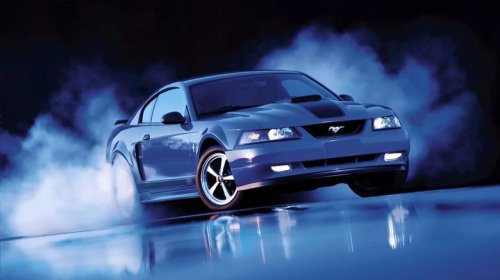
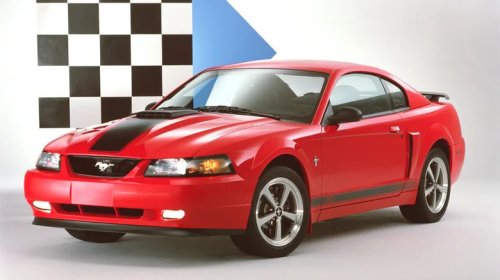
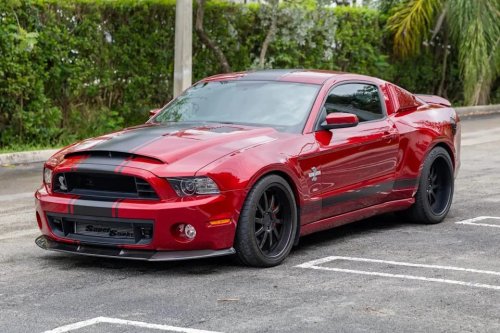
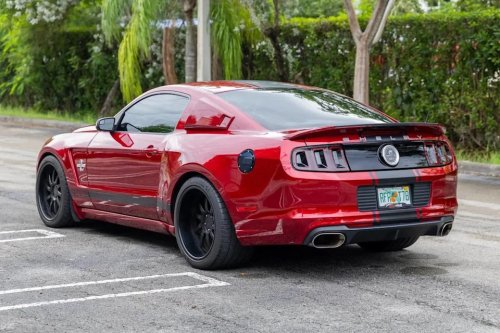
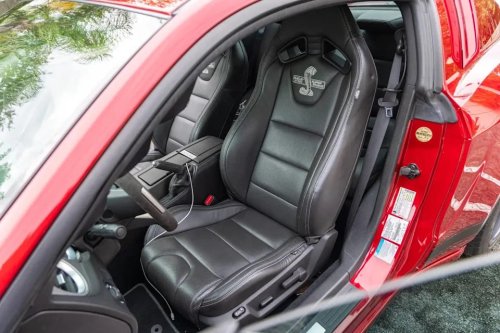
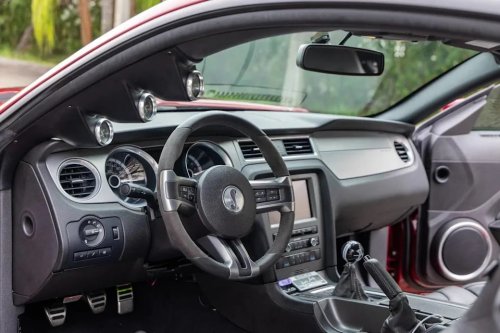
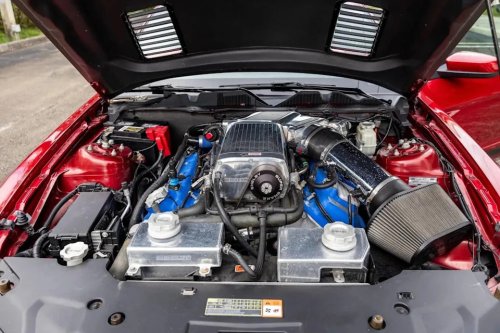
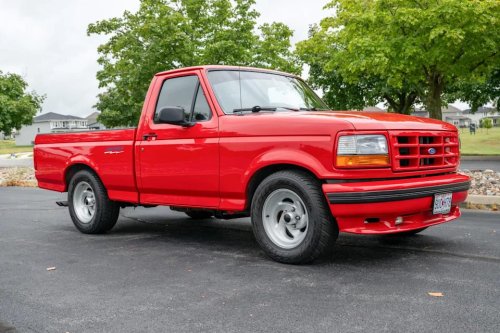
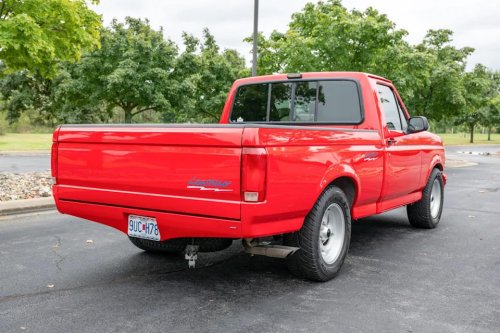
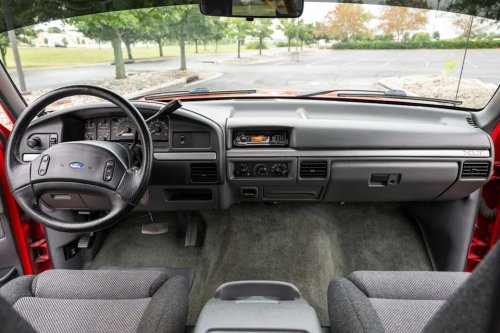
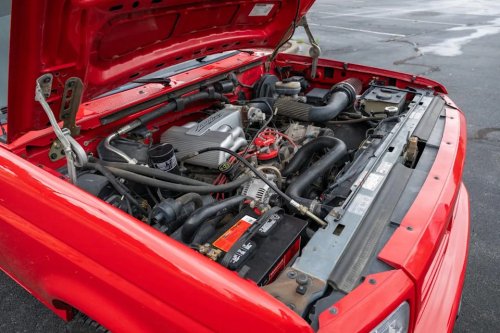
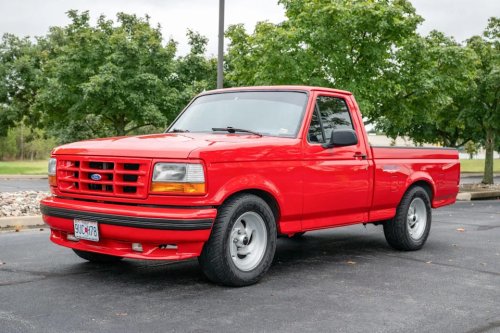
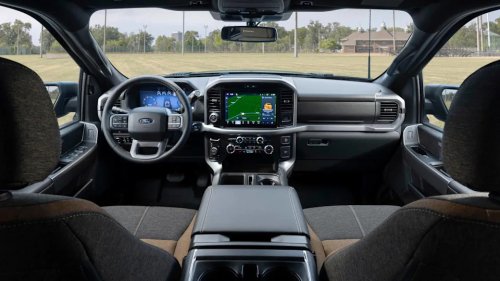
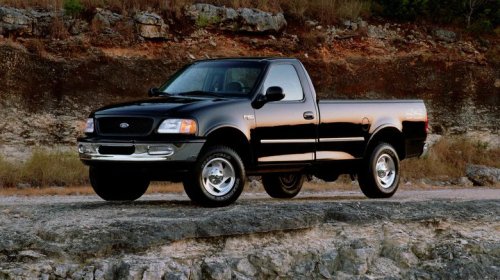
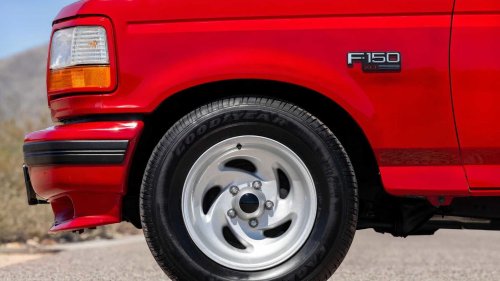
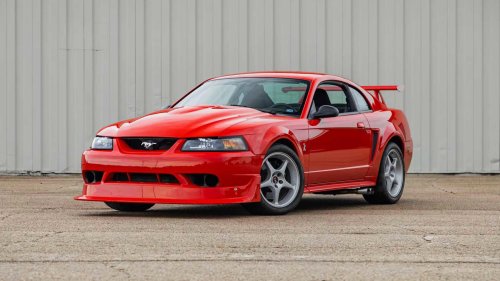
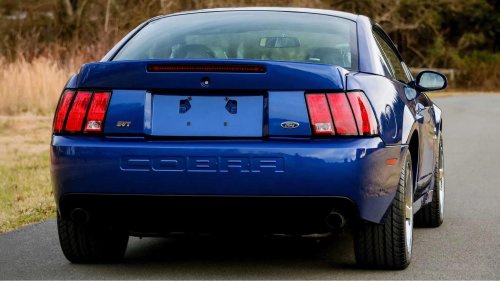
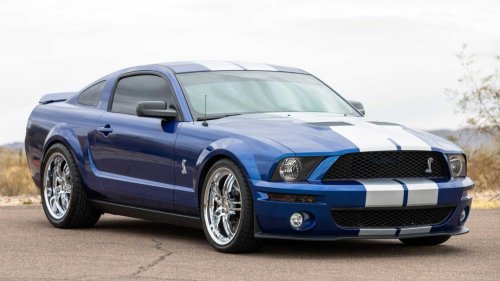
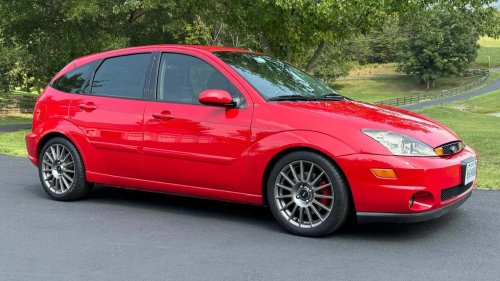
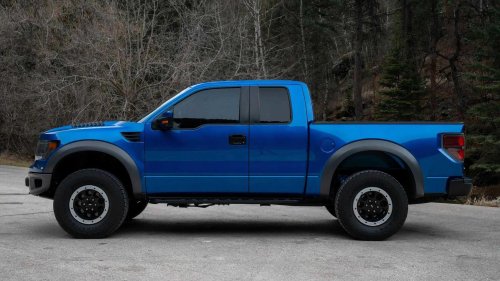
By the early 1990s, Ford had a problem that the sales charts could not hide. General Motors had the Corvette and the Camaro Z28. Chrysler had the Viper program underway and everyone knew it. The performance arms race that defined American car culture had produced clear winners and clear losers, and Ford's mainstream lineup was not delivering the kind of machines enthusiasts argued about after the showroom closed. The company's Special Vehicle Operations division had made some noise with the turbocharged Mustang SVO in the mid-1980s, but SVO had been dissolved and its work absorbed back into standard product development. Ford needed something more deliberate, more focused, and more permanent. Two senior executives saw the gap and decided to close it. What they built lasted more than two decades and left a mark on American performance history that is still visible today. What the Blue Oval Was Missing in the Early 1990s Bring a Trailer The American performance car landscape of 1991 was not kind to Ford. Chevrolet's Corvette ZR-1 had arrived in 1990 with a Lotus-developed all-aluminum V8 that produced 375 horsepower, setting a new benchmark for American performance at a price point the enthusiast press could not stop discussing. The Camaro Z28, running a 245-hp 5.7-liter V8, was outselling and outperforming anything Ford's Mustang GT could muster against it. Across town at Chrysler, Carroll Shelby and the engineering team were putting the finishing touches on the Viper, a car so extreme in its brief that it made every other American performance car look tentative by comparison.Ford's answer to the ZR-1 had been the SVO Mustang, a turbocharged four-cylinder that appealed to a different kind of driver but never caught fire with the broader enthusiast market. SVO ran for just three model years before Ford pulled the plug in 1986, having produced 9,844 examples. The lesson Ford took from that wasn't that performance vehicles couldn't work. It was that they needed a proper home, a dedicated team that put performance first and volume second. When Robert Rewey and Neil Ressler sat down to write the brief for that team in late 1991, they weren't building a marketing exercise. They were building a philosophy. The Skunk Works Mentality Ford Brought to Dearborn Mecum Auctions The new division would be a small, cross-functional group pulled from across Ford and its key suppliers. Engineers, product planners, marketing people, all with one brief: build limited-production vehicles for the enthusiast who actually knows what they're looking at. Every vehicle had to satisfy four things simultaneously. Performance meant real power and balanced dynamics, not just a bigger number on the spec sheet. Substance meant the driving character had to be built in, not stuck on as an afterthought. Exclusivity came from keeping production volumes low enough that owning one meant something. Value meant delivering the best possible performance per dollar, which kept the program from drifting into territory where only wealthy collectors could play. Hit all four or don't release the car. That was the deal.John Coletti, the man who had fought internally to stop the Mustang being replaced by a front-wheel-drive Mazda platform, became SVT's first director and ran the program from 1993 to 2004. He was not someone who shipped cars he wasn't proud of. When the 2000 and 2002 Cobras came up short during development, SVT pulled both model years entirely rather than put something inadequate on a showroom floor with the badge on it. That cost Ford sales. It also meant that when SVT did release a Cobra, buyers knew it had actually passed the test. The dealers who sold SVT products were separately certified and trained, a deliberate signal that this wasn't business as usual. SVT: Ford's Special Vehicle Team and What It Built Bring a TrailerSVT stood for Special Vehicle Team, and it launched publicly at the 1992 Chicago Auto Show with the unveiling of two first model-year products: the 1993 SVT Mustang Cobra and the 1993 SVT F-150 Lightning. Both went on sale in February 1993. The Cobra produced 235 hp from a reworked 5.0-liter V8, bettering the standard GT by 25 hp while adding upgraded suspension, larger brakes, and distinct exterior identification. The Lightning took a 5.8-liter V8 and delivered 240 hp from a full-size pickup at a time when performance trucks were not yet a defined market category. Between them, the two vehicles announced that SVT was not interested in half measures.The performance table captures SVT at its peak. The 2003 Terminator Cobra delivered 390 hp and 390 lb-ft of torque from a supercharged 4.6-liter V8, outrunning the Camaro SS to 60 mph by nearly half a second while offering independent rear suspension that the F-body cars could not match. The Lightning's 5.4-liter supercharged V8 delivered 380 hp in a full-size pickup, a combination that Car and Driver confirmed with a 5.2-second run to 60 mph and a 13.8-second quarter mile at 104 mph, figures that embarrassed plenty of sports cars of the era. The Shelby GT500 completed SVT's arc with 500 hp and independent testing recording 0-60 in as little as 4.5 seconds, making it the most powerful American production car under $50,000 at the time of its launch. The Cobra, the Lightning, and the Contour SVT Bring A Trailer The SVT Mustang Cobra was the program's flagship from 1993 through 2004, evolving from the Fox-platform original through the SN95 generation and ultimately to the supercharged Terminator that ended the run. Each generation received hand-built engines assembled by dedicated technicians at Ford's Romeo, Michigan plant, a detail that distinguished SVT cars from standard production line assembly and gave buyers a specific, traceable connection to the people who built their engines. The 1993 Cobra R, a racing-only derivative of the first Cobra, was produced in just 107 units and is confirmed today at $71,300 in Excellent condition, the most valuable of the first SVT generation.The SVT F-150 Lightning made a different argument entirely. A performance truck had no logical reason to exist by the four-pillar definition, but SVT made one anyway, and it worked. The second-generation Lightning's supercharged 5.4-liter V8, producing 380 hp and 450 lb-ft of torque from 2001 onward, created a vehicle that could tow a boat on Saturday and embarrass Mustang GTs on Sunday. Total Lightning production across the two generations reached 39,687 units. The SVT Contour, available from 1998 to 2000 with a 2.5-liter V6 producing 200 hp and running a five-speed manual, made the case for SVT in a compact sedan and showed that the program's philosophy was not limited to pony cars and trucks. Just 11,500 were built, and they remain among the most interesting sleepers in the SVT catalog. How SVT Built Cars Differently From the Standard Ford Process Bring a Trailer The Romeo engine plant's niche line was where SVT's substance principle became something you could actually touch. Every 4.6-liter DOHC Cobra V8 was hand-assembled by a dedicated technician who stamped their name on the finished unit. Not a sticker, a stamp. That meant someone was personally accountable for what went into your car, and if you knew where to look, you could find out exactly who. The Terminator's supercharged 4.6-liter iron-block V8 came off the same line, as did the GT500's 5.4-liter unit. A decade of SVT's most powerful engines, all built by the same people in the same building, with their names on every one.The small team structure gave SVT something most car programs never get: the ability to act quickly on what they actually found in the car. Standard Ford program reviews meant layers of sign-off before anything could change. SVT didn't have that overhead, so when the suspension on a development Cobra didn't feel right, they changed it. No committee, no six-month cycle, just engineers making calls based on what the car was telling them. That kind of feedback loop is expensive to create inside a large organization and almost impossible to replicate without genuine autonomy. SVT had it, and the cars drove the way they did because of it. The Zenith: Focus SVT, GT500, and What SVT Became Cars & Bids The SVT Focus, produced from 2002 to 2004, represented a deliberate expansion of the program's brief into the compact hatchback segment. Its 2.0-liter inline-four produced 170 hp at 7,000 rpm with 145 lb-ft of torque, paired to a Getrag six-speed manual. MotorWeek's 2002 test recorded 0-60 in 6.9 seconds and praised the car's handling at Roebling Road Raceway as transformed relative to the standard Focus. Motor Trend had called on SVT to create a budget-friendly American M3 sedan equivalent. The Focus SVT did not match the M3's performance, but it delivered the same principle: a modest platform elevated by focused engineering to something genuinely engaging, priced where enthusiasts could actually buy one. Total production was approximately 23,000 units across three model years.The Shelby GT500, which SVT had engineered as the all-new SVT Mustang Cobra before Ford's business relationship with Carroll Shelby reshaped its identity, arrived for 2007 as the program's performance zenith. Five hundred hp from a supercharged 5.4-liter DOHC V8 built at Romeo. Ford GT-derived four-valve aluminum cylinder heads. Brembo four-piston brakes. A Tremec TR-6060 six-speed manual. At a base price of approximately $41,000, it was the most powerful production Mustang ever built at that point, and the most powerful American production car under $50,000. SVT had built the car it had always been pointing toward. Two years after the GT500 launched, Ford began the process of absorbing SVT into a broader global performance structure, and in 2015 the division formally merged with the European RS team to become Ford Performance. Why SVT Still Defines What Ford Performance Means Bring a Trailer The four pillars Rewey and Ressler established in 1991 didn't disappear when SVT merged into Ford Performance in 2015. Performance, Substance, Exclusivity, and Value still sit at the center of every Ford Performance product, from the Mustang Dark Horse to whatever comes next. What SVT proved was that those four things could coexist in production vehicles that ordinary enthusiasts could actually afford, built by a team with enough autonomy to make real engineering decisions. That combination is rarer than it sounds in the context of a large mainstream manufacturer.The cars SVT produced are, in retrospect, exactly what they claimed to be: factory-built performance machines with engineering integrity that the passage of time has only clarified. The Terminator Cobra was underrated at the crank and overbuilt in the drivetrain. The Lightning was a truck that beat sports cars at the dragstrip. The Contour SVT was a compact sedan that the enthusiast press compared to the BMW M3. None of them were perfect, and SVT would have been the first to admit it. But every one of them was honest, and in the performance car world, that is worth a great deal. Ford built the Special Vehicle Team to close a gap in its lineup. It ended up defining what the company stood for when it decided performance actually mattered.Sources: Classic.com, Mecum, Bring a Trailer.


















 +45 others