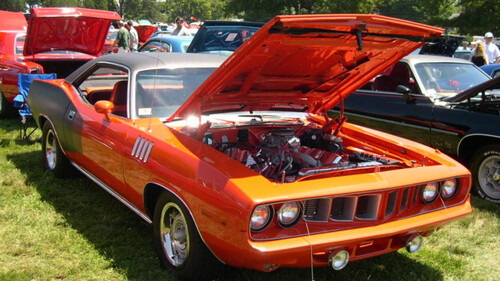
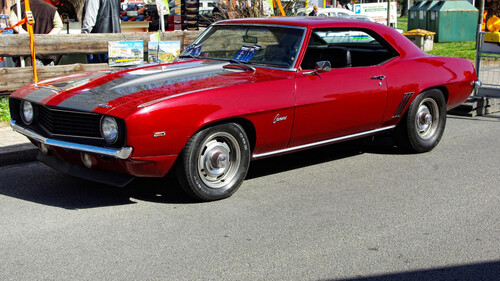
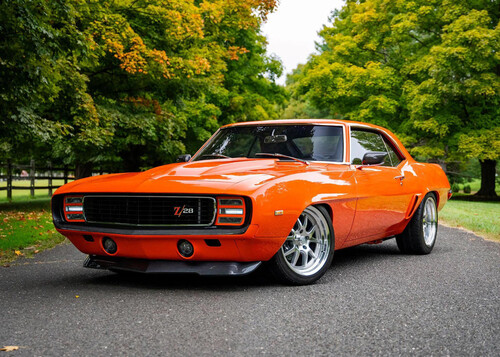
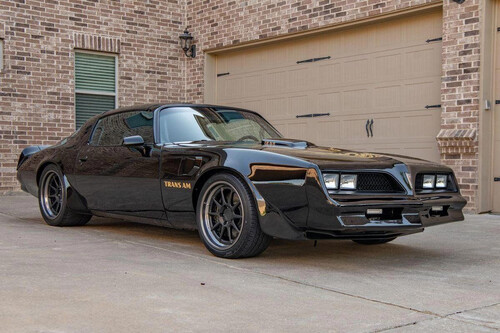
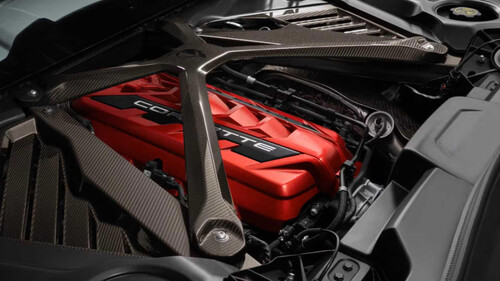
Jump LinksWhat About De-stroking?The 383 StrokerThe Ford 347The LS Family Of EnginesWhat is the point of a stroker engine?What does a 383 Stroker engine mean?What are the disadvantages of Stroker engines?Hang around an American car meet long enough, and you will hear the phrase stroker, or stroked engine mentioned, followed by some bragging about torque and such - most often with regard to a Ford Mustang GT or F-150, or even a Cadillac CTS-V. If you have ever wondered what actually a stroker is, or stroked engine, we have you covered. In this article we will look at what a stroker engine is, what it aims to achieve, and how it achieves these aims. We will also briefly cover de-strokeing an engine and look at some famous examples of both. What Is A Stroker Engine? Chevrolet A stroker engine is an engine that uses components that extend the piston's stroke inside the engine's cylinder, enabling it to go farther up and down each time. The longer piston stroke forces more fuel and air into the cylinder, increasing the combustion cycle's total power and supplying the crankshaft with more energy, which increases the torque applied to the vehicle's wheels and gearbox. It is mostly seen in naturally aspirated engines, where it is commonly a cheaper way of getting more power and torque out of an engine than turbocharging or supercharging it. Similarly, you will see most stroker kits made for big displacement engines, with the most common being the V8s of the 60s and 70s.While it has died down in a new era of forced induction engines, there are some people that are still stroking and de-stroking their more modern engine for performance gains. How Do You Stroke An Engine? Bring a TrailerThe basic theory behind stroking an engine is increasing the distance that an engine's pistons have to travel in the engine block. You can buy kits that help you do this, but it can't be done on just any engine. Some engines take to the process better than others as, if done incorrectly, or with the wrong engine, you will spend more time picking up the pieces of said engine off the road than putting that extra power to use. There are different ways to stroke your engine. We will give a brief look at each.Common upgrades when stroking an engine include: A new crankshaft with a longer stroke is installed. Lengthening the connecting rods: The pistons move farther when the connecting rods are longer. When combined with a new crankshaft, which is frequently included in a full kit, increasing the bore diameter boosts the engine's capacity. The Three Ways To Stroke Or De-stroke An Engine The bore-to-stroke ratio of stroker engines is divided into three categories: under-square (bore is smaller than stroke), square (bore and stroke are equal), and over-square (bore is larger than stroke). The engine's characteristics are determined by these classifications; under-square setups prioritize torque for heavier cars, whereas over-square setups are typical in racing for high-rpm power. Over-square: Bore is greater than stroke. This design is frequently used in racing applications because it increases air induction and rpms, while lowering average piston speed, improving dependability. This can also be referred to as de-stroking, as the stroke of the cylinder is shortened in most cases. Square: The stroke and bore have the same length. Under-square: Bore is less than stroke. For uses like off-roading with bigger cars or street cruising, this layout is frequently employed to provide additional torque. There are lots of examples of under-square engines, such as the 2008 Lamborghini 5.2 liter V10, Toyota's Dynamic Force 2.5L I4 found in the Camry, and BMW's B48 2.0 liter I4. What Are The Benefits And Drawbacks Of Stroking An Engine? There are a range of benefits and drawbacks to stroking an engine. The main benefits are power and torque. So long as the engine you are using is a known good engine for the conversion, you will be able to extract more power and/or torque from it without needing to use a supercharger or turbocharger. A stoker is also seen by some as a more pure hotrod style of extracting more from an engine, with the classic car crowd liking the naturally aspirated power band.There are some negatives to running a stroker engine. For one, there is an additional cost of converting an engine to a stroker. Changing the bore or stroke on an engine is a very involved and labor-intensive process and, as such, comes with a large cost. It is strongly recommended by most performance shops that you leave it to the professionals when it comes to stroking an engine, unless you want to risk taking chunks of metal out of the oil pan of your brand-new V8-shaped paperweight.As you increase the size and decrease the speed of your pistons, you also lose the ability to rev as high. Strokers are more about torque than high-revving, high-stress engines, and with the added mass of each piston working against you, some larger stroker engines actually lose rpms. Another issue to consider is, unlike a turbo kit, there can be no going back sometimes. If you are to the extreme point where you are also increasing the bore of your engine, you cannot just reduce it back to stock when and if you feel like it. What About De-stroking? BMWWhen an engine is destroked, its stroke is shortened, reducing displacement but enabling it to reach higher rpms, and possibly more horsepower at high speeds. This is accomplished by either utilizing a crankshaft with a shorter stroke or, in certain situations, by excising material from the piston tops. Although a shorter stroke produces less torque overall than a long-stroke engine, it lessens the strain on internal parts like connecting rods, increasing engine reliability at high speeds.A new and controversial example of this is from 4N Motorsports and its kit for the N55/S55 straight-six seen in the BMW 3 and 4 series, and the M3 and M4. The kit can lower the engine's displacement down from 3.0L, to 2.8L, 2.6L, or even 2.4L. This de-stroking allows the Bavarian lump to reaching a shocking 9,000 rpm. 4N has its own de-stroked race car, a 2015 BMW M4 (F82) race car using a turbocharged 2.4 liter S55 inline-six capable of a screaming 11,000 rpm and a brutal 901 hp (662 kW) at 9,500 rpm. Examples Of Famous Stroked Engines The 383 Stroker BringATrailerSeen in a plethora of Chevrolet, Pontiac and Plymouth models, from the Chevelle, Camaro, Nova, and El Camino to the Pontiac GTO. Other engines can be turned into a 383 Stroker, as the number is just the result of the bore x bore x stroke x 6.2838 formula, but the most famous engine to be used is the Chevrolet 350 V8, more commonly referred to the as the Chevy Small Block. The 383 is a popular conversion, as it blends the smaller, higher-revving nature of the smaller V8 with the larger torque of the bigger 400 series without suffering from the same over-heating issues that the larger 400 was plagued with. It is so famous and widely renowned that Chevrolet Performance began offering a 383 crate engine in 2020 that can still be ordered on its website.The 383 Stroker is not to be confused with the Mopar 383 big-block, a completely separate factory V8 seen in Dodge and Chrysler products during the same time period. The Ford 347 Bring a TrailerBased on the Ford 302 V8, the 347 is one of the most popular non-Chevrolet V8s you can buy. Making between 400 hp to over 500 hp, the 347 is most commonly seen sending classic Ford Falcons and Mustangs down the drag strip at blistering speeds, but is swapped into vintage Broncos as well. The LS Family Of Engines ChevroletChevrolet seems to be the king of stroker engines, with its modern compact V8, the LS, being a hugely popular crate motor and swapped into anything that can accept it. It is no surprise then to find out that numerous companies offer various sizes of the stroker kits for the different generations of LS engines. A popular technique is to use an LS3 block to generate a 416 cubic inch engine or a 6.0L block bored out to a 408 cubic inch displacement with a four-inch stroker crank. FAQs What is the point of a stroker engine? The overall point of a stroker engine is to increase horsepower and torque without the need for forced induction. It is better known for increasing torque, and is most commonly seen in small and midsize V8s. What does a 383 Stroker engine mean? A 383 Stroker refers to a Chevy 350 small block that has been stroked to a 383. It is one of the most famous stroker engines ever made as it has a cult following. What are the disadvantages of Stroker engines? The main disadvantages are that it is a very labor-intensive and an irreversible upgrade. It also limits how much the engine can rev.