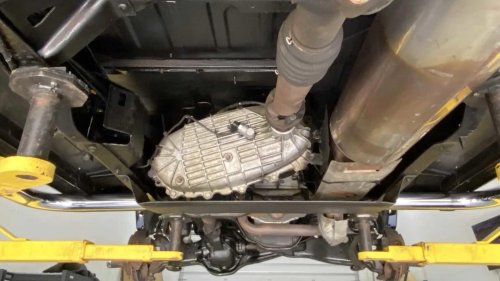
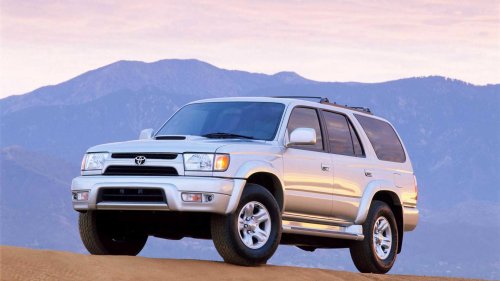
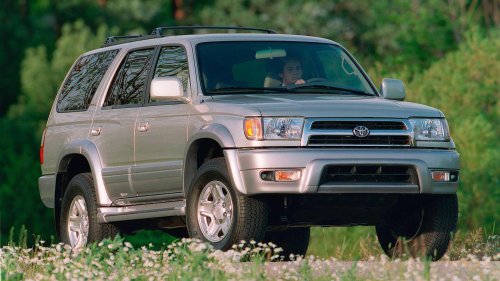
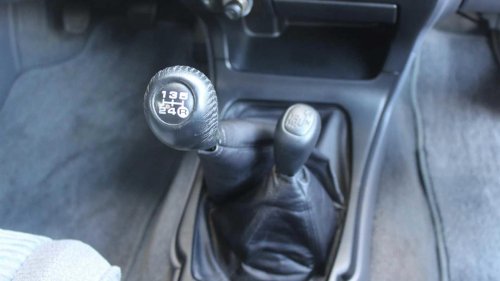
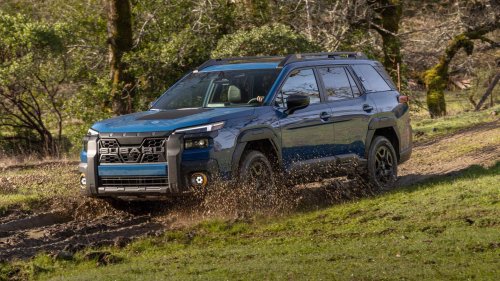
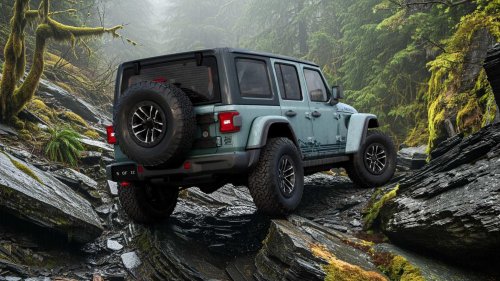
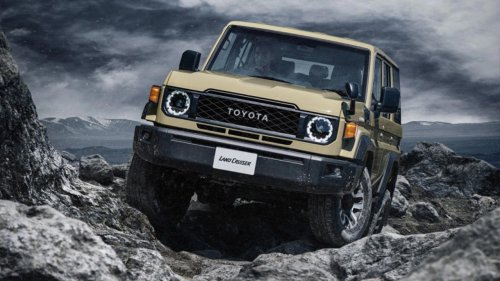
Jump LinksDo All Cars Have Transfer Cases?How To Tell If A Transfer Case Is Damaged Or BrokenExample: 3rd-gen Toyota 4RunnerAWD vs 4WD: Which Is Better?Four-wheel-drive vehicles are more capable at off-roading, and arguably even on-roading. They have better traction on wet or slippery pavement, gravel, mud, and any other adverse scenario you can come up with - this is all thanks to a part called a transfer case. But what is a transfer case, and what does a transfer case do? Well, in this article, we dive deeper than a basic understanding of transfer cases. By the end of this article, you'll know the difference between 4WD and what kind of transfer case AWD vehicles use, full-time and part-time transfer cases, and much more. Some models, like the Toyota 4Runner, can have either part-time or full-time four-wheel drive, depending on which trim level you choose. Here, you'll learn why that matters, and maybe even help decide which is best for your needs.This article is intended to clear up misconceptions about, and explain the differences between transfer case types. We discuss what each type is, what they do, and more. What Is A Transfer Case, And Why Is It Important? Bring A TrailerWhat: a transmission transfer case is an essential part of any four-wheel-drive vehicle that connects the driveshaft to both axles. Power generated by the engine is directed to the transfer case, which then transfers power to the front and rear axles.Why: transfer cases aren't just important to 4WD vehicles - they're essential. This single part is the entire reason both axles, or all four wheels, can spin at the same time. Without a transfer case, power can only be sent to one axle or the other, making a car either front- or rear-wheel drive. Do All Cars Have Transfer Cases? Not all cars, trucks, or SUVs have transfer cases; only those with four-wheel drive or all-wheel drive have transfer cases. We go into the difference between AWD and 4WD in this linked article, but it's important to know that both drivetrains use different types of transfer cases to send power to both sets of wheels. How To Tell If A Transfer Case Is Damaged Or Broken We talk more about binding and other concerns about certain transfer cases later. However, it's important to know how to take care of your transfer case, and how to know if or when it's broken. Firstly, if you try to engage four-wheel drive and only two wheels are still spinning, then there may be a problem with the transfer case. You may hear a clunk, or grinding noises when pushing the accelerator pedal, and the front wheels may not spin. This could be due to the transfer case's gears failing to engage with either the chain or other gears (depending on the type of transfer case). Keeping your transfer case fluid topped off at the manufacturer's recommended level is also important to keep it running smoothly. Differences Between Full-time And Part-time Transfer Cases ToyotaThe transfer case, usually a front transfer case, isn't a single part that can be installed on any vehicle. In fact, four-wheel-drive vehicles may have different types of transfer cases. For example, full-time and part-time transfer cases result in different abilities on and off the pavement. First, let's talk about part-time transfer cases. This type is unique since it allows the driver to send power to either the rear axle only, or both axles. By keeping it in two-wheel drive, the car burns less fuel, and there are fewer parts to potentially break. However, part-time transfer cases cannot be used in 4WD on high-traction surfaces, like dry pavement. Their internal components can bind and break, since they lack a differential.Full-time 4WD vehicles, on the other hand, come with a differential-like transfer case that allows for some slippage or movement depending on which axle has more traction. It's just like a regular car differential, where you don't want both tires on a single axle to spin at the same rate while turning (the inside wheel spins fewer times than the outside wheel when performing a turn). A full-time transfer case on a car, truck, or SUV allows for one axle to spin faster or slower than the other, while still providing power to both axles. That's where a locking center differential comes into play - locking the center differential means an even distribution of power is sent to both axles at all times, and should only be used in low-traction environments. Example: 3rd-gen Toyota 4Runner ToyotaOne of the best examples to showcase the differences between transfer case components and abilities is with the Toyota 4Runner's 3rd generation model. On sale from the 1996 model year through the 2002 model year, the 4Runner went through some serious changes over this generation. Firstly, all third-gen 4Runners technically have part-time four-wheel drive. Click the link above to learn more about how complicated this model's drivetrains were over the course of its production.Nevertheless, Base, SR5, and Highlander trims from 1996 to 2000, the 4Runner had a basic J-shaped shifting configuration with all-mechanical linkages. There were no electronics or push-button functions. You could just move the lever to your desired position, then it would be in 4WD. This is a typical part-time transfer case that can be engaged when you want it, but should never be engaged on dry pavement.That said, the 2001 and 2002 4Runner, regardless of trim, all came with what's known as 'Multi-Mode.' It's technically still a part-time 4x4, since you have to push a button to engage 4WD from its typical RWD layout. When Multi-Mode is engaged, it acts like a full-time 4x4. Its center differential allows it to be driven on dry pavement without fear of binding, but locking the center differential turns it into a true 4WD. The Most Common Transfer Case: Two-speed Bring A TrailerTwo-speed transfer cases are the most common, since they typically have a low-range and a high-range gear. These are simply transfer cases that can engage one gear ratio at a time, leading to more or less low-end torque. Think about it in relation to manual transmissions, where shifting the transmission on your own allows you to choose the gear ratio that best suits your current needs.A part-time 4WD vehicle will have a part-time transfer case that gets engaged or disengaged as needed, but most can be set to either low- or high-gear. In high gear, the transfer case has a 1:1 gear ratio; that means every single turn of the transmission's output shaft translates to a single turn of the driveshaft connected to each axle. Shifting to low gear means a single turn of the transmission's output shaft translates to more rotations of the driveshaft. For example, low gear in the Jeep Wrangler Rubicon allows for a 4:1 gear ratio. Do All-wheel-drive Cars Have Transfer Cases? SubaruYes, technically, all-wheel-drive vehicles have transfer cases. However, they are not the same type as those found in four-wheel-drive vehicles. AWD transfer cases continuously provide power to both the front and rear axles, but usually cannot be disengaged. AWD systems can dynamically change how much power is sent to the front and rear wheels on the fly, depending on which axle has more traction. These systems also go through a center differential - like some versions of the 3rd-gen 4Runner - but this differential cannot be locked. AWD vs 4WD: Which Is Better? Both AWD and 4WD have pros and cons, a topic that has been covered plenty of times before by CarBuzz and others. That said, here are some highlights in relation to how their transfer cases work. All-wheel drive transfer cases lack a low-range gear that's almost always found in 4WD transfer cases. That means that an AWD car is still capable off-road, but extreme conditions like steep or particularly slick surfaces will pose a challenge. This limits the amount of low-end torque generated, which means drivers will have to rev to a higher rpm to reach its maximum torque. Higher rpm can be more difficult to control, and tires may lose traction more easily. All this is to say that having 4WD with a low-range transfer case can be better in some conditions. However, AWD transfer cases are better for on-pavement driving. Summary: It's What Makes A 4X4 A 4X4 JeepWithout a transfer case, your car does not have four-wheel drive - it's as simple as that. All the technical jargon aside, a transfer case simply transfers power to both axles, rather than having a single driveshaft that delivers power to a single axle. There are multiple types of transfer cases, including those that offer part-time or full-time 4WD, and even special all-wheel-drive transfer cases that act in conjunction with a differential to send power to all four wheels. At the end of the day, it comes down to the fact that transfer cases make 4WD vehicles what they are.





























































!['What the [Expletive] Is That?:' Customer Complains Car is 'Shaking Like Crazy.' Then His Mechanic Takes a Closer Look At The Tire](https://cdn.topcarnews.net/thumb/id/aHR0cHM6Ly9jZG4ubW90b3IxLmNvbS9p-bWFnZXMvbWdsL0FrbkxWNi9zMS9jdXN0-b21lci1jb21wbGFpbnMtY2FyLWlzLXNo-YWtpbmctbGlrZS1jcmF6eS4tdGhlbi10-aGUtbWVjaGFuaWMtbG9va3MtYXQtaGlz-LXRpcmUuanBn/218c468b845ffd96e92fea5a0f10fae9.jpg?t=20260922&post_id=3458)