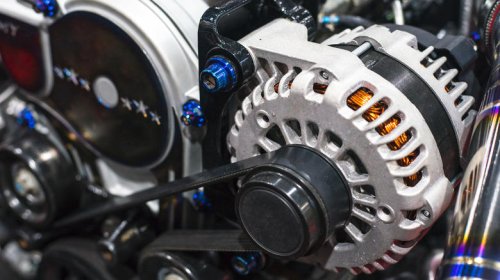
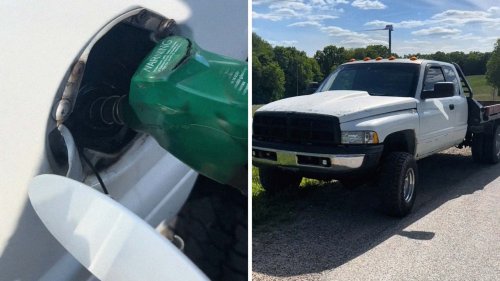
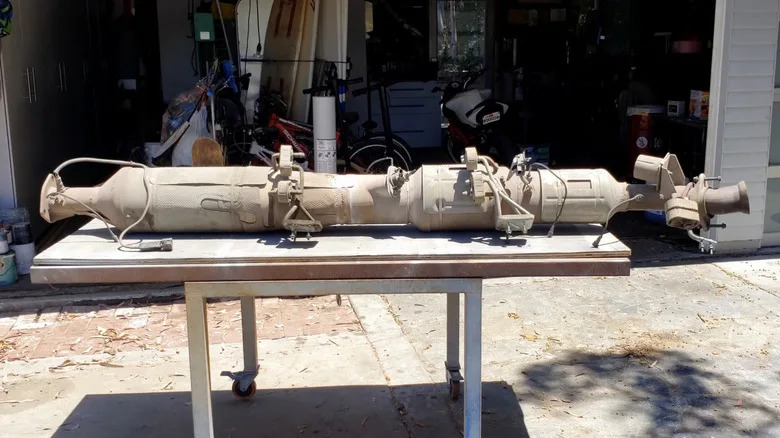
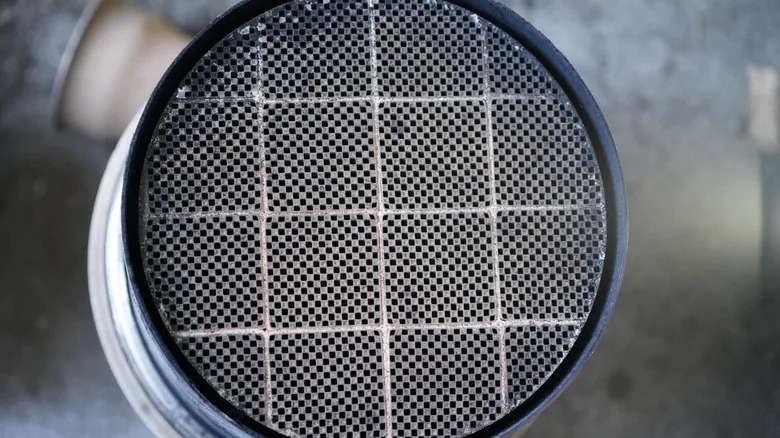
Lecaros fotografix 77/ShutterstockEvery diesel truck owner eventually hears about the DPF — the diesel particulate filter that catches soot before it can escape out the tailpipe in order to burn it off once the exhaust is hot enough. It's a great idea in theory. The problem is that a DPF only cleans itself out through a process called regeneration, which requires the exhaust to reach a specific operating temperature to burn off the trapped soot.Spend most of your time on short trips around town, and your truck may never get hot enough for long enough to pull that off. Eventually, the filter clogs. However, even if you drive your truck hard and allow the system to regenerate, the DPF is a wear item, just like brake pads or an air filter. That means that it will eventually need service, no matter how you use your truck. So, what do you do about it?There are a few options. You can let the truck DPF regenerate on its own while driving, force a regeneration with a scan tool, or pull the DPF off the truck entirely and clean it yourself or hire a professional to do it for you. That DIY option exists, and plenty of truck owners have done it successfully. Whether it's the right call for your filter is a separate question — if you're not confident cutting into your own exhaust system, take it to a shop instead. AdvertisementAdvertisementRead more: When (And Why) Did Cars Switch From Leaded To Unleaded Fuel?How to clean a DPFRedneck Oriental/YouTubeSoot is what regeneration burns off — and what packs the filter solid when a truck never runs hot enough. When regen alone won't clear it, the whole aftertreatment unit may need removal. The DPF always sits downstream of the diesel oxidation catalyst (DOC), though the selective catalytic reduction (SCR) unit can fall either before or after it, depending on the truck. Cut at the welds, after scribing a witness mark across both halves. Clean everything upstream, too, since a plugged DPF backs soot into whatever sits ahead of it.Home mechanic Redneck Oriental, who's cleaned filters this way on camera, uses a 4,200-psi washer. Most professionals advise against copying him. The ceramic honeycomb is brittle, and water at that pressure can crack the substrate — which cannot be cleaned, only replaced. That gap is the point: A professional cleaning runs in the low hundreds, while a new filter starts around $1,000 and goes up from there.Ash is what burning that soot leaves behind: incombustible residue. No regen removes it, which is why filters come off for professional cleaning somewhere in the 100,000 to 200,000-mile window. However, done doesn't always mean fully clean. A Lehigh University study, hosted by Springer Nature Link, ran 34 filters through commercial cleaning and found "back pressure may be decreased while DPFs may still retain significant levels of ash."AdvertisementAdvertisementLiqui Moly confirms that cleaning DPF ash has its limits, also stating that "If the DPF is overloaded with too much ash, the diesel particulate filter must be removed and replaced." Since cleaning can only do so much, in order to prevent your DPF from clogging, make sure to follow regeneration cycles, skip frequent short trips, and make sure you are only using appropriate additives.What to do after cleaning a DPFLecaros fotografix 77/ShutterstockOnce the DPF is back on the vehicle, check for exhaust leaks, warning lights, and fault codes. The system uses pressure measurements to monitor restriction through the filter, so diagnostic readings can help show whether airflow has improved after cleaning. DPF restriction testing is also used to determine filter condition and cleaning needs.Don't automatically force a regeneration after cleaning. Regen is designed to burn accumulated soot, and whether a forced or manual regen is appropriate depends on the truck and its current soot load. Cummins explains that regeneration removes carbon buildup from the DPF, while Ford notes that some vehicles will not allow manual regeneration until the DPF reaches a specified load.If regeneration is required, follow the manufacturer's procedure. For instance, with Ford diesel trucks, manual regeneration takes approximately 30 minutes. Sustained highway driving may also provide the exhaust temperatures needed for normal regeneration, depending on the vehicle and operating conditions.AdvertisementAdvertisementEither way, mistakes such as these are ruining your diesel engine, which is why you need to follow all of the maintenance requirements, schedules, additive choices, and habits to minimize chances of having issues with the DPF entirely. The system is complex and expensive to repair — warranty coverage and long-term reliability both depend on sticking to the manufacturer's recommendations.Want more like this? Join the Jalopnik newsletter to get the latest auto news sent straight to your inbox, and follow us or add us as a preferred search source on Google.Read the original article on Jalopnik.




















 +57 others














!['What the [Expletive] Is That?:' Customer Complains Car is 'Shaking Like Crazy.' Then His Mechanic Takes a Closer Look At The Tire](https://cdn.topcarnews.net/thumb/id/aHR0cHM6Ly9jZG4ubW90b3IxLmNvbS9p-bWFnZXMvbWdsLzQwRTk0cS9zMS9tYXpk-YS1taWF0YS1vbi1zdHVkZGVkLXdpbnRl-ci10aXJlcy10ZXN0LmpwZw/79e14514a276098b50ad4c871b42cc60.jpg?t=20260926&post_id=3458)
!['What the [Expletive] Is That?:' Customer Complains Car is 'Shaking Like Crazy.' Then His Mechanic Takes a Closer Look At The Tire](https://cdn.topcarnews.net/thumb/id/aHR0cHM6Ly9jZG4ubW90b3IxLmNvbS9p-bWFnZXMvbWdsL01rWVFNNC9zMS9pbWdf-ODY0Mi5qcGc/6f1ec4b4318a8b257cc3e8a877ffe35f.jpg?t=20260926&post_id=3458)
!['What the [Expletive] Is That?:' Customer Complains Car is 'Shaking Like Crazy.' Then His Mechanic Takes a Closer Look At The Tire](https://cdn.topcarnews.net/thumb/id/aHR0cHM6Ly9jZG4ubW90b3IxLmNvbS9p-bWFnZXMvbWdsL2xFM3dsVy9zMS9pbWdf-ODY0OC1jb3B5LmpwZw/347bc674f00c1700fd29d2c57e842287.jpg?t=20260926&post_id=3458)
!['What the [Expletive] Is That?:' Customer Complains Car is 'Shaking Like Crazy.' Then His Mechanic Takes a Closer Look At The Tire](https://cdn.topcarnews.net/thumb/id/aHR0cHM6Ly9jZG4ubW90b3IxLmNvbS9p-bWFnZXMvbWdsL2JnMTJHdi9zMS9tYXpk-YS1taWF0YS1vbi1zdHVkZGVkLXdpbnRl-ci10aXJlcy10ZXN0LTAxLmpwZw/93bb67d2c8cc97fba8d2ff15175061ca.jpg?t=20260926&post_id=3458)
!['What the [Expletive] Is That?:' Customer Complains Car is 'Shaking Like Crazy.' Then His Mechanic Takes a Closer Look At The Tire](https://cdn.topcarnews.net/thumb/id/aHR0cHM6Ly9jZG4ubW90b3IxLmNvbS9p-bWFnZXMvbWdsL3BiM3E5by9zMS9tYXpk-YS1taWF0YS1vbi1zdHVkZGVkLXdpbnRl-ci10aXJlcy10ZXN0LTAyLmpwZw/99624eda68d3f45fcbd7939f0443e37f.jpg?t=20260926&post_id=3458)
!['What the [Expletive] Is That?:' Customer Complains Car is 'Shaking Like Crazy.' Then His Mechanic Takes a Closer Look At The Tire](https://cdn.topcarnews.net/thumb/id/aHR0cHM6Ly9jZG4ubW90b3IxLmNvbS9p-bWFnZXMvbWdsL1hCNlBYVi9zMS9tYXpk-YS1taWF0YS1vbi1zdHVkZGVkLXdpbnRl-ci10aXJlcy10ZXN0LTAzLmpwZw/544d73fd805018640d3a35252e9dbb76.jpg?t=20260926&post_id=3458)