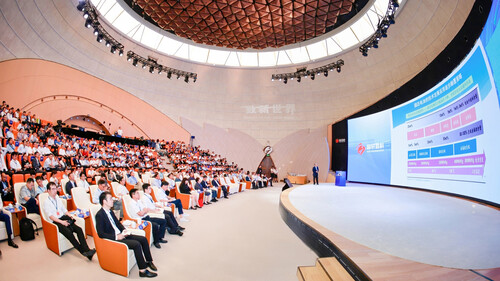
Volkswagen Group China unveiled its new technology package – comprising software, electronics and a platform – under the name VEGA at its Technology Day in Hefei. With this, VW is currently the only non-Chinese automaker with a locally developed technology foundation represented in the Chinese market.
CMP and CSP as the foundation for future VW models in China
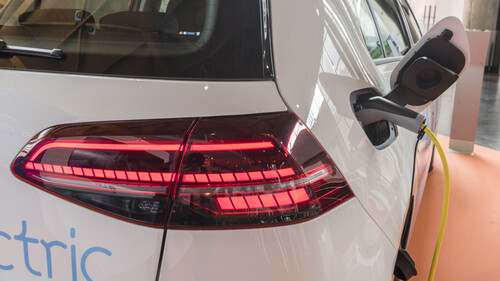
Two platform variants will serve as the foundation for future VW models in China. The China Main Platform (CMP) is designed for battery-electric and plug-in hybrid models in the A-segment. It is expected to achieve a CLTC range of over 600 km, with an efficient energy consumption of around 11 kWh per 100 km. Charging from 30 to 80 per cent takes 25 minutes. For the premium segment, the China Scalable Platform (CSP) features an 850-volt architecture, enabling charging from 10 to 80 per cent in just 13 minutes. This brings a charging stop closer than ever to the time of a traditional refuelling stop. Fully electric CSP models are set to achieve ranges exceeding 800 km, with energy consumption below 13 kWh per 100 km.
Advanced driver assistance systems essential in China
Driver assistance systems hold particular importance, as advanced ADAS functions have now become one of the most critical purchasing criteria in China. For assisted driving, Volkswagen’s software subsidiary Carizon has developed its first in-house L2++ solution, HyperSense 8 (HS 8). This system will enter series production in 2026 across seven new electrified models from the Chinese joint ventures FAW-Volkswagen, SAIC Volkswagen and VW Anhui.
HS 8 utilises a high-performance onboard computer with VW vehicle control, supporting navigation-assisted driving (NOA) on both highways and in urban traffic. Additionally, automated parking assistants for all everyday and parking scenarios are integrated.
To prepare these driver assistance systems and future autonomous driving functions for China’s road conditions, Volkswagen employs a virtual test ground based on its proprietary AI world model, GAIA 2.0. The software currently completes around five million simulation kilometres daily, based on 30 million real-world scenario segments, and is set to scale up to ten million training kilometres per day. This vast dataset enables the system to learn how to safely handle even rare and unexpected extreme situations in Chinese road traffic.
Level 4 autonomy planned from 2029
Level 3 systems, which allow drivers to take their hands off the steering wheel permanently under certain conditions, are scheduled to reach series production maturity by 2027. Volkswagen has already obtained an official licence for real-world road testing in Hefei. In the long term, the Group aims to achieve Level 4 autonomy by 2029, where the vehicle will handle driving completely independently. The technical foundation for this will be the third generation of the CEA electronic architecture (CEA 3.0) and a proprietary Volkswagen-developed control chip called C7H.
China-developed technologies to be used globally
The substantial investments in China’s technology ecosystem have long since ceased to be a purely local project for the Far Eastern market. Four years ago, the Group launched its strategic transformation under the motto “In China, for China” to secure local competitiveness through tailored developments. Now, Volkswagen is making a strategic pivot: its previous motto is evolving into the more globally-oriented “In China, Beyond China”. The Chinese location is thus transforming from a mere sales market into a central research hub and export node for the Group’s activities worldwide.
In addition to exporting vehicles and utilising China-developed technologies in emerging markets, the deployment of China-developed electronics in Europe may soon be on the horizon. Even today, models from the Volkswagen and Jetta brands produced in China are being exported to the Middle East, Uzbekistan, Kazakhstan and parts of Sub-Saharan Africa.
By the end of 2026, exports are set to expand to markets such as Mexico, Egypt and Vietnam, followed gradually by additional countries in the ASEAN region and South America. Beyond vehicle exports, the combination of the CMP platform and CEA electronic architecture serves as the technical basis for upcoming model ranges in the Global South. South America is expected to become the first international region to integrate these development results into its local product portfolio starting in 2030, followed by South Africa.