President Donald Trump announced Audi’s plan to build its first-ever United States production facility in Macon, Georgia, on Saturday, October 24. And now the commander-in-chief is reportedly prepared to offer the German automaker tariff relief as a result.
The Wall Street Journal reported on Thursday that the Trump administration has promised to ease tariffs on automakers that commit to U.S. manufacturing, and Audi may be the first to reap the benefit. Audi executives received assurances from the administration that the Commerce Department would soon institute a tariff-relief program for companies that invest in domestic production, according to people familiar with the plan. The automaker is set to invest $4 billion in a production facility that will build 200,000 vehicles annually by the early 2030s.
The details of the tariff relief plan have yet to be announced. However, the WSJ reported that the plan will likely allow automakers that invest in U.S. factories to receive exemptions or offsets for tariffs on imported vehicles or parts. Automakers would need to start factory construction before the end of next year to qualify, a person familiar with the plan said to the WSJ. Two sources briefed on the matter who spoke to Reuters said Audi pushed the U.S. to cut the current 15 percent tariffs to 7.5 percent, but that Commerce Department officials were expected to agree to a final rate around 10 percent.
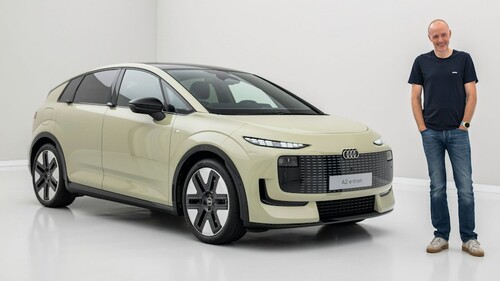
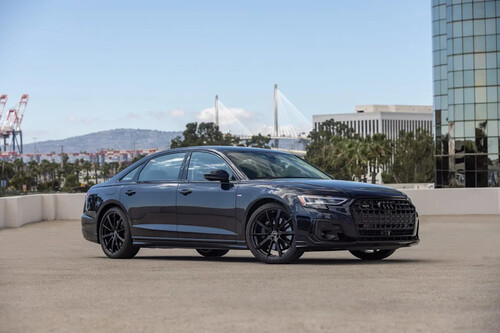
Similarly, the automotive tariff relief plan will likely share origins with a Commerce Department program established for tariffs on polysilicon, according to the WSJ. Under that program, solar companies can submit plans to move production to the Commerce Department and receive approval for tariff exemptions for certain products. Audi would benefit greatly from such a tariff relief program; it currently imports all of its models to the U.S. market from Mexico or Europe, and paid $1.4 billion in duties last year. The Volkswagen Group as a whole paid $4 billion in U.S. tariffs in 2025.
“We are not able to provide further comment at this stage,” an Audi spokesperson told Road & Track when asked for more information about the report.
Audi chief executive officer Gernot Doellner joined Trump on stage at a campaign rally on Sunday, October 25, where the president announced the new factory. Doellner said Audi’s new plant will create around 4500 jobs. The German automaker has also committed to building an additional 25,000 Audi units each year in South Carolina. Audi’s high-end Q7, Q8, and Q9 SUVs are slated for production at its future U.S. facilities.
"This decision was preceded by many months of careful planning and intense negotiations," Doellner said. "If the American president invites you, you accept the invitation. That is what respect for the office and for the country in which we invest demands."
Volkswagen’s Supervisory Board, which includes worker and labor-union representatives, still needs to sign off on Audi’s Georgia factory before any of these plans go forward. The board will meet in the coming weeks to finalize the plan, a plan that Audi executives are probably crossing their fingers over. The luxury automaker’s North American sales fell 16 percent in 2025, amid sticker price increases and a temporary pause on new vehicle deliveries.
A New York transplant hailing from the Pacific Northwest, Emmet White has a passion for anything that goes: cars, bicycles, planes, and motorcycles. After learning to ride at 17, Emmet worked in the motorcycle industry before joining Autoweek in 2022 and Road & Track in 2024. The woes of alternate side parking have kept his fleet moderate, with a 2014 Volkswagen Jetta GLI and a BMW 318i E30 street parked in his Queens community.