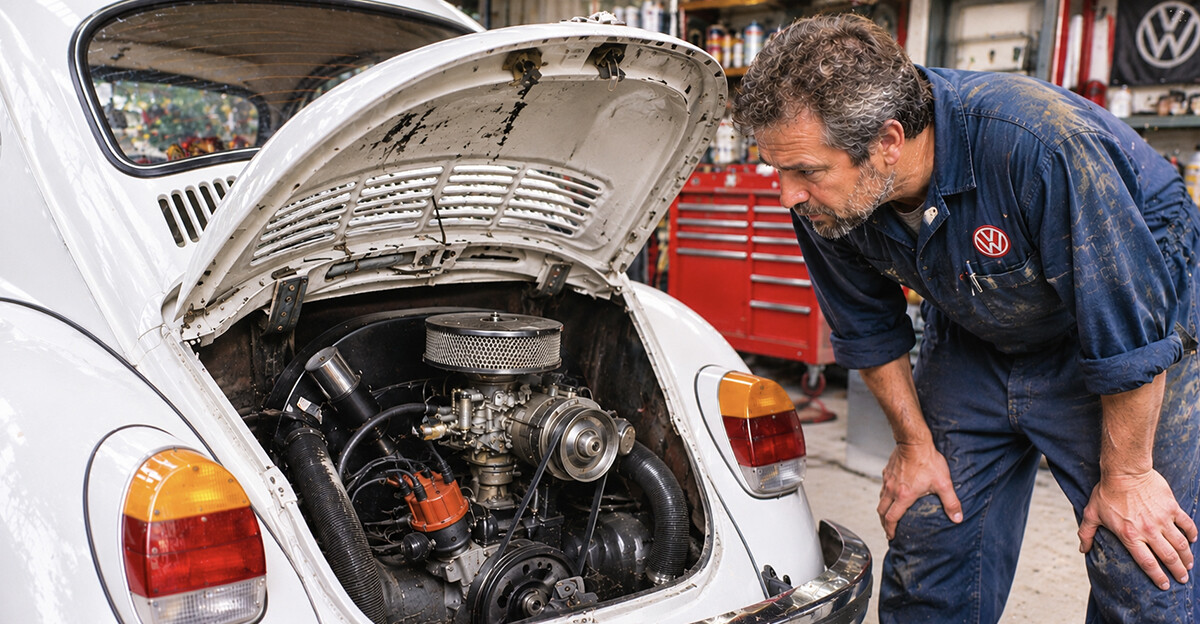
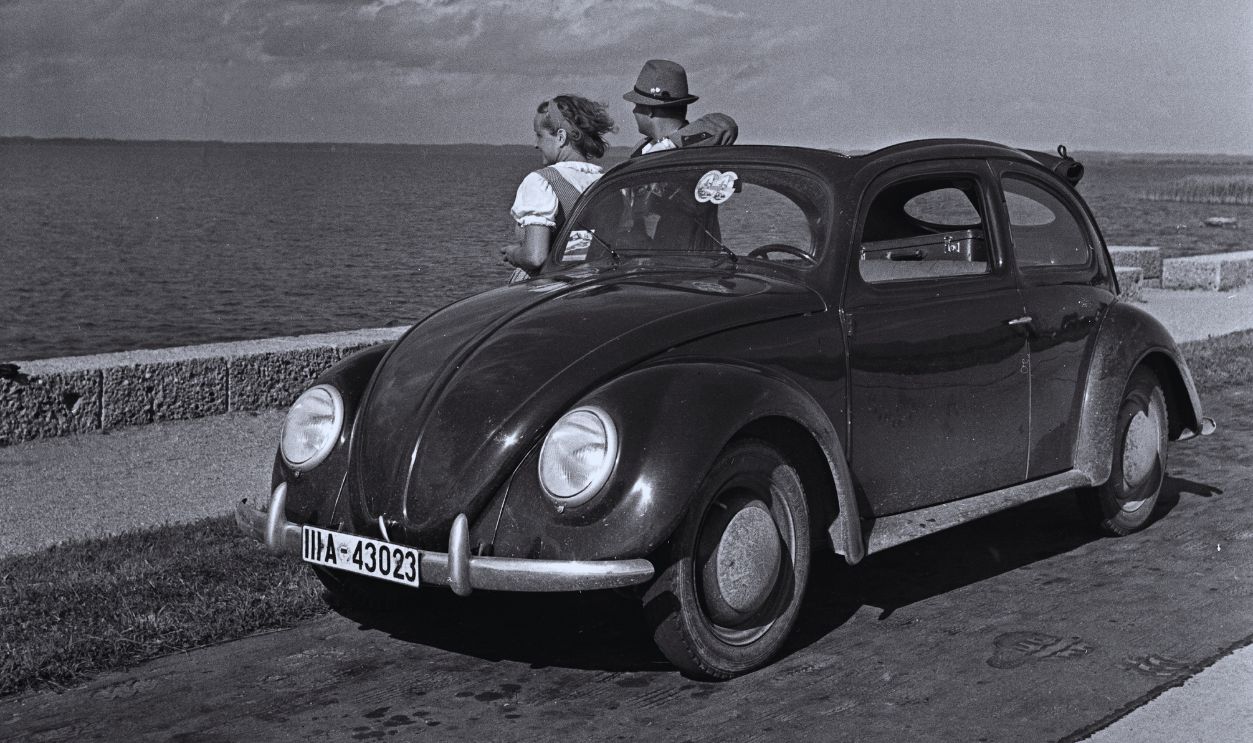
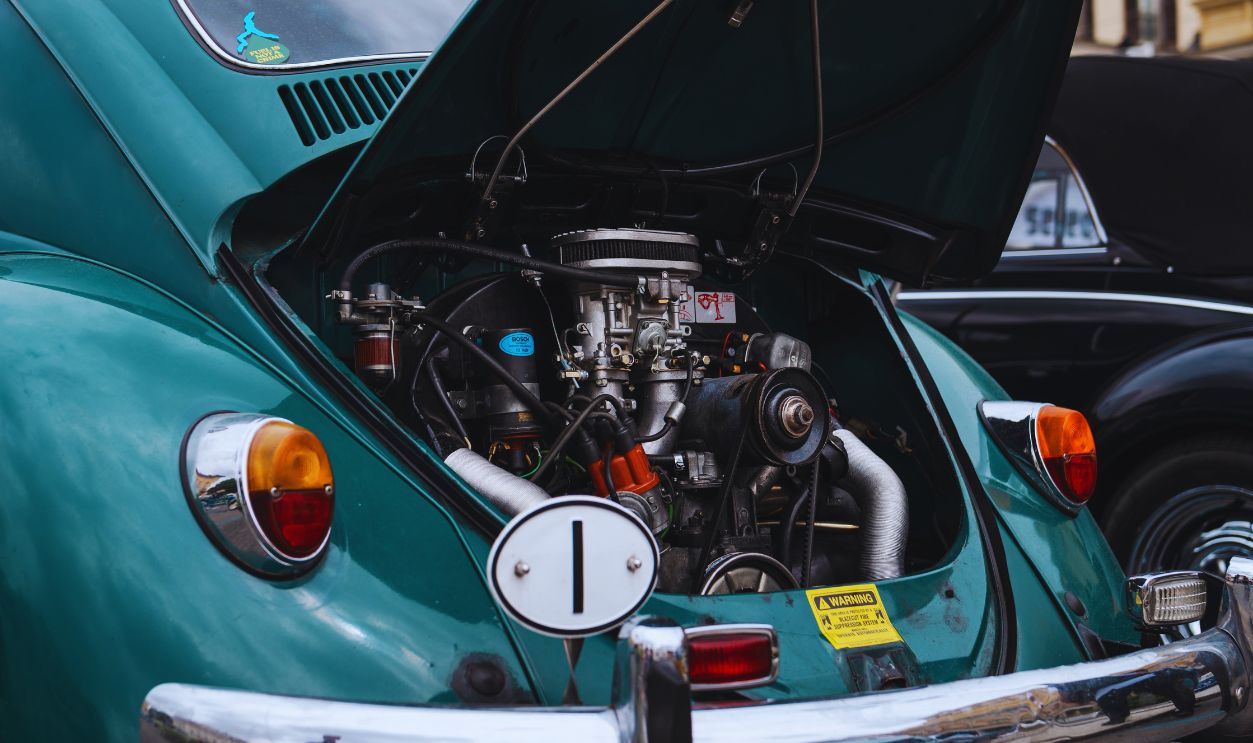
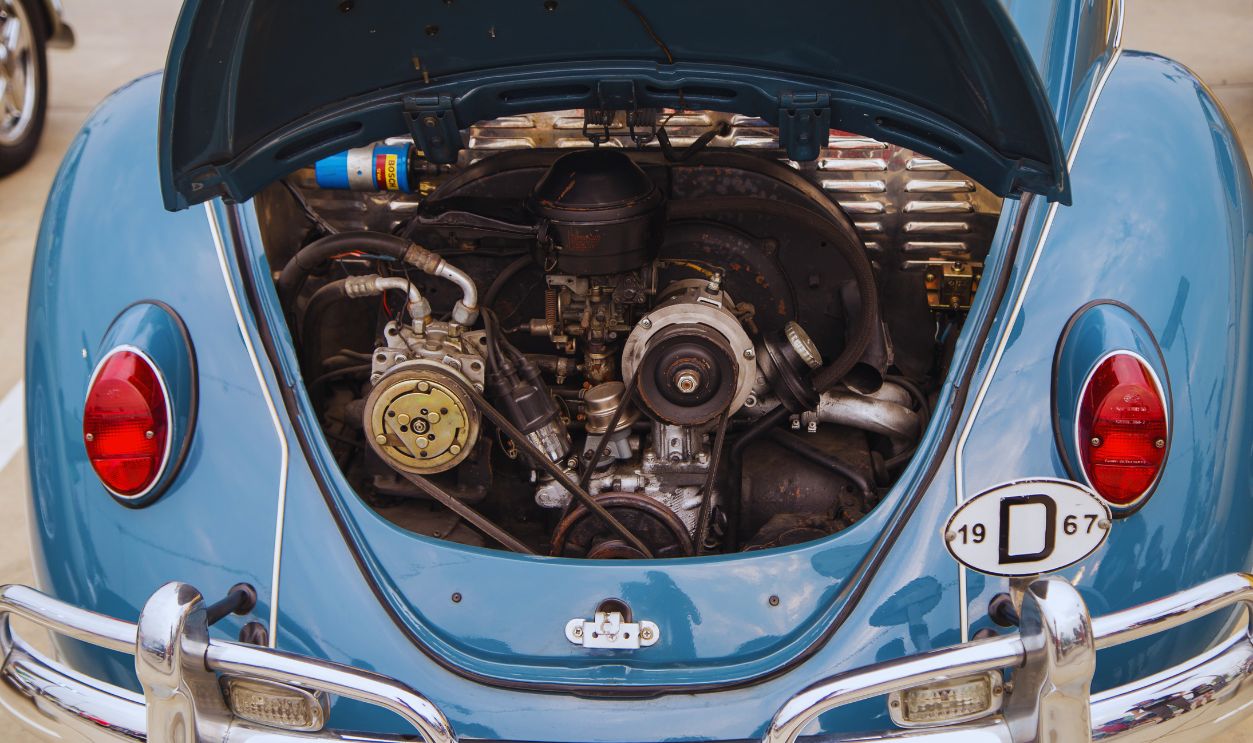
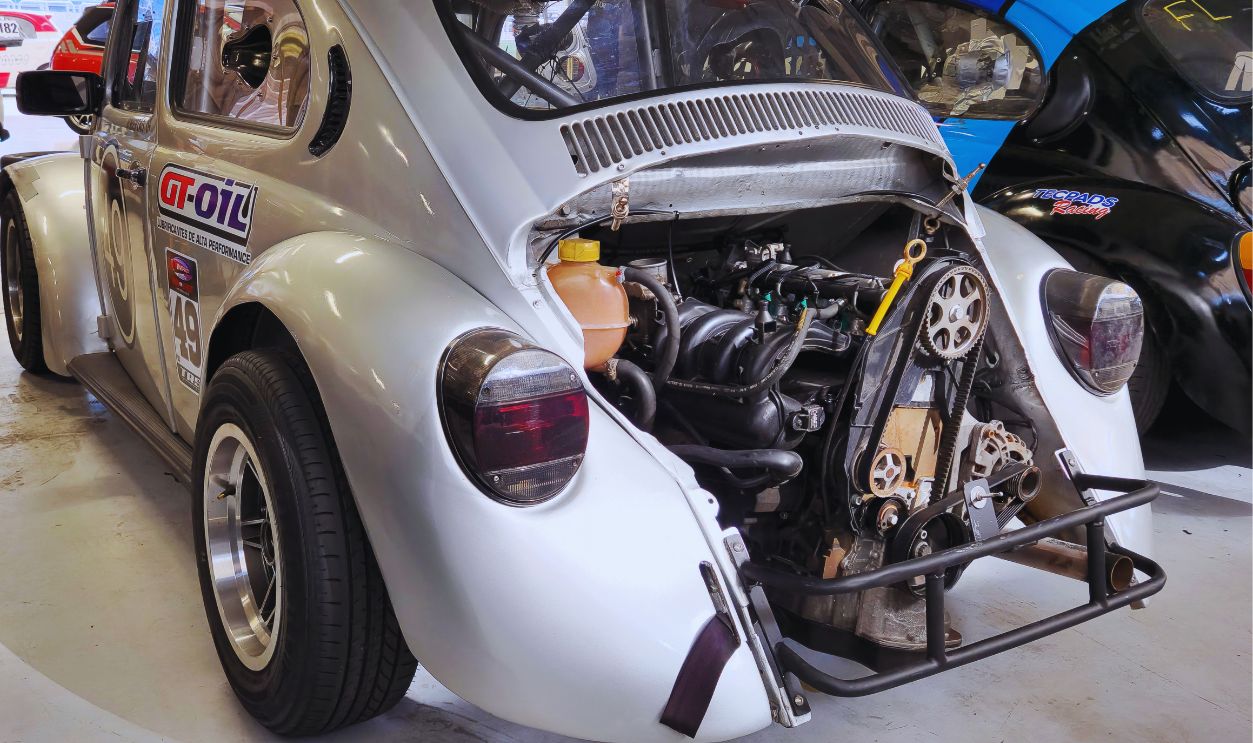
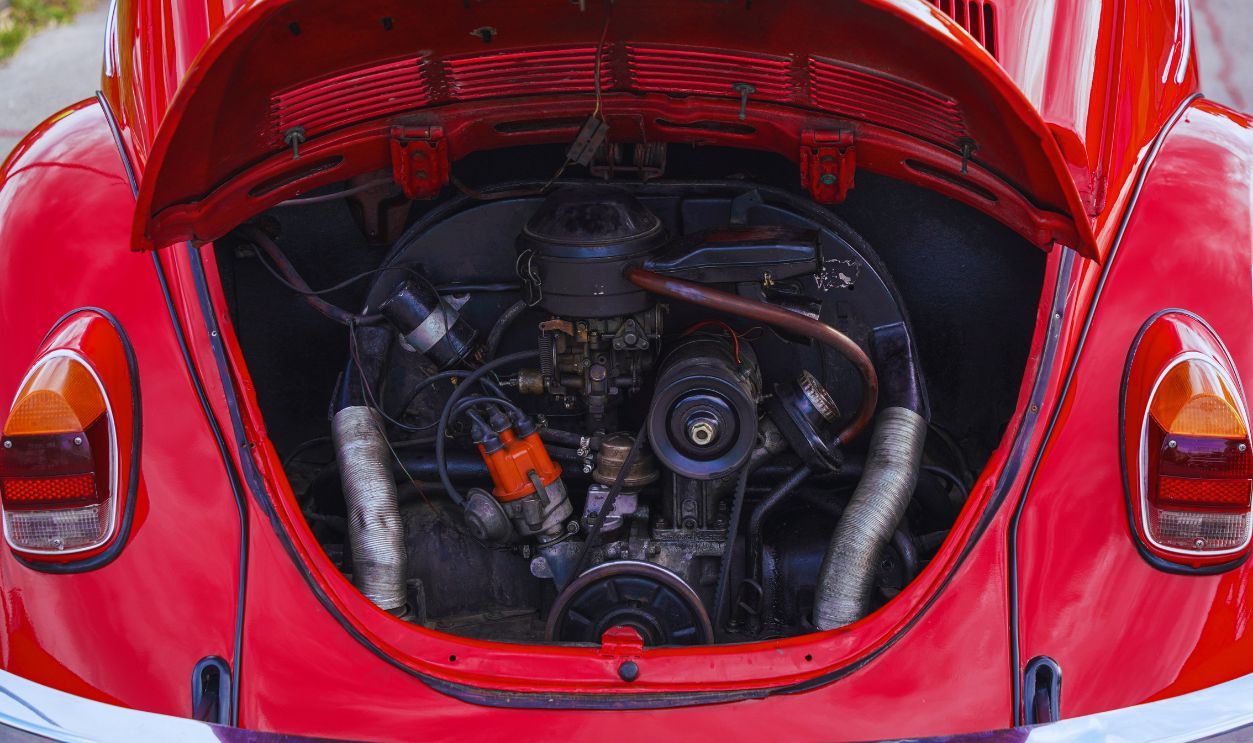
The Little Engine That Refused To Change While other automakers embraced liquid-cooled engines, Volkswagen kept the Beetle's air-cooled boxer engine for decades. Why stick with such an old-fashioned design? Did you ever own or drive an air-cooled Beetle? Its unusual engineering tells quite a story. The Beetle Was Designed In The 1930s The Beetle's origins date to 1930s Germany, when Ferdinand Porsche helped develop an affordable people's car. Its rear-mounted, air-cooled engine became a defining feature, long before the Beetle became a familiar sight on American roads. Air Cooling Wasn't An Accident The original design prioritized simplicity, affordability, and reliability. An air-cooled engine eliminated the radiator, coolant, water pump, and associated plumbing. That meant fewer components to manufacture, maintain, or potentially repair. No Radiator Meant No Frozen Coolant Early automotive cooling systems required careful winter maintenance. Without liquid coolant, the Beetle avoided radiator freezing and coolant leaks. This was especially attractive when antifreeze technology and maintenance practices were less convenient than today. The Engine Sat Behind The Rear Wheels Unlike most American cars, the Beetle carried its engine at the rear. This arrangement helped provide traction over the driven wheels and freed up space elsewhere, although it also created distinctive handling characteristics. It Used A Flat-Four Engine The Beetle's engine had four horizontally opposed cylinders, often called a boxer configuration. Its compact shape suited the rear-engine layout, while the low-mounted cylinders helped keep the engine's center of gravity relatively low. A Fan Did The Cooling Work Air-cooled didn't mean the Beetle relied entirely on passing breezes. An engine-driven fan forced air through metal shrouds and across cooling fins. That allowed cooling airflow even when the car was stationary. The Cooling Fins Were Essential The cylinders and heads had metal fins that increased their surface area. As the fan pushed air over them, heat escaped into the surrounding airflow. Keeping those passages clear was important for proper cooling. Volkswagen Didn't Need To Reinvent It Once Volkswagen established large-scale Beetle production, its engine design became familiar to factories, dealerships, and mechanics. Continuing with proven components reduced the disruption and expense of developing an entirely different powertrain. Mechanics Appreciated The Simple Layout The Beetle's engine was accessible beneath the rear lid, with familiar mechanical components and relatively straightforward servicing. Owners still needed regular maintenance, but its uncomplicated layout appealed to people who preferred fixing their own cars. No Coolant Leaks To Worry About A conventional liquid-cooled engine can develop radiator, hose, or water-pump leaks. The Beetle avoided those particular problems entirely. Of course, it could still leak engine oil, something many longtime owners remember rather well. Volkswagen Turned Simplicity Into Advertising Volkswagen famously promoted air cooling with the idea that air couldn't freeze or boil over. It was clever marketing, but also highlighted genuine advantages. The Beetle's unusual engineering became part of its identity. Americans Loved The Little Beetle During the 1960s, the Beetle became a familiar sight across America. Its relatively affordable price, distinctive appearance, and reputation for economical ownership helped it stand apart from Detroit's much larger cars. The Engine Was Never Particularly Powerful Early Beetles had modest horsepower, and even later versions weren't performance machines. A 1,192cc engine offered 34 metric horsepower from 1960, while certain later 1,584cc versions produced around 50 metric horsepower. Volkswagen Kept Improving The Engine The Beetle's engine didn't remain unchanged. Volkswagen increased displacement, revised internal components, and improved fuel delivery over the years. The basic air-cooled boxer layout survived, but the engineering evolved considerably. The Familiar Engine Sound Became Iconic That distinctive Beetle engine sound was part of the experience. Its horizontally opposed cylinders, cooling fan, and exhaust created a recognizable mechanical soundtrack. Owners could often identify an approaching Beetle without even looking. Air Cooling Had Some Drawbacks Air-cooled engines weren't perfect. Managing temperature across different operating conditions could be challenging, and cooling depended on properly functioning fans, shrouds, and airflow passages. Simplicity didn't eliminate the possibility of overheating. Missing Engine Tin Could Cause Trouble The Beetle's metal cooling shrouds and engine-compartment seals served important purposes. Missing or damaged pieces could allow hot air to circulate back toward the engine, increasing operating temperatures and potentially shortening engine life. The Cabin Heater Was Unusual Instead of using hot engine coolant, the Beetle warmed its cabin using air heated through exhaust-system heat exchangers. The arrangement worked, but its effectiveness depended heavily on condition, adjustment, and airflow. Winter Driving Could Be Chilly Some Beetle owners remember waiting a long time for comfortable cabin temperatures. Weak airflow, deteriorated heater components, and leaks could make winter driving unpleasant. Air cooling simplified the engine, but cabin heating involved compromises. Liquid Cooling Was Becoming More Sophisticated By the 1960s and 1970s, liquid-cooled engines benefited from improved antifreeze, thermostats, and cooling-system designs. Their advantages included more consistent temperature regulation and greater flexibility for future engine development. Emissions Rules Changed The Equation Tighter exhaust-emissions regulations made precise combustion control increasingly important. Liquid cooling offered advantages for maintaining consistent engine temperatures. Air cooling remained workable, but meeting new requirements became more challenging as standards evolved. The Beetle Eventually Received Fuel Injection Volkswagen introduced electronic fuel injection on U.S.-market Beetles for 1975. The system helped meet emissions requirements while retaining the traditional air-cooled engine. It demonstrated how far Volkswagen was willing to adapt the original design. The Beetle's Design Was Becoming Outdated By the early 1970s, competitors offered more modern interiors, improved refinement, and increasingly sophisticated powertrains. The Beetle remained charming and affordable, but its basic engineering was beginning to show its age. Volkswagen Couldn't Rely On One Car Forever The Beetle's enormous success created an unusual challenge. Volkswagen needed a modern replacement without alienating loyal customers. Several development projects explored different layouts and engine arrangements before the company settled on its next generation. The Golf Changed Volkswagen's Future The original Golf arrived in 1974 with front-wheel drive and a liquid-cooled engine. It represented a dramatic departure from the Beetle's rear-engine layout and became central to Volkswagen's future. The Beetle And Golf Coexisted Volkswagen didn't immediately eliminate the Beetle when the Golf appeared. Both remained in production, serving different customers and markets. The company could modernize its lineup while continuing to sell a familiar, established design. German Beetle Production Eventually Ended The final German-built Beetle sedan left Volkswagen's Emden factory in January 1978. German convertible production continued until 1980. The original Beetle's story, however, was far from finished. Mexico Kept The Beetle Alive Volkswagen continued manufacturing the Beetle in Puebla, Mexico. Its affordability, familiar mechanical design, and established market helped sustain production long after the car disappeared from most European showrooms. Mexican Beetles Received Modern Updates Later Mexican Beetles incorporated improvements including electronic fuel injection and catalytic converters. Despite these updates, they retained the familiar air-cooled boxer engine. Volkswagen continued adapting an old design to changing requirements. The Final Beetle Arrived In 2003 On July 30, 2003, Volkswagen's Puebla factory produced its final original Beetle. The air-cooled design had survived into the twenty-first century, decades after Volkswagen introduced the liquid-cooled Golf. More Than 21 Million Were Built Volkswagen produced more than 21.5 million original Beetles worldwide. That remarkable production history helped establish the car as one of the most recognizable automobiles ever manufactured. Its air-cooled engine was central to that identity. Air Cooling Became Part Of Beetle Culture For enthusiasts, the engine's distinctive sound, simple construction, and unmistakable personality remain part of the appeal. Air-cooled Beetles continue to attract restorers, collectors, and drivers who appreciate old-fashioned mechanical engineering. So Why Did Volkswagen Keep It? The answer wasn't that air cooling was always superior. The Beetle's engine was affordable, familiar, practical, and supported by decades of manufacturing experience. Volkswagen kept refining it because customers continued buying the car. Sometimes Simplicity Wins Hearts The Beetle eventually became outdated, but that didn't make its original engineering pointless. Its air-cooled engine helped millions of people enjoy affordable transportation. Even today, the sound of one starting can bring back memories.

 Liked by Connor Bouchard, Hannah Young












 Liked by Connor Bouchard, Hannah Young