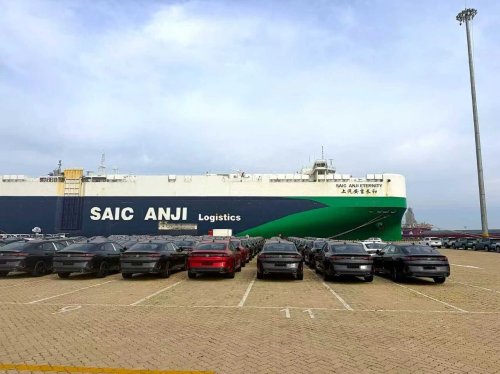
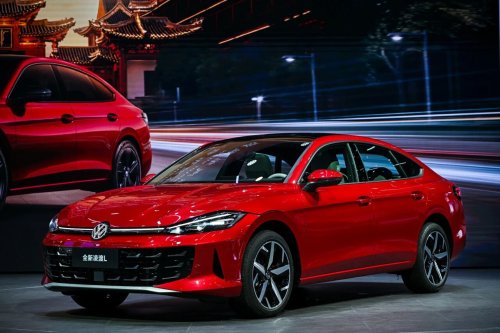
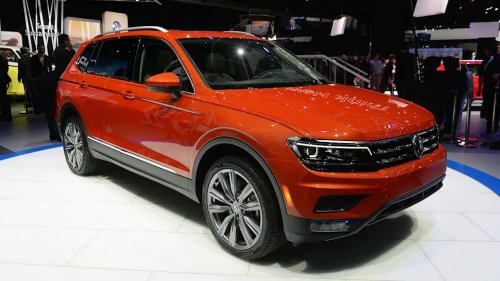
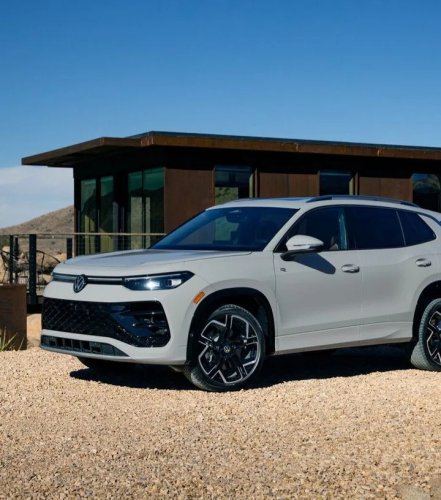
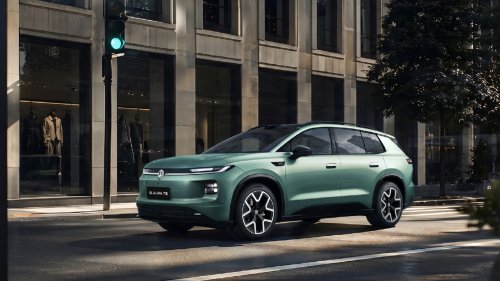
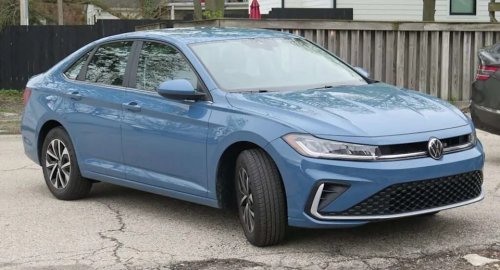
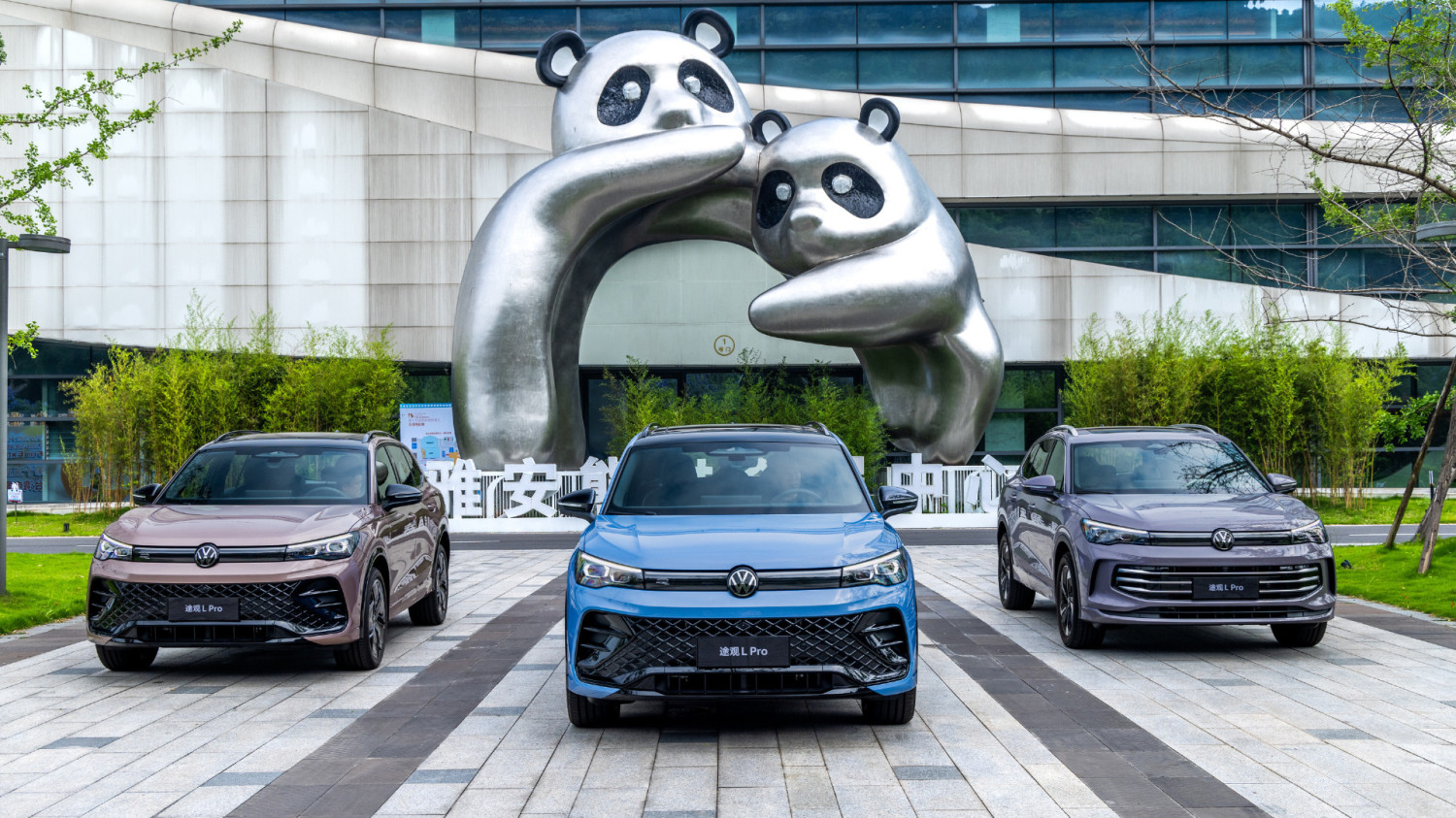
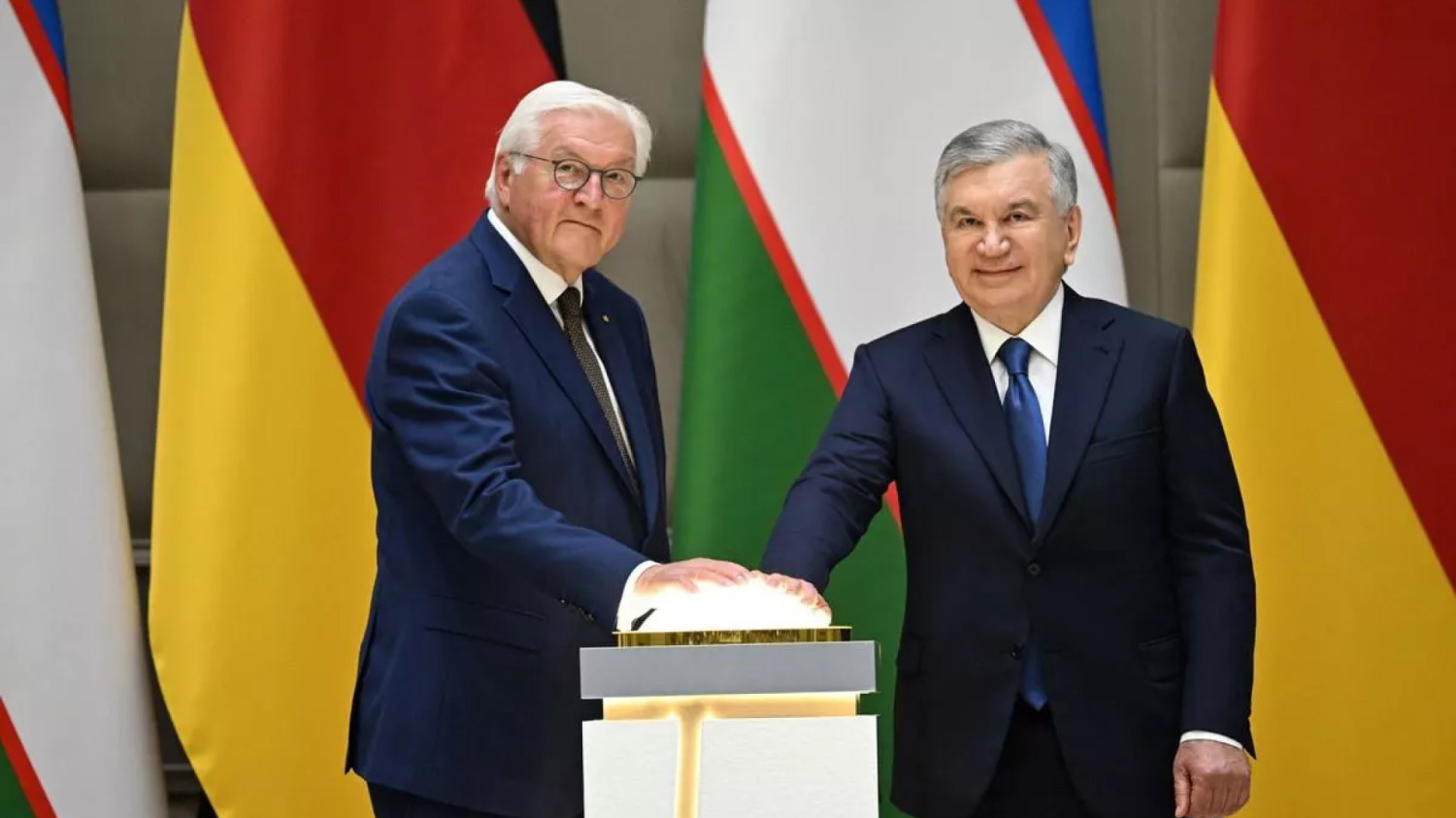
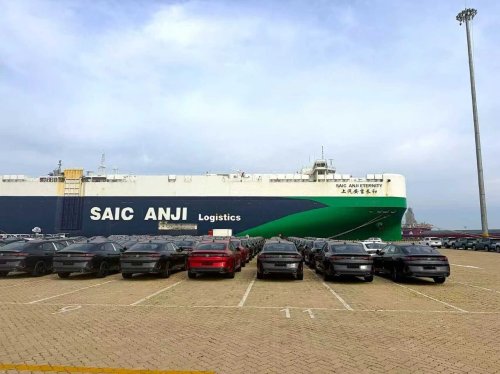
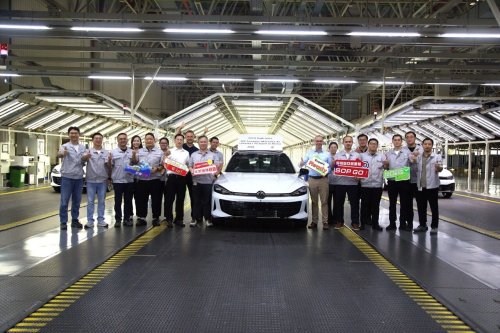
Volkswagen Tiguan L Pro crossovers in China. Credit: Volkswagen Understand China EV’s Market Real-time notifications when critical EV data is released All important data in one place 2,000,000+ data points Become a member Volkswagen China will introduce its vehicles to the Central Asian market amid rumors about the upcoming business model restructure. Cars from FAW-Volkswagen and SAIC Volkswagen will enter Kazakhstan and Uzbekistan, breaking the built-in-China-for-China rule. Volkswagen began automotive production in China back in 1985, joining hands with the Shanghai-based state-owned SAIC. A few years later, VW launched another joint venture with FAW to assemble cars in the Middle Kingdom. For many years, Volkswagen products were manufactured in China for China. Locally produced vehicles were adapted to the specifics of the local market, often increasing the overall length of the body. However, this rule is about to be broken. German President Frank-Walter Steinmeier (left) and Uzbekistan President Shavkat Mirziyoyev launched the project of the Volkswagen plant in Uzbekistan in June 2026 In June, Volkswagen China CEO Robert Cisek had a meeting with German President Frank-Walter Steinmeier and Uzbekistan President Shavkat Mirziyoyev at the international forum in Tashkent. These high-ranking officials announced plans for the local assembly of eight models from FAW-VW and SAIC VW by the end of 2026. The model line will include the Tiguan L Pro, the Passat Pro, the Teramont Pro, and Jetta vehicles. They will be also exported to CIS, Central Asia, and Caucasus. At the same time, FAW-Volkswagen finished the certification process of three models in Kazakhstan. The list includes the Volkswagen Magotan (which will be sold as the Passat in Kazakhstan), the Tayron L, and the Jetta VS7. It seems that these cars will enter the market shortly, as Volkswagen’s current lineup in Kazakhstan consists of a single model, which is the Slovakia-made Touareg. Volkswagen in Uzbekistan Such an entry into foreign markets is also beneficial for Volkswagen’s joint ventures in China, as they were lagging behind the NEV transformation. As a result, Volkswagen retains its position as the top seller of ICE cars in China. However, a share of internal combustion engine vehicles is continuously shrinking in the Middle Kingdom. China EV DataTracker shows that NEV penetration rate reached 54% (up 3.9% Year-Over-Year) with 4.7 million units sold. At the same time, Volkswagen’s local deliveries dropped by 28.9% Y-O-Y to 665,566 units. A few years back, this German brand sold over a million vehicles in the same period. So, FAW-VW and SAIC VW currently have spare capacity to meet the demand of foreign regions. Central Asia looks like the first region to house cars from Volkswagen’s Chinese joint ventures. Later, VW can enter other regions like Southeast Asia and the Middle East. The Central Asia entry coincided with various rumors about Volkswagen plans to cut model lines, close plants in Europe, and hold massive layoffs, as reported by Reuters. The German automaker currently deals with growing costs, rising Chinese competition, and the US import tariffs. Relying on Chinese factories as a new driver of global sales has become a strategic move for the company, as the country boasts lower-cost supply chains. Furthermore, Volkswagen may eventually shift to exporting electric vehicles and range extenders developed specifically for China to maintain global competition with BYD, Geely, and other Chinese brands.



















 +29 others


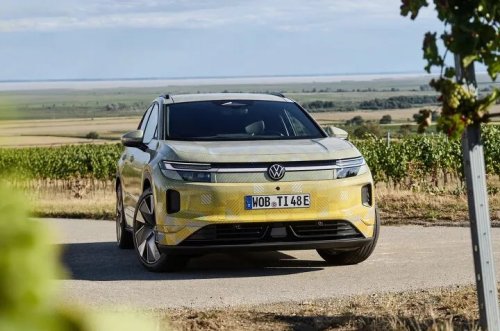
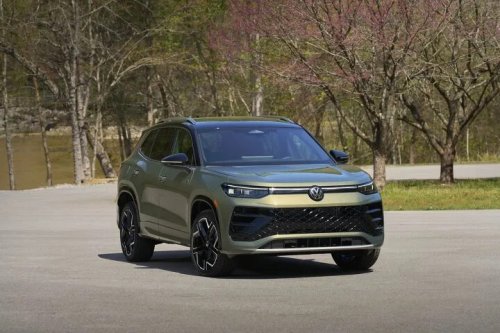
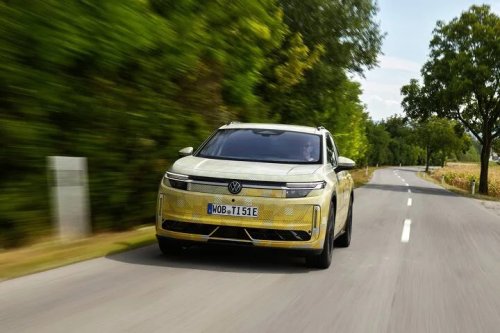
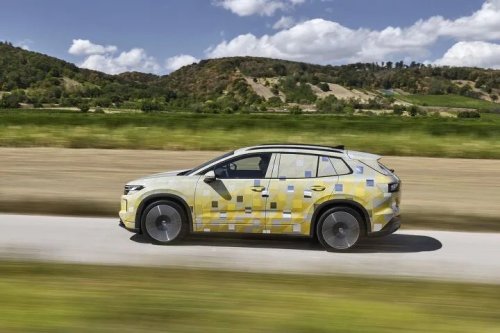
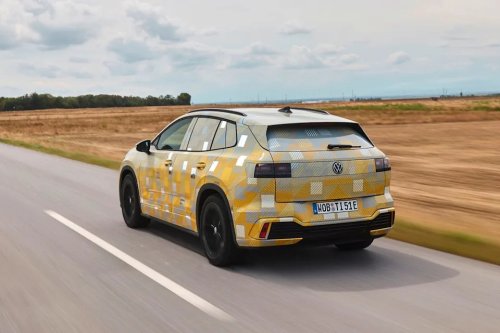
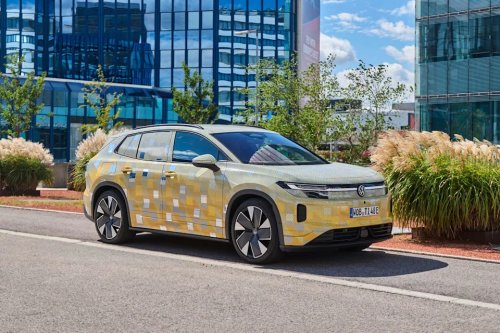
![Volkswagen, Volkswagen ID.4, Volkswagen ID.5, Volkswagen's best-seller is going electric in 2027 to replace the ID.4 and ID.5 [Images]](https://cdn.topcarnews.net/thumb/id/aHR0cHM6Ly9pMC53cC5jb20vZWxlY3Ry-ZWsuY28vd3AtY29udGVudC91cGxvYWRz-L3NpdGVzLzMvMjAyNi8wOS9Wb2xrc3dh-Z2VuLUlELVRpZ3Vhbi1JRC00LmpwZWc_-dz0xNTAwJmFtcDtxdWFsaXR5PTgyJmFt-cDtzdHJpcD1hbGwmYW1wO3NzbD0x/aed2aa2870791850c8e69c5fc3a0ed85.jpeg?t=20261006&post_id=66267)
![Volkswagen, Volkswagen ID.4, Volkswagen ID.5, Volkswagen's best-seller is going electric in 2027 to replace the ID.4 and ID.5 [Images]](https://cdn.topcarnews.net/thumb/id/aHR0cHM6Ly9lbGVjdHJlay5jby93cC1j-b250ZW50L3VwbG9hZHMvc2l0ZXMvMy8y-MDI2LzA5L1ZvbGtzd2FnZW4tSUQtVGln-dWFuLUlELTQtZnJvbnQtcXVhcnRlci5q-cGc_c3RyaXA9aW5mbyZhbXA7dz0xMDI0/97fb00cd3919b8d0dc36440715039e6e.jpg?t=20261006&post_id=66267)
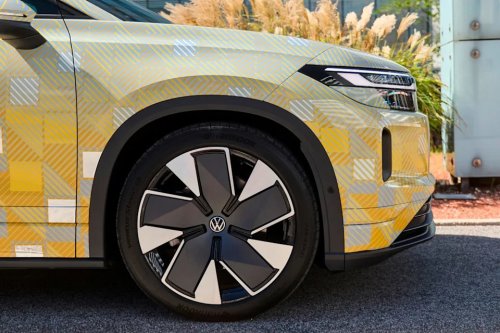
![Volkswagen, Volkswagen ID.4, Volkswagen ID.5, Volkswagen's best-seller is going electric in 2027 to replace the ID.4 and ID.5 [Images]](https://cdn.topcarnews.net/thumb/id/aHR0cHM6Ly9lbGVjdHJlay5jby93cC1j-b250ZW50L3VwbG9hZHMvc2l0ZXMvMy8y-MDI2LzA5L1ZvbGtzd2FnZW4tSUQtVGln-dWFuLUlELTQtc2lkZS5qcGc_c3RyaXA9-aW5mbyZhbXA7dz0xMDI0/ed240b20e8275f3af4b904f46ebb5fb3.jpg?t=20261006&post_id=66267)
![Volkswagen, Volkswagen ID.4, Volkswagen ID.5, Volkswagen's best-seller is going electric in 2027 to replace the ID.4 and ID.5 [Images]](https://cdn.topcarnews.net/thumb/id/aHR0cHM6Ly9lbGVjdHJlay5jby93cC1j-b250ZW50L3VwbG9hZHMvc2l0ZXMvMy8y-MDI2LzA5L1ZvbGtzd2FnZW4tSUQtVGln-dWFuLUlELTQtcmVhci1xdWFydGVyLmpw-Zz9zdHJpcD1pbmZvJmFtcDt3PTEwMjQ/436c7979cf5b947053f7f0bf39ff94bc.jpg?t=20261006&post_id=66267)
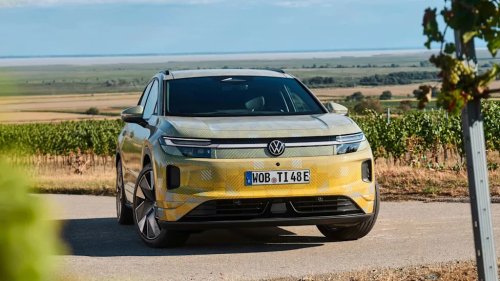
![Volkswagen, Volkswagen ID.4, Volkswagen ID.5, Volkswagen's best-seller is going electric in 2027 to replace the ID.4 and ID.5 [Images]](https://cdn.topcarnews.net/thumb/id/aHR0cHM6Ly9lbGVjdHJlay5jby93cC1j-b250ZW50L3VwbG9hZHMvc2l0ZXMvMy8y-MDI2LzA5L1ZvbGtzd2FnZW4tSUQtVGln-dWFuLUlELTQtZnJvbnQuanBnP3N0cmlw-PWluZm8mYW1wO3c9MTAyNA/ec2e4ca027ccbfb42942abe523f3acf7.jpg?t=20261006&post_id=66267)
![Volkswagen, Volkswagen ID.4, Volkswagen ID.5, Volkswagen's best-seller is going electric in 2027 to replace the ID.4 and ID.5 [Images]](https://cdn.topcarnews.net/thumb/id/aHR0cHM6Ly9lbGVjdHJlay5jby93cC1j-b250ZW50L3VwbG9hZHMvc2l0ZXMvMy8y-MDI2LzA5L1ZvbGtzd2FnZW4tSUQtVGln-dWFuLUlELTQtcmVhci5qcGc_c3RyaXA9-aW5mbyZhbXA7dz0xMDI0/668525889dc433b0fd0e166fd5bd8366.jpg?t=20261006&post_id=66267)