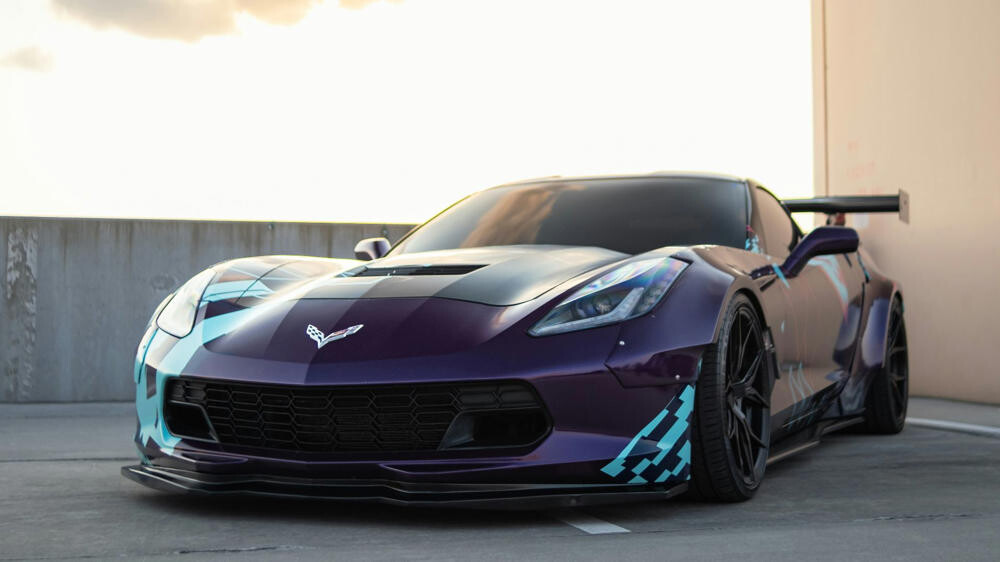
・Comedian Jay Leno has exposed a major change in the car industry. ・The new wave of more-affordable models from China is pushing other brands to a 'semi-premium' space. ・Brands like Toyota, Kia and Hyundai are not able to undercut rivals on price anymore. A multi-millionaire with one of the biggest car collections in the world is an unlikely person to reveal the awkward truth about the car industry - the middle-class is disappearing. Former television host and comedian Jay Leno, who reportedly owns more than 150 cars, was speaking on the TBPN podcast recently and has laid out the reality facing the car industry. “We have no middle class anymore,” Leno said. While he went on to discuss the new Porsche Mission S, and lamented that Porsche has evolved from a brand of attainable sports cars to increasingly more limited and special edition models, he did make a wider point about the car industry. “Unfortunately we have a situation, we have no middle anymore. You have poor people or you have rich people,” he said. Key takeaways He used the example of the Chevrolet Corvette, which has evolved from a more-affordable sports coupe into a genuine supercar rival to the likes of Porsche. Toyota RAV4 GR Sport Next up “The great thing about the Corvette is it’s an aspirational car,” Leno said. “If you’re a guy with your own plumbing business, boy you can aspire to own [one]. Yeah, it’s over US$100,000, but it’s not $1 million, so at some point in your life you can get one.” Leno and the podcast hosts then expanded to make the point that this phenomenon is not limited to cars, with the broader economy increasingly splitting into ‘cheap’ and ‘premium’. While they were speaking on the American experience, there’s no doubt that this trend is emerging in Australia too. China to force Toyota, Kia and more to go upmarket The Australian car industry is seemingly headed for a major split, as more and more Chinese brands enter the market and undercut what were once considered the ‘middle-class’ cars, such as Toyota, Kia and Hyundai. As they can no longer compete directly on price, these brands are having to shift their focus from simply ‘price’ to ‘value’ and position their cars as a more ‘premium’ choice for customers. Toyota has admitted as much, albeit in South Africa rather than Australia, where its public relations manager admitted the company could no longer go head-to-head with the Chinese brands and has chosen to move more upmarket. "We intentionally moved it into a more premium space,” said Riaan Esterhuysen, Toyota South Africa Motors senior public relations manager. “[RAV4] occupies or plays in the higher part of the segment now, and that is intentional. “We can't compete with the emerging Chinese brands directly on an entry-level price point. They have changed that market. They have shaped the market or changed the shape of the market by driving customers down to a lower and mid-tier of the segment or taking used car buyers and upselling them.” Hyundai Elexio China to force Toyota, Kia and more to go upmarket continued This means Toyota, Kia, Hyundai and others will have to position themselves, in terms of price and equipment offered, as ‘semi-premium’ brands. This means sitting above the mainstream, most affordable new cars but below the premium brands, such as BMW, Mercedes-Benz, etc. MG3 Volkswagen and Mazda paying the price While this technically-speaking puts them in the ‘middle’ it doesn’t mean these remain middle-class cars, as they are now at a level previously reserved for more genuinely premium models. Pre-pandemic, an Audi Q5 started at $65,900, now that’s what you have to pay for a RAV4 plug-in hybrid, so the entire market has shifted upwards and customers are having to adapt to higher prices at a time of over economic challenges and soaring fuel prices. It creates ideal conditions for the new brands from China to enter and offer a more affordable alternative, which has been a major factor in the rapid growth of so many of them. It also, at least partially, explains the sharp decline of two brands that were previously seen as the ‘semi-premium’ - Mazda and Volkswagen. Both are down significantly in 2026, struggling to retain owners and attract new buyers in the face of so much competition. For buyers it means adjusting to this new world order, so to speak, and getting comfortable paying a premium for a well-known and trusted brand, or choosing to save money and try one of the newer options. While it would be nice to have Jay Leno’s bank balance and ponder on the need to buy or not buy the production version of the Porsche Mission S, the reality for most middle-class and working-class Australians in their next new car will be a tough financial decision. BYD Atto 1

 Liked by Mia Tremblay, Caleb Pelletier











 Liked by Mia Tremblay, Caleb Pelletier