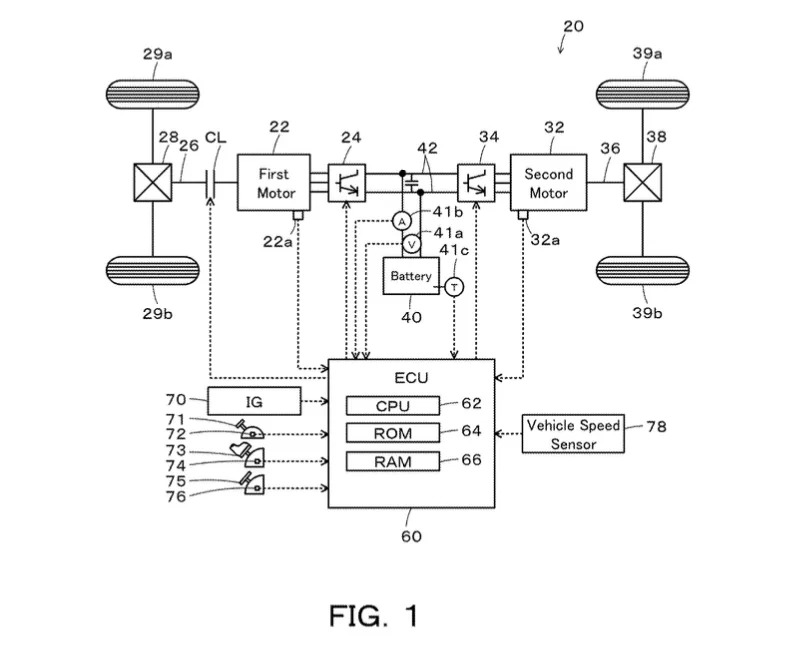



















Image Credit: ToyotaToyota may have discovered a clever new way to improve one of the most important technologies in modern electric vehicles. A recently published patent suggests the automaker is developing a system that could keep regenerative braking working at full strength even when the battery can no longer absorb additional energy.That might sound like a small technical detail, but it could solve one of the biggest compromises built into today's EVs and hybrids. Regenerative braking helps recover energy while slowing the car down, improving efficiency and extending driving range. The problem is that the system only works effectively when the battery can accept the incoming charge.Once the battery becomes nearly full, overheated, too cold, or temporarily unable to absorb energy quickly enough, regenerative braking performance drops off. At that point, the vehicle relies much more heavily on traditional friction brakes, reducing efficiency and changing how the car feels to drive.AdvertisementAdvertisementToyota's newly surfaced patent outlines a possible workaround that could allow EVs and hybrids to maintain stronger regenerative braking far more consistently. If the system eventually reaches production, it could improve efficiency, braking feel, and overall energy management in future Toyota electrified vehicles.Why Regenerative Braking Matters So Much In EVsImage Credit: Toyota.Regenerative braking has become one of the defining characteristics of modern electric vehicles. Instead of wasting momentum as heat through brake pads and rotors, EVs use their electric motors as generators while slowing down.That process converts kinetic energy back into electricity and sends it to the battery pack. The result is improved efficiency, less brake wear, and additional driving range that would otherwise be lost.It is also what enables one-pedal driving in many EVs. Drivers can often slow the vehicle significantly just by lifting off the accelerator pedal, creating a smoother and more energy-efficient driving experience.AdvertisementAdvertisementThe technology works extremely well most of the time. However, regenerative braking systems still face one major limitation tied directly to battery charging capacity.The Big Problem With Current Regenerative Braking SystemsBatteries can only absorb electricity at a certain rate. If the battery is nearly full or operating outside its ideal temperature range, it may not be able to accept all the energy generated during braking.When that happens, the vehicle has no choice but to reduce regenerative braking force. Traditional friction brakes then take over a larger portion of the stopping work.Drivers sometimes notice this as inconsistent brake feel or weaker deceleration. In some EVs, regenerative braking strength can vary noticeably depending on battery charge level or weather conditions.AdvertisementAdvertisementToyota's patent appears designed specifically to address that issue. Instead of simply reducing regeneration when the battery reaches its limits, the system attempts to redirect the excess energy somewhere else.Toyota's Patent Uses One Motor To Absorb Extra EnergyImage Credit: Toyota / USPTO.The newly published patent describes a dual-motor setup featuring one electric motor at the front axle and another at the rear. The interesting part involves a clutch system capable of disconnecting one of those motors from the wheels when necessary.Under normal conditions, both motors can contribute to driving and regenerative braking. However, if the battery cannot absorb additional energy during braking, Toyota's system changes the role of one motor entirely.One motor continues generating electricity through regenerative braking while the disconnected motor acts as an energy absorber. Instead of overloading the battery or wasting the energy, the second motor effectively consumes the excess electrical load.AdvertisementAdvertisementIn simple terms, one motor temporarily becomes a backup destination for unused regenerative energy. That allows the vehicle to maintain stronger regenerative braking performance without overwhelming the battery pack.Toyota's filing also notes that the system could work in both fully electric vehicles and hybrids. That flexibility would allow the technology to potentially spread across multiple future platforms.What Drivers Could Actually Notice On The RoadIf Toyota eventually puts this system into production, the biggest benefit may be consistency. Drivers could experience more predictable regenerative braking regardless of battery state or temperature conditions.That could make one-pedal driving feel more natural and reduce situations where braking suddenly changes because the battery can no longer accept charge. Maintaining stronger regenerative braking would also continue reducing wear on traditional brake components.AdvertisementAdvertisementThe system may also improve overall energy efficiency by making better use of electricity that would otherwise go unused. In dual-motor vehicles especially, smarter energy management can have noticeable impacts on range and responsiveness.Toyota has not announced any production plans connected to the patent. Like most automakers, the company files many patents that never reach showroom vehicles.Still, the idea itself highlights how automakers continue searching for smaller efficiency gains that can make EVs feel more refined and usable in everyday driving. Battery technology often gets the headlines, but improvements to supporting systems like regenerative braking may end up playing just as important a role in the next generation of electrified vehicles.If you want more stories like this, follow Guessing Headlights on Yahoo so you don't miss what's coming next.