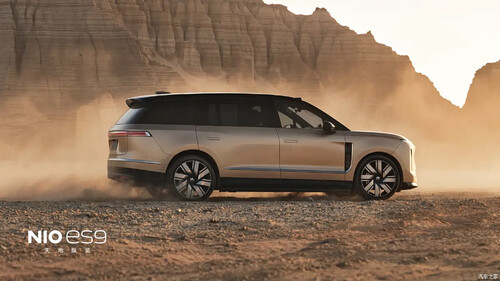
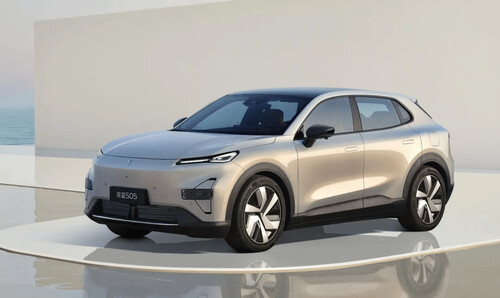
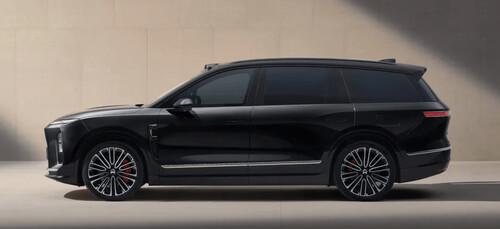
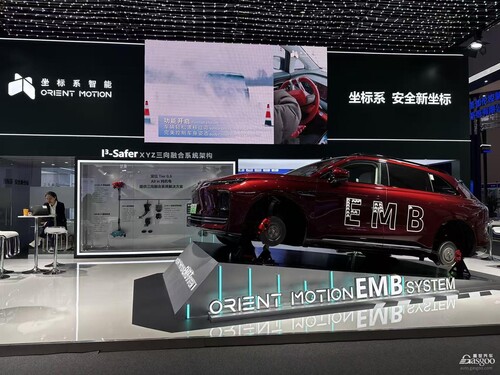
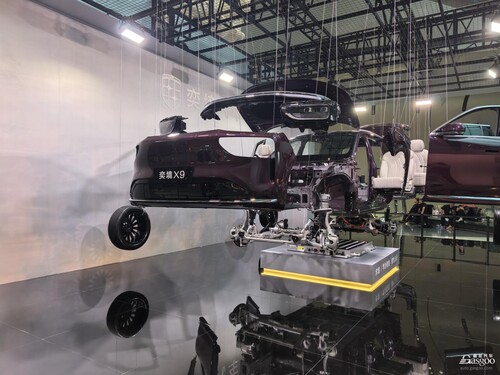
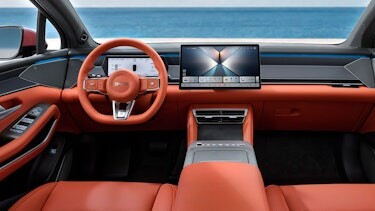
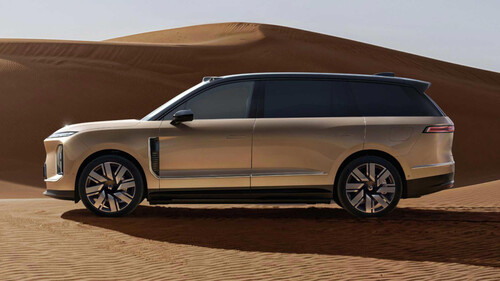
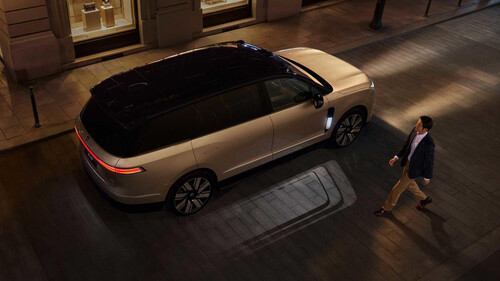
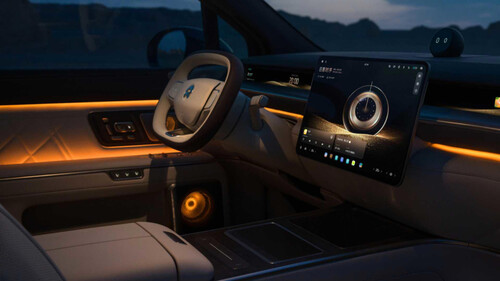
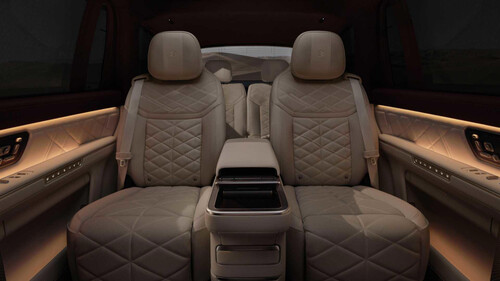
The Yangwang U8 can spin turn 360 degrees on itself and lift its corners to change tires without needing a jack. (Photo by Cui Nan/China News Service/VCG via Getty Images)China News Service via Getty ImagesForget the Far East’s ultra-quick recharging or car production cycles undercutting 24 months. Chinese carmakers have spent the last five years trying to outdo each other with ever more futuristic technology. Massive dashboard screens, autonomous parking systems, “tank turns,” amphibious driving modes and drone-launching roofs have all appeared in modern Chinese SUVs. But one of the most eye-catching innovations is far more practical: SUVs that can literally lift one or more wheels off the ground without using a traditional jack in order to change a tire.The technology sounds like something from a science-fiction movie, yet several Chinese manufacturers have already put it into production. (Check out the body lifting tech video below)The best-known examples are the BYD Yangwang U8, the NIO ET9 flagship sedan and some premium SUVs from Chinese off-road brand Dongfeng Motor Corporation M-Hero. These vehicles use advanced hydraulic or air suspension systems powerful enough to individually raise and lower each corner of the vehicle.AdvertisementAdvertisementThe most well-known crossover is arguably the Yangwang U8, which was officially launched in China in late 2023. The luxury plug-in hybrid SUV immediately went viral online thanks to videos showing the vehicle dancing, floating in water, spinning like a tank and lifting itself high enough to change tires.Sophisticated hydraulic suspension makes ‘jackless’ tire changes easyThe U8 uses BYD’s sophisticated DiSus-P intelligent hydraulic body control suspension system. Unlike a conventional air suspension setup designed mainly for comfort, DiSus-P actively controls the height and damping of each wheel independently. That means the SUV can redistribute weight and raise one wheel fully off the ground, allowing drivers to remove and replace a tire without needing a separate jack.The feature is particularly useful because the U8 is enormous, tipping the scales at around 3.5 tonnes. Even on a flat piece of road, changing tires would be challenging and potentially dangerous. By integrating the lifting function directly into the suspension, BYD effectively turns the vehicle itself into its own hydraulic jack.The Yangwang U8 currently sells primarily in China, where pricing starts at roughly 1.1 million yuan, or around US$150,000. It targets wealthy buyers who might otherwise consider a Mercedes-Benz G-Class or a Range Rover.AdvertisementAdvertisementAnother Chinese vehicle using similar technology is the NIO ET9, launched in late 2024. Although it is a sedan, the ET9 employs NIO’s fully active SkyRide suspension system, which can rapidly adjust ride height and body movement at each corner of the car. NIO demonstrated the technology by showing the vehicle maintaining its composure, keeping perfectly flat over bumps and lifting sections of the car independently.Meanwhile, Chinese military-inspired off-road brand M-Hero — operated under Dongfeng — has showcased suspension systems capable of extreme wheel articulation and wheel-lifting functionality for difficult terrain driving and recovery situations.So why are Chinese automakers embracing this kind of technology? Partly because China’s premium EV market has become brutally competitive. Carmakers are desperate to distinguish themselves with features that go viral on social media. In many cases, these technologies are as much about marketing as engineering.But there is also a practical elementHeavy EVs and plug-in hybrid SUVs place enormous strain on tires. Many of these vehicles weigh significantly more than comparable gasoline-powered models because of their large battery packs and reinforced structures. Traditional roadside tire changes using jacks can be difficult, especially in remote areas or harsh weather. An integrated hydraulic lifting system simplifies the process while also improving off-road capability, ride comfort and vehicle stability.AdvertisementAdvertisementThe systems also support other advanced functions. The Yangwang U8’s suspension, for example, helps stabilize the SUV during high-speed tire blowouts. BYD claims the vehicle can continue driving temporarily even after a puncture thanks to the active chassis control system.At the moment, most of these vehicles remain China-focused products. The Yangwang U8 is sold mainly in mainland China, although BYD has hinted at potential exports to selected overseas markets including the Middle East, Australia and parts of Southeast Asia.Europe is a more realistic possibility than the United States.Chinese automakers including BYD, XPeng and Zeekr are already expanding aggressively into Europe, where consumers are generally more open to new EV brands. Luxury Chinese SUVs equipped with exotic suspension technology could eventually appeal to European buyers seeking alternatives to established German luxury marques.The United States, however, remains basically closedAs Nature’s online site featured, high tariffs on Chinese EVs, political tensions between Washington and Beijing, and strict regulatory requirements create major barriers. In 2024, the U.S. sharply increased tariffs on Chinese electric vehicles to over 100%, effectively pricing many Chinese models out of the American market.AdvertisementAdvertisementThere are also certification hurdles. Suspension systems that actively lift vehicles would need to comply with U.S. and European safety standards, durability testing and repair regulations. Regulators may also scrutinize how such systems behave during accidents or emergency roadside repairs.Still, the underlying technology itself is unlikely to disappear.Active suspension systems are becoming increasingly important as EVs grow heavier and more software-driven. Chinese brands currently lead the industry in rapidly commercializing these technologies, but Western automakers are watching closely. Features that look extravagant today could become surprisingly normal within the next decade.For now, though, China remains the global epicenter of automotive experimentation — and SUVs that can jack themselves up to change a tire may be one of the clearest signs yet that the modern car is evolving into something far more intelligent than merely a machine with wheels and a navigation system.AdvertisementAdvertisementThis article was originally published on Forbes.com