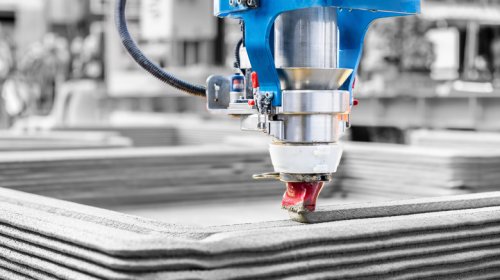
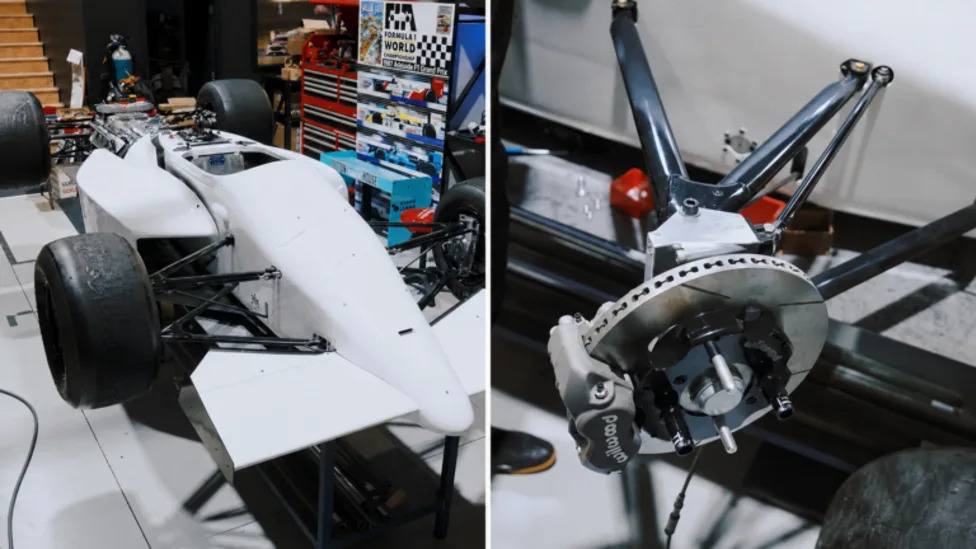
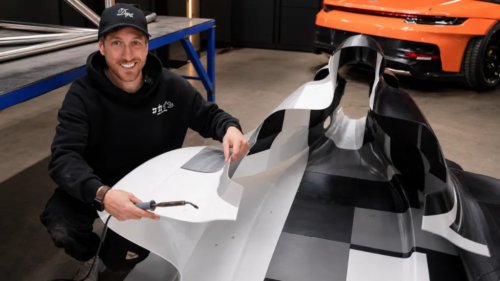
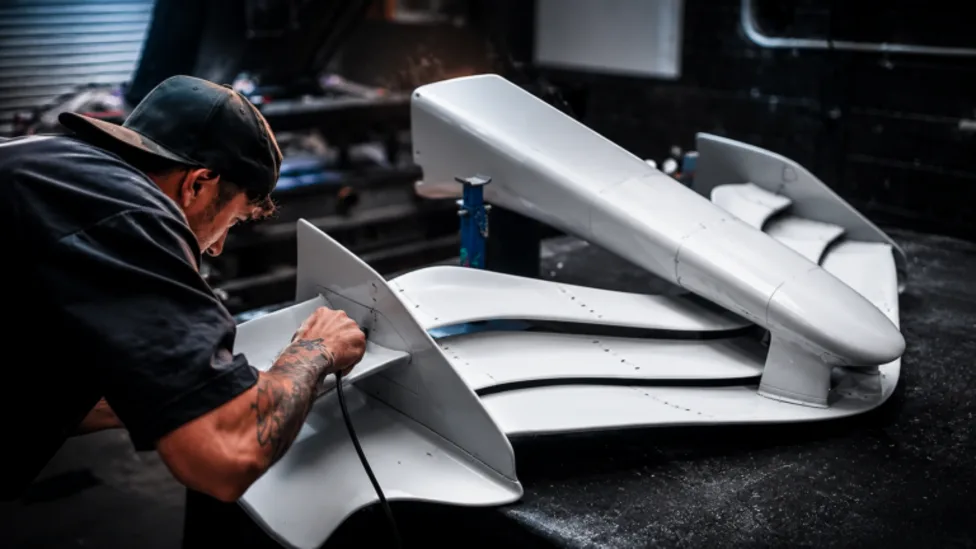
This YouTuber is Building a Full-Size 3D-Printed F1 Car With ‘New Look With Old Sound’There are people who watch Formula 1 and there are people who decide the sport's $20 million price of entry is more of a suggestion than a hard limit. Australian YouTuber Mike Lake falls firmly into the second category…Lake has set out to build a full-size, running 2026-spec Formula 1 car. Not a scale replica, not a static show piece, but a genuine driveable machine constructed almost entirely from 3D-printed parts. He plans to drift it. That's the goal. No team principal, no nine-figure budget, no problem.The Front Wing Alone Took 175 Hours to PrintThe build started with what is arguably the most aerodynamically complex single component on any F1 car. The front wing alone required 38 individual pieces and more than 175 hours of combined print time, consuming around nine kilograms of plastic and roughly $220 Australian (about $158 USD) in raw material.AdvertisementAdvertisementTo get there, Lake equipped his shop with a fleet of Bambu Lab H2S 3D printers, running everything in PETG filament.The model files were sourced by Ryan from Fatlip Collective – a mechanical engineer based in Melbourne, Australia with a background in 3D printing and design – then converted by a specialist overseas into print-ready files sized for the Bambu Lab bed dimensions.Assembly involves a combination of a soldering iron for plastic welding and a heat-staple gun, with Loctite 406 adhesive run through every seam. Once the structural shapes are complete, the plan is to lay 0.4mm fibreglass cloth over the printed surfaces before finishing and painting – which should give the bodywork enough rigidity to handle actual track use and the aerodynamic loads that come with drifting at speed.The finished front wing spans nearly the full width of an F1 car. Per the 2026 regulations, that's a vehicle 1.9 metres wide and 3.4 metres long between wheel centres – a wheelbase that puts it significantly ahead of most supercars. A Lamborghini, for comparison, sits around 2.75 metres centre to centre.A Mercedes V12 Going Into a Plastic ChassisThe engine situation is where the project goes from impressive to genuinely unhinged. Lake's stated aim is 'new F1 look with old F1 sound,' meaning a 2026-regulation exterior housing a powerplant that has no business being anywhere near a modern open-wheel silhouette.AdvertisementAdvertisementHe somehow landed on a secondhand Mercedes-Benz M120 V12, the engine famous for powering the early Pagani Zonda, and known for being a high-revving, naturally aspirated unit.The choice deliberately avoids the quiet hybrid architecture of current-generation racing in favour of the kind of high-pitched scream that defined 1990s motorsport. A compression test confirmed the engine is healthy and ready to run.Packaging a V12 of that size into the narrow confines of an F1 car requires a complete rethink of the layout, and 3D printing is what makes the custom mounts and clearance solutions achievable.By that stage of the build, Lake had already logged over 500 hours of machine time producing the bodywork and structural components.AdvertisementAdvertisementThe project is still a long way from its first drive. The monocoque, which runs to more than 200 individual printed pieces compared to the front wing's 38, is next in the queue. Custom centre-lock wheels from Arco, the same supplier used on Lake's parallel 3D-printed Porsche GT3 build, will eventually go on the corners. The livery is still to be decided.What Lake is building is, in the most literal sense, the kind of car that no ordinary person should be able to own. He's doing it one print at a time, out of PETG, in a workshop, with a V12 sourced off Facebook Marketplace. Modern F1 teams spend hundreds of millions chasing fractions of a second. This one's chasing the whole experience for the price of filament.


















 +78 others