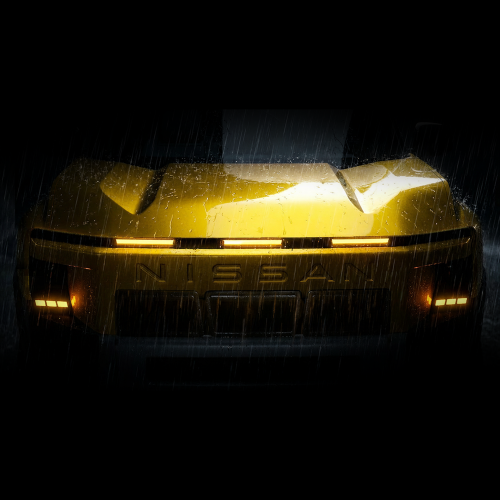
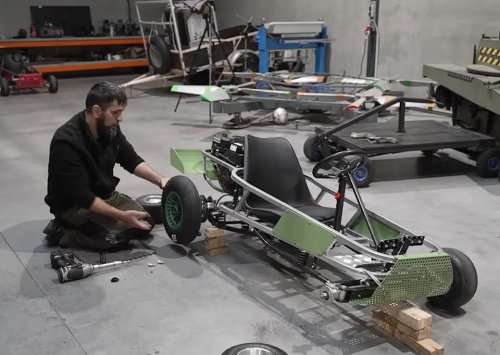
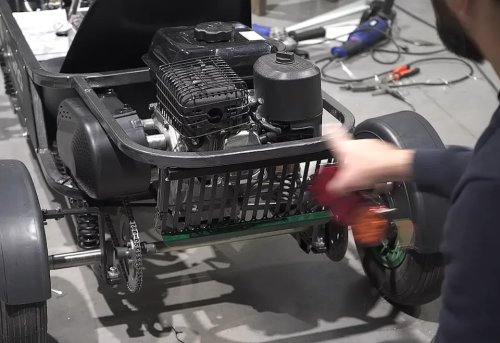
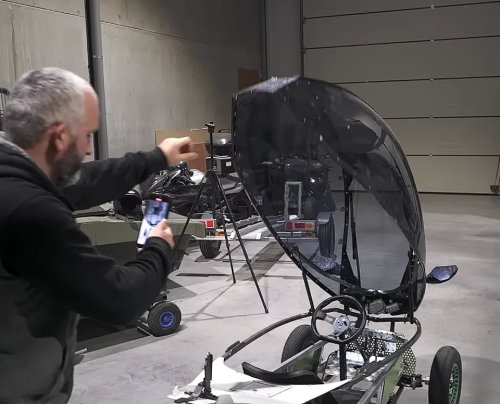
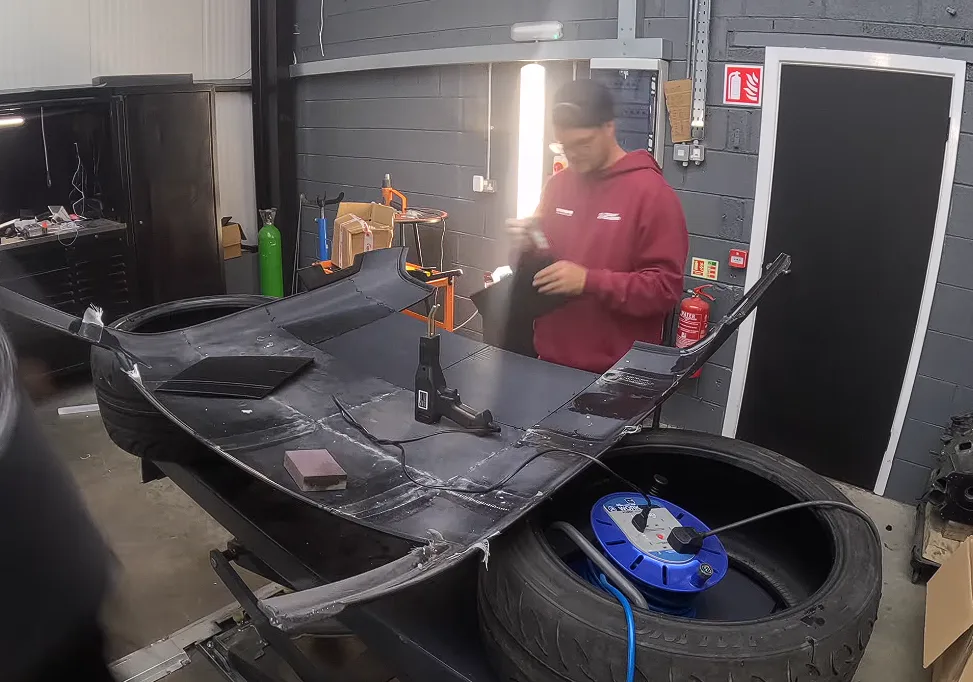
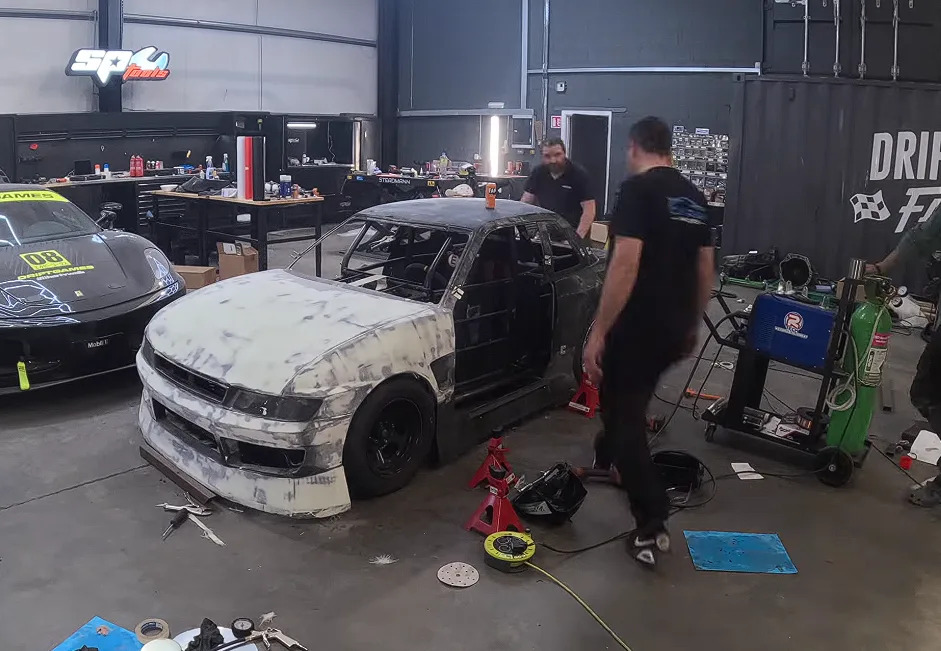
Most custom car builds take months, if not years, of meticulous planning, fabrication, and patience. But the crew at the popular Irish automotive channel Drift Games decided to completely rewrite the rulebook.In an ambitious, sleep-deprived sprint, they set out to build a fully functional, half-scale Nissan S13 drift car from scratch. The twist? The entire body is 3D printed, and they had exactly one week to finish it before debuting the build at the UK's massive Gravity Show.A 460-Hour Jigsaw PuzzleThe foundation for this miniature madness is a "Legend car"—a purpose-built, tube-frame race chassis powered by a high-revving Yamaha motorcycle engine, making it perfectly proportioned for a shrunken drift build. However, creating the custom bodywork was a logistical nightmare.AdvertisementAdvertisement"This is our mini drift car Well it will be in uh just under a week We're going to be 3D printing the entire body putting it on this legend car with a whole of modifications," the team explained right out of the gate.To pull this off, the crew utilized an army of Bambu Lab 3D printers running non-stop. They ultimately produced over 200 individual panels using roughly $400 worth of filament. The sheer volume of manufacturing was staggering."Roughly what you're looking at here is about 350 hours of 3D printing. Uh, it's closer to 460 now, I think 460," they revealed while staring at piles of unorganized plastic. Assembling the shell was likened to putting together a massive jigsaw puzzle without the picture on the box.Plastic Welding and Pure PanicWith the deadline breathing down their necks, the project quickly devolved into an all-hands-on-deck crunch. The debut target was the Gravity Show, one of Europe's premier modified car exhibitions held at the NEC in Birmingham. "We are exactly 7 days until this thing needs to be ready loaded to Gravity," they realized as the panic truly set in.AdvertisementAdvertisementTo fuse the 200-plus plastic panels together, the crew used a combination of melting staples, structural acrylic bonds, and super glue. However, because standard 3D-printed plastic is notoriously brittle under the extreme vibrations and stresses of motorsport, they had to lay massive sheets of fiberglass and resin across the interior of the shell. This gave the plastic shell the structural rigidity of a traditional fiberglass bumper, ensuring it wouldn't shatter the moment it went sideways on the track.The final aesthetic goal for the miniature shell is to serve as a tribute to the iconic "Low Brain Drifters" Nissan S13, a legendary European drift chassis known for its aggressive styling.Despite multiple failed overnight prints, a frantic scramble to fabricate a custom rear crash structure, and exhausting bodywork sanding sessions, the team successfully transformed a pile of plastic scraps into a recognizable, hard-parked drift machine. Reflecting on the sheer absurdity of the sleep-deprived crunch, the crew admitted, "I do think this might be the most outlandish fun build we've ever done".



















 +57 others