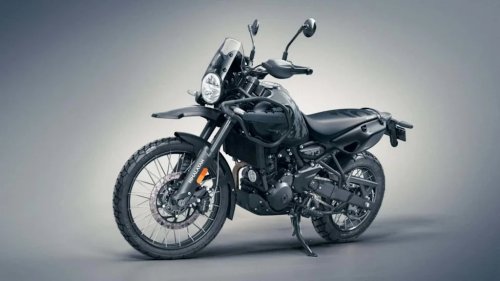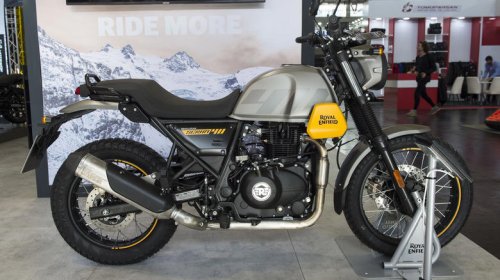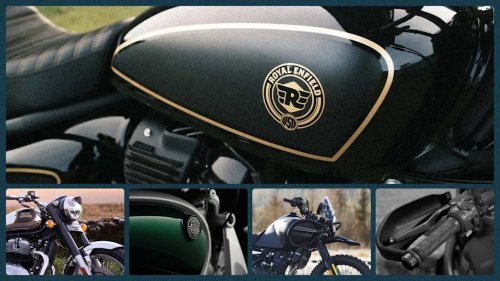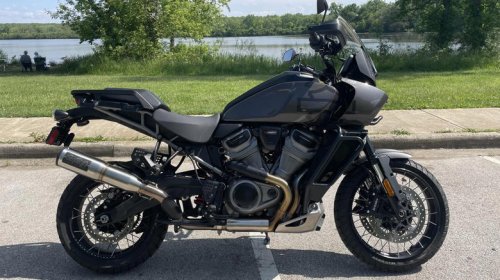
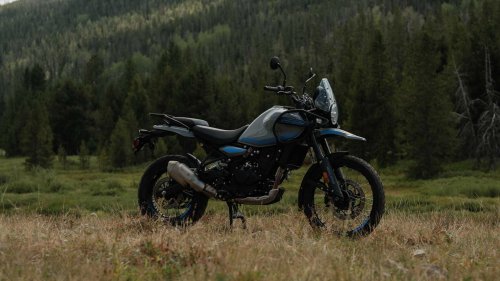
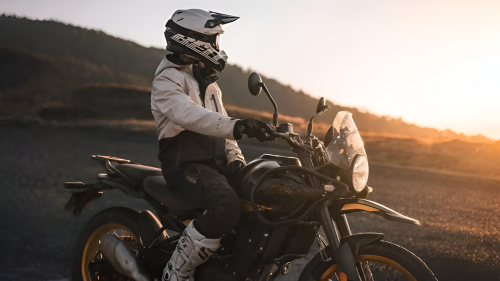
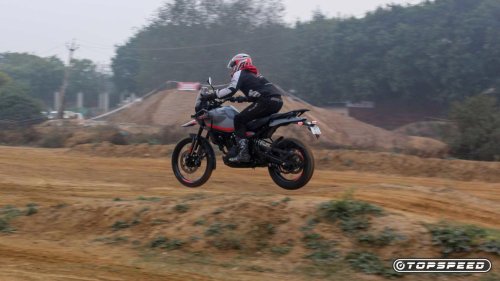


















Adventure motorcycles have never looked more tempting in the U.S. market, but they have also never looked quite so expensive. That's a serious problem. Walk into most dealerships today, and anything remotely trail-capable starts north of $15,000. Even the more accessible mid-displacement options from KTM and BMW rarely dip below $12,000 once you add the hardware needed to actually use them off-road.For riders who want to explore dirt roads, tackle backcountry trails, and still have enough composure to cover a long highway stretch home, the math rarely adds up. That's the specific tension the small-to-mid displacement adventure segment exists to resolve. Finding both in the same package, at a price that doesn't require a second mortgage, has been the hard part until recently. And it's something Royal Enfield has always done quite well. Rethinking True Value In A Premium-Heavy Market Harley-DavidsonThe ADV segment's growth has been impressive, but the value story at the accessible end of the market hasn't kept pace. Most bikes that arrive genuinely trail-ready carry premium price tags to match. The ones that don't tend to make compromises that are hard to ignore — suspension that loses composure quickly on broken terrain, ride modes that feel like afterthoughts, or an electronics package so basic that safety features most riders now expect simply aren't there.ApriliaMid-displacement adventure bikes, in particular, tend to fall into one of two camps. Either they're built around capable off-road hardware — long-travel suspension, proper wheel sizes, real ground clearance — but arrive stripped of the electronics that make modern riding safer and more manageable. Or they're loaded with rider aids, connectivity features, and polished displays, but run on suspension soft enough to be considered a touring package in disguise. The rider ends up spending money they didn't plan to spend, either on aftermarket suspension or on safety systems that should have come standard. The Royal Enfield Himalayan 450 Undercuts Harley And Triumph ADVs By Thousands Base Price: $5,999 Royal EnfieldRoyal Enfield has spent years moving beyond the old stereotype of being just a retro brand. The Himalayan 450 is the clearest proof yet that the company wants to compete in modern engineering, not just nostalgia. In the U.S., the bike starts at $5,999 for Kaza Brown and Slate Poppy Blue, while other trims rise to $6,099, $6,399, and $6,599 depending on color and wheel specification. Even the top end of the Himalayan 450 range remains dramatically below the least expensive big-brand adventure bikes.That pricing changes the entire conversation. The Tiger 900 GT begins at $15,195, and the Pan America 1250 Special begins at $19,999. So the Himalayan 450 isn’t just way more affordable. It is a different kind of proposition altogether, one that invites newer riders, budget-conscious buyers, and practical commuters to consider real adventure capability without the usual premium penalty. In simple terms, it rewrites the value equation by being affordable first and adventure-ready second. Liquid-Cooled Punch Meets Off-Road Simplicity Royal EnfieldThe new Sherpa 450 engine is a big deal for Royal Enfield because it marks a clean break from the company’s older, simpler air-cooled singles. This is a liquid-cooled, single-cylinder, DOHC, four-valve engine with 451.65cc of displacement, paired to a 6-speed gearbox and a slip-and-assist clutch. The official figures list maximum output at 40 hp at 8,000 rpm and 29.50 lb-ft of torque at 5,500 rpm. Royal Enfield also says the model uses a ride-by-wire system and electronic fuel injection with a 42 mm throttle body.Out in the open, that output is not chasing bragging rights. It is tuned for a broad, useful spread of torque, the kind that helps a bike crawl up loose climbs without constant clutch abuse and still sit happily at highway speeds when the trail ride turns into a long pavement transfer. Trail-Tested Suspension And Chassis Dynamics Built For Hard Ground Royal EnfieldThe Himalayan 450’s chassis story is refreshingly straightforward. Royal Enfield lists a 43 mm upside-down front fork, linkage-type rear mono-shock, and 7.87 inches of suspension travel at both ends, with the setup sourced from Showa. The bike rides on a 21-inch front wheel and a 17-inch rear wheel with dual-sport tires, which is the sort of setup that still makes sense when traction disappears, and the route gets ugly. Ground clearance is listed at 9.05 inches.There is also a practical detail here that riders tend to love once they have a flat tire far from home. Royal Enfield offers tubeless spoked wheels on selected color variants of the Himalayan, including Kamet White, Hanle Black, and Mana Black. Tubeless spoke rims are not just a spec-sheet flex; they make trail-side puncture repair much less painful than dealing with a tube in the dirt. For an adventure bike with real backcountry ambitions, that is the kind of convenience that feels like a luxury without actually being one. Ergonomics Spec'd For Stand-Up Technical Work And Daily Comfort Royal EnfieldThe Himalayan 450’s ergonomics are built around the old adventure idea that a rider should be able to sit, stand, and shuffle weight without the bike fighting back. Royal Enfield says the slim seat and tank help the rider get feet firmly on the ground, while the wide handlebars and enduro-style foot pegs support standing control on rough terrain. The seat itself is a two-piece, adjustable setup, with the standard seat height listed at 32.4 inches, adjustable to 33.2 inches. Unintimidating Proportions For Confident Backcountry Exploring Royal EnfieldThis is where the Himalayan 450 may win over riders who have admired adventure bikes from a distance but never quite wanted to wrestle one in a gas station lot. At 432-lb curb weight, it is not featherweight. But the center of gravity feels manageable in concept and in execution, and the bike’s proportions are full-sized without becoming physically imposing. That makes a difference when the trail gets slow, the surface gets loose, and the rider needs to dab a foot without feeling like the motorcycle is about to topple into another zip code. A Modern Electronics Package Hidden Behind Minimalist Style Royal EnfieldThe Tripper dash is a 4-inch circular full-color TFT display — an unusual shape that references classic analogue instrument design while delivering entirely modern functionality. The display supports full Google Maps navigation mirroring via smartphone connection, presenting either a full-map view or simple directional arrow guidance depending on the rider's preference. Navigation as a factory-standard feature, at this price point, is genuinely unusual. Bikes costing more than twice as much have been known to be a paid add-on.The ride-by-wire throttle system underpins two distinct riding modes — Performance and Eco. Performance sharpens throttle response and raises the traction control threshold for more aggressive inputs. Eco softens the delivery and conserves fuel — useful on long highway stretches where 45–65 mpg is a realistic return from the 4.5-gallon tank, putting a realistic range well above 200 miles per fill. Real-World Safety Nets For Dirt And Tarmac Punya Sharma / TopSpeedThe safety net is there, but it does not get in the way. Royal Enfield lists dual-channel ABS with switchable functionality, letting the rider disable it when loose surfaces demand more control from the rear wheel. That makes the Himalayan 450 feel properly adventure-minded rather than digitally overprotected. LED lighting, integrated rear indicators, and the high-mounted air intake under the tank all reinforce the same message: this bike is meant to keep going when conditions become less polite. In the end, the Himalayan 450’s real achievement is not just that it is cheap. Cheap bikes can be forgettable. This one is memorable because the value feels intentional. It does not pretend to be a 150-hp status symbol, and it does not try to out-tech bikes that cost nearly triple its price. Instead, it gives riders the core adventure ingredients in a package that is easier to buy, easier to manage, and easier to justify. For a lot of American riders, that is not a compromise but the exact intention.Source: Royal Enfield