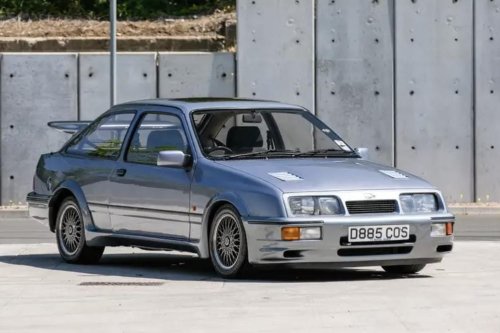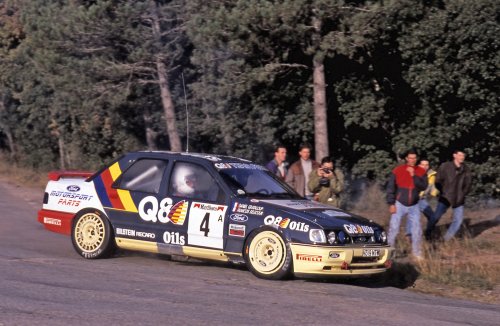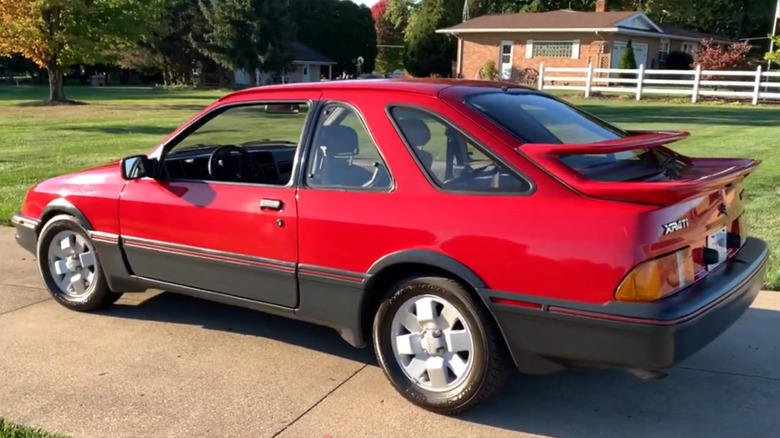
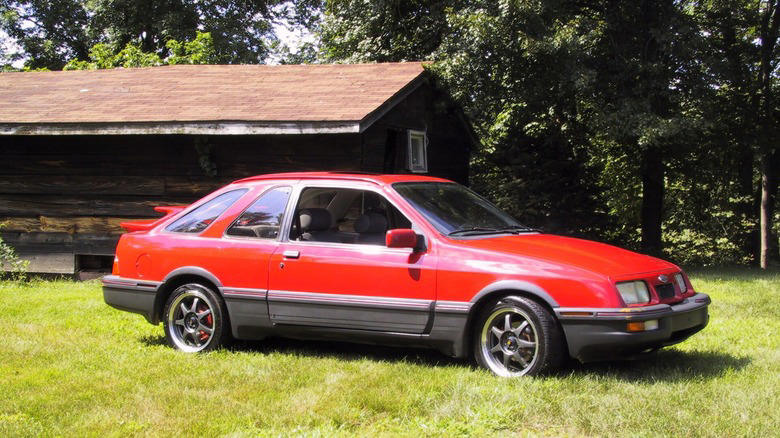
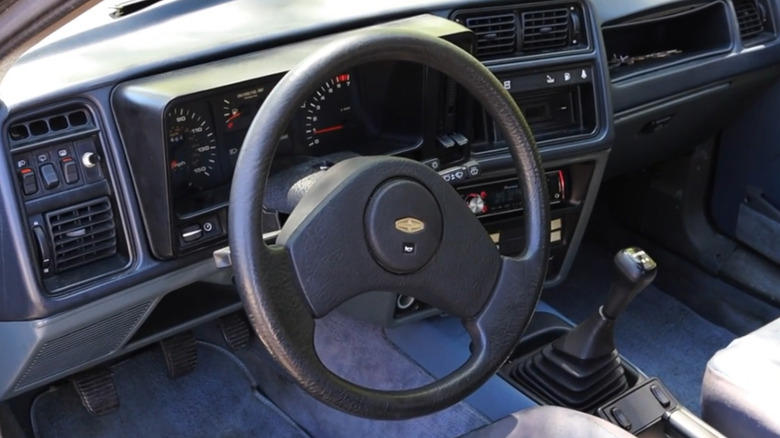


















AutoAtlantica/YouTube Industry giant Bob Lutz has a long list of winners connected to his name, but even Mr. Lutz could swing and miss on occasion. For example, he joined BMW in the early 1970s and helped develop the original 3 Series that would revolutionize both the brand and the marketplace. The 3 Series, of course, would be a home run. Lutz found himself leading Ford of Europe a few years later. There, seeing how well the BMW was received, he pushed the Blue Oval to develop a competitor. Enter the Merkur XR4Ti. The upscale three-door hatchback was made in Germany, based on Ford of Europe's Sierra family, and was booted off the U.S. market by 1989 — just four short years after its debut. Now, the XR4Ti certainly had its fans. For example, it was a player in Car and Driver's 1985 sports-coupe comparison, in which it finished 3rd out of 8 rides. The XR4Ti trailed only the Audi Coupe GT and Toyota Supra while finishing ahead of cars like the Ford Mustang SVO, Nissan 300ZX, and Mitsubishi Starion (although the 3 Series didn't participate). Jack Roush entered the XR4Ti in Trans Am competition, supporting driver Scott Pruett during his 1987 championship run. Meanwhile, the car's aerodynamic design, especially when rocking its double-decker rear spoiler, created an exotic, futuristic look that was far different from typical vehicles of the time. What went wrong? Well, the devil is in the details, and he seems to have been hard at work on the Merkur XR4Ti. The foundations of the Merkur XR4Ti DellaGato: In Color/Wikimedia Commons As stated, the starting point for the XR4Ti was the midsize European Ford Sierra. Primarily designed with families and fleets in mind, the Sierra launched as a three-door hatchback with relatively athletic underpinnings. For one, Ford didn't want to spend the money engineering a front-wheel-drive powertrain for the new Sierra, so it kept the RWD configuration of its predecessor, the Ford Cortina. Ford also deployed the same sort of independent suspension as used by BMWs of the era, as well as a dynamic chassis setup — albeit one originally tuned more for comfort than handling. As for modifications for U.S. consumption, there's some conflicting info. Some sources note the "surprisingly short list" of necessary changes, while others claim that about 850 different parts had to be added to the North American car. There's no debate about the main difference, though. Under the hood, the Sierra's naturally aspirated 2.8-liter Cologne V6 — which some Jalopniks consider among the worst engines they've ever driven — was swapped out for a turbocharged four-cylinder unit that also found a home in the previously mentioned Mustang SVO, as well as the Thunderbird and Mercury Cougar. The Merkur's motor made 175 horsepower when paired with a 5-speed manual transmission, giving it enough grunt to outrun rivals like the E30 3 Series, Audi 4000, Mercedes-Benz 190E, and even the Ferrari 308 GTB. You could also order the XR4Ti with a three-speed automatic, but that reduced output by 30 horsepower, making it another example of a great car ruined by its transmission. Dealers deserve blame for the Merkur's death Shooting Cars/YouTube Yet only 42,464 examples of the XR4Ti were sold between 1985 and 1989 — in part because of who was doing the selling. Lutz originally hoped to offer the cars through dealerships already familiar with imports and their fans. Instead, Ford created a sub-brand called Merkur — from the German word for Mercury — and enlisted some 800 already-existing Lincoln-Mercury dealerships to do the job. Unfortunately, few of the actual dealers seemed interested in moving Merkurs. Not only were they far different from the usual Lincoln-Mercury fare, but they didn't deliver the same high commissions. Sure, the XR4Ti had a relatively steep MSRP of up to $18,000, which was higher than that of a contemporary BMW 318i. But Ford had already spent more than $1.2 billion on the project overall, including approximately $50 million solely to get the vehicles ready to meet U.S. regulations. So there wasn't much of a profit margin left over for dealers. Nor did Ford put much effort into upgrading the XR4Ti during its short run on the market. Overseas, the Ford Sierra would welcome features such as an upgraded 2.9-liter V6, a four-door body style, and four-wheel drive. Even better, it would be transformed into homologation specials like the Sierra RS Cosworth and the RS500, both of which were among the best fast Fords of all time. The XR4Ti advanced only in small steps and took one big leap backward by deleting its cool dual-wing spoiler. The good news? The XR4Ti's lack of popularity has extended to the used-car marketplace. Hagerty, for instance, puts a value of $6,000 on 1985 models in good condition.