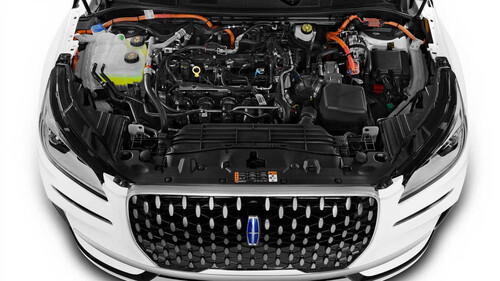
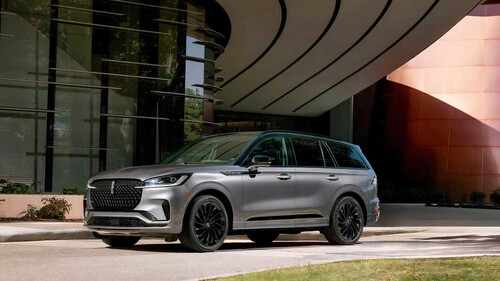
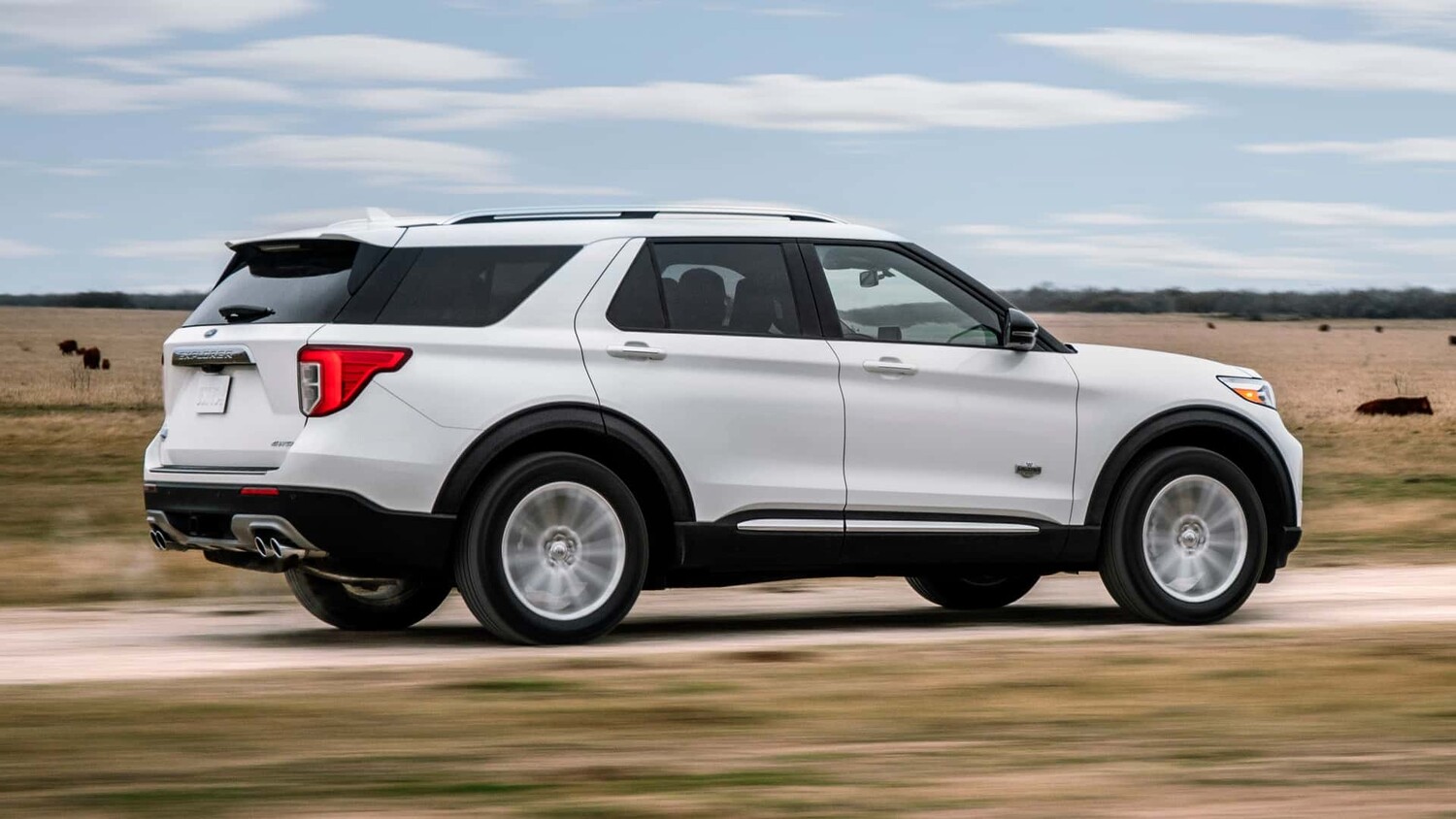
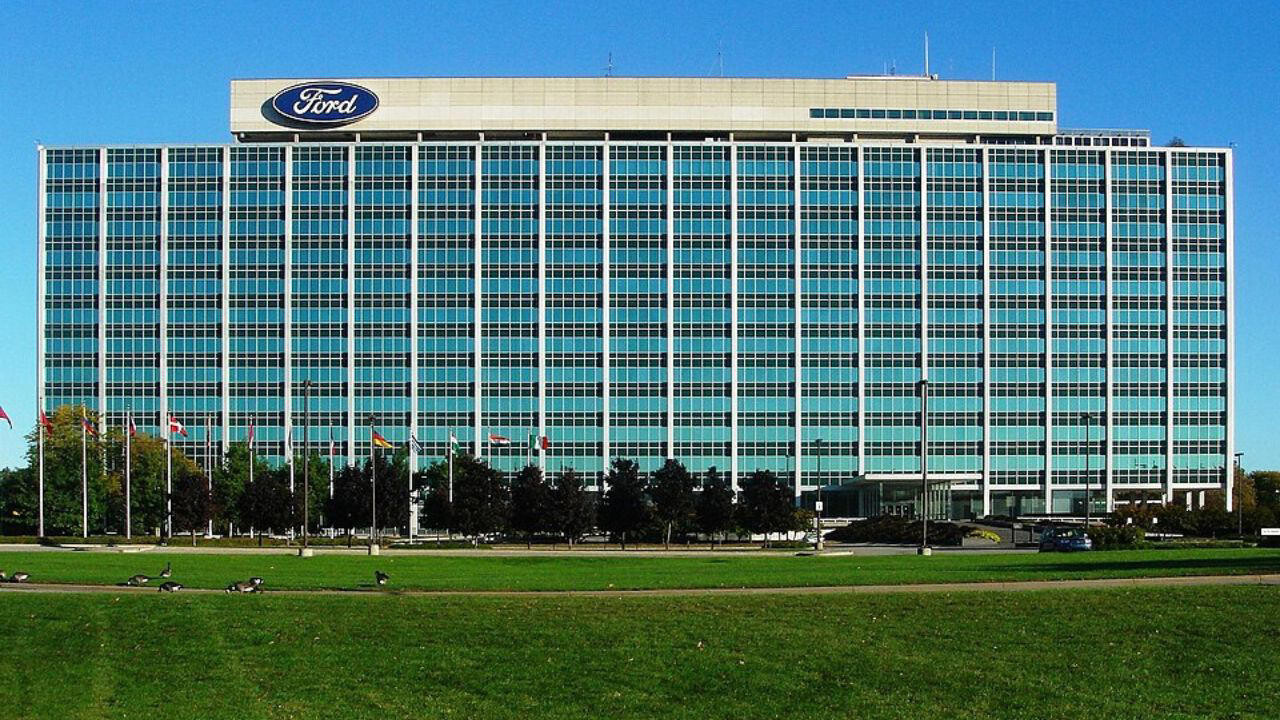
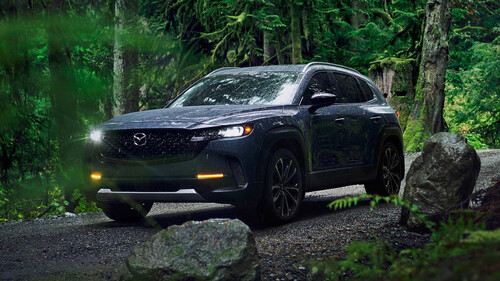
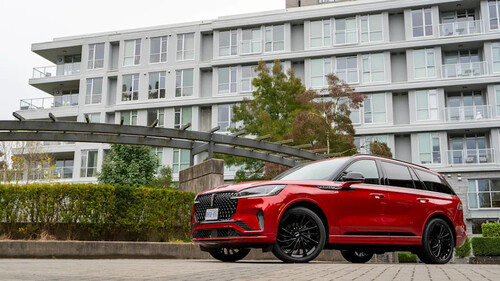
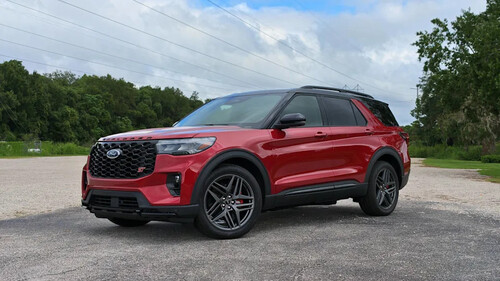
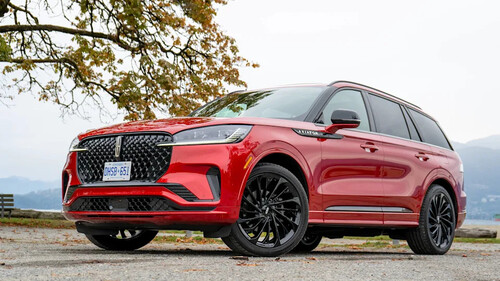
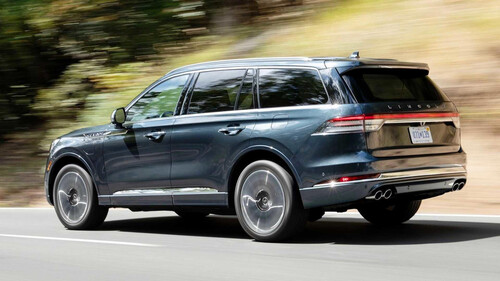
Ford Ends Lincoln Imports From China by 2030 — What It Means for Nautilus OwnersRead Ford's statement from Wednesday evening carefully and the most interesting thing about it is what isn't there. No plant. No investment figure. No model name. The word "Nautilus" appears exactly zero times.What Ford did say is that it will grow Lincoln production in the United States beginning in 2030, and that Lincoln will phase out importing vehicles from China for the American market. It named the two Lincolns already built here — Navigator at Kentucky Truck Plant in Louisville, Aviator at Chicago Assembly — noted that both continue to be exported to Canada, Mexico and the Middle East, and promised thousands of direct and indirect jobs. Jim Farley supplied the pull quote: "Lincoln is a quintessentially American brand, and Ford is America's automaker. This wasn't necessarily the easiest path. In fact, it's a path most of our competitors aren't choosing to take. But Ford builds in America because we believe in America, and we're betting on that belief again," said the CEO. fordThat's a commitment expressed as a sentiment. The engineering, the tooling budget, and the floor space are all still TBD. Which is worth sitting with, because the vehicle everyone assumes this is about is the best-selling Lincoln in America.The math on why this had to happenPer Ford's own year-end tally, Lincoln moved 106,868 vehicles in the U.S. in 2025. Nautilus accounted for 33,744 of them, down 7.7%. That's roughly a third of the brand's volume riding on a crossover assembled by the Changan Ford joint venture and shipped across the Pacific.Related ArticlesMexico's Auto Parts Industry Just Set a Record — Thanks to a Tariff Loophole Shaped Like a Wiring HarnessVolvo's EX90 Came With a Life-Saving Sensor — When Its Supplier Went Bankrupt, Owners Got SiriusXM InsteadAdvertisementAdvertisementThe duty stack is what makes that arrangement untenable. Imported passenger cars carry a 2.5% baseline rate. On top of that sits the 25% Section 232 automobile tariff, which applies in addition to any other duties. And Chinese-built vehicles were already carrying Section 301 duties before either of those existed. Add it up and you land at the 52.5% rate Ford has acknowledged paying on the Nautilus.Nobody eats that. Ford told investors in its Q2 2025 release that tariffs represented a $3 billion gross adverse EBIT impact for the year, partially offset by about $1 billion in recovery actions. "Recovery actions" is finance-speak that eventually shows up on a window sticker.Why 2030, specificallyHere's the part the reshoring framing buries. In January 2025, Commerce's Bureau of Industry and Security finalized its connected vehicle rule, which bans China- and Russia-linked technology from passenger vehicles sold in the U.S. It phases in two ways: covered software prohibitions bite at model year 2027, and Vehicle Connectivity System hardware prohibitions bite at model year 2030.Model year 2030. The same year Ford picked.AdvertisementAdvertisementVCS hardware isn't exotic. It's the telematics control unit, the cellular modem, the Bluetooth and Wi-Fi modules — the boxes that make a car "connected" in the first place. A vehicle assembled in Hangzhou is going to have a supply chain full of components that are, at minimum, expensive to prove clean under a Declaration of Conformity. Ford can either re-engineer the electrical architecture of a China-built car to survive an American compliance audit, or it can build the car somewhere else.Tariffs made the Nautilus expensive. The hardware deadline made it a countdown. Wednesday's announcement is Ford acknowledging a date that was set for it in the Federal Register more than a year ago.And there's a legislative ratchet behind that. The Connected Vehicle Security Act of 2026 cleared the Senate Commerce Committee unanimously on July 22, and among other things it would set ownership thresholds of 15% for manufacturers and 25% for suppliers. If that becomes law, "phase out" stops being a corporate choice.The capacity question nobody at Ford wants to answer yetThis is where it gets genuinely awkward, and where you can see why the press release stayed vague.AdvertisementAdvertisementThe previous-generation Nautilus was built at Oakville Assembly in Ontario. That plant is gone as an option — Ford committed it to F-Series Super Duty, adding capacity for up to 100,000 units, precisely because Kentucky Truck and Ohio Assembly were already running flat out. Ford's own 2025 production tables show Oakville with no output at all for the calendar year while that conversion ran.Louisville Assembly? It built the Escape and the Corsair, and the Corsair is finished. Ford has said its next Universal EV Platform vehicle — the midsize electric pickup now named Fathom — starts assembly there in 2027. That building is spoken for.Chicago Assembly runs Explorer and Aviator and produced more than 280,000 vehicles between them last year. Kentucky Truck runs Super Duty, Expedition and Navigator. Neither has a spare shift lying around for 34,000 luxury crossovers.So Ford is promising to build Lincolns here in 2030 without a naturally available line to build them on. That's not necessarily a bluff — four years is enough time to add a line, retool, or design the replacement around an existing platform and plant from the start. Note that Ford's phrasing is "grow Lincoln production," not "move the Nautilus." Those are different projects. The second one implies picking up a car and setting it down elsewhere. The first allows for a next-generation vehicle, on a different architecture, wearing a different name, sharing a body shop with something already in production.AdvertisementAdvertisementIf I had to guess where this lands, I'd look at a Lincoln variant of something Ford already builds in volume in a plant with headroom — which is exactly how Aviator and Explorer coexist in Chicago today.What this means if you're shopping or already own oneYou have roughly four model years to buy a China-built Nautilus. Ford said production grows in the U.S. beginning in 2030 and imports phase out — not that imports stop tomorrow. Expect the current car to soldier on, tariff-loaded, until the replacement is ready.Don't expect a discount because it's on the way out. The 52.5% duty is baked into every unit Ford lands at the port. Run-out pricing on a tariffed import behaves differently than run-out pricing on a domestic model; there's less margin to give back.Related ArticlesA Lyft Driver Allegedly Dragged a Man 300 Feet by His Wedding Ring – And the App Worked Exactly as DesignedGeorgia Made It a Crime to Just Watch a Street Takeover. The I-285 Crowd Never Got the MemoAdvertisementAdvertisementParts and warranty are not in danger. The connected vehicle rule includes an exemption for VCS hardware imported for repair or warranty service on vehicles with model years before 2030. Your 2026 Nautilus doesn't become unserviceable in 2030.Collision repair is the real cost exposure. Body panels, lighting, glass and electronic modules for a China-assembled vehicle are moving through the same tariff regime the whole car does. Higher parts prices raise repair estimates, and higher repair estimates push borderline hits closer to a total-loss determination. If you own one, this is worth a conversation with your carrier about how your policy values the vehicle — not a panic, just diligence.Residuals are the wildcard. A model whose successor is built somewhere else, possibly under a different name, on a different platform, tends to develop a used-market identity of its own. Sometimes that's fine. Sometimes the outgoing generation quietly becomes the odd one out in a lineup that's moved on. Two-year-old Nautilus values in 2031 are a genuinely open question, and anyone telling you otherwise is guessing.The honest read on Wednesday: Ford announced a decision that federal rulemaking had already made for it, on a timeline the rulemaking already set, without disclosing where or how it will be executed. That's not nothing — committing publicly raises the cost of backing out. But the interesting news isn't a press release in 2026. It's the plant announcement that has to come before 2029, and Ford hasn't made it yet.AdvertisementAdvertisementJoin our Newsletter, follow our Instagram page, and connect with us on Facebook.