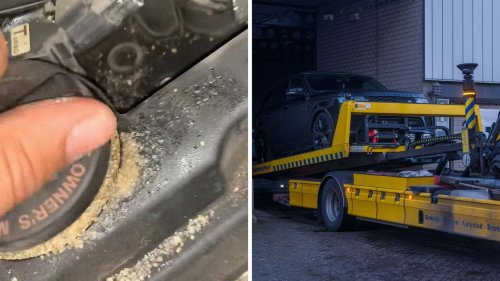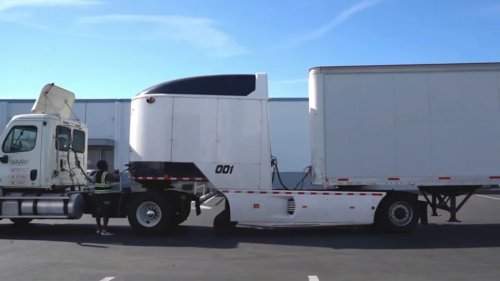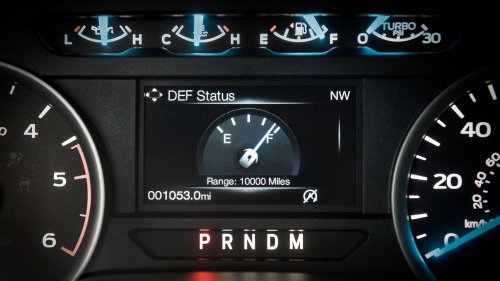





















Diesel engines have been a hot-button topic among the eco-minded for decades. The diesel engine's black-soot exhaust and penchant for leaking an amalgamy of fluids onto the pavement have concerned many, and over the years, a couple of things have been done about it on a federal level. After all, the diesel-engined industry is a huge one, especially out on the roadways, and too much sooty exhaust can lead to a serious case of pollution if left unchecked.In the early 2010s, stricter US emissions rules led many manufacturers of diesel vehicles to adopt Diesel Exhaust Fluid, or DEF, as part of SCR systems, as a solution to the dirty diesel problem.In essence, the system using DEF to clean exhaust gases is complicated, consisting of several components, many of which are historically prone to failure. Just recently, the government has tried to help the issue of the ever-failing and expensive DEF systems. But, sadly, the solution is really more like a band-aid, rather than an actual answer to the issue. A Strange Way To Clear The Air FordThe story of DEF begins in the early 2000s. At the time, Nissan's heavy-duty subsidiary, the Nissan Diesel Corporation, was looking for ways to reduce diesel exhaust pollution via alternative means to the usual practice of making engines smaller, or using less fuel. The brand wanted to build a semi-truck capable of hauling the same sort of loads other trucks could, while also contributing much less pollution.However, because a reduction in fuel or engine size would mean a less capable truck, the aforementioned alternative means were sought. The company deiced to utilize a process called selective catalytic reduction, or SCR, wherein nitrogen oxide levels are reduced. For the non-chemistry majors reading, nitrogen oxide is toxic in high amounts, and is also, reportedly, damaging to the atmosphere. Reducing the amount found in diesel exhaust would mean a positive outcome for the polar bears. To facilitate the SCR process, a catalyst was needed.Ford Here's where DEF comes into play. The actual fluid is made up of something called urea, a nitrogen-containing compund not too dissimilar to urine, and de-ionized water, also known as distilled or purified water. The ratio is roughly 32.5 percent urea and 67.5 percent de-ionized water.The DEF fluid goes about removing the nitrogen oxide from diesel exhaust by being injected into the exhaust system, wherein the water inside the DEF evaporates, and the resulting reaction between the hot urea and exhausted nitrogen oxide forms two compounds: ammonia (NH3) and isocyanic acid (HNCO), both of which are non-toxic to the atmosphere.DEF itself can be a frustrating thing to handle. While it's completely safe and non-toxic, it forms a latticed, crystalline structure when spilled and left to dry. It can also be corrosive to certain metals, namely aluminum. It's known to freeze at temperatures below 12 degrees Fahrenheit, but because the US government requires full DEF flow within 70 minutes of engine start, some vehicles using the liquid need to use heaters hooked up to the DEF tanks. Other vehicles simply rely on engine heat to defrost the DEF. Here's The Big Problem PorscheDEF systems have been notoriously unreliable since their inception. Earlier this year, the EPA launched an inquiry into DEF systems in an effort to figure out why they're so prone to failure. The study found that the Urea Quality Sensors (UQS) are the most common culprit, leading to the agency's reversal of older regulations mandating the use of UQS. According to the EPA, the Urea Quality Sensors will be phased out, and an alternative solution be put in its place.Another issue is the nanny-state software built into US-market DEF systems, both on the road and off. The best example of this is the use of something called "derating". A derate limits the engine's power or speed, forcing whatever sort of vehicle you're piloting to operate at a reduced capacity.For road-going vehicles, this is usually called "limp mode", wherein the vehicle cannot exceed a certain speed. For agricultural equipment and other off-road diesel applications, which also require DEF systems, engine torque or revs are reduced, kneecapping the piece of equipment's ability to perform.Both of these issues prove to be extremely costly, both in time and money, for folks who rely on diesel engines on a regular basis. The Proposed Fix NissanDespite the issues listed above, the EPA is only addressing the UQS issue. Replacing the use of Urea Quality Sensors will, reportedly, be nitrogen oxide sensors. Instead of the UQS sensors – which are positioned early on in the DEF system – the Nitrogen Oxide sensors are positioned in the exhaust system. The idea is to monitor the levels of nitrogen oxide, and adjust the DEF flow as needed based on the data collected.The EPA has also released more information regarding existing, UQS-equipped systems. Prior to the new regulations, removing any or all components of the DEF system was, technically, against the law. However, the EPA will now allow shops to remove and replace the UQS sensors with new, approved nitrogen oxide sensors. In addition to the replacement allowance, the EPA also relaxed regulations restricting in-field repairs of the DEF system.Mercedes-Benz In addition, the EPA has also done away with something called "derates." A derate is a process wherein engine speed or power output is reduced, limiting a vehicle's use. Prior to a February 2026 ruling, DEF systems would force a derate when a fault was sensed, or the DEF fluid tank was empty. New software has been developed that removes the immediate derate action which, in passenger cars, limited speeds to as low as 5 mph. Why It's A Band-Aid FordHowever, this doesn't address the myriad other issues regarding the DEF system as a whole. While the UQS system is, indeed, unreliable, there are other components prone to failure, too. For example, DEF systems use injectors that spray the solution into the exhaust stream in order to clean the actual gases passing through. These nozzles are extremely prone to clogging, due to DEF's affinity for crystallizing when dry. When it comes to the cost of replacing a DEF nozzle, it can reach up to $1,450 for both parts and labor for a simple nozzle.Another issue lies in onboard DEF storage tanks. They can be prone to contamination from rust, diesel fuel, and even water, further compromising solution flow. Replacing a DEF tank can reportedly cost up to $1,600, and if your system has built-in heating, that can run you up to another $1,700. If a DEF tank is leaking, the solution can damage wiring and other components due to its mildly corrosive nature.Instead of figuring out alternative means of cleaning up diesel exhaust emissions, it seems the EPA has only managed to chip away at the block of marble that is the DEF issue. Replacing the UQS sensors with nitrogen oxide sensors will, in theory, fix a large-ish issue surrounding the DEF system. Eliminating the ridiculous derating is a big step in the right direction, too. But the DEF system as a whole is still largely unreliable, and expensive to maintain. A Larger Change Is Needed VolvoWhen the DEF system was introduced, it was a good-natured solution to a real issue. Nitrogen oxide in high amounts is toxic to the environment, as well as humans, and trying to clean some of it up is a noble and good endeavor. However, just 16 years after the DEF systems were officially mandated in the US, we've learned that they're extremely unreliable, expensive to maintain, and overly intrusive when it comes to derates.The EPA's solution of removing the derating and replacing the Urea Quality Sensors is a step in the right direction, but it seems the entire DEF system might need to be thrown back on the drawing board, made to be simpler and easier to maintain, or just scrapped in favor of some new system altogether.