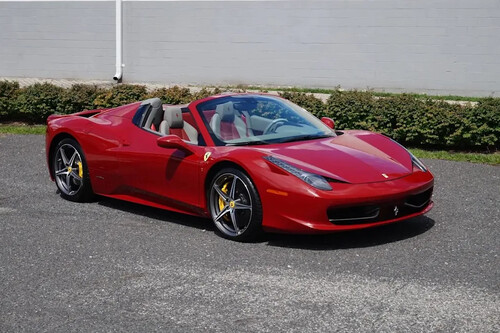
Sophie Tremblay · 5 months ago@sophietremblay28The £7,000 TikTok Trap: Why Viral CarTok Hacks Are Destroying Vehicles Liked by+12 othersPost commentRelated Posts2013 Ferrari 458 Spider for Sale With 7,000 Miles 33 · Caleb Johnson · 1 months ago2008 BMW M3 Coupe for Sale With 7,000 Miles 47 · Abigail Smith · 1 months ago2024 Bentley Flying Spur Speed Edition 12 For Sale With 7,000 Miles 11 · Isabelle Bouchard · 1 months ago2005 Ford Thunderbird 50th Anniversary Edition for Sale With 7,000 Miles 89 · Chloé Smith · 1 months agoGM's Fix for Its Self-Destructing V-8 Was Basically an Oil Change. Nearly 7,000 Owners Say That Didn't Work. 77 · Nicole Young · 1 months ago7,000 People Said Their GM's 6.2L V8 Still Blew Up After Being 'Fixed' 21 · Amelia Young · 1 months agoBritish man spends $7,000 building a street-legal sports car in his shed 63 · Lauren Clark · 1 months agoTikToker's Tailgating Trick Lets You Keep The Trunk Open Without Wasting Battery 35 · Jacob Bouchard · 25 days agoTikTok User Said a Minor Scratch on His Car Led to a Repair Huge Bill 83 · Henry Brown · 1 months agoTikTok and other social media firms told to remove “reprehensible” dangerous driving videos 69 · Madeleine White · 1 months agoHilarious TikTok Shows SUV Limping Through Intersection Like It's Doing the Stanky Leg 95 · Jackson Fortin · 2 months agoTikTok User Claimed He Was Driving a Brand New Volkswagen He Didn't Have the Rights To Own 79 · Daniel Rogers · 2 months agoTikTok Video Shows a Tesla Cybertruck Performing a Successful tow...for the First Eight Seconds 19 · Claire Johnson · 2 months ago“Unbelievable”: A California TikToker Says He Can’t Register His 2024 Honda Until He Completes Four Manufacturer Recalls — and His Video Has X Furious at the State 35 · Leo Green · 2 months agoTikTok is no longer optional for car dealers. Here’s why. 58 · Claire Fortin · 3 months agoNew Grand Tour Featuring Throttle House and TikTok’s Favorite Trainspotter Drops Sept. 4 52 · Sophie Rogers · 3 months agoThe Company Behind TikTok Could Get Into The Autonomous Car Race: Report 41 · Charlotte White · 3 months agoThis Dad's $25K Car Almost Cost Him $34K, And His TikTok Is Making Buyers Nervous 69 · Liam Campbell · 3 months ago"Subaru, Thank You": TikTok Shows Man Praising Car After He Hits Deer at 70 MPH And Survives Unscathed 58 · Matthew Gagnon · 3 months ago"Disaster Strikes In 3, 2, 1...": TikTok Shows Supra's Hood Fly Off and Hit Windshield Mid-Drive 50 · Liam Labelle · 3 months ago


 +12 others+12 others
 +12 others