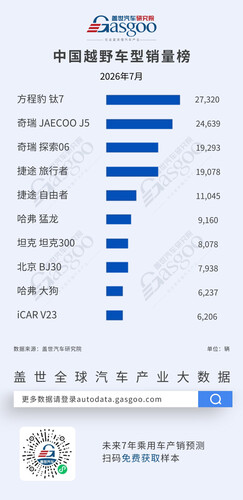
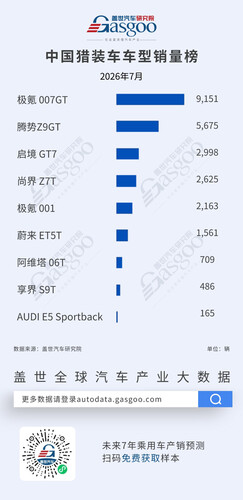
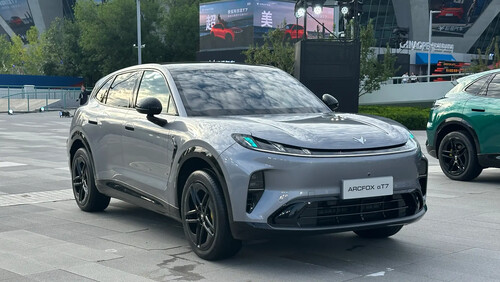
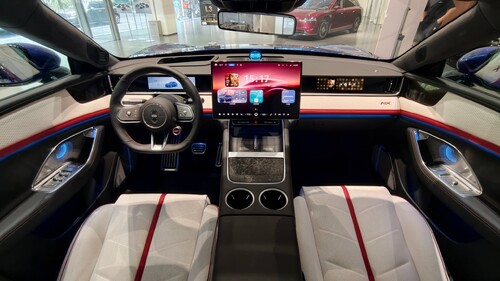
Lauren Campbell · 6 months ago@laurencampbell69Next-Gen SU7 Available for Pre-Order at $33,000, Slated for April Launch Liked by+53 othersPost commentRelated PostsI just saw Xiaomi's electric hypercar concept, created for Gran Turismo and 'shaped by the wind' — but back on Earth, the good news is you'll be able to buy a Xiaomi EV in Europe in 2027 78 · Owen Hill · 1 months agoHyundai warns US may be next for a wave of cheaper Chinese EVs 98 · Lauren Girard · 1 months agoXiaomi Auto Surpasses 800K Deliveries; New Li L9 launched in UAE; CATL Expands Copper Foil Partnerships 84 · Adam Pelletier · 1 months agoBMW M3 EV Lays Down 11s Trying To Shake Xiaomi At The Ring 36 · Emma Girard · 1 months agoIFA Berlin Recap Part 1: Diverse Approaches To Sustainability 51 · Alexander Pelletier · 1 months agoHas NIO Really Found Its Footing? 12 · Olivia Lee · 1 months agoXiaomi Auto signs 8 German dealer groups ahead of 2027 Europe entry 20 · Zoë Walker · 1 months agoDetroit’s Big Three Push Back Against Trump’s Chinese Car Invitation 66 · Mia Hall · 1 months agoJuly 2026 Off-Road/Premium/Shooting Brake Sales Rankings: Model Y Leads Premium Segment, Titanium 7 Tops Off-Road Segment | Gasgoo Automotive Institute 81 · Chloé Rogers · 1 months agoArcFox Alpha T7: BAIC’s half-priced Xiaomi YU7 secures 30,000 orders in 60 minutes 70 · Mia Leblanc · 1 months agoWho is Buying the SkyNomad Without 800V? 52 · Ryan Mitchell · 1 months agoXiaomi Skynomad EREV SUV begins deliveries in China, CEO Lei Jun hands over keys to owners 67 · Audrey Anderson · 1 months agoXiaomi confirms 2027 Europe EV launch with 8 German dealer groups 70 · Zoë Girard · 1 months agoMaker of a 1,527-HP EV Introduces an SUV With a Pop-Up Roof Cabin 18 · Grace Pelletier · 1 months agoXiaomi to launch electric cars in Europe from 2027 65 · Logan Scott · 1 months agoIM LS6 undercuts Tesla Model Y, adds steer-by-wire from $31,000 91 · Kaitlyn Anderson · 1 months agoXiaomi's European Launch Plan: What Its New Global Site Reveals and Hides 56 · Abigail Lee · 1 months agoAISTALAND Responds to "Offense-Defense" Info Leak: Admits Unprofessional Handling 69 · Thomas Clark · 1 months agoTop Selling Electric Vehicles in the World — 27% EV Share in July! 76 · Ava Poirier · 1 months agoPress a Button, Get a Two-Story Camper: Inside Xiaomi’s Wild $44,100 EREV SUV 84 · Matthew Wright · 1 months ago




 +53 others