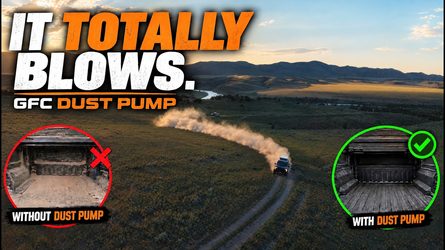
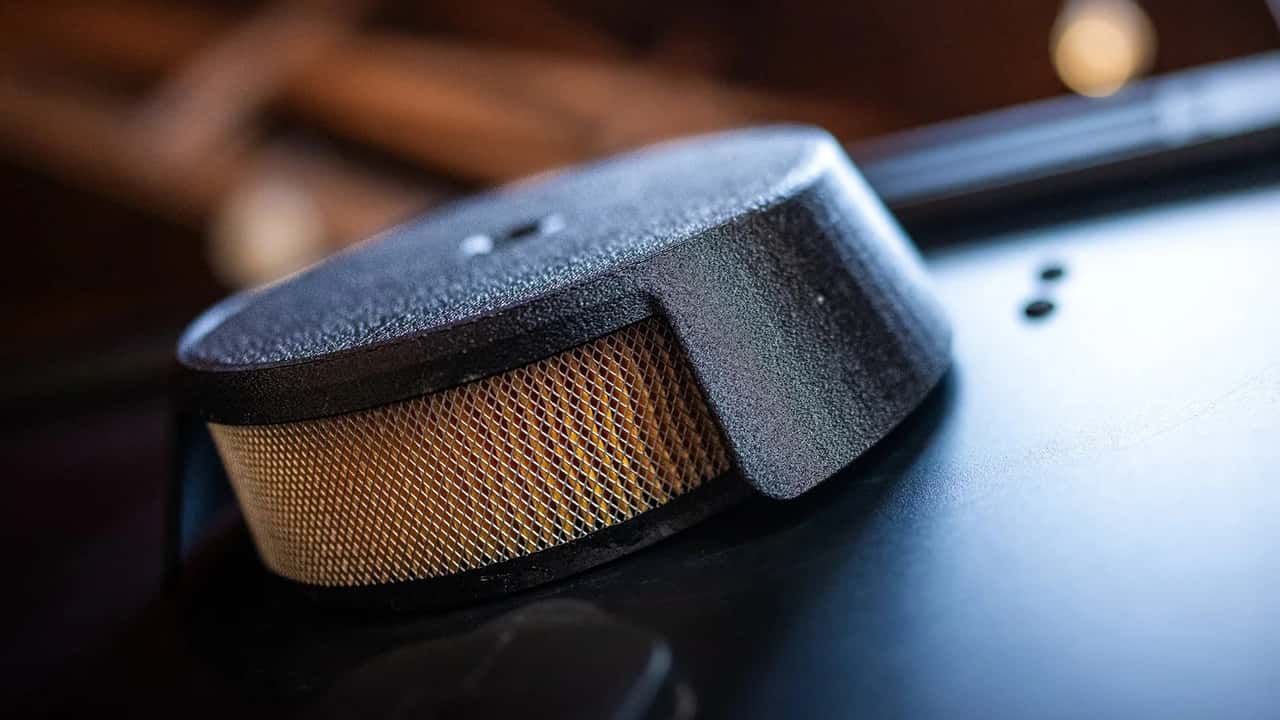
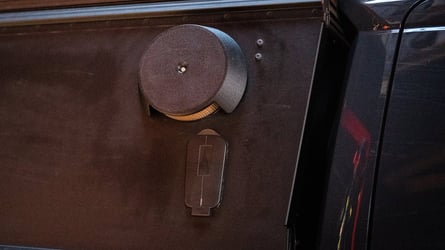
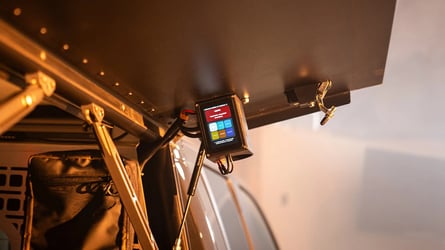
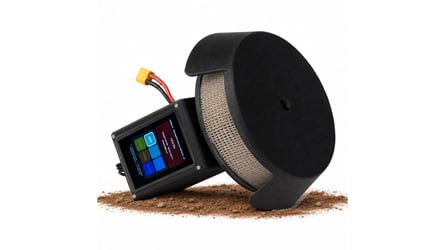
Go Fast Campers (GFC) has come up with an unusual solution to one of the biggest annoyances of off-road adventures: dust getting inside truck beds. Rather than simply adding more seals to keep dirt out, the Montana-based company developed an elaborate system that forces filtered air into the cargo area to keep dust out. And it wasn't exactly a cheap or straightforward project. GFC poured tens of thousands of dollars into microcontrollers, pressure sensors, custom software, and a jet turbine to develop what it calls its new positive-pressure system. The company even admits it might have gone a little overboard trying to solve what many truck owners consider a minor inconvenience. The problem is familiar to anyone who regularly takes a pickup off the beaten path. Truck beds aren't completely sealed, with gaps around the tailgate, between body panels, and underneath the bed rails. Even if owners close most of those openings, the bed and camper can flex independently when driving over rough terrain, creating more opportunities for dust to enter. The Last 10 Percent Is The Hardest To Eliminate GFC says sealing those gaps can eliminate roughly 90 percent of dust intrusion. However, that remaining 10 percent can be particularly frustrating in extremely dusty conditions. The company wasn't necessarily chasing a spotless truck bed. It simply wanted to avoid spending hours cleaning camping gear after returning home from a weekend outdoors. The solution came from motorsports. Rally cars often have roof-mounted air intakes that aren't designed to feed the engine but rather to pressurize the cabin. By constantly pushing clean air inside, the system creates positive pressure that prevents dust from being sucked through openings in the bodywork. GFC wanted to apply the same principle to truck bed campers, but there was a catch. Rally cars can use relatively simple ram-air systems because they usually have access to clean air ahead of the vehicle. That's not necessarily the case when driving behind another vehicle on a dusty trail. The company therefore experimented with passive filtration systems, including particle separators mounted on the camper's roof and side panels. However, these setups only started building meaningful pressure at higher speeds. That wasn't good enough for slow off-road driving, so GFC moved on to forced induction. GFC Dust Pump A Jet Turbine Was The Answer The answer was an RC jet turbine. Despite its compact dimensions, the unit moves substantial amounts of air while generating the pressure needed to keep dust out. GFC says its initial tests were so powerful that the unfiltered turbine blew papers, 3D-printer filament spools, and even full water bottles across its engineering lab. Naturally, having more power than necessary created another challenge: controlling it. Not every truck bed seals equally well, and the pressure inside the camper changes with vehicle speed, wind, terrain, and how often the suspension hits bumps. Simply giving owners a dial to adjust the turbine's speed wouldn't have been ideal. GFC instead developed an electronic control system that continuously measures the pressure inside and outside the camper. Working with an engineer experienced in building telemetry systems for trophy trucks, the company created a setup using a microcontroller and custom-designed pitot-static tubes inspired by those found in aircraft. The system measures the pressure differential 50 times per second and automatically adjusts the turbine's output to maintain the pressure the user selects. If a truck bed has more leaks, the turbine works harder. If it's better sealed, the system doesn't need to work as much. Owners can monitor the readings in real time and select their desired pressure through a touchscreen. There's also Wi-Fi connectivity and an accompanying app, allowing the system to be controlled from inside the truck's cabin without running additional wiring to a separate controller. GFC Dust Pump A Lawn Mower Filter Keeps Costs Down After spending a small fortune developing the electronics and turbine setup, GFC took a decidedly less exotic approach to filtration. Instead of creating a proprietary replacement filter, it opted for a readily available lawn mower air filter that costs $9.99 for a two-pack on Amazon, making replacements relatively inexpensive and easy to find. Ultimately, this is a rather unusual example of a company taking a relatively mundane problem and throwing an extraordinary amount of engineering at it. GFC could have settled for better seals and called it a day, but instead developed a miniature aircraft-inspired pressurization system to avoid cleaning dusty camping gear. What do you think? GFC has the product listed on its website for $799, but it's already sold out. Talk about overkill...