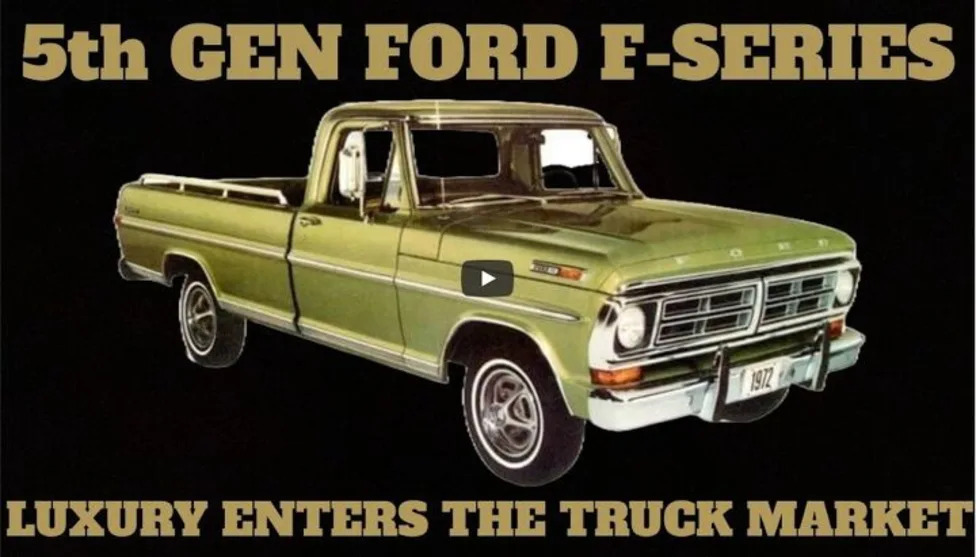
fifth generation 1967 1972 ford f series ford trucks go mainstreamThe launch of 5th generation F-series for the 1967 model year was going to be big for Ford Motor Co. Ford has seen tremendous growth in sales in the 4th generation and Ford wanted to see that growth continue. This growth came from buyers that were saw the pickup truck not only a work vehicle but a vehicle that could be used every day as transportation as well a work vehicle. In the 50s and early 60s pickup trucks were work only vehicles for a majority of owners. Things began to change in the 4th generation F-series when Ford released the King Cab and the Ranger trim levels. For the 5th generation Ford was going to go after these buyers with their advertising and by offering more and more options. How did this strategy evolve over time and how successful was this change for Ford?AdvertisementAdvertisementThe TTAC Creators Series tells stories and amplifies creators from all corners of the car world, including culture, dealerships, collections, modified builds and more.An AI-generated transcript summary edited by a staffer is below.[Image: Tony's Fords and Mustangs/YouTube]Become a TTAC insider. Get the latest news, features, TTAC takes, and everything else that gets to the truth about cars first by subscribing to our newsletter.Summary: The Fifth-Generation Ford F-Series (1967–1972)This transcript traces the development of the fifth-generation Ford F-Series pickup (1967–1972), explaining how Ford transformed the pickup from a work-only vehicle into a comfortable daily driver, helping establish the modern pickup market. AdvertisementAdvertisementFord's New StrategyIn the mid-1960s, Ford recognized that more buyers were using pickups for personal transportation rather than just work. The fifth-generation F-Series was designed to appeal to these customers by offering:Improved stylingMore comfortable interiorsAdditional trim levelsMore options and convenience featuresA smoother, car-like ride thanks to Twin I-Beam front suspensionThis strategy would become the blueprint for modern pickup trucks. 1967: A Major RedesignIntroduced in October 1966 as a 1967 model, the new F-Series featured:F-100, F-250, and F-350 modelsTwo- or four-wheel driveStyleside, Flareside, and stake-bed configurationsWider cab with three inches of additional interior widthSquared-off styling that earned the nickname "Bumpside" because of the distinctive body crease along the sidesNew safety features including padded dashboards, four-way flashers, backup lights, and safety door latchesAdvertisementAdvertisementThree trim levels were offered:Standard CabCustom CabRangerFord also expanded the option list with:Bucket seatsPower steering and brakesAir conditioningAutomatic transmissionAuxiliary fuel tankCamper Special packageEngine choices included:240-cu-in inline six (150 hp)300-cu-in inline six (170 hp)352-cu-in V8 (208 hp)Ford sold 330,581 F-Series trucks in the U.S. during the 1967 model year, making it America's best-selling truck. 1968: More Power and New FeaturesUpdates included:Revised grilleFederally mandated side reflectorsNew instrument panel and door panelsReplacement of the 352 V8 with:360-cu-in V8 (215 hp)390-cu-in V8 (255 hp)Introduction of the limited-edition Explorer trimNew two-tone paint options and tinted glassAdvertisementAdvertisementSales climbed dramatically to 435,973 units. 1969: Continued GrowthChanges were minimal:Introduction of the optional 302-cu-in V8Canadian buyers finally received the Ford-branded F-Series after the Mercury M-Series ended productionSales surpassed half a million, reaching 504,441 trucks. 1970: Luxury Comes to PickupsFord significantly expanded trim levels:CustomSport CustomRangerRanger XLT (the first appearance of the now-famous XLT name)The Ranger XLT added features uncommon for pickups at the time:Cloth seatsCarpetingSimulated woodgrain trimBetter sound insulationLuxury interior appointmentsAdditional exterior brightworkAdvertisementAdvertisementFord also introduced specialized work packages, including:Contractor SpecialFarm & Ranch SpecialHeavy Duty SpecialNew options included:Sliding rear windowVinyl roofBehind-seat storageUnder-hood generatorConvenience lighting packageSales reached 506,094 trucks. 1971–1972: RefinementFor 1971:New egg-crate grilleOptional AM/FM stereoSales increased again to 537,957 units.For 1972:Another grille redesignFew additional changes as Ford prepared the next generationSales jumped to 644,529 trucks, the highest of the generation. The platform also continued production in Brazil-with updates-until 1992. Sales Success and Market ImpactAdvertisementAdvertisementThe video's conclusion argues that Ford's strategy was highly successful:Buyers increasingly viewed pickups as both work vehicles and family transportation.Ford continuously added comfort, convenience, and upscale trim levels, increasing profitability.Competitors like Chevrolet and Dodge quickly adopted similar approaches.The battle for America's best-selling pickup intensified:Ford led sales in 1967, 1969, and 1970.Chevrolet led in 1968, 1971, and 1972.This rivalry would continue into subsequent generations and help shape today's full-size pickup market. Key TakeawaysThe fifth-generation F-Series marked Ford's transition from building utilitarian work trucks to comfortable, feature-rich everyday vehicles.The introduction of upscale trims like the Ranger XLT foreshadowed the luxury pickups that dominate today's market.Sales nearly doubled during the generation, from 330,581 trucks in 1967 to 644,529 in 1972, validating Ford's strategy of blending work capability with passenger-car comfort.