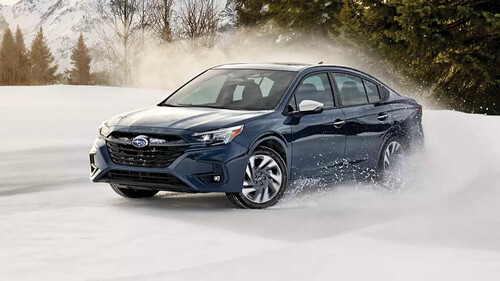
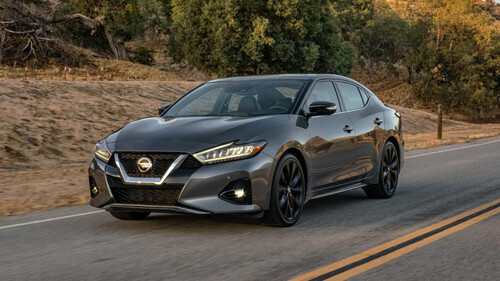
Autoblog and Yahoo may earn commission from links in this article.If you haven't struggled with posting a car on Facebook Marketplace or Craigslist, or hanging a "For Sale" sign on your car's rear window hoping to privately sell your car, consider yourself one of the lucky ones. For years, privately selling your car was one of the easiest ways to make more money when selling your old car. You could bring your old car to a dealership to sell it, but it was pretty much guaranteed that you'd get below the market value, since a dealership only cares about profit. Therefore, the only way to ensure you got the market value for your car (or maybe a little more) was to privately sell your car. CarvanaBut it comes with a lot of headaches. You have to take a lot of pictures, you have to write a clever description, and mention any mechanical needs or recent fixes to make buyers feel more confident. Then you have to deal with seemingly never-ending calls and texts from strangers. And don't get me started on the low-balling (I've privately sold a car several times, and hated it each time). Then companies like Carvana started cropping up to help change the way both selling a car online and privately selling a whole lot easier, without sacrificing profit. Let me break it down for you.The pros and cons of selling your car privatelyI know it sounded like I was badmouthing privately selling, but there are a few noteworthy benefits to privately selling. You have a lot more control, and if your car has more modifications or a lengthy service history, you can accurately spell all that out. Here are some other benefits to selling privately:AdvertisementAdvertisementYou set the price: This is one of the best things about privately selling. You get to decide what the price is, based on how much you think it's worth. For example, if I wanted to sell my 2006 Jeep Wrangler LJ Unlimited, I could list it for $19,000 due to the long list of modifications and the excellent condition of the engine and transmission and see if any other Jeep nerd would pay that price. I could lower it if I want to sell it quicker, or I can leave it at $19K and wait for the "right" buyer. Regardless, I get to decide how much it's worth.You control negotiations: Let's say someone came to buy my $19K Jeep LJ. They do the age-old trick of, "I have $18,500 in cash, would you take that price?" I can say no or yes. I have a car that they want. So, if I don't want to settle for a lower price, I don't have to. Or, if I want it out of the driveway, I can take the lower offer. Either way, it's up to me.You control who buys it: Sometimes you have to sell a car out of desperation for income, because you're moving, or because you can't afford to keep it anymore. For lots of folks, selling a car is an emotional decision (unless you hate the car, then that's different). In my hypothetical Jeep scenario, I'd be an emotional seller, so I'd want to make sure it goes to a buyer who I feel would take really good care of that car. If I felt like they were just going to strip the mods off of it and leave the rare Jeep chassis to rot on blocks, for example, I wouldn't sell it to them. I get to control who gets the keys.You control the seller's description: This is where selling a car starts to conjure up moral dilemmas. Every time I sold a car, I was honest about any mechanical needs or upgrades that helped justify the price, and helped trustworthy buyers feel better about reaching out to me. When I sold my first car, a 1999 Toyota Corolla LE, I was honest about a hole that rusted through the gas tank and that my lack of funding to fix it was my reason for selling an otherwise amazing car. Because I was honest, I sold the car quickly for the price I was asking. I was honest about no longer needing my Nissan Maxima because I bought my Subaru. You control how people see the situation.Depending on the car, demand can be high: This is related to number 1. I'll use my husband's 2002 Subaru WRX wagon as an example. Back in 2012, my husband paid $8,000 for his WRX, and it had 108,000 miles on the odometer. Taking a look at private sellers close to us selling their Bugeye WRXs, they're selling anywhere from $8,000 to $10,000, with more miles clocked and in worse condition. My husband modified his WRX, as one does, but he kept all of the stock parts. So, if he wanted to, he could put everything back to stock and technically sell it for more because a bone-stock WRX is rare.As you can see, most of the benefits from privately selling your car come from the fact that you have complete control of the situation. But there are a few issues that can come with being at the helm, like:Low-Ballers: I mentioned this before, but this is, hands down, the most annoying aspect of privately selling a car. You can list a car for $5,000, write "firm price, no low-ballers," and still get people texting or calling you asking if you'd accept a lower price. It's incredibly frustrating, especially when you put "PRICE IS FIRM" in every available text box, and they still ask. Then there's the risk of abuse: The reality is, people suck. And when you have something they want, they can get greedy. If you tell them they can't have what they want, sometimes people can get ugly. I've had people call me every female-specific slur in the book, insult my intelligence, or even threaten me because I turned down their insulting offer for a price reduction. Or the post wasn't taken down in time, and I informed them the car was sold, I've been verbally attacked, too. People can be creepy, too: As a woman, I've always made it a point to have someone with me when someone came by to buy a car that I was selling. The main reason is, well, I'm a fan of true crime documentaries, and I don't want to be the subject of Netflix's newest documentary about a woman who was trying to sell a car and ended up being chopped up into bits and dumped somewhere. When you let people onto your property to look at the car you're selling, you're putting yourself at risk. Big time.It can take a long time: It didn't take me a long time to sell my Toyota Corolla or my Nissan Maxima, but it did take me a long time to sell my 1986 Ford F-150. I was in college at the time, and I had to deal with an overwhelming amount of drama for months before I let my dad take over selling it. And, we ended up settling for a dramatically lower price just to end it.Sometimes you don't get the price you're asking for: Circling back to my Jeep example, just because I list it for $19,000 doesn't mean anyone will pay it. And while I have legitimately seen listings for LJs as high as $19,500, with a lift, tires, winch bumper, and a hard top, it doesn't mean the market will make room for it. For all we know, I wouldn't get a bite on the listing until I lowered it as much as $10,000.The pros and cons of selling your car through an online dealershipThe user interface on a mobile of getting an online offer through CarvanaCarvanaIf you don't know how sites like TrueCar, Driveway, Cars.com, CarMax, AutoNation, or Carvana work, they handle buying and selling your car online. The only time you might see an employee is during an inspection or signing paperwork. Here are some other benefits to going through online dealerships:AdvertisementAdvertisementA faster, more streamlined process: Online dealerships, like Carvana, have a simple goal: to buy your car and then resell it quickly. Because they function professionally, the process is much quicker. Because buying, selling, and even financing are all online, you don't have to talk to people (unless you want to, of course) on the phone or face-to-face. No strangers at your door or having access to your private phone number, no low-balling, none of that. All you have to do is enter your vehicle's VIN and answer some conditional questions (about dents, mileage, scratches, mechanic history, whether or not it starts and runs, things like that) through their online system, and wait. Either someone comes out to look at your car, or you take it to their site. They verify the condition, then write you a check. That's it. No research on your part at all.No low-balling: Carvana can't low-ball the price of your car because they don't use humans to assign value. Instead, Carvana uses a proprietary artificial intelligence pricing algorithm to instantly evaluate the value of a used car. Instead of relying on a human appraiser, their system cross-references your car's details against huge amounts of real-time market data to generate an automated offer. So, for my husband's WRX, if the market value average, for both dealerships and private sellers, is about $8,000, you'll get an offer for $8,000. That same AI system cross-checks the VIN for any previously reported accidents, repairs, and other information to assign value, too.No abuse or scams: This is a simple reason, but it's one of the more important ones. Carvana is a business with one goal: To buy your car for a fair price and then resell it for a fair price. No ulterior motives, no scamming, and no verbal abuse if you don't agree to their offer. They simply move on to the next customer.In fact, depending on what you're selling, you can get more: The algorithm monitors search patterns and clicks on Carvana's platform. If thousands of users are actively looking for your exact car model and trim level, your offer will go up. Though the opposite is true, too. If your model or trim level isn't as popular, you won't get as high an offer. But it's guaranteed you'll always get the market price. The AI algorithm will make sure of it.They pick your vehicle for you: If you accept the offer, a driver will come to collect your car. Easy peasy.CarvanaAs far as cons go, there aren't any, really. They handle all the difficult things that are the most annoying things about selling privately: the market research, the inspections and the ownership verification, all with their resources. It goes quickly, you're guaranteed the market value, and then when the inspection turns out clean, you either have the check written or you're paid via direct deposit. After that, the resale of your old car is on them. You're dealing with a professional business, not a random private buyer.If you're looking to sell, consider selling onlineI've never bought or sold a car with Carvana, but I do know someone who did. Two years ago, my best friend bought her 2017 Subaru Crosstrek Sport from Carvana and used her old Honda Insight Hybrid as a trade-in, and she remarked about how easy and quick the entire process was. She was offered $10,000 for her Honda and was able to deduct that from the price of her Crosstrek, all online. Carvana has flexible in-house financing options, too, to help keep everything in one place. To this day, she wholeheartedly recommends going through their site. She even considered trading her Sport in for a Wilderness model, and even doing that would be easy to do online.CarvanaIf you're ready to sell your old car, truck, or SUV, give it a try using our link. AdvertisementAdvertisementThis story was originally published by Autoblog on Jul 7, 2026, where it first appeared in the Car Buying section. Add Autoblog as a Preferred Source by clicking here.