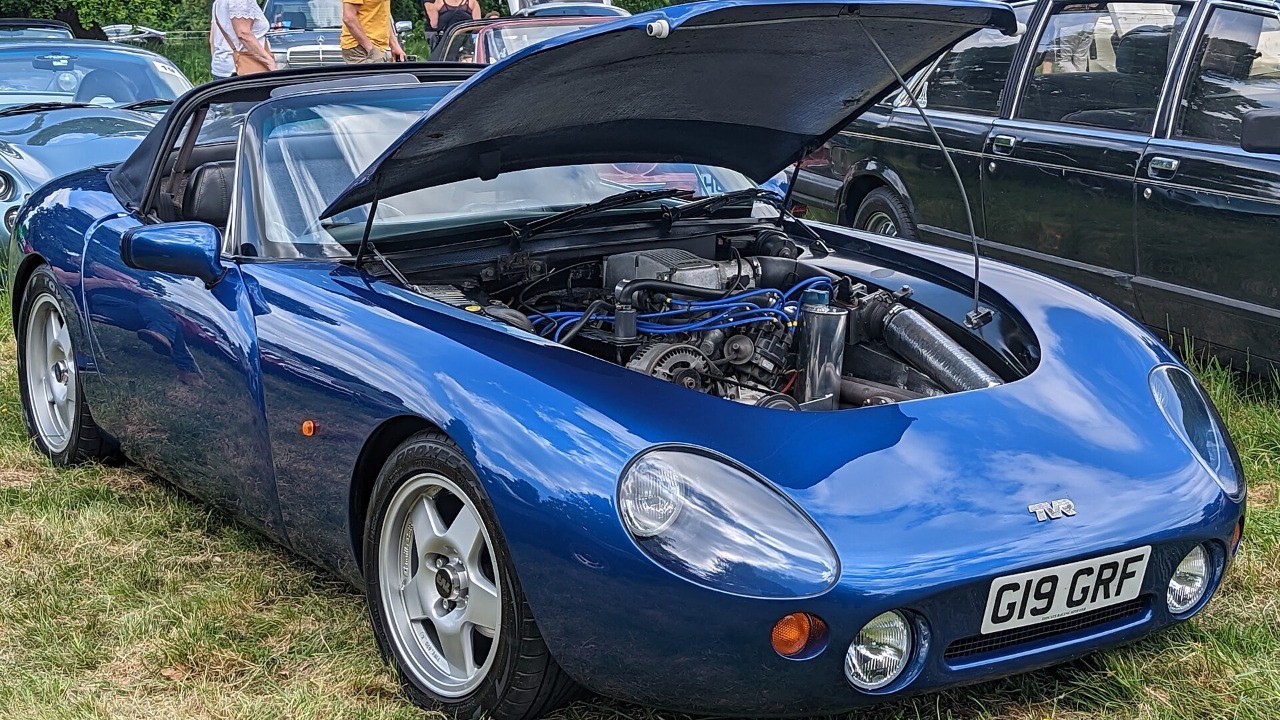
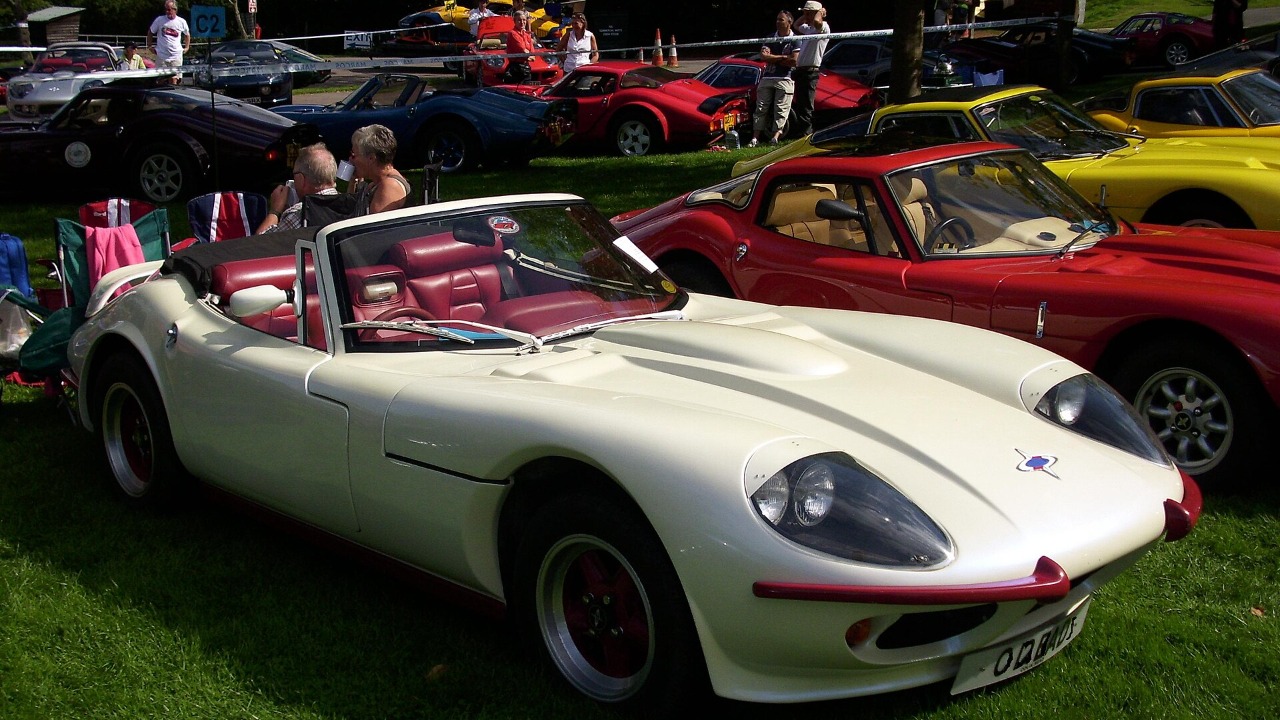
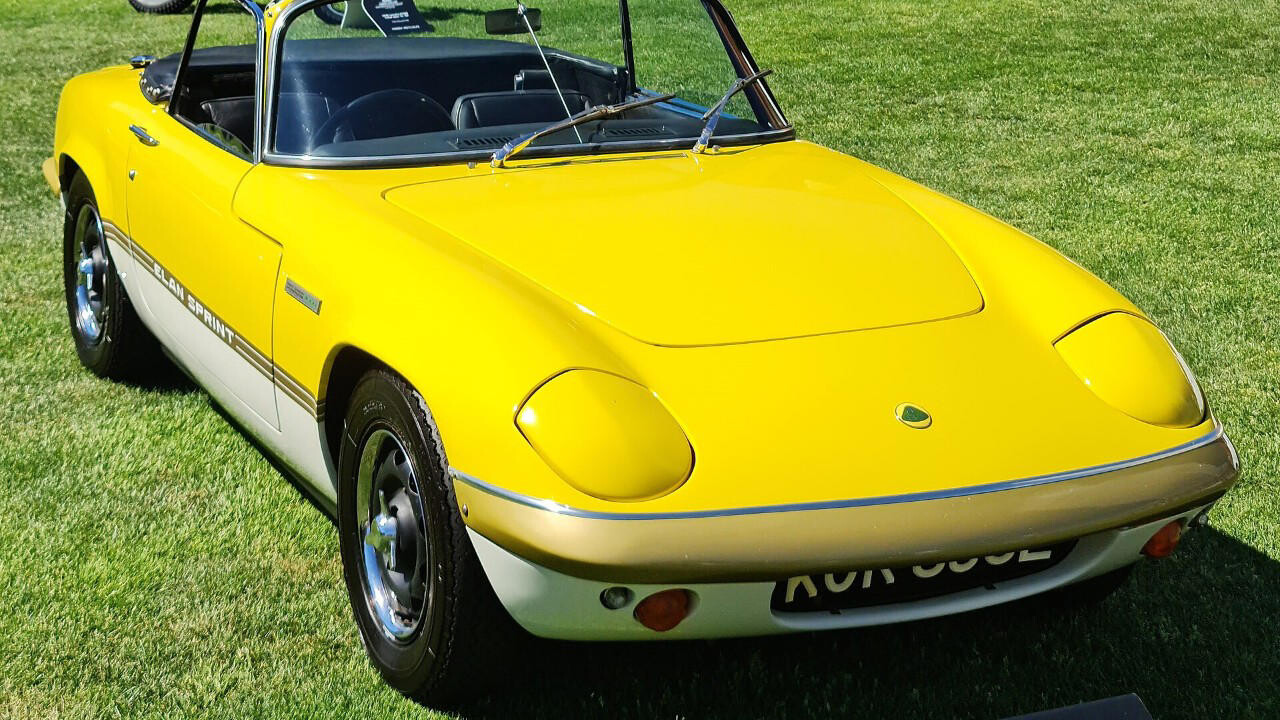
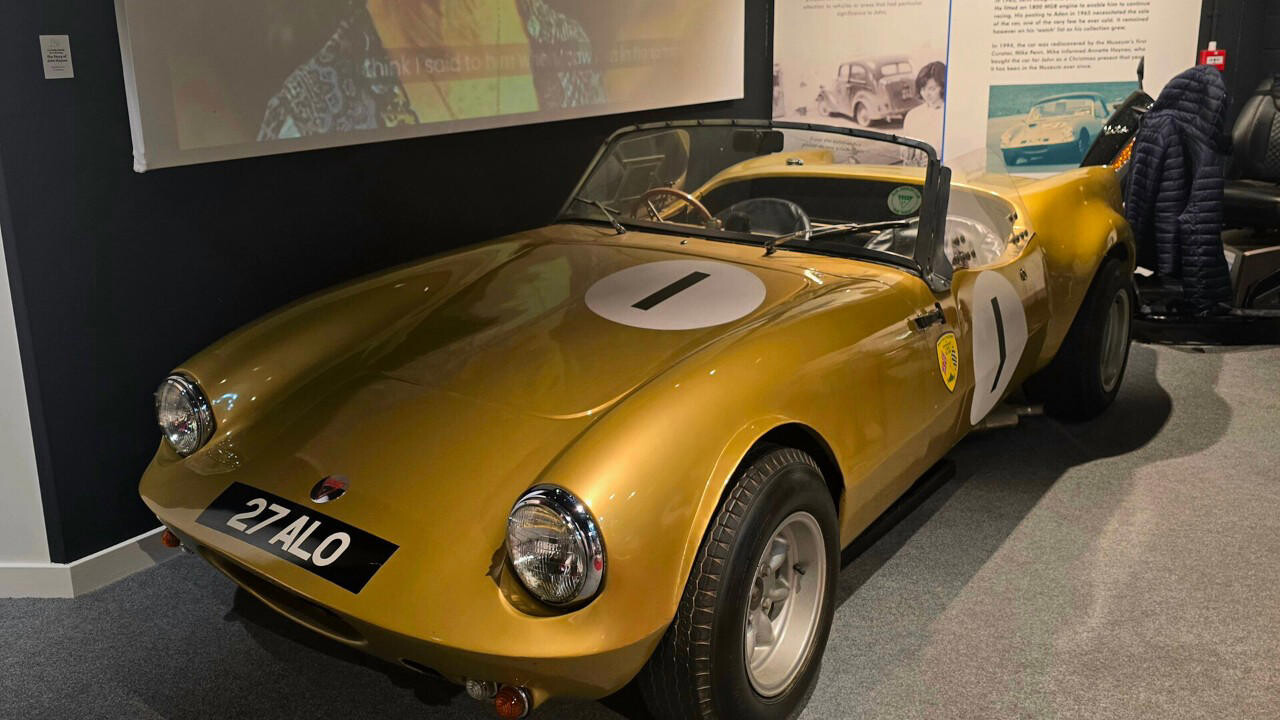
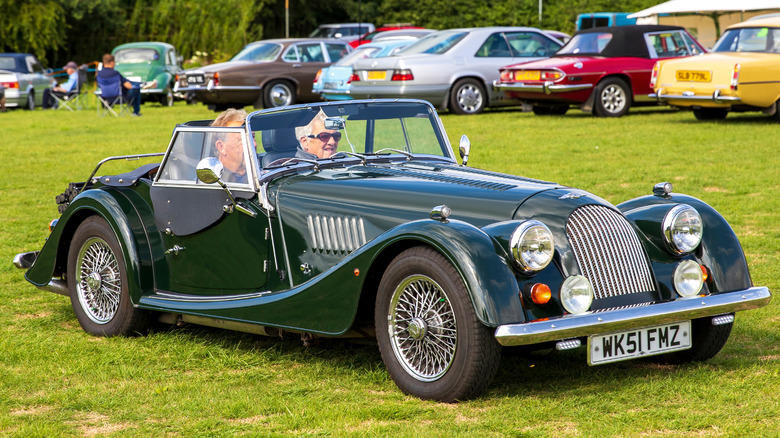
The Rover V8 began life in America. Buick’s light aluminum 215-cubic-inch V8 arrived for 1961 with a claimed 150 horsepower, yet GM dropped it after three years. Rover then bought the rights, and the little V8 went on to power British cars for decades. These are our picks for the Rover V8 cars that felt a little too strong for their own good. The verdicts are our take. However, the outputs, years and build counts come from the references at the end. 1. 1982 Rover SD1 Vitesse Group A rally car The Vitesse arrived in 1982 as the hottest SD1. Fuel injection lifted the V8 to about 190bhp, and that made a big family hatchback very fast for its day. Austin Rover also took the car racing, and Andy Rouse won the 1983 British Saloon Car Championship in one. The car pictured is a Group A competition machine. In our view, a five-door executive car that wins titles should have come with a warning label. 2. TVR 350i TVR started offering the Rover V8 in 1981 as an alternative to Ford’s V6. Then the 350i arrived in 1983, rated at 200 horsepower and built on the 280i wedge. That wedge later grew into the 3.9-liter 390SE and the 450 SEAC, which reached 325bhp. Still, the 350i was where TVR’s V8 story really took off. We think TVR handed this much shove to private buyers with very little hesitation. 3. 1968 Rover P5B The P5B was the first Rover to use the V8, launched in September 1967 with a claimed 140bhp. Rover switched to sand-cast blocks with pressed-in liners for its version. As a result, the big saloon’s 0-60 mph time fell from around 16 seconds to about 12. Production ran until 1973. A stately car with a dignified grille simply had no business moving that briskly, and that is exactly why we love it. 4. 1977 Rover P6 3500S The P6 took the V8 in 1968, but buyers could only get it with an automatic. That changed in 1971, when the 3500S brought a four-speed manual. Its V8 made 152bhp at 5,000 rpm and 203 lb-ft at 2,750 rpm. By comparison, the four-cylinder 1967 Rover 2000 TC took a different path to performance. For us, a manual V8 in a sensible sedan is a recipe the regulators somehow missed. 5. 1986 Rover 3500 SD1 Vanden Plas The SD1 3500 launched in 1976 with 155bhp at 5,250 rpm and nearly 200 lb-ft of torque. It won European Car of the Year for 1977. In fact, more SD1s left the line with the V8 than with any other engine. This Vanden Plas car comes from 1986, the SD1’s last year before the Rover 800 replaced it. We’d call it a luxury car with a getaway driver’s engine. 6. 1973 Leyland P76 Super V8 Australia got its own take on the Rover V8. Leyland stretched it to 4.4 liters for the P76, and range-topping cars made 194 horsepower. Sadly, build-quality trouble, strikes and the fuel crisis cut sales to half of what Leyland expected. The car was gone within a few short years. Still, a 4.4-liter aluminum V8 in a mid-size family sedan was a bold move, and we think it deserved a better fate. 7. 1980 Triumph TR8 The TR8 was the official V8 version of the TR7, and it used Rover’s engine rather than the Triumph V8 from the Stag. Early cars were coupes, while later ones were convertibles. Triumph built 2,497 in all, and only 14 of those were right-hand drive. So most of them went abroad. A wedge-shaped roadster with this much torque felt like something the rule makers should have looked at twice. 8. 1982 Land Rover Stage 1 V8 Land Rover put the V8 into its utility vehicle in 1979 to fight Japanese rivals and win buyers in the Middle East. The “Stage 1” name had nothing to do with engine tuning, though. Instead, it came from the company’s own turnaround plan. Even so, a V8 in a working 4×4 that already climbed almost anything felt like overkill to us. We mean that as praise. 9. 2003 Morgan Plus 8 Morgan dropped the Rover V8 into a modified Plus 4 chassis in 1968. The first cars had 160bhp and ran 0-60 mph in 6.7 seconds. The Plus 8 then lasted 36 years before production stopped in 2004, when V8 supply faltered. Later, Morgan revived the name with a BMW V8. This 2003 car is one of the last Rover-engined examples. A traditional-looking roadster with that much punch is, in our opinion, gloriously unreasonable. 10. 1992 TVR Griffith 4.2 The Griffith arrived in 1991 with a 4.0-liter V8 rated at around 240bhp, good for more than 150 mph. Then the Rover V8 grew to 4.2 liters in 1992, and the Griffith 4.2 put that size to work. At the top of the range, a 5.0-liter Griffith reached about 340bhp and nearly 170 mph. That is a lot of speed for a small British roadster. We’d say that alone makes the case for a restriction. 11. TVR Chimaera The Chimaera came along in 1992 as the softer sibling to the Griffith. It offered more cabin space and a bigger trunk. Entry cars still used a 240bhp 4.0-liter V8, and the range topped out with a 5.0-liter. As a result, it became a big success for TVR. Today, the Chimaera is the most affordable seriously quick TVR, which is either great news or a dangerous idea. We lean toward great news. 12. Marcos Mantula Spyder Marcos started in 1959, went bust in 1972 and was back in business by 1981. Two years later, the Mantula became its first V8 model, with styling that still looked like the 1960s. Early cars were 3.5-liter coupes. Later, Marcos added a 3.9-liter V8 and this open Spyder. The company kept using the Rover V8 for two decades. In our view, a tiny low-slung roadster with a V8 up front was always a little too much car. Sources: Classic & Sports Car, Classics World and Autocar’s history of the Rover V8. Also on Fast Lane Only: how the 1970 Range Rover changed off-road vehicles.

 Liked by Noah King, Kayla Scott
 Liked by Noah King, Kayla Scott