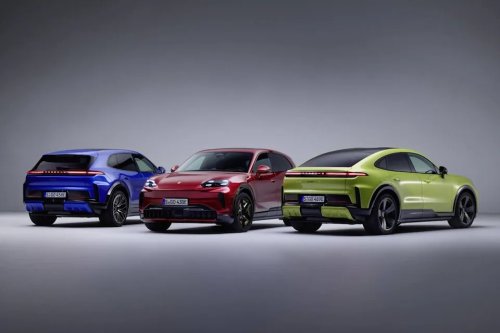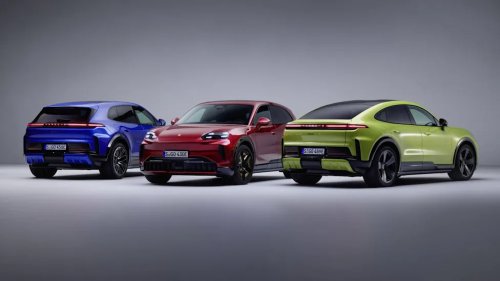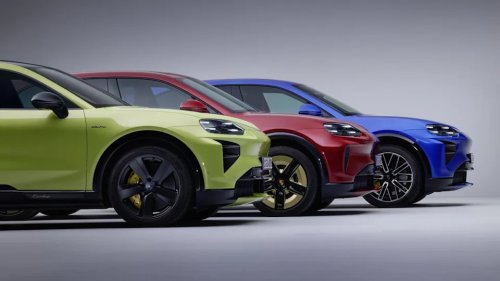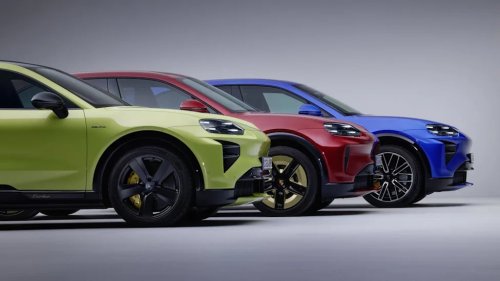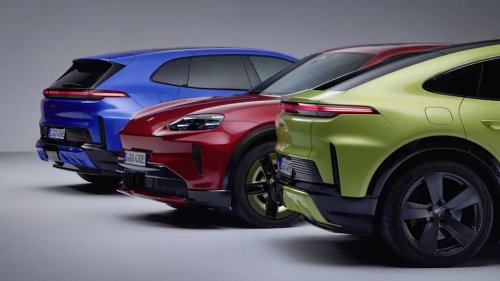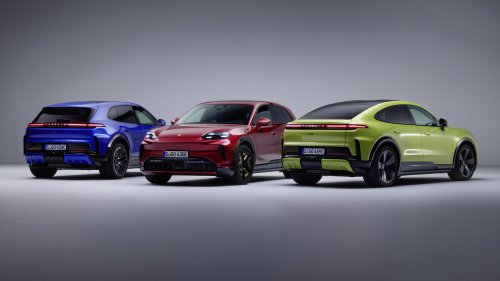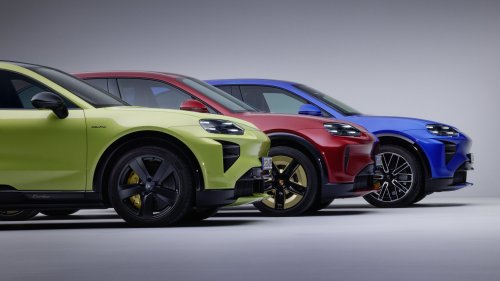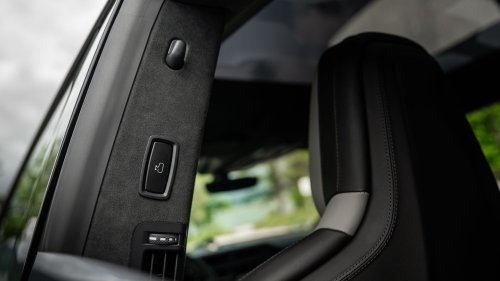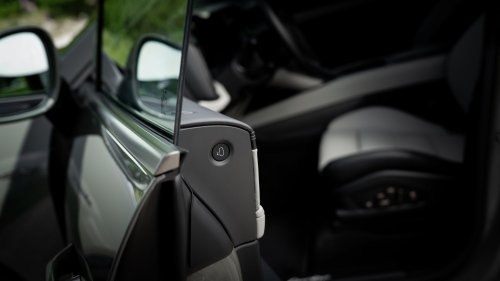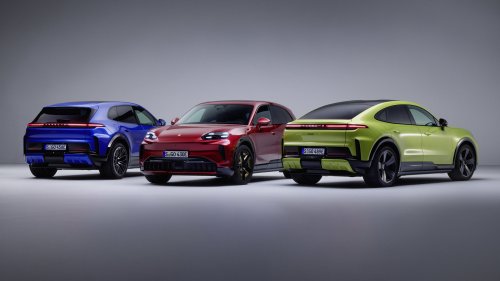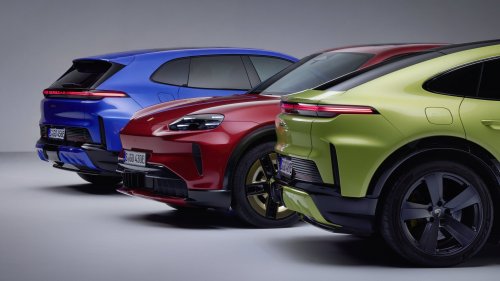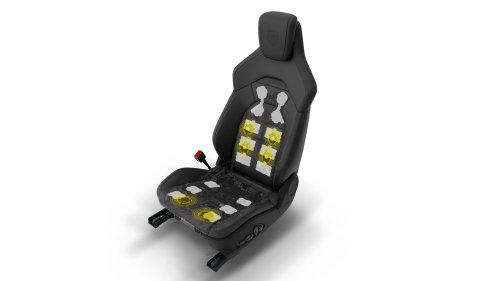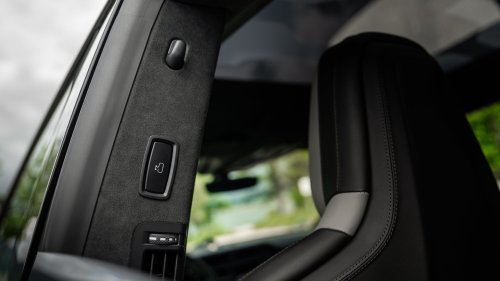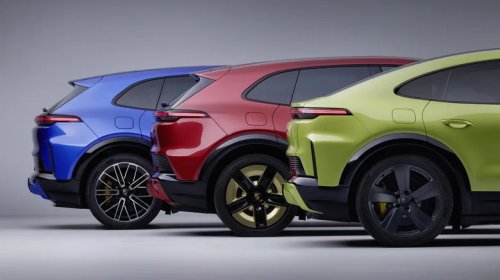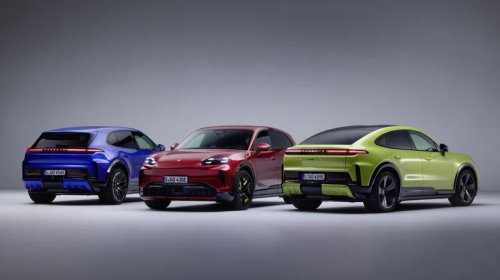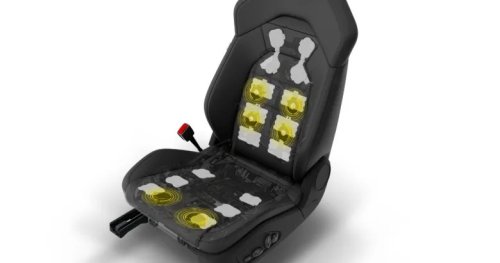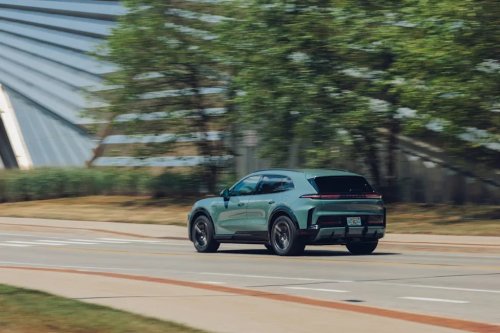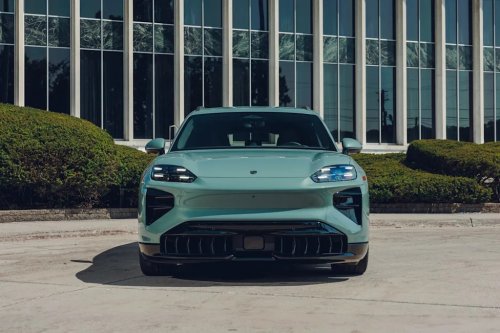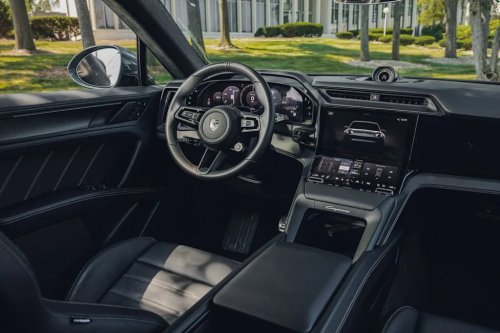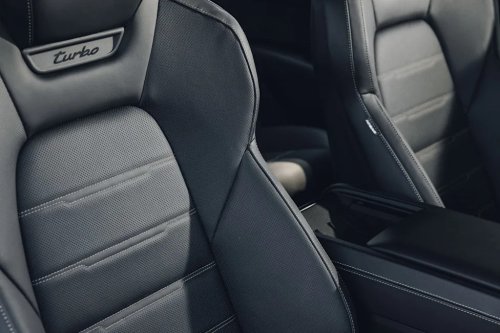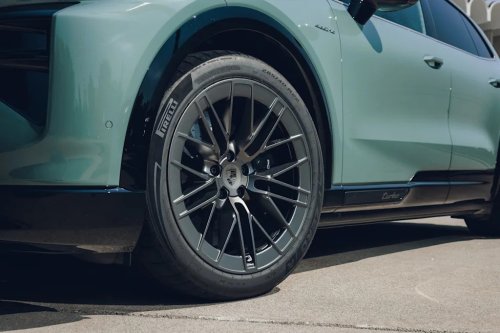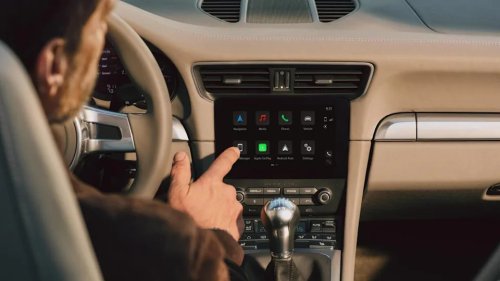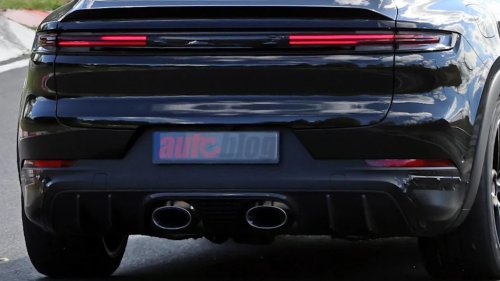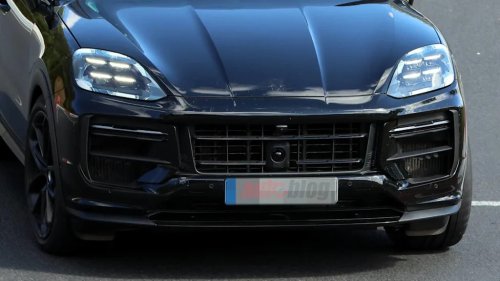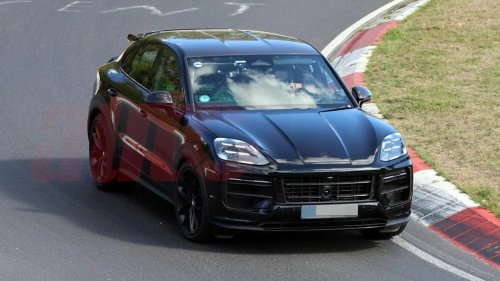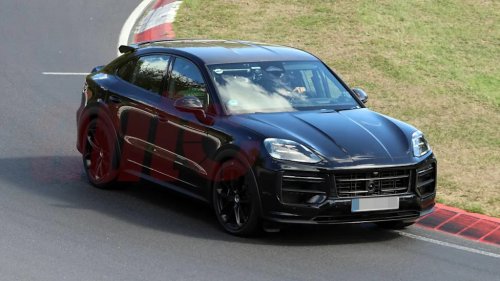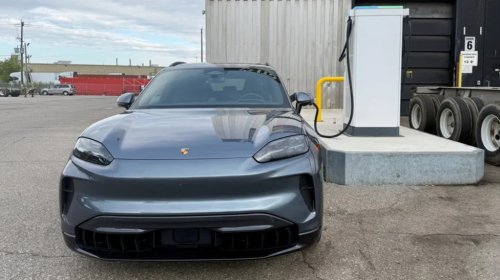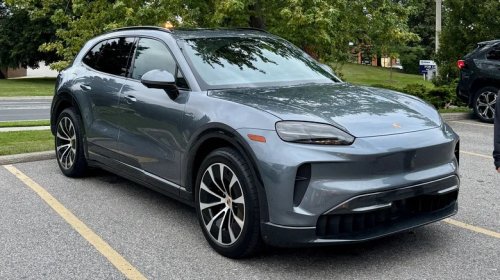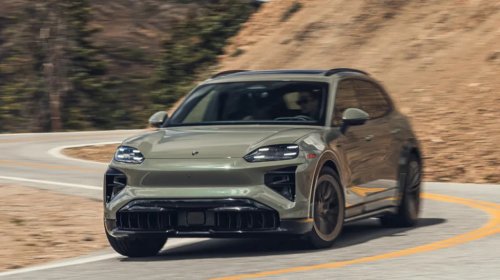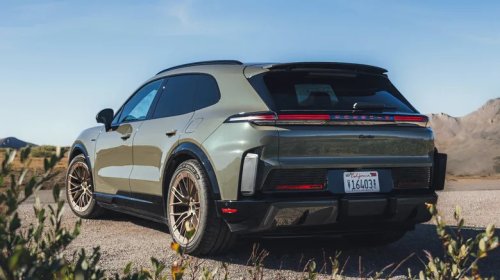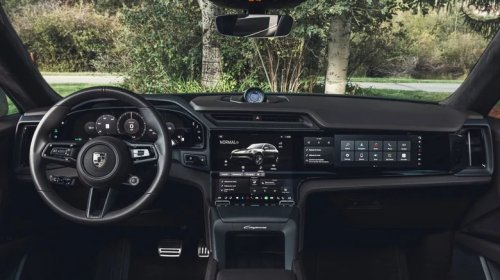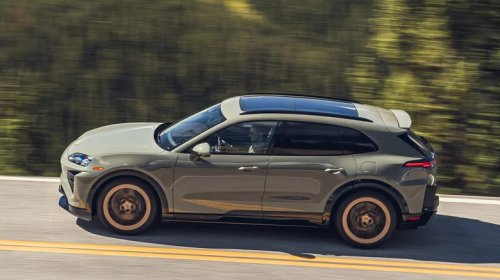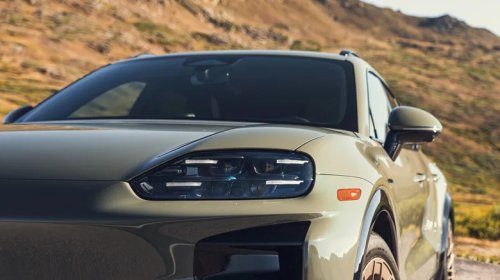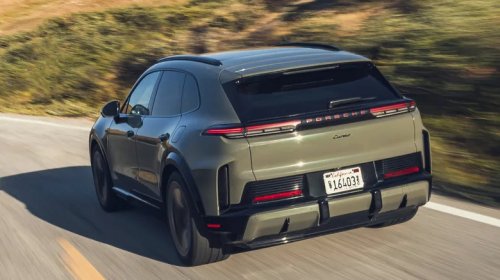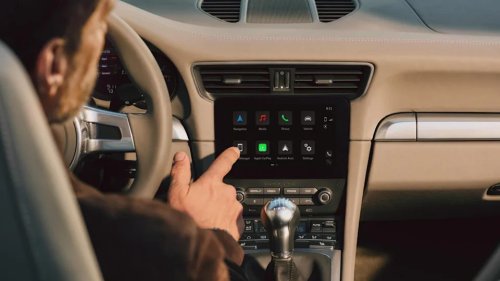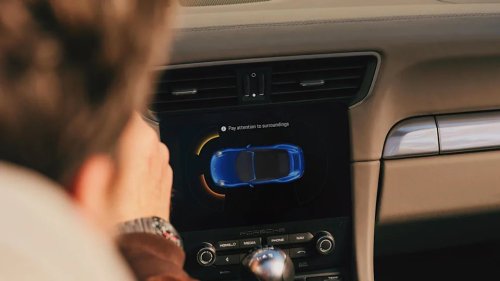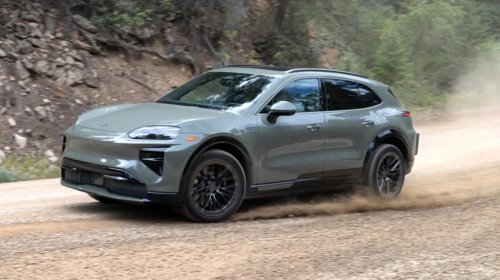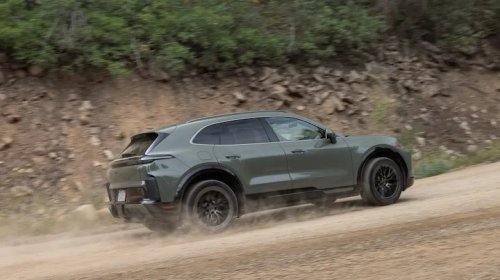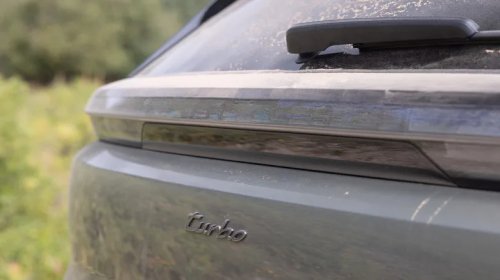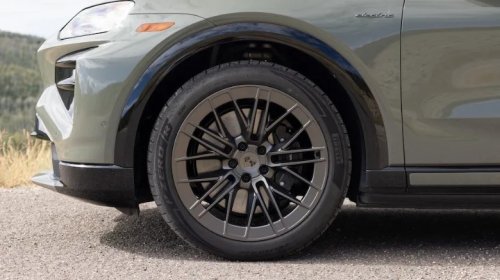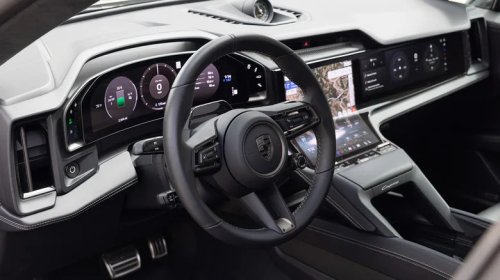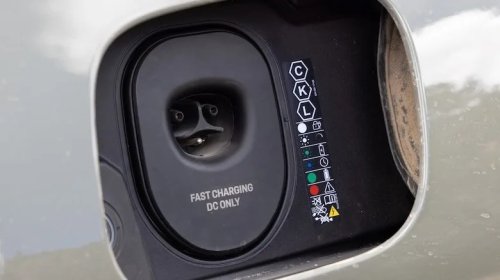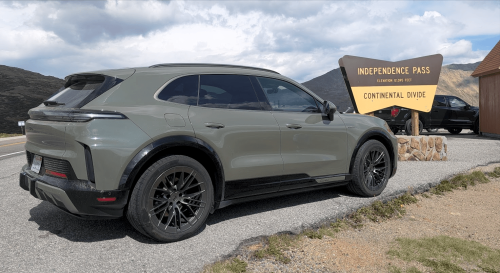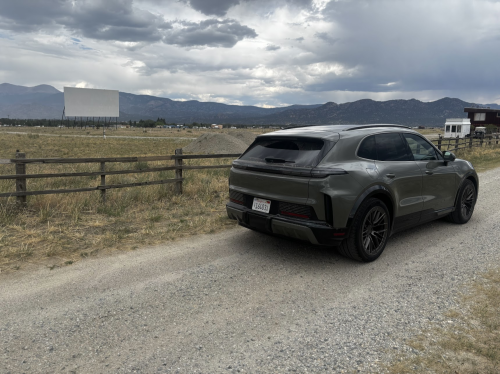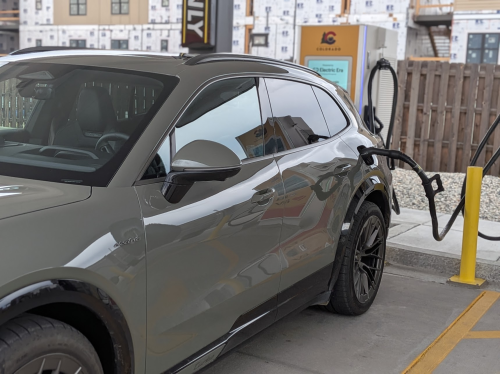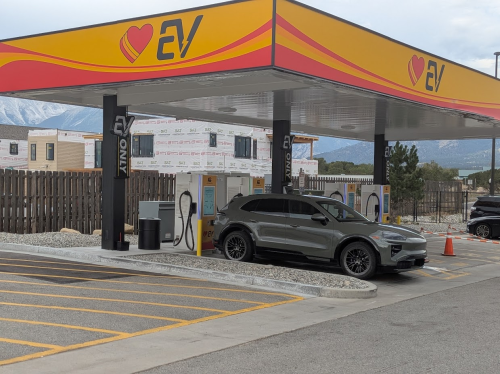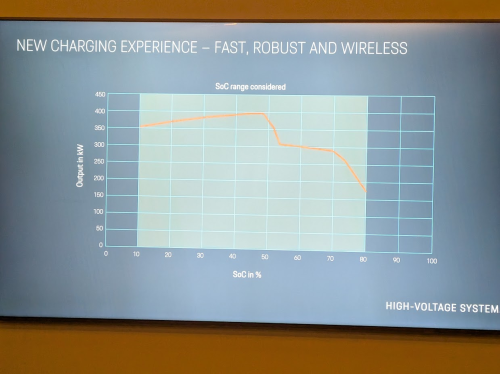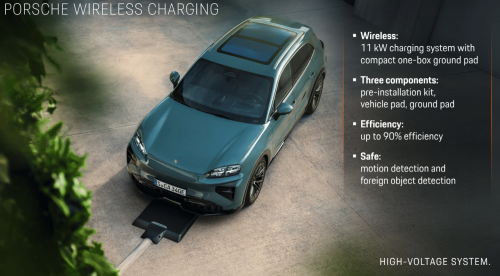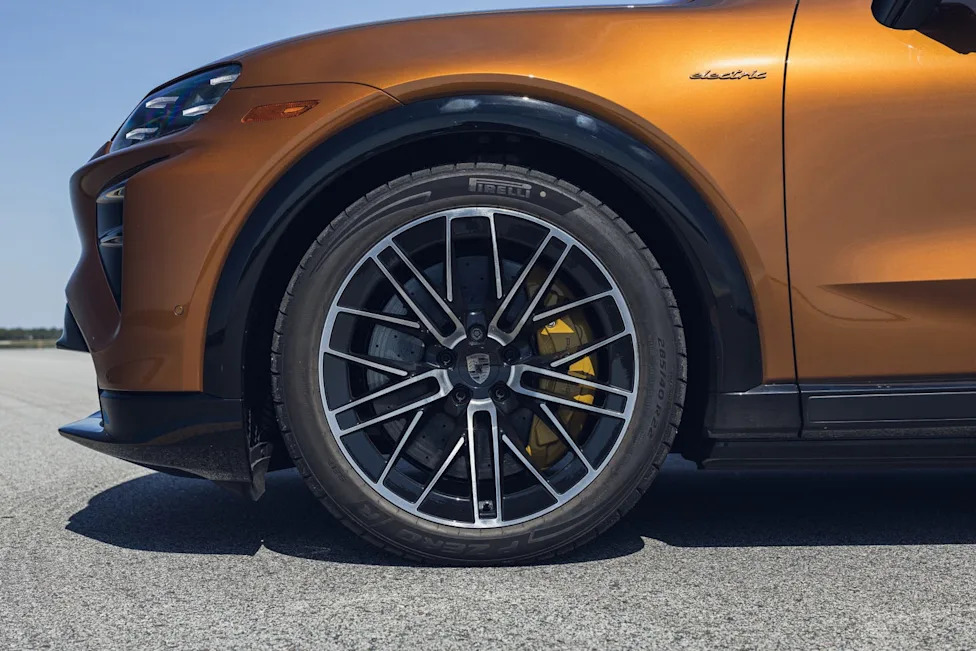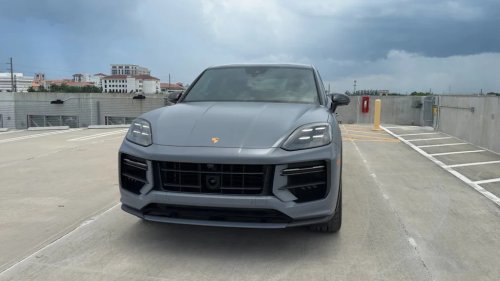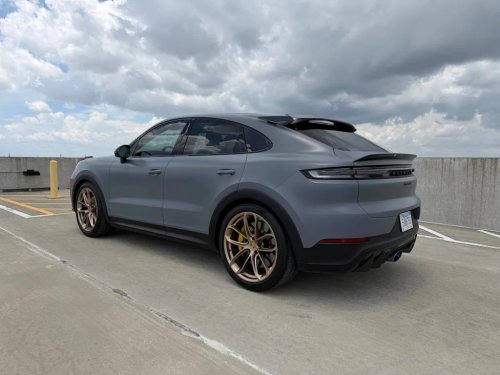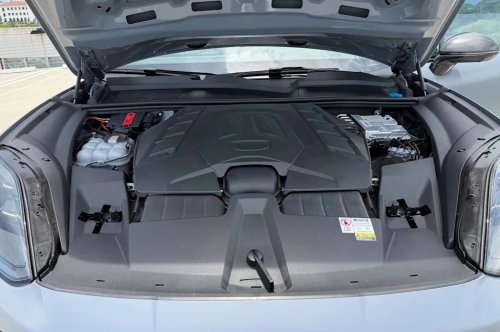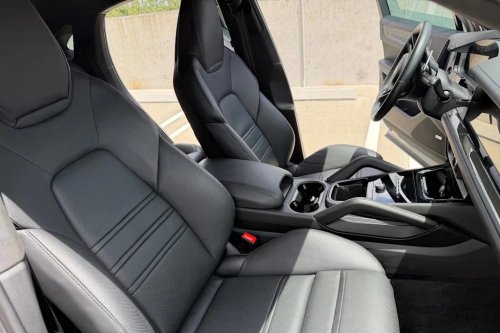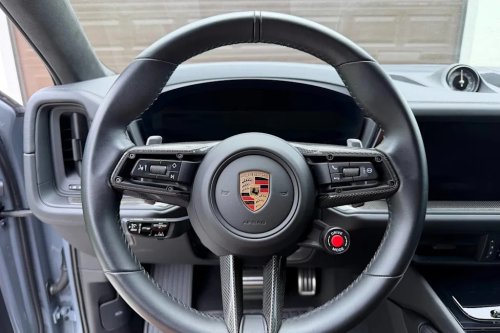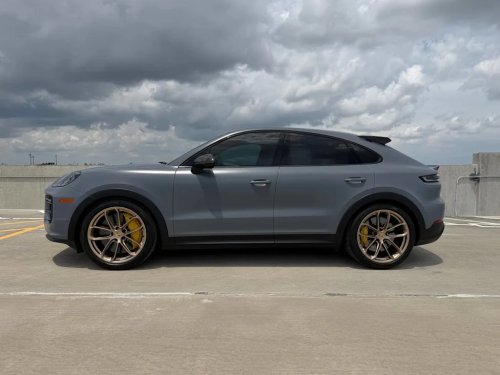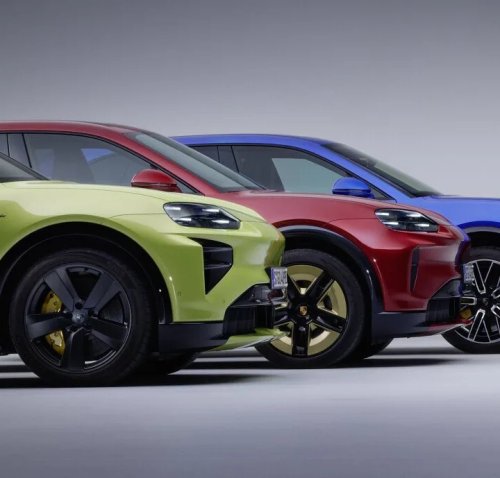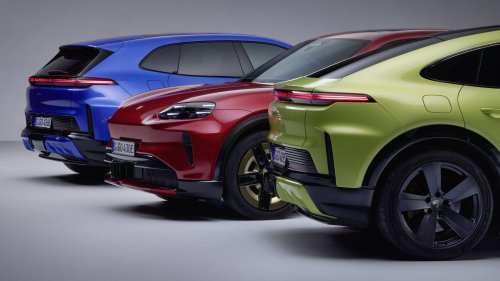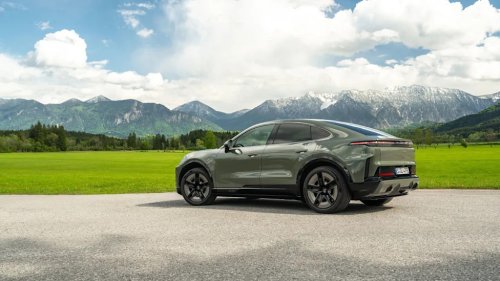
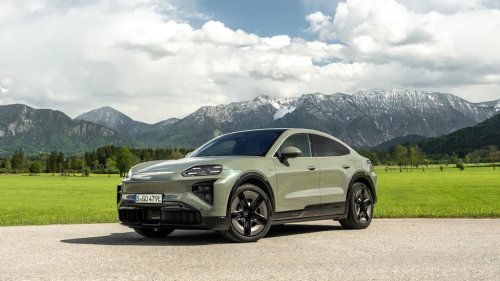
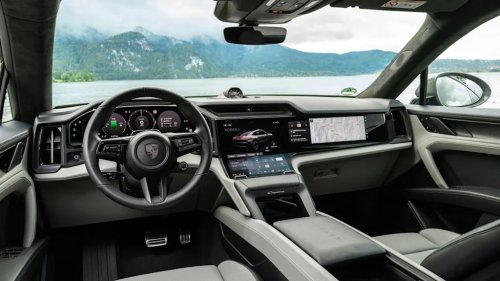
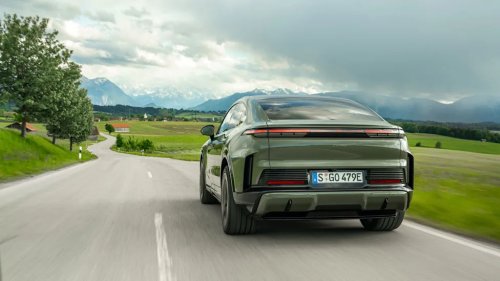
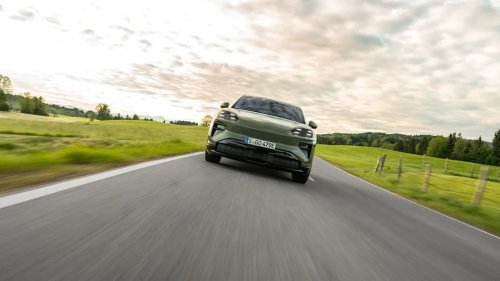
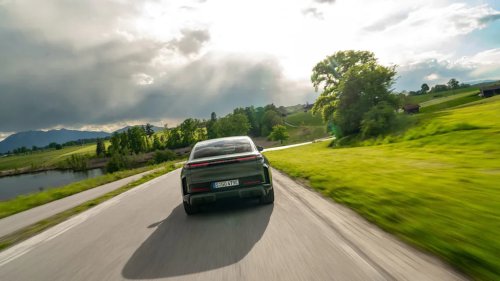
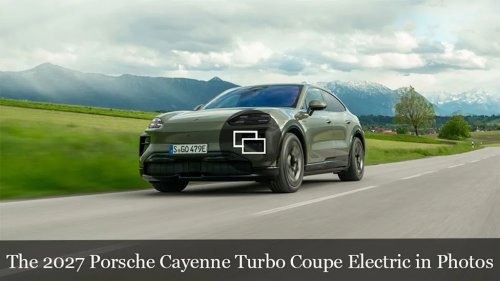



















Porsche has struggled to bring an all-electric sports car to fruition, with battery-powered versions of its Boxster and Cayman seemingly stuck in a holding pattern. But on the S.U.V. front, it's been no problem. In fact, the 2027 Cayenne Turbo Coupe Electric we recently drove becomes among the most powerful Porsches—street models or racers—in the marque's 78-year-history. Let the 911 diehards sulk. Or better, let them experience what 1,139 hp and a torrential 1,106 ft lbs of torque feel like in a five-passenger, all-weather S.U.V.—one that adopts a familiar arsenal of Porsche tech, such as rear-axle steering and the superlative Active Ride suspension, and then adds more. An ingenious wireless inductive charging system let us replenish the Porsche in Bavaria without leaving the driver seat and reaching for an awkward cord and plug. A sophisticated 800-volt architecture allows a blazing 400-kilowatt charging rate, matching the Lucid Gravity's, for a refill from 10 percent to 80 percent in less than 16 minutes. And, as any $6-a-gallon pumper in California might envy at this geopolitical moment, the Cayenne combines generous electric driving range with zero tailpipe emissions. More from Robb ReportAdvertisementAdvertisementPorsche's Taycan and More Models Could Be on the Chopping Block: ReportTaste Test: Bulleit's New 20-Year-Old Rye Whiskey Is Not for the Faint of HeartAlpine's All-Electric A110 Just Made Its Debut at the Goodwood Festival of SpeedThe 2027 Porsche Cayenne Turbo Coupe Electric.What's New for 2027The calendar says 2026, but beginning in late summer, the only all-new, fourth-generation Cayenne you'll be able to buy is this 2027 electric model. It's available in a choice of a standard S.U.V. body style or the fastback Coupe we tested. Porsche isn't expected to roll out a redesigned, fourth-gen gasoline Cayenne until 2028 at the earliest, which will replace the current model that debuted in 2019 and received a facelift for 2024. Porsche reiterates plans to keep selling pure internal-combustion and hybrid Cayennes "up to 2030 and beyond" for its global customers, alongside these electric vehicles. DesignAmong gasoline Cayennes, Porsche says 40 percent of U.S. customers choose the slope-roofed Coupe version over a standard model. Here, both the Cayenne Electric and Cayenne Coupe Electric adopt a standalone electric platform with a nearly five-inch longer wheelbase and a radically reimagined interior. Not a single body panel is shared with internal-combustion Cayennes, and near-zero components as well, aside from a shapely GT steering wheel.Once again, the fastback Coupe becomes the more-fashionable choice, while trading nearly 20 percent of the standard model's rear cargo space and a touch of rear headroom. Now lower by nearly an inch, the Coupe's roof helps deliver an impressively slippery 0.23 coefficient of drag, which affords about 11 additional miles of driving range versus its square-backed sibling. Active cooling flaps adorn the shapely nose, and there's a jaunty active decklid spoiler. On the Turbo, a pair of active "aeroblades" emerge from the rear body at speeds above 34 mph. Not a single body panel is shared with internal-combustion versions of the Cayenne.For the first-time Porsche customers that the marque expects this EV to attract, a generational leap in cockpit tech and infotainment may rank among the Cayenne's most winning features. A new digital driver interface—dramatic, yet not overwhelming—centers on a vertically oriented, 14.25-inch OLED screen that curls away from the dashboard. The console's leather hand rest is a subtle-yet-significant advance, making it a breeze to operate the screen while in motion.AdvertisementAdvertisementIn another edge over many EVs, analog switches manage some key controls, including a volume knob. An optional passenger screen brings a comprehensive range of functions, topping the gimmicky, limited shotgun screens from Ferrari and others. Passengers can watch videos on the road, the view digitally shielded from the driver. Screen-based vent controls are one EV trend Porsche might well have skipped. My test Turbo was ordered extra-spicy, including Dolomite Silver paint; 22-inch, red-painted "Satin Pyro" wheels; a Bordeaux-red leather interior, and "Porsche" and "Turbo" scripts tracing black doorsills. The cockpit tech and infotainment may rank among this Cayenne's most winning features.Power Train and Other HardwareEvery electric Cayenne integrates dual electric motors for standard AWD. For the range-topping Turbo Coupe Electric, those motors churn out 845 hp in normal operation. Launch-control starts summon an improbable 1,139 hp, toppling previous Porsche kings such as the hybrid 918 Spyder or the recent Taycan GT Turbo. For Turbo and S models, a robust rear electric motor traces directly to Porsche's championship-winning Formula E racers. Non-conductive cooling oil flows directly through internal copper windings that carry live electricity, versus the external liquid jackets of every current EV. That affords regenerative braking at a remarkable 600-kilowatt rate, without overcooking components. An air-spring suspension is standard, with options including rear-axle steering and a torque-vectoring rear axle. Also optional is the near-magical Active Ride suspension, which combines hydraulic dampers and electric motors to control unwanted body motions to an astounding degree. Selecting Comfort mode seemingly isolates the cabin entirely, making the Porsche feel like it's hovering over the road surface with hardly any sensation of body roll in corners. In sportier modes, each wheel can counteract handling forces with up to 2,250 pounds of resisting force. For the Turbo and S variants of the all-electric Cayenne, a robust rear electric motor traces directly to Porsche's championship-winning Formula E racers.PerformanceOn a memorable run from Munich into the foothills of the Alps, the Cayenne Turbo Coupe Electric rewrote the rules for what an S.U.V. is supposed to do. Those launch-controlled starts urge the Coupe to 60 mph in a Porsche-quoted 2.4 seconds. It felt closer to 2.2 seconds—faster than several supercars. The brain-squeezing rush of those starts is nearly indescribable. As improbable, this Teutonic flying saucer can hit 124 mph in 7.4 seconds, and dispatch a quarter-mile sprint in 9.9 seconds. AdvertisementAdvertisementOn the Autobahn, the Cayenne effortlessly stormed to its 162 mph top speed, feeling granite-solid and maintaining an air of serenity inside. Drivers can dial in a digitized soundtrack that feels inspired by old-school V-8s, or waft in whispery silence, though with more tire roar than in some luxury EVs. While heading into the lush alpine hills circling Germany's lovely inland lakes, the Cayenne demonstrated agile steering and corner-carving talents that, again, defied all expectations for a nearly 6,000-pound S.U.V. At any moment, an addictive squeeze of the push-to-pass button on the steering wheel delivers another 173 hp hit of electric boost, available in giddy 10-second bursts. Porsche claims the Cayenne Turbo Coupe Electric covers zero to 60 mph in 2.4 seconds on its way to a top speed of 162 mph.Porsche continues to resist offering the one-pedal regenerative braking that's a staple of many EVs, preferring its models to coast like traditional cars when you lift off throttle. The upside is the regenerative brake pedal that Porsche says can handle 97 percent of all stops in everyday driving. Only a deeper dive into the pedal travel engages the physical brakes, with a truly invisible transition between the regenerative and friction stoppers. Once activated, those brakes haul down this Cayenne with monstrous force, boosted via optional ceramic-composite brakes. As for the model's range, the EPA has not offered estimates, but we expect electric Cayennes to easily surpass 340 miles in real-world driving. Is It Worth It? The Cayenne Turbo Coupe Electric is a tour de force of tech and plug-in performance. For our test model, a $170,350 base price rose to $233,000 after options. The shopping list included ceramic-composite brakes for $10,900, the Active Ride suspension for $7,700, an augmented-reality head-up display for $2,910, and rear-axle steering at a relative-bargain of $1,350. Porsche might point to a Lamborghini Urus SE, a plug-in hybrid with 789 hp, 700 ft lbs of torque, and an interior that, in my opinion, screams "mainstream Audi." The Porsche reaches 60 mph a full second quicker than the hyper-aggressive Urus. That Lamborghini S.U.V. starts from $262,000, or closer to $340,000 after options, more than $100,000 beyond this electric Cayenne.This zero-emissions Cayenne is a tour de force of tech and plug-in performance.Buyers can choose a standard Cayenne Coupe Electric from $116,150, with 402 hp, 435 launch-controlled horses, and a perfectly respectable 4.5-second run to 60 mph. A Cayenne S Coupe Electric treads a delightful middle ground: 536 hp, 657 horses at launch, and a 3.7-second sprint to 60 mph. That Cayenne S starts from $133,550, and rises to just over $200,000 with options. They include a $17,390 Lightweight Package that includes a weight savings of 40 pounds, a carbon-fiber roof, and fabric seat inserts in the charming "pepita" pattern that traces to classic Porsches from the 1960s. It's a rare touch of nostalgia in a Porsche whose gaze is fixed squarely on the future. SpecificationsVehicle TypeAdvertisementAdvertisementAll-electric midsize S.U.V., standard AWDIn Production Since2026 for the 2027 model yearPower TrainDual permanent-magnet synchronous AC motorsOutput: 845 hp, rising to 1,139 hp and 1,106 ft lbs of torque under launch controlPerformanceZero to 60 mph: 2.4 secondsTop Speed: 162 mphBase price: $170,350As Tested$233,000Click here for more photos of the 2027 Porsche Cayenne Turbo Coupe Electric.Driving the 2027 Porsche Cayenne Turbo Coupe Electric.Best of Robb ReportThe 2024 Chevy C8 Corvette: Everything We Know About the Powerful Mid-Engine BeastThe World's Best Superyacht ShipyardsThe ABCs of Chartering a YachtSign up for RobbReports's Newsletter. For the latest news, follow us on Facebook, Twitter, and Instagram.Click here to read the full article.