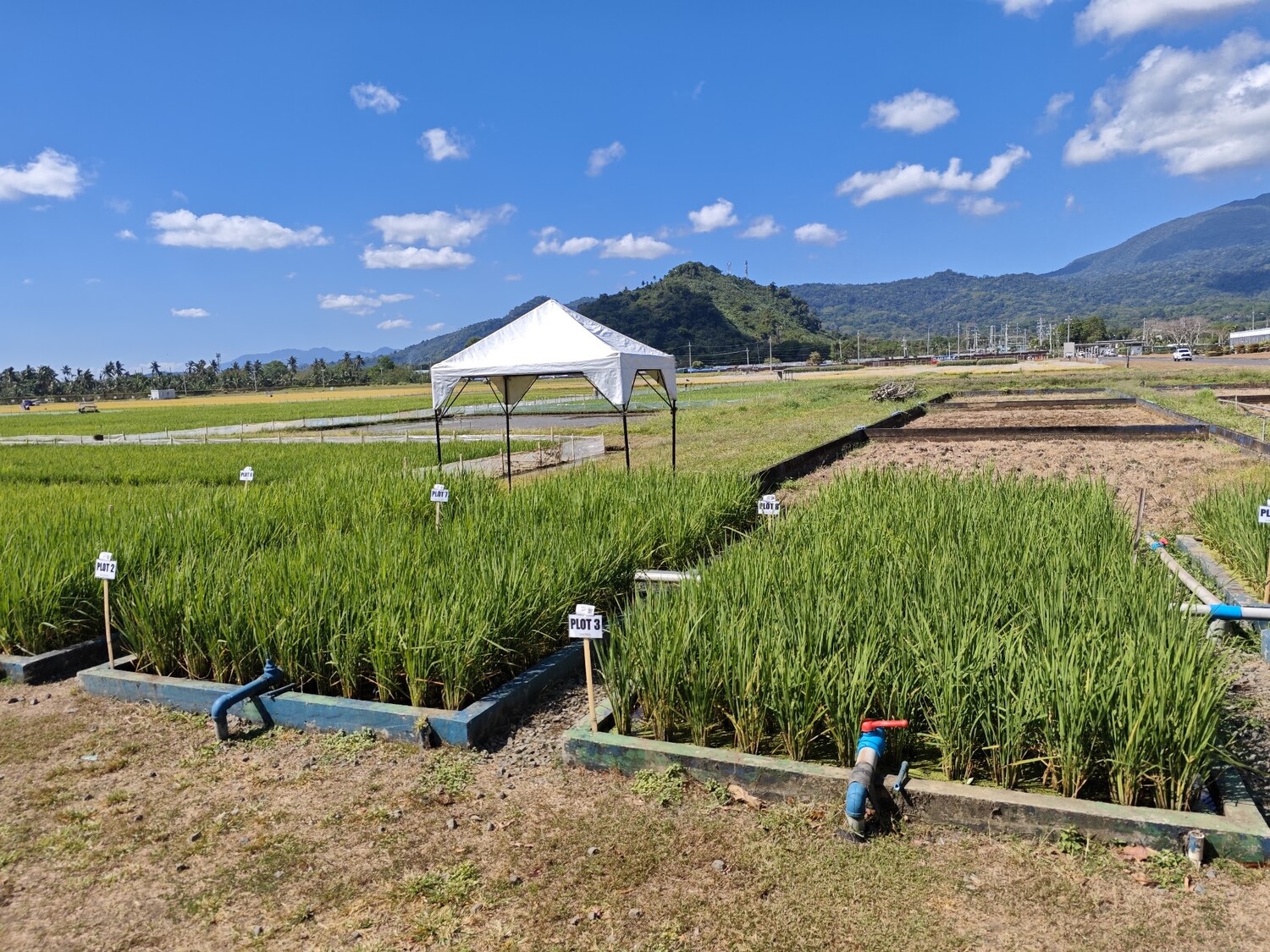
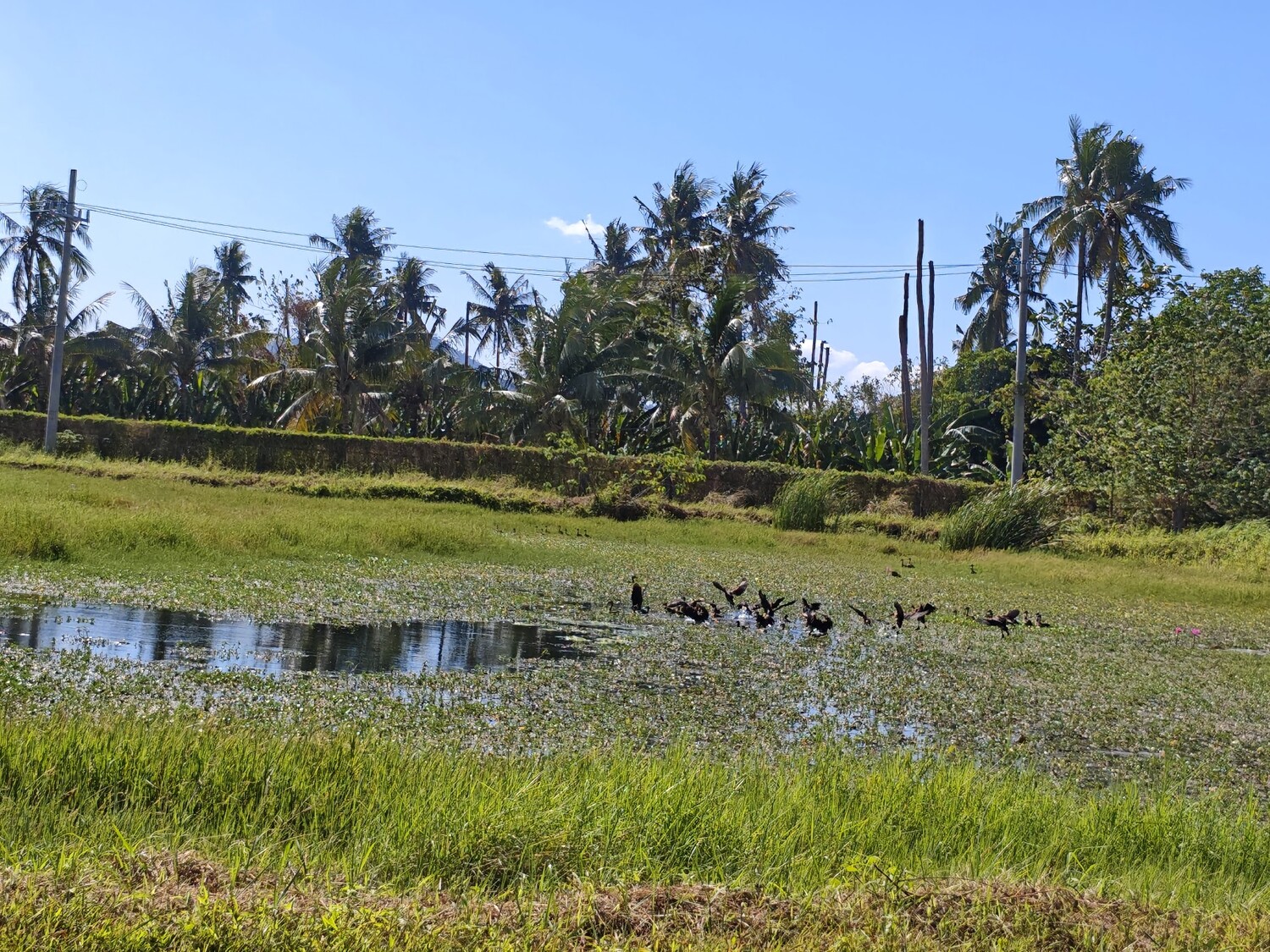
Rice farming has long been a significant source of methane emissions, a potent greenhouse gas formed when organic matter decomposes in flooded, oxygen-deprived soils. Traditional rice paddies create exactly these conditions, making the crop one of the largest agricultural contributors to methane globally. While its total share of global emissions is smaller than sectors like transport or livestock, rice remains one of the most important — and most addressable — sources within crop agriculture. That makes it a critical target for climate action, especially in Asia where rice is both a staple food and a dominant land use. But now rice farming is undergoing a quiet technological reset, and much of it is happening at the International Rice Research Institute (IRRI) in Los Baños. CleanTechnica witnessed this parade of solutions at a recent visit to the facility itself just two weeks ago. Long defined by flooded fields and heavy resource use, rice is now at the center of a different narrative: one where simple, scalable technologies are delivering both productivity gains and measurable climate benefits. The shift is being driven not by a single breakthrough, but by the convergence of practical farm techniques, digital tools and increasingly precise emissions measurement systems. The Alternate Wet-Dry controlled plots show major reduction in field methane emissions. (Photo for CleanTechnica by author) AWD, But Not All-Wheel Drive At the core of this transition is water management. Alternate wetting and drying (AWD), now widely promoted across Asia, replaces continuous flooding with controlled irrigation cycles. Farmers allow fields to dry to a defined threshold before re-irrigating, guided by a simple field tube. The result is strikingly efficient: water use drops by up to 30%, methane emissions fall, and yields remain stable. In some cases, improved soil aeration even strengthens root systems and crop resilience. What makes AWD notable is not just its impact, but its accessibility. It requires no expensive equipment and can be adopted by smallholder farmers with minimal training. That combination — low cost, high impact — is exactly what climate-smart agriculture has struggled to achieve at scale. But IRRI’s work does not stop at water management. Direct-seeded rice is gaining traction as a complementary approach, eliminating the need for transplanting and reducing both labor and early-stage water demand. When paired with mechanization, precise land leveling and improved weed control, it becomes part of a broader system upgrade rather than a standalone technique. More experimental systems, such as aerobic rice, are pushing cultivation into non-flooded conditions, targeting regions where water scarcity is becoming a limiting factor. At the same time, digital agriculture is entering the equation. Drone-based seeding and fertilizer application, recently demonstrated to farmers in Laguna, show how automation can reduce labor bottlenecks while improving input precision. Remote sensing and decision-support platforms further refine irrigation timing, allowing farmers to respond to actual field conditions rather than fixed schedules. Comparative Emissions Globally, animal agriculture contributes roughly 14–15% of total greenhouse gas emissions. A large share comes from methane produced by cattle digestion, along with manure and feed production. Commercial vehicles fall under the broader transport sector, which contributes about 20–25% of global CO₂ emissions. Heavy duty trucks and freight vehicles make up a significant portion of that. Even looking at commercial vehicles alone, their emissions are still far larger than rice. Rice cultivation is smaller in total share, contributing about 1.5–2% of global greenhouse gas emissions. However, it is one of the largest sources of methane within crop agriculture because flooded paddies create low-oxygen conditions that generate methane. This is important to know because when it comes to greenhouse gases, what ties all of this together is measurement. Measuring Emissions Through its Rice Emissions Measurement and Mitigation Technology (REMET), IRRI is building a framework that connects farm practices to verifiable climate data. Field measurements using chamber systems and sensor networks are validated in upgraded laboratory facilities, including high-precision gas chromatography systems, before being scaled through models and integrated into national reporting. This is where the shift becomes structural. With credible data, practices like AWD are no longer just agronomic improvements — they become quantifiable climate solutions. Governments can include them in greenhouse gas inventories, and emerging carbon markets can potentially assign value to their adoption. According to Ando Radanielson, a climate change expert at IRRI, the real leverage lies in simplicity. Adjusting how water is managed in rice fields can deliver immediate gains in both efficiency and emissions reduction. But the larger impact comes from combining technologies—water management, mechanization, digital tools—into integrated systems that improve overall farm performance. In ASEAN This integrated approach is now being scaled beyond the Philippines. In Vietnam, IRRI is working with the Tay Ninh Provincial Department to expand low-emission rice models, linking farm-level practices with national climate targets. Across South and Southeast Asia, similar programs are positioning rice not just as a food staple, but as a sector with significant mitigation potential. At the same time, the institute is broadening its scope beyond emissions. In the Philippines, IRRI has supported efforts to strengthen detection of rice yellowing syndrome, improving crop protection and resilience. Globally, it has also engaged in conversations around inclusion, participating in the Global Conference on Women in Agrifood Systems in New Delhi, highlighting the role of women in scaling agricultural innovation. These parallel efforts point to a larger strategy. Rice systems are being reengineered not only to produce more, but to do so with fewer resources, lower emissions and greater resilience to shocks. A Rather Sad Footnote Historically, the United States has been a major supporter of international agricultural research centers such as the International Rice Research Institute, often channeling funding through the CGIAR system. In the current policy environment under Donald Trump, U.S. foreign aid priorities are being reassessed, creating uncertainty around how these institutions access and manage taxpayer-funded support. The primary US government partner is the United States Agency for International Development. USAID has funded multiple IRRI programs over the decades, through CGIAR (Consultative Group on International Agricultural Research, then called the Consultative, now simply CGIAR) is the world’s largest global agricultural innovation network dedicated to reducing poverty, enhancing food security, and improving natural resources in developing countries. Now that USAID is no more, just a mere office under the Department of State, we don’t know what funds IRRI now. I guess, if it were not for the Bill & Melinda Gates Foundation there would be less funding. The foundation has invested heavily in agricultural development, including IRRI-led projects aimed at boosting smallholder productivity, improving nutrition and advancing climate-smart rice systems. Much of this funding supports research, innovation and deployment of technologies in developing countries. IRRI also collaborates with US academic institutions such as Cornell University, University of California – Davis, and other land-grant universities. These partnerships contribute expertise in plant science, genetics, data science and agricultural systems. I asked the question of how IRRI funding will happen now that Musk and DOGE crumpled USAID operations. No one at the institution is authorized to answer that question. The Philippine Swamp Duck is crucial to the balance of the rice ecosystem. (Photo for CleanTechnica by author.)