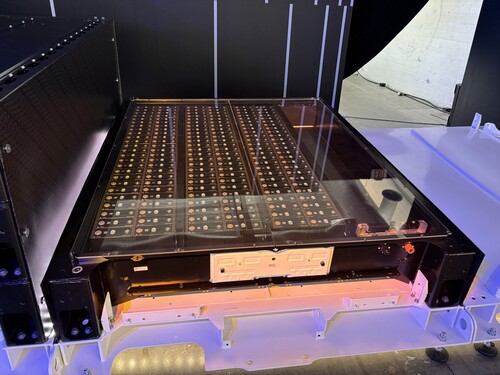
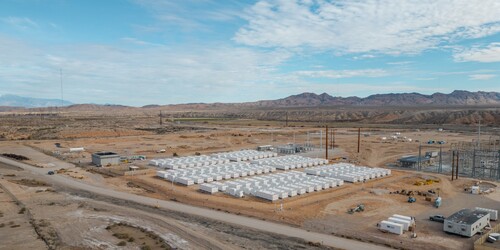
Texas has earned a reputation for grid reliability issues over the years, but renewable energy and storage have flipped the script. Although US President Donald Trump has put a crimp in the wind industry, the killer combo of solar-plus-storage is dominating new capacity additions in the US generally, and in Texas particularly. Utility watchers in the state are crediting the trend with enabling grid operators to keep the kilowatts flowing without relying on conservation warnings to avoid outages. That’s something of a disconnect with Texas’s deep red political profile, but then again, who ever said grid reliability has to be a political football? Oh, wait… Renewable Energy And The Texas Grid In terms of grid reliability, Texas is a unique case. Back in the 19990’s lawmakers decided to “island” the state’s electricity grid from its neighbors. The move was intended to avoid federal oversight, but it also largely cut the state off from power-sharing with neighboring states in the event of grid emergencies, including hot-weather demand spikes as well as storm-related damage recovery, underscored by Winter Storm Uri in 2021. The law of unintended consequences being hard at work, the state’s grid manager, ERCOT, was forced to scramble after any and all available in-state power generation resources. Up through the early 2000’s that meant conventional resources, until new improvements in wind turbines, solar panels, and storage systems began to flip the script. Texas has staked out ground as a renewable energy leader, vying with California and Florida for the #1 solar spot and leading the nation on energy storage, while continuing to ride on its longstanding role in the wind industry (see lots more ERCOT background here). Texas is now saturated with renewable energy and storage assets, and it’s making a difference in grid reliability. From 2008 to 2022, ERCOT issued almost 50 “Conservation Appeals,” asking ratepayers to reduce consumption in order to avoid controlled outages or rolling blackouts. In 2023 alone, ERCOT issued six Conservation Appeals during extreme hot weather in the final week of August that year. Just three years later, ERCOT sailed into the summer of 2026 anticipating that sufficient generation resources were in hand. Despite an especially hot summer that raised electricity demand to persistently high levels, ERCOT did not report any Conservation Appeals all season. In July, ERCOT issued a series of advisories and alerts when hot weather pushed demand over the 91 gigawatt threshold for the first time in its history, but the next step — a Conservation Appeal — proved unnecessary. Last month, Heatmap News took a look at the data and attributed the state of affairs to record-breaking levels of renewable energy generation and battery storage discharges. “The state’s grid operator, ERCOT, has not issued a single ‘conservation appeal,'” Heatmap recapped on August 26. “Those conservation appeals were almost always given for the late afternoon and early evening, when demand typically peaks,” Heatmap reporter Matthew Zeitlin explained. “That’s also when the grid has to ramp up dispatchable resources quickly to compensate for solar falling off the grid as the sun sets.” The Energy Storage Difference With “dispatchable” increasingly covering BESS (battery energy storage systems), the difference also shows up in wholesale utility costs. Zeitlin cites the figure of $85 per megawatt-hour for the cost of electricity during peak use periods in 2023, when wind and solar combined made up only 20% of the Texas grid. This year, with solar alone topping out at 36%, peak use prices have been hovering around the $46 per megawatt-hour mark. As a knock-on effect, Zeitlin also points out the improvement in grid stability — and the increase in solar generation — means that batteries can be charged during daytime demand periods. That would be counter-intuitive in a fossil energy scenario, but excess solar power generated during daylight hours has to go somewhere, and it’s going into storage. The Ripple Effect Keeps Rippling As another knock-on effect of that fateful 1990’s-era policy decision, Texas is also ripe territory for DER, the distributed power resources trend. While DER can encompass fossil resources, the primary beneficiary is renewable energy, with solar leading due to its extreme scalability. DER includes rooftop solar systems and home batteries that can be linked together, performing as virtual power plants by storing up energy during peak renewable energy production periods and feeding it back to the grid as needed, adding more dispatchable resources to the grid without requiring new, centralized power plants. It’s no surprise to see Texas become an epicenter of the virtual power plant movement, and there’s plenty more where that came from. The sprawling UK firm Octopus Energy Group, for example, dipped its toe in the Texas VPP waters back in 2023 through its US branch, and now the firm is back with a new investment in the Colorado-based DER management specialist Uplight Energy. “The investment supports Uplight’s next phase of growth, including targets of $1 billion in customer savings and more than doubling flexible capacity to 20 GW over the next five years,” Octopus explained in a press statement earlier this week. An Easy Way To Connect With Renewable Energy Alongside the Uplight announcement, Octopus also let word slip that it is debuting its “Octopus Shift” app in the US, smoothing the way for ratepayers to sign up for flexibility incentives through their local utility. “The app makes enrollment simple and keeps customers engaged over time, rewarding them for participating and turning that engagement into grid capacity utilities can count on,” Octopus explains. The company also notes that its PowerStore service is up and running in the US, making residential battery storage more accessible to ratepayers by eliminating the up-front cost of a battery. “This gives utilities dispatchable storage they can rely on to manage peak demand,” Octopus emphasizes, again drawing attention to networks of small, individual battery systems that can perform the same grid duties as a centralized power generation resource. Next Steps For VPPs In The US As for Uplight, the startup surfaced on the CleanTechnica radar back in 2020, when it partnered with the Italian energy firm Enel X and utilities in New York State on a home EV charging offer that focused on access to renewable energy, through Enel’s software-enabled JuiceBox branch. Enel ended the connectivity part of the program in 2024 but Uplight continued to grow its business in flexible load management, with the leading global firm Schneider Electric among its investors in addition to the new stake by Octopus. This year Uplight hit the 1 million customer mark this year for its VPP and DER programs. The company notes that it manages a total of 8.5 gigawatts in flexible load for more than 85 utilities, including eight of the the 10 biggest utilities in the US. The hookup between Uplight and Octopus is just one example. Another significant development in the VPP space popped up on September 3, when an A-list combo of electrification stakeholders launched a new VPP serving the Bay Area in California. Partners include the utility PG&E and the nonprofit organization Rewiring America along with Google, Carrier Global Corporation, Tesla, Sunrun, and the energy management specialist Renew Home among others, with Sunrun in particular underscoring the connection to renewable energy. Called “SHARE,” the new VPP connects battery-enabled heat pumps and other smart devices as well as standalone batteries, with the partners pitching in to motivate thousands of households to adopt the relevant technologies. “The model is designed to create additional capacity, support reliability and help put downward pressure on rates while participating households save money through smarter energy management with next-generation home technology,” the partners emphasize. That’s just for starters. SHARE is designed as a first-of-its-kind, proof-of-concept system that can be replicated elsewhere around the US to help deliver more kilowatts where and when they’re needed, more quickly, while enabling ratepayers to save on their electricity bills. Who could hate it? Well… Image: The UK firm Octopus Energy Group is zeroing in on renewable energy opportunities in the US, with a focus on growing its Virtual Power Plant business (courtesy of Octopus Energy).