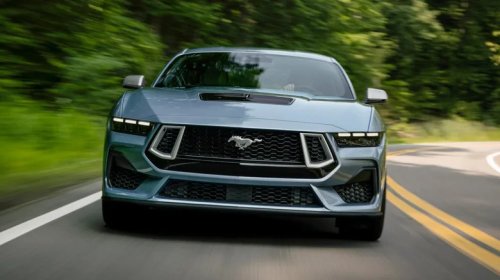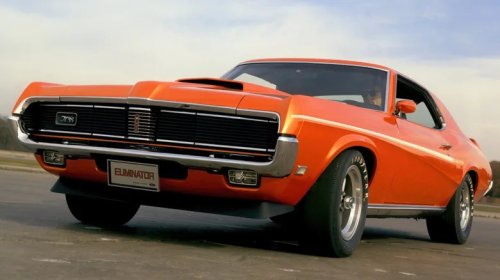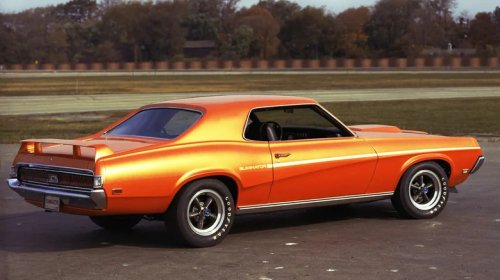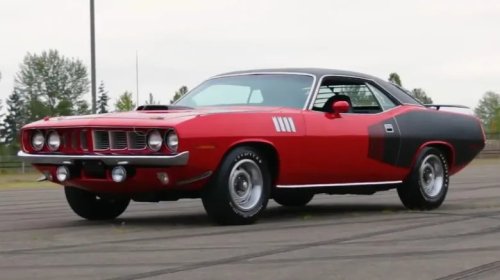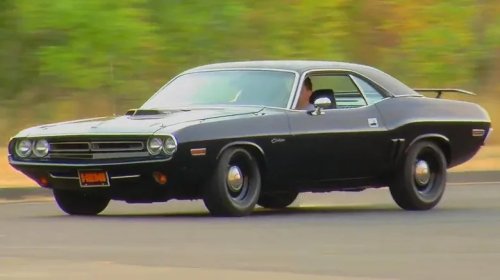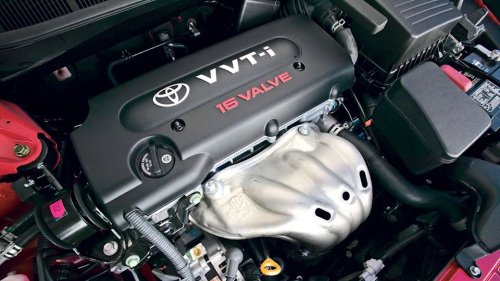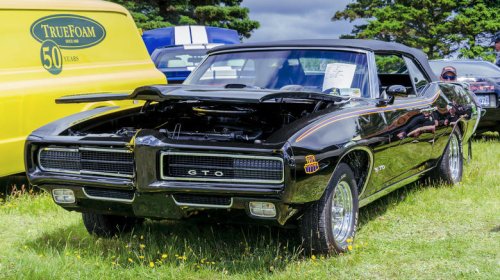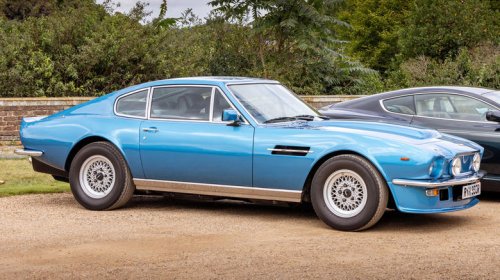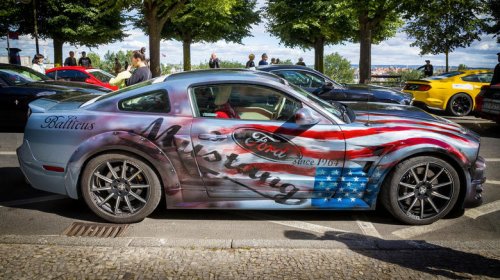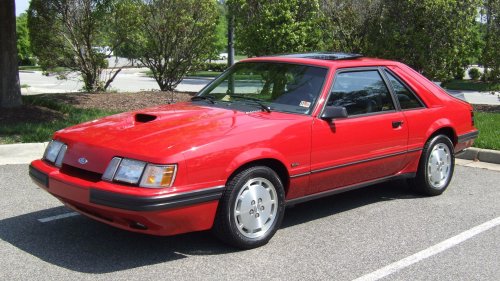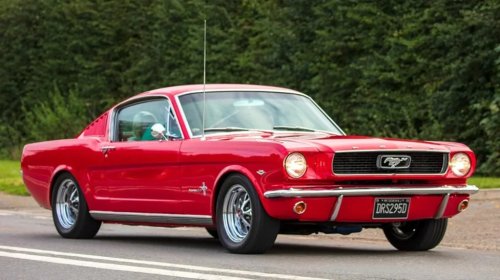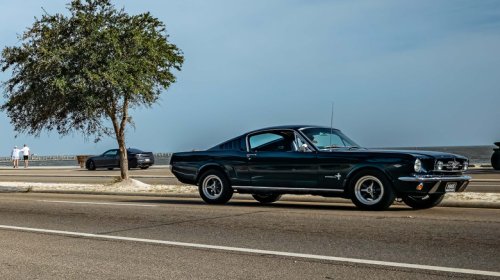
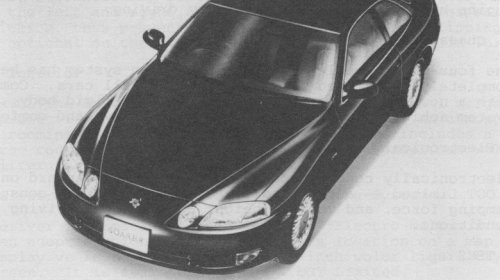
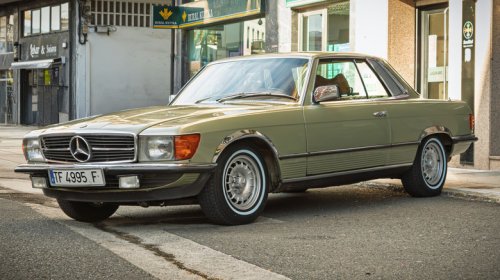
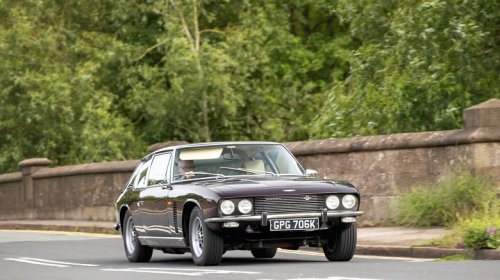
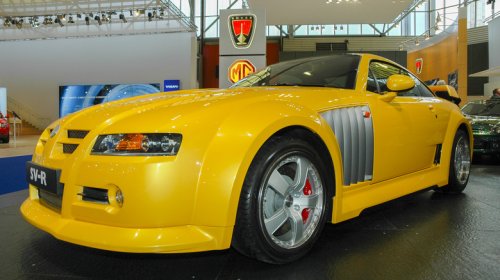



















Different_brian/Getty Images When Ford launched the Mustang on April 17th, 1964, it pioneered an entirely new category of vehicle in the so-called pony car. Being first to market has its advantages, and Ford absolutely cleaned house in those first couple of years, selling over a million Mustangs in less than 24 months. While the Mustang has been on sale continuously for 62 years, pretenders have come and gone in the same time period, like the Dodge Challenger, Chevrolet Camaro, and AMC Javelin. And many enthusiasts will contend that the pony car is a distinctly American invention, but I am here to disagree. Not only does America not hold a monopoly on the pony car, but such vehicles have been independently evolved by the Italians, the Japanese, the Australians, the English, and the Germans. To start, we'll have to define what makes a pony car. The basics are fairly obvious: a stylish two-door with a long hood/short deck look, a V8 engine, and it has to be cool. It doesn't have to be the biggest or most powerful engine, but it has to be a V8. This differs from a muscle car in that a muscle car is typically a small car receiving the big engine from its larger siblings explicitly for speed, styling be damned. Many pony cars are muscle cars, though not all muscle cars are pony cars. With the Camaro and Challenger currently dead, only the Mustang remains to carry the American flame for the pony car. So what else has it had to compete against over the years? I found six examples from around the world that fit my vision of a pony car. Feel free to respond in the comments with your non-American pony car thoughts. Holden Monaro Tim Graham/Getty Images Being a pony car enthusiast, you probably already know about the Holden Monaro, and you've definitely seen a few of them traipsing around the American countryside with Pontiac badges. The Monaro was built in Australia and imported to the U.S. as the Pontiac GTO, as Holden was the Aussie subsidiary of General Motors. Now defunct, the brand was once an antipodean icon. Australians have always had a knack for being better at acting American than Americans do. They love their V8 engines, their rear-wheel drive burnouts, and looking cool as heck doing it. The one we got as the GTO is hardly the first Monaro, though. This thing dates back nearly as far as pony-car-dom does, having first hit the market in 1968. Holden initially set about developing its own compact V8 to fit in the diminutive Monaro, but settled for a Chevy small block when it found a way to get the engine to fit. Some of you might argue that the third-gen Monaro wasn't as "style forward" as our definitions of the segment might require. Perhaps you thought the GTO looked boring when it launched here in the early 2000s, but I've always held that this was the best-looking car from a big-three brand in its day. It's understated, but stylish, particularly with the larger snout and hood scoops required by the later 6.0-liter models. This car would absolutely be near the top of the pony car charts if it were built in America, and with Australia's status as America-but-better, it's easy to argue that this belongs on this list. This is a proper weapon of a ride that's great for circle work, ya hoon. It'll roast some tyres, but it's hardly a yank tank. Toyota Soarer Toyota Like the Monaro, you probably know the Toyota Soarer by another name. This car, particularly the 4.0GT version, was imported to the U.S. as the Lexus SC400. While slightly too upmarket in the U.S. to be considered a pony car, the Soarer was an everyman's GT car in Japan. As time and depreciation have hit it, the SC400 has become quite inexpensive in today's market, so maybe it's an edge case, but I'm still going to include it. After all, you've got a 4.0-liter V8 under the hood, rear-wheel drive, and seating for four. It's not really a sports car, but then again, neither was a Mustang until this decade. Built from 1991 to 2000, the fourth-generation Soarer was assembled in Japan on a modified version of the Mk4 Supra's chassis, making it an extremely capable machine. While the V8 version of this car never got a manual transmission, it was also available with an inline-six with a stick, so if you can handle a slight reduction in power for the ability to row your own, the Soarer/SC still fits the bill. After the 1997 model year, the SC400 was equipped with VVT-i and its horsepower rating was increased to 290 ponies (notable, as that same year the Mustang's larger V8 made just 215 hp). If you want a more powerful and more comfortable Mustang with better build quality, this is the pony car for you. Even at its then-higher price tag, the Lexus was punching way above its weight. Here's a note from Car and Driver: "The SC400 costs only one-sixth of the astounding $250,000 price tag of the Aston Martin we tested in May. The Lexus turns the Aston into an instant aberrational anecdote—a shaky tale told in the face of another projectile about to go ballistic for real." Mercedes 450SLC/500SLC 5.0 Roman Belogorodov/Shutterstock Mercedes-Benz has typically been the most muscled of the German automakers, copying some of the American V8 sensibilities, and holding a tradition of stuffing big engines into its smaller cars. The 450SLC 5.0 (later renamed 500SLC 5.0) was a homologation-special coupe version of the iconic 107 series SL built in limited numbers between 1977 and 1981 in order for the Mercedes to be eligible for the World Rally Championship. In addition to its 240-hp 5.0-liter engine, the 5.0 received a bunch of lightweight aluminum panels to give it a fighting chance in competition, including the hood, the decklid, and the bumpers. Compared to its more commonplace 4.5-liter siblings, this lightweight version was a full 253 pounds lighter at just 3,338 pounds. The legendary L.J.K. Setwright had magnificent things to say of the car when he reviewed it for Car and Driver in 1980: An SLC is one of the sweetest things in swervery, beautifully balanced... Its power steering is among the best of its kind, feeling just a shade less light at very high speeds in the five-liter car, perhaps because its aerodynamic appendages help to keep its weight firmly on the ground. When going into tight [corners,] it is amazing how much grip is available to allow braking to be used right up to the apex; coming out of them, even wet ones, it is equally amazing how much traction is available, only the utmost extravagance producing a brief and eminently corrigible twitch of the tail. No wonder racing drivers like the car; being no kind of racing driver myself, I absolutely loved it. This is one of the most incredible Mercedes ever built and absolutely deserving of the pony car name, or perhaps kleiner Pferdewagen? It definitely has cool in spades. Iso Grifo Heritage Images/Getty Images With design by Giugiaro and chassis engineering by Bizzarrini, the Iso Grifo is perhaps the most stylish and pedigreed addition to this list. Beginning in 1965, just months after the launch of the Mustang and the pony car market, Italian firm Iso (until then known primarily for scooters and the "little Iso" Isetta for BMW) launched this sporty Berlinetta with drawn-out flowing lines and chrome accents. Powered by a variety of Chevrolet Corvette V8 options, the Series I Grifo was a stately and stylish alternative, albeit a much more expensive one, to the Corvette or later Camaro. This might be more of a European Grand Tourer than a pony car, but the American-made V8 and its stylish bodywork help tip it toward the latter in my eyes. With just 333 Series I cars built, and 79 Series II constructed before the company went bankrupt, examples are rarely seen. You'll get at least 80% of the driving experience by buying yourself a nice Corvette, but for style and individuality, that remaining 20% can't be beat. And unlike many of its Italian Grand Tourer counterparts, you can stroll into any NAPA and pick up a new alternator for it. With price tags deep into the six figures based on rarity and provenance, this isn't exactly going to be cross-shopped with a Camaro or Mustang. However, if you're looking for that kind of American V8 driving experience, but with a more posh air to it, this could be the car for you. Jensen Interceptor Sue Thatcher/Getty Images New for 1966, the Jensen Interceptor was unlike almost anything else on the planet. A British-built four-seat grand tourer, with American V8 power from a Chrysler 383 V8, mated to the long-serving TorqueFlite automatic transmission or a four-speed manual. In order to find a stylish body for the car, Jensen staff went on a tour of Italy, with proposals from Ghia, Vignale, and Carrozzeria Touring. Touring developed the squared-off fastback look that would become the Interceptor, but didn't have the ability to build it for them, so Vignale was contracted to build the initial prototypes and early production bodies. The prototype was shown at the London auto show in October of 1966, and was met with instant enthusiasm. Unfortunately for Jensen, it was hardly breathing rarefied air, as American-powered Italian-designed grand tourers were all over, with AC's new Frua-bodied 428 and others from Bizzarrini, De Tomaso, and the aforementioned Iso. There were also financial issues at Jensen, frequent worker strikes, and quality assurance failures. In 1972, the Interceptor SP (Six Pack) was born, with a 440ci V8 under the hood, producing 385 hp, good for a then-nearly-unbeatable 147 miles per hour. Across its decades of production, around 6,500 examples of the Jensen Interceptor were built; of them, just 232 were SP models. Enough of them were made that it's hard to call them particularly rare, but in comparison to the million Mustangs built, the Jensen is practically non-existent. One did make it into the movies, though. With a big V8 under the hood and extremely stylish, cool car looks, I think the Interceptor fits the bill, though. It definitely gets bonus points for having a cool name. Interceptor. It's just fun to say. MG XPower SV Sjoerd Van Der Wal/Getty Images This is definitely straining the concept of pony car, but the MG XPower SV is one of the coolest cars on the planet, so I wanted an opportunity to tell you a little about it. This car's dramatic Peter Stephens-penned bodywork makes the car look like it's going a hundred miles an hour while it's parked, and that goes a long way. To add to its pony car creds, the MG is powered by a modified 4.6-liter version of the Ford Modular V8 from the Mustang. It's a British carbon-fiber-bodied cousin of the Mustang, and for that it deserves to sit on this list anyway. This is a car with a weird and convoluted history, as well, as it is actually far more Italian than it is British. MG was in a bad way in the late 1990s, and it sent a small crew of engineers out to develop a new car that would give the aging brand a shot in the arm. Originally developed as the De Tomaso Biguà, then re-badged as Bruce Qvale's Mangusta, the MG shares its underpinnings and chassis with the Italian duo. Only 284 examples were built before Qvale went out, so MG stepped in and bought the production rights in 2001. Customers could choose from a standard 320 hp version or a supercharged 450 hp SV-R, and XPower was supposed to be MG's answer to Mercedes AMG and BMW M, but with just 82 examples built and sold, the company gave up and shut it down for good by 2007. Sometimes a pony car has to give up a little bit in order to be really cool. Being cool is one of the biggest factors in a pony car to me, and this is the coolest on the list.